Introduction

The Limousin ('Limoges's country') is a verdant, hilly and forested region at the heart of France. It is one of the most off-the-beaten-track destination, lacking any city of consequence (Limoges has barely 140,000 inhabitants), but is nevertheless attractive for its charming or quaint little villages, many of which are listed among the most beautiful in France.
In 2015 Limousin fused with Aquitaine and Poitou-Charentes to form the Nouvelle Aquitaine region.
The Limousin is the least populous mainland French region (pop. 735,000) and the least densely populated (43 inhab./km², 7.5 times less than the Nord-Pas de Calais). The region's economy is essentially agricultural, renowned for its herds of muscular Limousin cattle and its oak orchards, used almost exclusively for making cognac barrels. The chesnut is the symbol Limousin. The most famous local dessert is clafoutis, a thick flan-based cake with black cherries. A variation is the flaugnarde, made with apples, peaches, pears or plums instead of cherries.
Until the 16th century, Occitan was the official language of Limousin, and it is still spoken or understood by the majority of the population.
Famous people from Limousin include (chronologically): the chemist and physicist Joseph Louis Gay-Lussac, the painter Pierre-Auguste Renoir, and President Jacques Chirac.
History
The history of Limousin stretches back to ancient times, taking its name from the Celtic tribe known as the Lemovices who inhabited this region before Roman conquest around 50 BCE. Under Roman rule, the area formed part of the province of Aquitania and was organised as a civitas, or tribal association of Gaul. During the Merovingian period (6th-8th centuries), the region was known as Pagus Lemovicinus and served as a disputed territory between rival Frankish kings. The area's strategic importance continued under the Carolingian dynasty (8th-10th centuries), when it was incorporated into the kingdom of Aquitaine, whilst its monasteries, particularly Saint-Martial at Limoges, emerged as major cultural centres throughout this period.
The medieval era witnessed significant political fragmentation as Limousin was divided into numerous feudal units during the 10th century. The northern portion became the county of Marche, whilst other sections fell under the control of neighbouring counts of Auvergne, Angoulême, and Poitou. By the mid-11th century, the viscounts of Limoges, Comborn, Turenne, and Ventadour had gained control of the remaining territory, recognising the overlordship of the Duke of Aquitaine. The region became renowned for its troubadour poetry during the Middle Ages. This political fragmentation led to the construction of numerous castles throughout the 11th century and beyond, whose ruins still dot the landscape today. A particularly notable event occurred in 1199 when King Richard I of England (Richard the Lionheart) was fatally wounded by a crossbow bolt during his siege of Château de Châlus-Chabrol, approximately 30 kilometres southwest of Limoges.
From the 12th to the 15th centuries, Limousin became one of the principal battlegrounds between English and French forces. The marriage of Eleanor of Aquitaine to the future Henry II of England in 1152 brought the region under English suzerainty, though Philip II Augustus recovered the province for France in the early 13th century. During the Hundred Years' War (1337-1453), the region changed hands multiple times: it was ceded to the English by the Treaty of Calais in 1360, then reconquered by French King Charles V between 1370-1374. After further disruptions, Limousin remained under French suzerainty, with royal control becoming direct when the viscounty of Limoges was added to the royal domain in 1607 and Turenne was purchased by the crown in 1738. The region's economic transformation began in 1768 with the discovery of kaolin deposits at Saint-Yrieix-la-Perche, leading to the establishment of the first porcelain manufactory in 1771 under the auspices of Turgot. This marked the beginning of Limoges' worldwide reputation for exquisite porcelain production, with the industry initially protected by the Comte d'Artois and later by King Louis XVI himself.
Cuisine
Limousin cooking is famed for solid, hearty fare. The lush pastures yield the prized Limousin cattle, and meat sold under the Viande Limousine label enjoys international renown. Farmers also rear succulent lamb and the traditional cul-noir pork, a heritage breed once fattened on chestnuts. Golden Limousin apples hold AOC status for their crisp sweetness. Chestnut groves blanket the region, making the nut a mainstay of both savoury and sweet dishes. Local markets brim with creamy goat’s cheeses from small Creuse dairies.
Among signature savouries, the pâté de pommes de terre is a puff-pastry pie stuffed with sliced potatoes, cream and sometimes bacon. Hearty bowls of bréjaude and potée limousine combine pork with potatoes, cabbage and root vegetables. Rural cooks still prepare mique, a bread-like dumpling simmered with pork, and farcidure, poached potato balls served with meat. Travellers can spread garlicky grillons on fresh bread or snack on buckwheat galétous topped with honey. Adventurous diners might try amourettes, pan-fried sheep testicles flavoured with garlic butter. Even the local boudin noir gains sweetness from chopped chestnuts.
Limousin is synonymous with clafoutis, a flan-like dessert baked around unpitted black cherries, and its cousin flognarde made with apples, pears or plums. Chestnut sweets range from silky crème de marrons to moist fondant cakes. Other treats include buttery creusois, delicate massepains and the marzipan of Saint-Léonard-de-Noblat, while Le Dorat is famed for macaroons. Meals pair well with local wines such as Vin de Branceilles or the light Vin de Corrèze. Autumn cafés often serve chestnut liqueur or simply roast the nuts, underscoring the enduring role of the “bread-tree” in Limousin cookery.
Attractions
Département de la Corrèze
|
Collonges-la-Rouge |
|---|
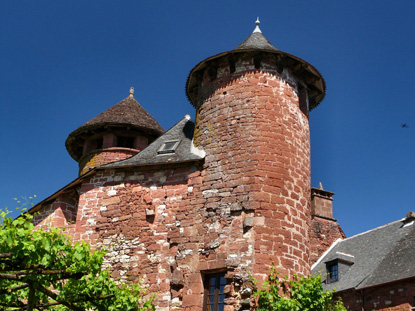
 Collonges-la-Rouge, the original 'Most Beautiful Village in France', captivates visitors with its flamboyant red sandstone buildings and medieval charm. This 8th-century Corrèze gem features historic turrets, cobbled streets, and the impressive Romanesque Church of Saint-Pierre. |
| Curemonte |
|---|

 Curemonte, one of France's Most Beautiful Villages, is a medieval hilltop gem in Corrèze known as the 'Village of Three' for its trio of castles, churches, and fountains. Perched on a ridge with stunning valley views, this timeless village features noble houses and authentic charm. |
| Argentat |
|---|
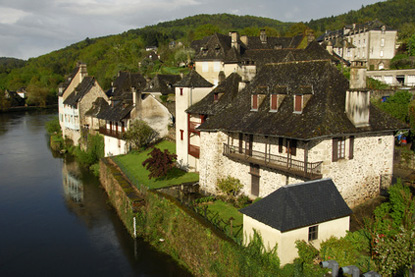
 Argentat is a charming historic riverside town in Corrèze, Limousin, nestled along the Dordogne River. Known for its medieval houses, stone quays, and traditional gabare boats, this peaceful town of 3,000 retains authentic character from its days as a river trading hub. |
| Ségur-le-Château |
|---|
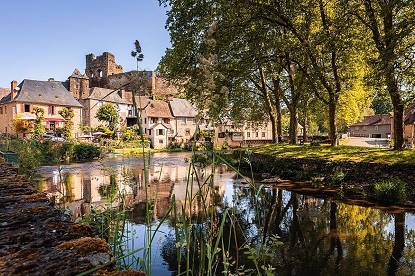
Medieval Ségur-le-Château, one of France's most beautiful villages, sits on a peninsula in the Auvézère river. This picturesque Corrèze village boasts 12th-century castle ruins, half-timbered houses, and Renaissance architecture from its judicial past. |
| Tulle |
|---|
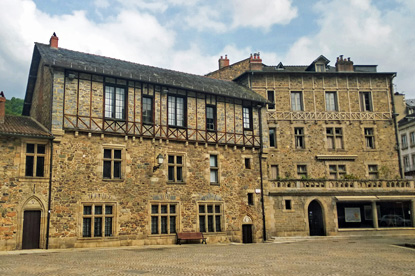
The capital of Corrèze, Tulle is a "city of seven hills" on the Corrèze river. Explore its medieval old town with labyrinthine streets, admire its elegant cathedral, and discover a heritage of fine lacemaking and traditional accordions, for which the city is famous. |
| Uzerche |
|---|
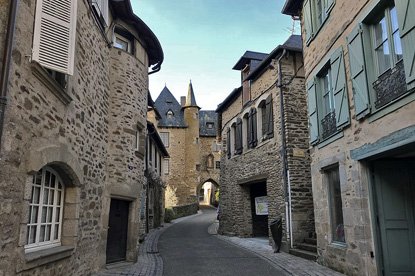
Nicknamed the 'Pearl of the Limousin', this medieval fortified town sits dramatically on a rocky outcrop encircled by the Vézère River. Renowned for its turreted castle-like mansions and 11th-century Romanesque abbey of Saint-Pierre, Uzerche creates a remarkable architectural ensemble. The town embodies the local saying 'Who has a house in Uzerche has a castle in Limousin'. |
| Turenne |
|---|

The delightful village of Turenne, strategically sited on a limestone hill, is regularly short-listed as one of France's most beautiful villages. Turenne was the seat of an independent viscounty until 1738, a state in its own right within the Kingdom of France. |
| Brive-la-Gaillarde |
|---|
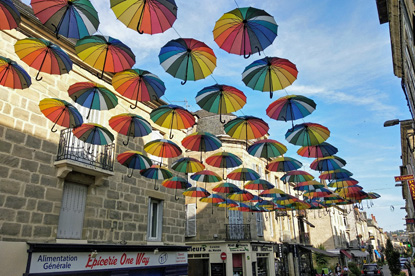
The largest town in Corrèze, Brive-la-Gaillarde entices with its vibrant market, famed for regional gastronomy. Its historic centre reveals Renaissance mansions and cobbled alleys. A relaxed, energetic hub, it’s an ideal base for exploring the surrounding Limousin countryside. |
| Treignac |
|---|
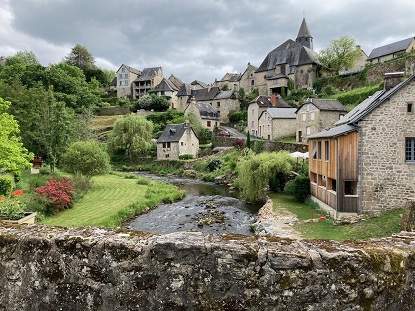
Medieval village on the River Vézère classified as one of France's most beautiful villages. Features an 11th-century church, historic market hall, and pilgrim heritage from the Santiago de Compostela route. Popular for water sports at nearby Lac des Bariousses and challenging river canoeing. |
Département de la Haute-Vienne
|
Limoges |
|---|

Limoges is the capital of the Limousin, a remote, oldfangled city, with a strong socialist base. Limoges is known for its medieval enamels on copper, for its 19th-century porcelain, and for its oak barrels, used for Cognac production. |
| Montbrun Castle |
|---|
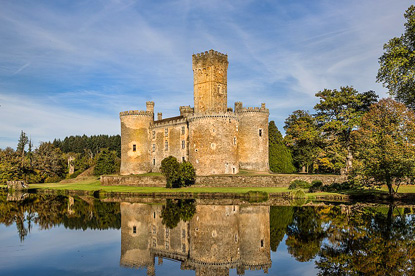
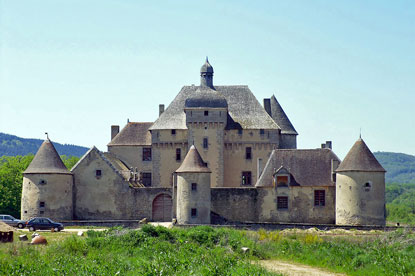
Built in 1179, this magnificent medieval fortress in Haute-Vienne epitomises castle architecture with its four round towers, central keep, and moat. Set in a picturesque valley near Dournazac, legend claims Richard the Lionheart died here after being wounded at nearby Chalus. |
| Nexon Castle |
|---|
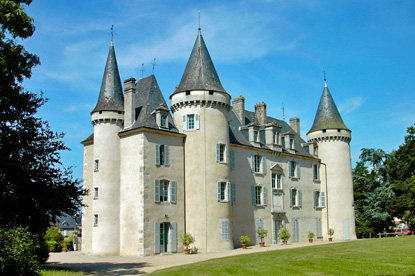
Built in the 17th century, this elegant château served as ancestral seat of the Gay de Nexon family for 350 years. Now Nexon's town hall, it boasts renowned equestrian heritage and a magnificent 38-hectare historic park, open year-round to visitors. |
Département de la Creuse
| Saint-Germain-Beaupré Castle |
|---|
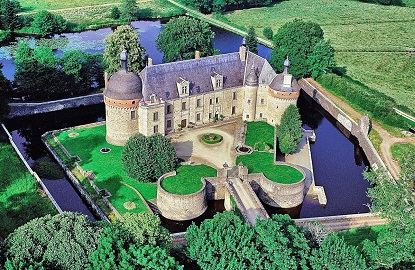
Saint-Germain-Beaupré Castle is a moated Renaissance stronghold in Creuse, built from 1533 on a medieval site and shaped as a pentagon with round corner towers. Privately owned and not open to visits, it remains a striking listed monument amid tranquil parkland. |
Other attractions
Aubusson
Villemonteix Castle



 : Local interest
 : Moderately interesting
 : Outstanding place
 : Must-see in the country
 : Top cities in Europe