Introduction

The beautiful island of Corsica (Corse in French) is a paradise for nature lovers, a place of rugged red granite landscape, turquoise sea, coves of white sand beaches, forested mountains, deep gorges, and, almost anywhere you go, breathtaking scenery.
Birthplace of France's greatest military genius and first emperor, Napoleon Bonaparte, Corsica has nevertheless only been part of France since 1769, and still feels more Italian than French today. The island belonged to the Genoan Republic from 1347 to 1735, when the Corsicans revolted and declared their independence. In 1755, the Corsican drafted the world's first modern democratic constitution.
Corsican language is a dialect of Tuscan, and therefore a form of Italian. Corsica is the second smallest French region (after Alsace), and by far the least populous, with only 300,000 inhabitants. The island welcomes 3 million tourists annually - the equivalent of ten times the local population.
History
Corsica's recorded history begins with Greek colonisation in 566 BCE, when settlers from Phocaea in Asia Minor founded the colony of Alalia (modern-day Aléria) on the east coast, calling the island Kalliste, meaning "the most beautiful one". However, the island had been inhabited for millennia, with the megalithic archaeological site of Filitosa providing evidence of settlements dating back to 6000 BCE, and the mysterious Torrean civilisation establishing settlements south of Ajaccio around 1900 BCE before disappearing circa 600 BCE. In 540 BCE, the Greeks faced defeat at the Battle of Alalia against a Carthaginian-Etruscan alliance, which limited Greek expansion but allowed them to maintain commercial control over trade in wood, resin, and honey. Roman conquest began in 259 BCE during the First Punic War, when Lucius Cornelius Scipio captured Aleria, and by 238 BCE, Rome had annexed both Corsica and Sardinia from Carthage, establishing the province of Sardinia et Corsica in 227 BCE. Roman rule faced persistent resistance from indigenous Corsican tribes, with notable rebellions in 231 BCE suppressed by Gaius Papirius Maso, whilst the Romans exploited the island's iron, timber, and salt resources, established colonies like Colonia Mariana around 104 BCE, and introduced viticulture.
Following the collapse of Roman power, Corsica was conquered by the Vandals in 430 CE, then briefly recovered by the Byzantine Empire in 534 CE during Justinian's campaigns, before enduring centuries of raids by various Germanic tribes. The medieval period was dominated by the rivalry between the Italian maritime republics of Pisa and Genoa, who initially cooperated in defending the island from Arab invasions in the 11th century before competing for control. Pisan rule from 1077 to 1284 brought considerable economic and social development, creating what Corsicans remember as the mythical "pax pisana". However, Genoese supremacy was established definitively following their victory over Pisa at the Battle of Meloria in 1284, marking the beginning of over four centuries of Genoese influence. The struggle between the two republics introduced the broader Guelph-Ghibelline conflict to Corsica, and in 1298, Pope Boniface VIII formally bestowed the Kingdom of Corsica on James II of Aragon, though Genoese control continued in practice. In 1347, after years of political turmoil, a diet of Corsican nobles formally offered sovereignty to the Genoese Republic, allowing Corsicans to retain their own laws and customs whilst paying regular tribute, though the devastating Black Death arrived that same year, killing perhaps two-thirds of the population.
The 18th century witnessed Corsica's brief but significant period of independence, beginning with the Corsican Revolution in 1729 against Genoese rule, which eventually led to the declaration of the Corsican Republic in 1755 under the leadership of Pasquale Paoli. This revolutionary government created one of the world's first democratic constitutions and maintained independence for 14 years, becoming a symbol of Enlightenment ideals across Europe. However, financial difficulties forced Genoa to cede the island to France in 1768 through the Treaty of Versailles for 200,000 livres, as France sought to strengthen its Mediterranean position following defeats in the Seven Years' War. The French conquest was completed in 1769 at the Battle of Ponte Novu, where the Comte de Vaux decisively defeated Paoli's forces, forcing the Corsican leader into British exile and ending organised resistance, though guerrilla warfare continued for another year. Remarkably, Napoleon Bonaparte was born in Ajaccio just three months after the French victory, making him technically French rather than Genoese by citizenship. Corsica briefly regained independence as the Anglo-Corsican Kingdom from 1794 to 1796 under British protection and Paoli's leadership, following a successful British-Corsican campaign that captured the French garrisons at San Fiorenzo, Bastia, and Calvi, but French forces reconquered the island in 1796, establishing it permanently as a French département.
Cuisine
The agriculture is typically Mediterranean, constituted mostly by olive orchards, vineyards, citrus fruits, figs, chestnuts and mulberries. Meats are traditionally cured to make sausages such as coppa, lonzu, figatellu, panzetta, or prisuttu, all made from pork. Corsican cheese (a filetta, bastelicaccia, brocciu, casgiu merzu, casgiu veghju, muntanacciu, niolo) is made either of goat or ewe milk. Corsica produces a variety of alcohol, including pastis (Pastis Dami), whisky (P&M), Liqueur du Maquis, eau de vie, chestnut beer (Pietra), sparkling muscat, and red wine. Corsican cuisine shares a lot with mainland Italy (e.g. pesto, polenta). Wild boar and goat meat are popular, and local dishes often make use of chestnut for their preparations.
Attractions
Département de Haute-Corse
| Restonica Gorges |
|---|
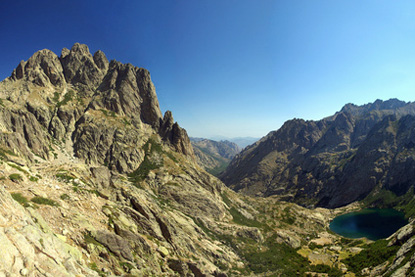
 Dramatic granite gorges carved by the Restonica River near Corte, featuring turquoise swimming pools, waterfalls, and pine-covered cliffs. Popular hiking destination with trails leading to glacial lakes Melo and Capitellu. One of Corsica's most scenic valleys. |
| Calvi |
|---|
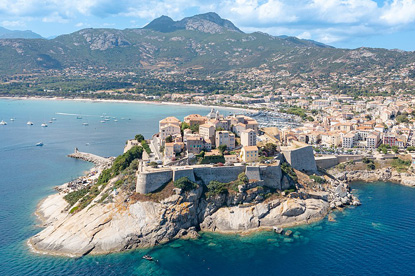
 Picturesque port town on Corsica's northwest coast, famous for its 13th-century Genoese citadel rising above a crescent-shaped bay. Features a bustling marina, 6km of pine-fringed beach, and claims as Christopher Columbus's birthplace. |
| Corte |
|---|
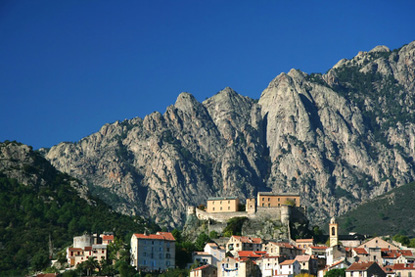
Corte, Corsica’s historic heart, is a mountain town crowned by a dramatic citadel and steep lanes of stone houses. Set where the Restonica and Tavignano valleys meet, it blends scholarly buzz from its university with wild hiking, river pools, and sweeping Alpine-style vistas. |
| Murato |
|---|
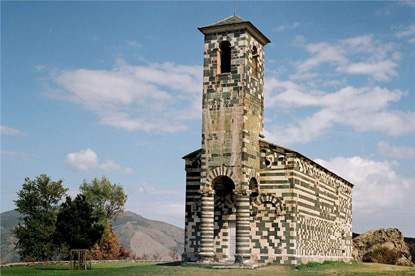
 Murato, a Nebbio village amid chestnut woods, is famed for the 12th-century San Michele, a striking Pisan-Romanesque church in green and white stone, overlooking vine-clad slopes and the Bevinco valley. Expect tranquil lanes, spring-fed fountains, and far-reaching views near Bastia. |
| Bastia |
|---|
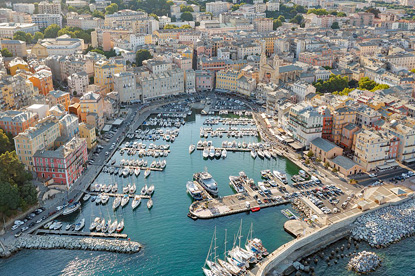
 Corsica's second-largest city and bustling port in the northeast, Bastia combines authentic Mediterranean charm with rich Genoese heritage. Explore the atmospheric old port, hilltop citadel, baroque churches, and lively Place Saint-Nicolas in this dynamic, year-round destination. |
| Corbara |
|---|
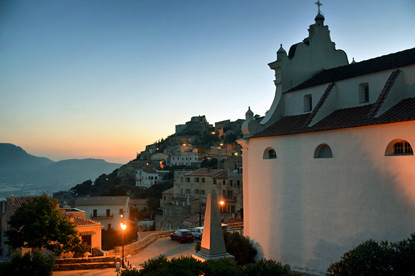
Ancient Balagne village of staggered neighbourhoods facing the sea, renowned for Moorish architecture and historical ties to the powerful Savelli family. Comprises two charming hamlets, Pietralta and U Borgu, dotted with baroque churches and chapels offering spectacular coastal views. |
| Lucciana |
|---|
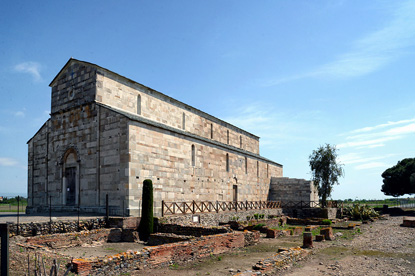
Lucciana is a picturesque hilltop village amongst olive groves above ancient Roman ruins of Mariana. Minutes from Bastia and sandy beaches, this historic Corsican commune blends archaeological treasures, Romanesque churches, and coastal charm for an authentic Mediterranean experience. |
| Aléria |
|---|
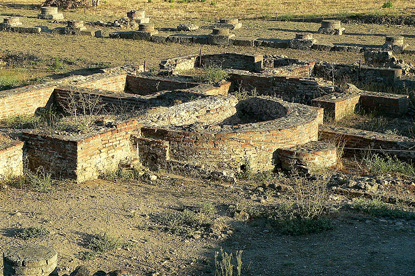
Aléria, Corsica's ancient Roman capital and oldest city, features exceptional archaeological ruins including forum remains and thermal baths. The Jérôme Carcopino Museum in medieval Fort Matra displays remarkable artefacts, whilst this historic eastern coastal town also offers sandy beaches. |
Département de Corse-du-Sud
| Calanques de Piana ※ |
|---|
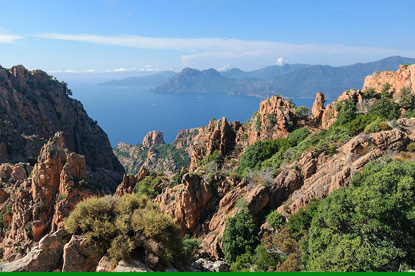
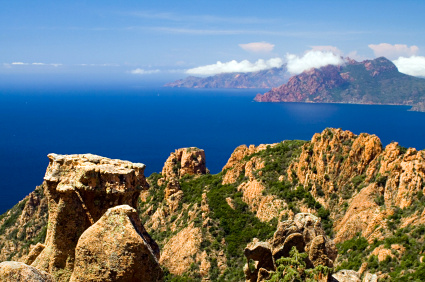
 UNESCO World Heritage Site featuring spectacular red granite cliffs rising 300 metres above the Mediterranean on Corsica's west coast. These dramatic erosion-sculpted formations between Ajaccio and Calvi can be explored by boat, scenic drives, or hiking trails. |
| Ajaccio |
|---|

Ajaccio, Corsica’s sun-kissed capital, blends elegant boulevards, a lively old town and golden beaches along a sparkling bay. Birthplace of Napoleon, it offers museums, a Genoese citadel and café-lined squares, with easy strolls to harbourside markets and coastal viewpoints. |
| Sartène |
|---|
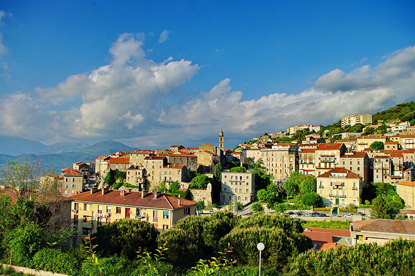
Atmospheric medieval fortress town perched on granite cliffs, famously dubbed 'the most Corsican of Corsican towns'. Explore winding cobbled streets, authentic traditions like Easter processions, and enjoy panoramic views over southern Corsica's valleys. |
| Cucuruzzu |
|---|
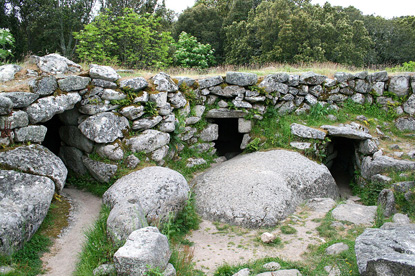
Bronze Age archaeological site near Levie with a fortified hilltop settlement featuring an impressive 8-metre tower. Dating from 1200 BCE, this casteddu is accessed via a 2.5km forest trail through Mediterranean woodland, offering a captivating glimpse into Corsica's prehistoric past. |
| Bonifacio |
|---|

Bonifacio, Corsica's spectacular medieval fortress town, perches dramatically atop towering white limestone cliffs at the island's southernmost tip. Its ancient citadel shelters narrow cobbled streets and historic buildings, whilst below lies a picturesque natural harbour filled with yachts and cafés. |
| Propriano |
|---|
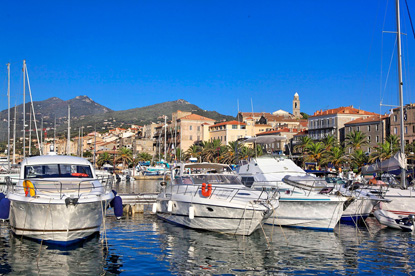
Sun-kissed Propriano nestles on the Gulf of Valinco, blending a lively marina, sandy beaches like Lido and Mancinu, and a relaxed Corsican pace. Backed by maquis-cloaked hills, it’s perfect for boat trips, swimming, and easy dining, with nearby Sartène and coastal coves to explore. |
| Araghju |
|---|
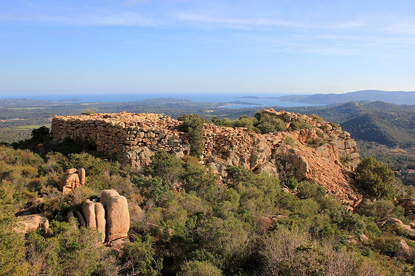
A remarkably preserved Bronze Age fortress dating to 2000 BCE, perched dramatically on a rocky spur near Porto-Vecchio. This prehistoric Torrean stronghold offers magnificent panoramic views over southern Corsica after a challenging 30-minute hillside hike. |
| Filitosa ※ |
|---|
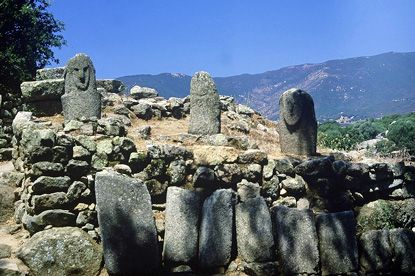
Corsica's premier prehistoric site, Filitosa boasts 8,000 years of history and Europe's finest collection of carved granite menhir statues. These mysterious warrior figures, up to 3 metres tall, stand amid ancient towers in the scenic Taravo Valley—a UNESCO World Heritage treasure. |


 : Local interest
 : Moderately interesting
 : Outstanding place
 : Must-see in the country
 : Top cities in Europe