


| Contents |
|---|

Introduction
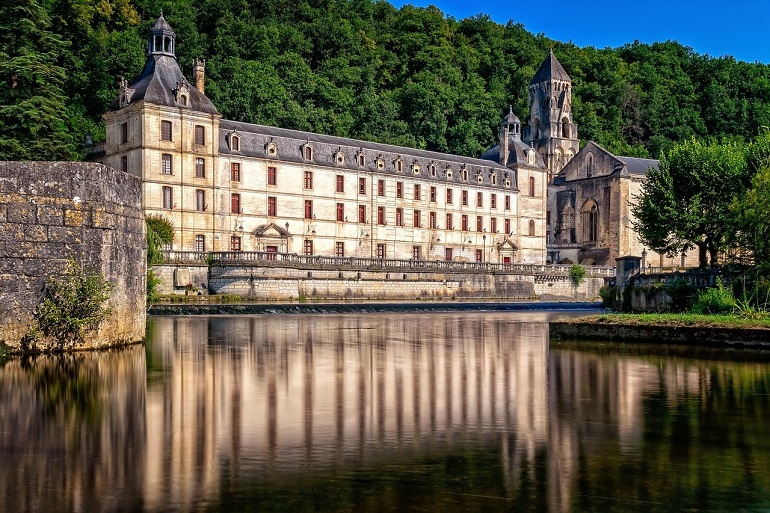
Brantôme (pop. 2,000) is a picturesque old village ituated within a loop of the River Dronne and backed by limestone cliffs. The town grew around its Benedictine Abbey, founded by Charlemagne in 769, which remains the central landmark with its 11th-century bell tower considered amongst the oldest in France. Known as the "Venice of the Périgord", Brantôme features medieval and Renaissance architecture, with narrow winding streets, historic bridges, and riverside gardens creating a tranquil setting. The town's troglodyte caves carved into the limestone cliffs include the famous Cave of the Last Judgement with its medieval bas-relief, whilst the peaceful River Dronne offers opportunities for canoeing and riverside walks. Brantôme hosts a renowned Friday morning market, particularly famous for local delicacies during winter months, and serves as an excellent base for exploring the Périgord Vert region. There are six castles in Brantôme, though they are all private.
Interesting Facts about Brantôme
- Brantôme is often called the “Venice of the Périgord” because its historic centre sits on an island encircled by the River Dronne and is linked by multiple picturesque bridges.
- The town’s Benedictine abbey was traditionally founded in 769 under the patronage of Charlemagne, anchoring Brantôme’s medieval identity.
- The abbey’s Romanesque bell tower is frequently cited as one of the oldest in France, a rare survival that dominates the skyline.
- Behind the abbey lies a dramatic limestone cliff honeycombed with troglodyte caves where early monks lived and carved sacred spaces.
- Brantôme’s nickname was popularised in the early 20th century and reflects its watery setting rather than any direct resemblance to Venice.
- The town grew at a river crossing on an old route used by pilgrims heading towards Santiago de Compostela, giving it a long tradition of hospitality.
- Viking raids in the 9th century damaged the early abbey, prompting later reconstructions that layered Romanesque and Gothic features.
- A distinctive right-angled bridge, the Pont Coudé, connects the Renaissance abbot’s lodging with gardens across the Dronne.
- Brantôme hosts a lively Friday market that draws producers from the green Périgord and fills the island streets with regional specialities.
- Canoeing and riverside walks showcase Brantôme’s calm loops of water, stone arches, and reflections of the abbey’s pale freestone.
- Local lore tells that relics of Saint Sicaire were donated to the abbey, enhancing Brantôme’s medieval appeal to pilgrims.
- The town’s five bridges include elegant pedestrian passerelles, adding to its leisurely, riverside promenade atmosphere.
- Brantôme’s caves feature enigmatic bas-reliefs such as the Grotte du Jugement Dernier, which inspire varied interpretations.
- The surrounding Périgord Vert landscape frames Brantôme with wooded valleys and soft limestone, shaping its architecture and cuisine.
- Brantôme’s layered past—Celtic, Roman, monastic, and Renaissance—can be read in its street names, riverworks, and abbey cloister.
History
Brantôme, often referred to as the "Venice of the Périgord," boasts a remarkable history stretching back to prehistoric times. The town's origins can be traced to Celtic and Roman settlements, with evidence of early human habitation found in the rocky overhangs carved by the River Dronne, including the classified megalithic monument known as the dolmen of Peyrelvade. The most significant chapter in Brantôme's history began in 769 when Charlemagne founded the Benedictine Abbey of Saint-Pierre de Brantôme, according to legend donating relics of Saint Sicarius, one of the Holy Innocents massacred by King Herod. These sacred relics attracted pilgrims from across Europe, bringing considerable affluence to the developing community that grew on an island encircled by a sweep of the River Dronne.
The abbey's early centuries were marked by both prosperity and devastation, as Viking raiders advanced along the Dordogne and Isle rivers to reach the Dronne, laying waste to the monastery in 848 and again in 857. Following these destructive invasions, the abbey was rebuilt towards the end of the tenth century, featuring a distinctive Romanesque bell tower that claims to be amongst the oldest campaniles in France. This unusual tower was constructed not atop the church itself, but built into the 12-metre-high rock overhang above it, creating one of Brantôme's most iconic architectural features. The abbey suffered further damage during the Hundred Years' War with the English, necessitating additional reconstruction in 1465 and 1480. During this period, the original abbey incorporated troglodyte caves carved into the cliff face, which served as living quarters for the monks, housing a dovecote for raising pigeons, and even containing a salmon fry farm.
The Renaissance period brought significant architectural enhancements to Brantôme under the stewardship of Pierre de Mareuil, who served as abbot from 1538 to 1556 and commissioned the construction of the elegant right-angled Pont Coudé bridge over the river. This bridge connected his newly built Renaissance abbot's lodging with its garden on the opposite bank, demonstrating the abbey's continued prosperity. His nephew and successor, Pierre de Bourdeille (abbot from 1558 to 1614), was a distinguished soldier and writer better known as Abbé Brantôme, whose diplomatic skills proved crucial during the Wars of Religion when he successfully saved the abbey and commune from Huguenot forces led by Gaspard de Coligny on two separate occasions in 1569. The abbey's monastic life finally ended during the French Revolution when it was secularised as a "bien national," with the last seven monks being pensioned off and the abbey's renowned library dispersed. Today, the former monastery serves as a cultural centre, housing the Fernand Desmoulin Museum and preserving the remarkable troglodyte caves, including the famous Cave of the Last Judgement with its monumental bas-reliefs.
Main Attractions
Brantôme Abbey and Troglodyte Caves
Dominating the landscape, the impressive Brantôme Abbey stands as one of the most significant Benedictine foundations in France, dating back to the 8th century and rebuilt in the 11th century after Viking raids. The abbey is famed not only for its majestic architecture and 11th-century bell tower, reputedly among the oldest in France, but also for the troglodyte caves that lie behind it. These ancient caves, carved into the limestone cliffs, were inhabited by monks and still feature notable bas-reliefs such as the Grotto of the Last Judgement, as well as the historic Saint Sicaire fountain believed to have healing properties. A tour of the abbey and caves offers a journey through millennia of spiritual and communal life.
The Cloister, Bell Tower, and Abbey Grounds
Within the abbey complex, the cloisters provide a peaceful escape, noted for their medieval charm and surviving architectural features from various periods. A climb up the 11th-century bell tower, although narrow and somewhat steep, rewards intrepid visitors with panoramic views of the river and Brantôme’s rooftops. The adjoining abbey church, rebuilt over centuries, displays a harmonious blend of Romanesque and Gothic elements. The abbey precincts include tranquil gardens ideal for quiet reflection.
Waterways, Canoeing, and Boat Cruises
Known as the ‘Venice of the Périgord,’ Brantôme is best appreciated from the River Dronne, which gracefully arcs around the old town. Hiring a canoe or kayak allows for a leisurely paddle beneath ancient bridges and along wooded banks, perfect for soaking up the town’s charm and natural serenity. Alternatively, boat cruises departing from Brantôme Croisières offer a different perspective, providing narrated excursions that reveal the town’s rich history and scenic beauty. Water activities are especially popular during the warmer months and bring a sense of adventure to your visit.
Jardin des Moines (Monks’ Garden)
Set beside the river, the Jardin des Moines offers a quiet oasis with manicured lawns, shade trees, and views of the abbey’s rear façade. Once tended by Benedictine monks, the gardens blend formal French horticultural styles with hints of their medieval roots. Benches and walking paths invite visitors to unwind or enjoy a scenic picnic.
Les Jardins Tranquilles
A short stroll from the centre, Les Jardins Tranquilles lives up to its name by providing a haven of calm. With meandering pathways, diverse plant collections, and shaded picnic areas, this private garden is perfect for relaxation and nature appreciation. Dogs are welcomed on leads, and the gardens are particularly colourful in spring and summer.
The Old Town, Place d’Albret, and Stone Bridges
Brantôme’s historic centre is a tapestry of winding lanes, small squares, and picturesque stone bridges spanning the Dronne. Place d’Albret is known for elegant columns and offers lovely perspectives of the abbey and market bustle. Amble across the Pont Coudé, a unique angled bridge, and explore quiet courtyards lined with medieval buildings. The riverside walkways and lively Saturday market complete the quintessential Brantôme experience.
Château de Bourdeilles (nearby recommended visit)
Just a few kilometres from Brantôme, Château de Bourdeilles boasts a dramatic hilltop setting and a fascinating blend of medieval fortress and Renaissance elegance. The site offers castle tours, fine antique collections, and panoramic vistas of the Dronne valley—a rewarding half-day excursion from Brantôme.
Top Museums
Le Bimbillou Parc
Le Bimbillou Parc is an extraordinary troglodyte museum set along the River Dronne, housed within ancient limestone caves. This unique site invites visitors on a journey through time, showcasing the evolution of tools, crafts, and daily life in the Périgord region. The museum highlights ancient milling equipment, antique household objects, and intriguing exhibits devoted to river-based trades and crafts. Interactive displays and carefully restored artefacts create an immersive experience as visitors explore both the external mill and the subterranean galleries. The cave setting provides a mysterious and authentic glimpse into legends and early rural lifestyles, making it a memorable visit for families and history enthusiasts.
Musée Fernand Desmoulin
Located within the historic Abbey of Brantôme, the Musée Fernand Desmoulin is dedicated to the work of Fernand Desmoulin, a notable painter and etcher from the late nineteenth and early twentieth centuries. The museum is renowned for its striking collection of mediumistic art—works created during Desmoulin's brief yet intensely creative period around 1900-1902, when he experimented with spiritualism. These hauntingly evocative pieces, blending technique and trance-like inspiration, set the museum apart as one of the most original collections of spiritual art in France. Visitors can contemplate the power, mystery, and emotion of Desmoulin’s oeuvre in a tranquil and contemplative environment often included with tours of the abbey and troglodyte caves.
Château de Mareuil
Just north of Brantôme, Château de Mareuil offers a museum experience merged with the grandeur of a historical fortress. Situated in the village of Mareuil, the castle presents collections illuminating noble life and regional history. Guided and self-guided tours lead through impressive rooms adorned with period furnishings, tapestries, and ornaments that evoke centuries of aristocratic heritage. Special attention is given to the unique architecture, defensive features, and the influential families who resided here. The museum sections include military memorabilia, art objects, and local artefacts, making it an enriching destination for those fascinated by medieval and Renaissance culture.
Brantôme Abbey Caves
While not a conventional museum, the Abbey Caves are integral to Brantôme’s heritage experience. The network of caves behind the abbey showcase bas-reliefs, spiritual symbols, and architectural features shaped by centuries of monastic activity and legend. Inside, notable sights include the dramatic Grotto of the Last Judgement and the Saint Sicaire fountain. Interpretations of the carvings and relics reflect both religious devotion and mysterious local stories. Visiting the caves is a moving historical exploration, ideal for those intrigued by ancient spirituality and geological wonders.
Local Cuisine
Brantôme, nestled in the heart of the Dordogne, offers a culinary experience that perfectly encapsulates the region’s rustic charm and rich agricultural heritage. Visitors will find menus featuring exquisite foie gras, a renowned delicacy here, often served with a touch of local fig or spiced compote. The area's proximity to lush woodlands also ensures the frequent appearance of truffles, which lend an unmistakeable aroma to everything from omelettes to pasta dishes. Brantôme’s riverside restaurants pride themselves on dishes such as magret de canard (duck breast) and confit, as well as specialties like Périgord walnut cake and creamy goat’s cheeses from nearby farms. For those with a sweet tooth, artisan pastries and hazelnut tarts are a delightful way to finish a meal, ensuring visitors savour the flavours of Brantôme long after they leave.
Getting There
By trainBrantôme has no rail station of its own, so the simplest route is to take the regional TER service to Périgueux, a busy junction on the Bordeaux–Limoges line, and continue the final 25 km by taxi or the limited local bus that meets certain arrivals.
By coach or busDirect long-distance coaches rarely venture into the Périgord Vert, so the most practical option is to ride an intercity coach to Périgueux and transfer to the regional bus (line Périgueux-Nontron) that stops in Brantôme several times a day, allowing a seamless connection from larger Dordogne towns.
By carDriving gives the greatest flexibility: pick up the A89 motorway to exit 16 (Périgueux-Centre), follow the N89 west briefly, then head north on the D939 and D78 through gentle countryside straight into Brantôme, where ample parking rings the historic centre.