


Introduction
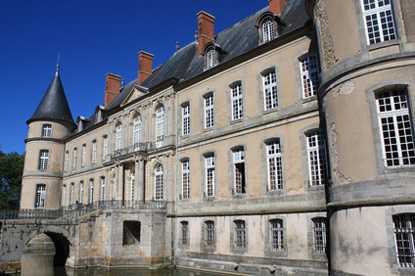
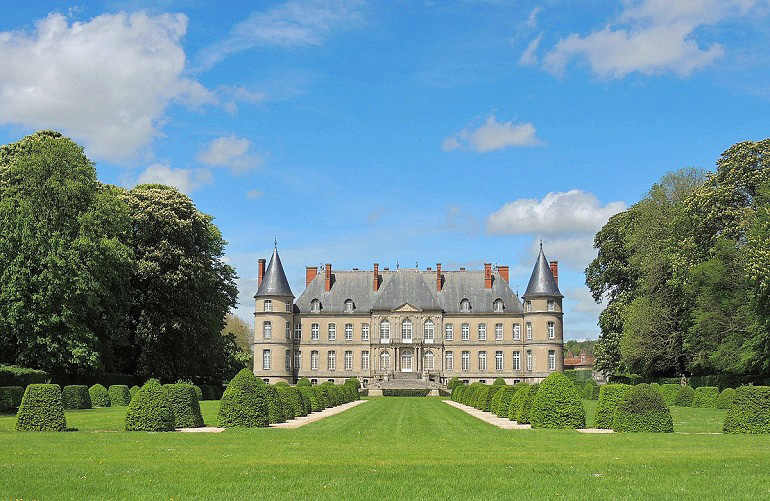
Château d'Haroué, often called "Lorraine's little Chambord," is an 18th-century architectural masterpiece built between 1720 and 1732 by renowned architect Germain Boffrand for Marc de Beauvau, Prince de Craon. Located in the village of Haroué in Meurthe-et-Moselle, the château ingeniously incorporates four medieval towers and the original moat from a 16th-century castle into its classical design. The building's unique architecture symbolically represents a calendar year, featuring 365 windows, 52 fireplaces, 12 towers, and four bridges crossing the moat. Decorated by prominent Lorraine artists including Jean Lamour, who created the ironwork, and Barthélémy Guibal, responsible for the exterior statuary, the château showcases the finest craftsmanship of the period. The property includes formal French gardens designed by Emilio Terry and has been classified as a monument historique since 1983. Today, the château remains a private residence, owned by the Canpasoglou de Fürstenberg family since the 1950s, yet continues to welcome visitors who can explore its richly furnished interiors, including a remarkable collection of tapestries depicting the battles of Alexander the Great.
Interesting Facts about Haroué Castle
- Often called “Lorraine’s little Chambord,” Haroué Castle is a celebrated Enlightenment masterpiece set in the Saintois countryside south of Nancy.
- Built between 1720 and 1732 by Germain Boffrand for Marc de Beauvau‑Craon, it ingeniously incorporated the medieval moat and four towers of an earlier fortress.
- The château famously “reads like a calendar,” with 365 windows, 52 fireplaces, 12 towers and four bridges symbolising the passage of the year.
- Its ornate ironwork has long been associated with the Lorraine master Jean Lamour, famed for the gilded gates of Place Stanislas in Nancy.
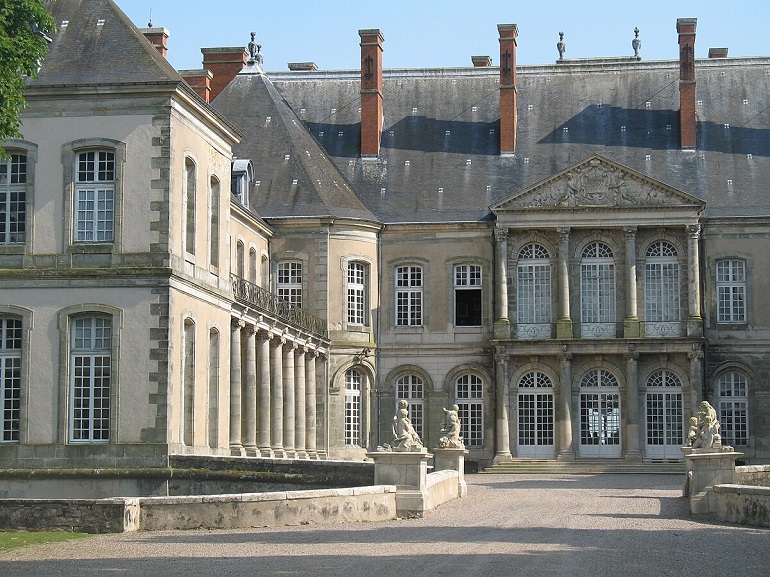
- Sculptor Barthélemy Guibal contributed lively groups of putti outside the château, originally commissioned for Nancy but deemed too small and acquired for Haroué.
- The vast roof would cover roughly 1.3 hectares if laid flat, underscoring the scale of this aristocratic residence.
- Haroué’s interiors feature elegant enfilades and a family library hung “touche‑touche” with ancestral portraits in traditional salon style.
- The gardens, designed in the French manner and later shaped by Emilio Terry, frame the southern façade with parterre geometry.
- Long associated with the Beauvau‑Craon line, the château remains lived‑in, preserving the character of a “palace in the country.”
- Classified as a Monument Historique, Haroué hosts cultural events and exhibitions that animate its 18th‑century grandeur today.
History
The château de Haroué is located in the village of Haroué in Lorraine, France. Originally, the site hosted a medieval fortress, which was destroyed in the 15th century by Antoine de Vaudémont. In the 16th century, the Bassompierre family rebuilt the estate into a Renaissance palace, thoughtfully incorporating the four towers and moat from the medieval château. By the early 18th century, the château had again fallen into ruins, setting the stage for a grand reconstruction.
Between 1720 and 1729, Marc de Beauvau-Craon, the Grand Constable of Lorraine, commissioned the notable architect Germain Boffrand to build the current château. Boffrand masterfully used the foundations and retained the U-shaped layout of the old château, including maintaining the moat and towers, which were symbolic of seigneurial power. The design famously symbolises the passage of time, boasting 365 windows, 52 fireplaces, 12 towers and turrets, and four bridges. Inside, the château is embellished with artwork by eminent Lorraine artists such as Jean Lamour for the gates and balconies, Barthélemy Guibal for the statuary, and Jean Pillement for painted decoration. The château spans 82 rooms and covers an area of approximately 1.3 hectares, surrounded by formal French gardens and an English-style park.
The château remained in the Beauvau-Craon family until 1951, when it was purchased by the grandfather of Berk Canpasoglou de Fürstenberg, whose family continues to live there today. Since opening to the public in 1964, the château has hosted guided tours alongside cultural events including fashion exhibitions curated by Hubert de Givenchy and open-air operas, making it both a family home and a lively centre of heritage. Celebrated as "Lorraine's little Chambord" and classified as a historical monument in 1983, the château benefits from partnerships with organisations such as the Centre des Monuments Nationaux, ensuring its preservation and ongoing public engagement.

Description
Château de Haroué is a poised, lived-in palace where classical symmetry meets playful ornament, all encircled by a broad, reflective moat and four graceful bridges. The exterior’s crisp lines, high slate roofs and sculpted balustrades set an elegant tone that continues indoors, where salons unfold in a sequence of light, colour and craft.
Atmosphere and layout
The interiors feel intimate for such a grand house, with enfilades that draw the eye through tall mirrored doorways to views of water, lawns and clipped avenues. Polished stone floors and chevron parquet alternate from room to room, catching the light from long sash windows dressed in silks and damasks. Walls are animated with stucco scrolls, carved boiserie and canvases in gilt, giving a soft glow that changes throughout the day.
Grand staircase
A broad staircase rises in fluid, harmonious curves, its wrought-iron railing delicately scrolled and topped with a smooth timber handrail. Lanterns and portrait medallions punctuate the ascent, while the pale stone steps bear the gentle patina of centuries of use. It is both ceremonial and welcoming, drawing guests naturally towards the principal floor.
Salon Pillement (Chinese salon)
Set within a circular tower, this boudoir-music room wraps visitors in frescoed chinoiserie: curling foliage, fanciful pagodas and exotic birds painted directly onto the plaster. Curved banquettes and pieces with rounded fronts echo the room’s geometry, creating a cocoon-like space for music, conversation and tea. Gilded trophies of musical instruments and delicate stucco emphasise the Rocaille exuberance without overwhelming the intimacy.
Ceremonial bedroom
The chambre d’apparat presents a study in theatrical refinement, anchored by an imposing Italian bed dressed in rich textiles. Green damask and pale satins are picked out with gold, while embroidered hangings and a canopy give vertical drama. A pair of marble-topped commodes, an elegant writing table and upholstered fauteuils complete a setting designed as much for receiving as for rest.
State salons
- Grand salon: A high-ceilinged room where tall mirrors double the light of crystal chandeliers, reflecting silk wall coverings and gilt-framed family portraits. Low tables display porcelain and objets d’art, while a marble fireplace anchors the arrangement of sofas and bergères.
- Salon des tapisseries: Tapestries soften the acoustics and add depth of colour—verdant landscapes, mythic figures and architectural caprices—framed by pale panelling. The seating is arranged conversationally around a carved fireplace with a classical mantel clock.
- Music room: A more intimate salon with a harpsichord or piano set beneath painted cornices, its acoustics tempered by rugs and drapery. Sheet music and music stands hint at informal recitals and evening gatherings.
Library
Lined with floor-to-ceiling bookcases, the library has a scholarly calm, warmed by polished wood and the scent of leather bindings. A rolling ladder glides along brass rails, and a central table is set for reading by lamplight. Globes, scientific instruments and a discreet writing desk suggest the room’s role as both study and retreat.
Dining room
The dining room is tailored for polished hospitality: a long table under cut-glass chandeliers, walls articulated by pilasters and mirrored panels, and a generous marble fireplace. Sideboards display silver and crystal, and seasonal flowers or greenery echo the views seen through the windows to the moat and lawns.
Private apartments
A suite of smaller rooms—morning room, dressing room and boudoir—balances comfort and style, with lighter fabrics, embroidered screens and slim occasional tables. Portrait miniatures, travel souvenirs and framed letters lend a personal note to otherwise formal decoration.
Chapel
A serene chapel, paneled in pale wood with gilded accents, contains a simple altar and devotional paintings. Light filters softly through clear or lightly tinted glass, falling across stone floors and a small bank of chairs for family services.
Galleries and corridors
Long galleries link towers and pavilions, their rhythmic sequence of doors and niches ideal for sculpture and busts. The floors alternate between parquet and stone flags, while high windows provide shifting patterns of light and shadow throughout the day.
Decorative arts
Throughout the house, Baccarat chandeliers, Sèvres and other fine porcelains, and exquisitely veneered commodes and secretaires express a consistent taste for refinement. Stucco putti, carved shells and vegetal motifs carry a Rococo lightness into otherwise classical spaces, tying the decorative scheme together with grace.
Views and transitions
Doorways align to capture layered vistas: a glimpse of the moat from the grand salon, a framed prospect of the park from the dining room, and the playful curve of a tower corridor leading to the Chinese salon. Thresholds are often marked with marble inlays or a change in parquet pattern, subtly signalling the shift from public to private zones.
Cellars and attics
Below, vaulted cellars in cool stone speak to the château’s practical life—wines, preserves and service routes discreetly organised. Above, the attics reveal the carpentry of the great roofs, a world of beams and trusses that underscores the building’s craftsmanship and scale.
Overall impression
Haroué’s rooms are coherent rather than ostentatious, blending aristocratic polish with the comforts of a long-inhabited home. The sequence—from water-laced approaches to richly layered salons and serene private spaces—creates a visit that feels both cinematic and human in scale. It is a château designed for living beautifully: intimate conversations, music carried softly through corridors, candlelight caught in mirrors, and windows that always lead the gaze back to water, garden and sky.
Getting There
By train The most straightforward public-transport route is the frequent TER service from Nancy’s Gare de Nancy-Ville to the small halt at Vézelise, followed by a 10-minute taxi ride through gentle Lorraine countryside to the château gates.
By coach Regional buses on the Nancy–Haroué–Colombey line depart from Nancy’s Quai Sainte-Catherine coach station and set you down at the village stop opposite the church; from here it is a leisurely five-minute stroll along leafy Avenue du Château.
By car Drivers should leave the A33 at exit 11 (Ludres/Flavigny), then follow the D914 south-west through rolling farmland; after 23km Haroué’s elegant towers rise suddenly on the right, with ample parking signposted beside the moat.
| Travel destinations in Lorraine | ||||||||||||||
|---|---|---|---|---|---|---|---|---|---|---|---|---|---|---|
|
|
|
|
| ||||||||||
|
|
|
|
| ||||||||||


