


| Contents |
|---|
Introduction
Provins (pop. 11,000) is a medieval town renowned for its well-preserved architecture and historical significance. It served as a major economic center during the Middle Ages, hosting significant annual trade fairs that connected northern Europe with the Mediterranean. These fairs, which flourished from the 11th to the 14th centuries, made Provins a hub for international commerce, particularly in textiles and rose-based products. The town's layout, including its ramparts, merchant houses, and underground galleries, reflects its historical role as a trading center. Provins was designated a UNESCO World Heritage Site in 2001, recognizing its unique medieval architecture and cultural heritage.
Interesting Facts about Provins
- Provins was once France's third-largest city after Paris and Rouen, with a population of 80,000 during the Middle Ages.
- The town became a UNESCO World Heritage Site in 2001 due to its well-preserved medieval architecture and historical significance.
- Provins was famous for hosting the Fairs of Champagne, which attracted merchants from all over Europe during the 11th to 14th centuries.
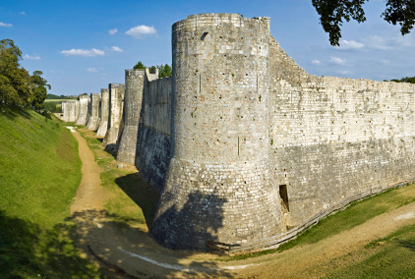
- The town is surrounded by impressive 25-metre-high ramparts that date back to the 11th-13th centuries.
- Provins is renowned for its rose gardens, featuring over 450 varieties of roses, including the famous Rosa gallica or 'rose of Provins'.
- The town once had its own currency called the Provins 'denier' or penny, which was accepted throughout France.
- Provins hosts an annual medieval festival in June, where the entire town reverts to medieval mode, complete with period costumes and decorations.
- The town features unique underground galleries that were originally used by fullers to remove grease from woollen cloth.
- Provins is home to the impressive Caesar's Tower, which has served as a watchtower, prison, and shelter throughout its history.
- The town offers falconry displays on its ramparts, showcasing a medieval art still practised today.

History
Provins, located in the Île-de-France region, is a town steeped in medieval history and charm. Its origins trace back to Roman times when it served as a crossroads for major trade routes. However, it was during the Middle Ages that Provins truly flourished under the Counts of Champagne. By the 12th and 13th centuries, it had become one of France's most prominent cities, renowned for its Champagne fairs. These fairs were international trading hubs connecting northern Europe with the Mediterranean, fostering commerce in goods like wool and rose-infused products. The town's strategic urban planning, including wide streets and multi-level merchant houses, reflects its role as a bustling centre of medieval trade.
The decline of Provins began in the 14th century due to a combination of factors such as plague, war, and the shift towards sea trade routes. Heavy taxation under King Philip IV further exacerbated its downturn, leading to a significant loss of population and economic vitality. Despite this decline, Provins retained much of its medieval architecture, as it was largely untouched by modernisation efforts. Today, visitors can explore its well-preserved ramparts, cobbled streets, and iconic landmarks like the Tour César and the Grange-aux-Dîmes. This preservation earned Provins recognition as a UNESCO World Heritage Site in 2001.
What makes Provins particularly unique is its ability to transport visitors back in time. The town hosts numerous events celebrating its medieval heritage, including festivals and performances such asThe Eagles of the Ramparts. Its historical significance is further highlighted by landmarks like the Saint-Quiriace Collegiate Church, where Joan of Arc once attended mass with King Charles VII. With its rich history and remarkable preservation, Provins offers an unparalleled glimpse into medieval life and remains a must-visit destination for history enthusiasts.
Main Attractions
Ramparts and Fortified Gates
The upper town of Provins is encircled by an impressive 1,200 metres of well-preserved 13th-century walls, featuring 22 towers of various shapes and sizes. These fortifications stand as a testament to the town's medieval importance and strategic significance. The walls offer visitors a chance to walk in the footsteps of history, with panoramic views of the surrounding countryside. The fortified gates, including the imposing Porte Saint-Jean and Porte de Jouy, serve as striking entrances to the old town, their sturdy structures and intricate designs reflecting the architectural prowess of the Middle Ages.
Caesar's Tower (Tour César)
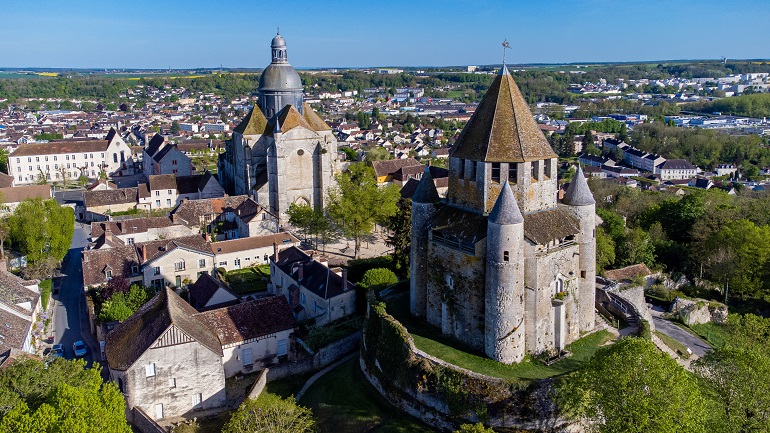
Standing proudly at the heart of Provins, Caesar's Tower is a 12th-century octagonal donjon built atop a square base. This iconic structure, rising to a height of 42 metres, dominates the town's skyline and serves as its most recognisable landmark. The tower's unique architecture blends Romanesque and Gothic styles, showcasing the transition between these two important periods. Inside, visitors can explore the guard room, prison, and reception hall, each offering insights into medieval life. The tower's strategic location allowed it to serve as both a symbol of power and a military stronghold, playing a crucial role in the defence of Provins throughout its history.
Saint-Quiriace Collegiate Church
The Saint-Quiriace Collegiate Church, begun in the 12th century, stands as an impressive example of medieval religious architecture. Although left uncompleted due to financial constraints during the Hundred Years' War, the church's existing structure is a marvel of Gothic design. Its vast nave, soaring vaulted ceilings, and elegant flying buttresses demonstrate the ambition of its original planners. The church's unique dome, added in the 17th century, creates an interesting architectural juxtaposition. The building's rich history includes a visit from Joan of Arc in 1429, adding to its historical significance.

Underground Galleries
Beneath the streets of Provins lies a network of ancient caves and tunnels, known as the Underground Galleries. These subterranean passages, carved out of the limestone bedrock, date back to the 13th century and extend for several kilometres. Originally used for chalk extraction, they later served various purposes including storage for goods during the famous Champagne Fairs, refuge during times of conflict, and even as meeting places for secret societies. The cool, constant temperature of these galleries made them ideal for storing perishable goods, contributing to Provins' commercial success during the Middle Ages.
Saint-Ayoul Priory
The Saint-Ayoul Priory, founded in the 11th century, is a prime example of Romanesque architecture in Provins. Named after Saint Ayoul, whose relics attracted pilgrims to the town, the priory played a significant role in the religious and cultural life of medieval Provins. Its stone walls and arches bear witness to centuries of history, while the remaining frescoes offer glimpses into the artistic sensibilities of the time. The priory's medieval garden, reconstructed based on historical records, provides visitors with an authentic experience of monastic life. The stained glass windows, though mostly modern replacements, add vibrant colour to the austere stone interior.
Provins Rose Garden
Spanning 3.5 hectares, the Provins Rose Garden is a horticultural delight that pays homage to the town's long association with roses. The garden showcases over 450 varieties of roses, including the famous "Rosa Gallica Officinalis" or "Rose of Provins", which has been cultivated in the area since the Crusades. This species, known for its intense fragrance and medicinal properties, became a symbol of the town and was widely used in medieval times for various purposes, from perfumes to medicines. The garden's design incorporates elements of medieval garden layouts, with sections dedicated to medicinal plants, aromatic herbs, and fruit trees, offering visitors a sensory journey through the botanical world of the Middle Ages.
Medieval Shows
Provins brings its rich history to life through two popular medieval shows. The Eagles of the Ramparts is a captivating falconry demonstration that showcases the ancient art of training and hunting with birds of prey. Set against the backdrop of the town's historic ramparts, skilled falconers in period costume demonstrate the impressive abilities of various raptors, including eagles, falcons, and owls. The show not only entertains but also educates visitors about the importance of falconry in medieval society.
The Legend of the Knights is a thrilling spectacle that transports viewers to the heart of medieval warfare and chivalry. This dynamic show features skilled horsemen performing daring stunts, dramatic sword fights, and demonstrations of medieval war machines. The performance weaves together elements of history and legend, bringing to life tales of valour and conflict that defined the Middle Ages. Set within the atmospheric confines of the old town, this show provides an immersive experience into medieval pageantry and martial prowess.
Tithe Barn (Grange aux Dîmes)
The Tithe Barn or Grange aux Dîmes is a remarkably well-preserved 13th-century building that offers valuable insights into commercial life during medieval times in Provins. This sturdy stone structure once served as a warehouse and trading post during Champagne Fairs that made Provins one of Europe's most important commercial centres at that time. Its name refers to its later use for collecting tithes—taxes paid to churches—and its vaulted cellars demonstrate its scale for trade activities during those fairs. Today it houses exhibits recreating these bustling fairs with displays on goods traded along merchants’ journeys.
Place du Châtel
At Provins' heart lies Place du Châtel Square surrounded by timber-framed homes reflecting Middle Age architecture alongside Exchange Cross relics where counts posted decrees!
Top Museums
Musée de Provins et du Provinois (Provins and Provinois Museum)
Housed in the Maison Romane, one of the oldest buildings in Provins dating back to the 12th century, this museum showcases the town's history from prehistory to the 19th century. The museum's collection is spread across four levels and features:
- Exceptional remnants from the Saint-Quiriace Church treasury, including golden monstrances and a 13th-century silk chasuble of Saint Edme
- A diverse array of artefacts from archaeological excavations in the region
- Unique items such as a wolf mask worn by Napoleon at a costume ball and a collection of medieval pavements
- Objects related to Freemasonry, including aprons, medals, and instruction books
The Tithe Barn (Grange aux Dîmes)
This 12th-century stone building offers an immersive experience into medieval life and commerce. Highlights include:
- Audio-guided tours that bring to life the crafts and merchant activities of the Middle Ages
- Scenes depicting various historical figures, such as Italian and Flemish merchants, money-changers, and artisans
- Exhibits focusing on the famous Champagne Fairs that took place in Provins
The Underground Galleries
These fascinating subterranean chambers provide insight into Provins' underground history. Features include:
- A network of galleries that were initially used as medieval quarries for extracting Fuller's earth
- Spaces that served as refuges, storehouses during the Champagne Fairs, and gathering places for various groups
- Ancient inscriptions on the walls, indicating their use for cult gatherings and Masonic lodges
Vie d'Autrefois Museum (Life of Yesteryear Museum)
Located in the medieval town, this museum offers a journey through time with its extensive collection:
- Over 100 scenes depicting daily life from bygone eras
- More than 70,000 exhibition items showcasing various aspects of historical life

Local Cuisine
The local specialties reflect the town's rich heritage, with rose-infused delicacies taking centre stage. The Rose of Provins, renowned for its medicinal properties, is incorporated into various dishes and sweets. Visitors can savour rose candies, rose-flavoured honey, and even rose petal jam. For those seeking a more savoury experience, the town's restaurants serve up classic French fare, including bouchées à la reine and navarin of lamb. No visit to Provins would be complete without trying Hypocras, a medieval spiced wine that perfectly complements the local cuisine. To round off your meal, indulge in a niflette, a sweet pastry unique to the region. With its blend of traditional French cooking and medieval influences, Provins offers a truly memorable culinary journey.
Getting There & Around
Provins is easily accessible by public transport. From Paris, take the SNCF train on line P from Gare de l’Est for a direct journey of about 1 hour and 20 minutes to Provins station. Alternatively, you can use the RER A or D lines combined with bus services like Line 50 or Line 47 to reach the town. For those driving, Provins is well-connected via major roads such as the A4 and A5 motorways. Once in Provins, the town is compact and walkable, but a small tourist train operates between the train station and key sites in the lower town. Free shuttles also run during festivals to connect parking areas with the main attractions. With its cobbled streets and historic landmarks, Provins is a delightful destination to explore on foot.
| Travel destinations in Île-de-France | ||||||||||||||
|---|---|---|---|---|---|---|---|---|---|---|---|---|---|---|
|
|
|
|
| ||||||||||
|
|
|
| |||||||||||


