France Guide  |
|---|
|
| | Top French Cities |
|---|
|
| | French Regions |
|---|
|
| | Photos |
|---|
|
| | Europe Guide |
|---|
|
| | Travel Tools |
|---|
|
|
|
|
 Ouessant Island at dusk, Brittany. Ouessant Island at dusk, Brittany.
Introduction

A peninsula jutting into the Atlantic in northwest France, Brittany (Bretagne in French) is considered as one of the six Celtic nations (along with Cornwall, Wales, Manx, Scotland and Ireland). It has been known historically as Lesser or Little Britain (as opposed to Great Britain).
The modern region of Brittany, smaller than cultural and historical Brittany, occupies a territory 27,208 km2 (10,505 sq mi), slightly less than Belgium or the US state of Maryland. With 3.1 million inhabitants, it is the 7th most populous French region - as well in fact as the 7th largest and 10th richest based on the GDP per capita.
A rugged land with a dramatic coastline and a deep ancestral connection to the sea, Brittany has never felt really like the rest of France, nor truly French. Its culture and history is more tied to the British Isles or the northern coast of Spain.
The Breton language, although only spoken by some 200,000 people today, still plays a major role in the region's cultural identity. Breton is a Celtic language more closely related to Cornish and Welsh than either of them are to Irish or Scottish Gaelic. The reason is that Brittany was resettled in the 5th century by Britons from what is now England, escaping the Anglo-Saxon invasions.
Famous people from the present-day region of Brittany include (chronologically): the explorer Jacques Cartier, the writer François-René de Chateaubriand, and the Nobel Peace Prize-winning climatologist Jean Jouzel.
History
Ever since the Neolithic, Brittany has had close ties with the Atlantic fringe of Europe, from Ireland to Portugal. Brittany was one of the most important centres of the Megalithic culture, and the stone alignements at Carnac are the most extensive menhir collections on Earth.
The Bronze Age witnessed the arrival of the Indo-Europeans (the Proto-Celts) from Central Europe, who brought the old Megalithic culture to an end. Brittany's rich mineral deposists, notably of gold and tin ore, were highly valued by the new Celtic elite.
The region was known to the Romans as Armorica. Only after the British migrations of the 5th and 6th centuries did the peninsula acquire its modern name. A Kingdom of Brittany arose at the onset of the 7th century. Divided in three kingdoms (Vannes, Domnonée and Broërec), then reunited, Brittany becomes a vassal duchy of the Kingdom of France in 936. It would however remained de facto independent until the marriage of Anne of Brittany to Charles VIII of France in 1492, followed by the offcial Union of Brittany and France in 1532.
Cuisine
Brittany’s cuisine is deeply influenced by its coastal geography, with seafood and shellfish taking centre stage on most menus. Dishes such as plateaux des fruits de mer, featuring a selection of fresh oysters, mussels, and crab, are widely enjoyed, while cotriade, a hearty fish stew, showcases the region’s tradition of combining different local fish with leeks, potatoes, and herbs. Mussels, often cooked as moules marinières, and scallops from the Côtes-d’Armor are local highlights, typically served fresh and simply prepared to emphasise their natural flavours.
Salted Breton butter is a distinctive ingredient found throughout the area’s cooking, from savoury galette batter to the region’s iconic pastries such as kouign-amann and gâteau breton. Crêpes and galettes are essential staples; the former made with wheat flour and sweet fillings, and galettes made using robust local buckwheat, often served with ham, cheese, and egg. The galette-saucisse, a buckwheat galette wrapped around sausage, is a much-loved street food, while cider—produced from regional apples—traditionally accompanies these dishes.
Brittany’s inland areas contribute high-quality dairy and pork, notably the famous Pâté Hénaff and a variety of buttermilk-based products. Farmers’ markets abound with artichokes, cauliflower, and strawberries, reflecting the fertile Breton soil and temperate climate. While cheese is less prominent than in other French regions, some local varieties merit attention, and for a sweet finale, the Far Breton flan is a classic dessert, combining prunes with silky custard and plenty of the region’s prized butter.
Attractions
|
Département des Côtes-d'Armor
| Dinan |
|---|

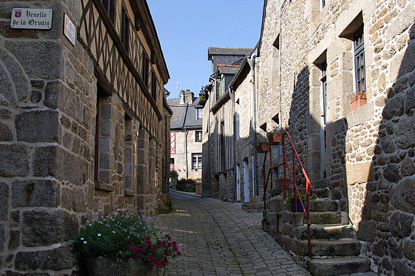
 Dinan is a beautifully preserved medieval town on the River Rance, encircled by ramparts and crowned by a 13th-century castle. Wander cobbled lanes lined with half-timbered houses, descend the steep Rue du Jerzual, and linger at the leafy harbour’s cafés. |
| Cap Fréhel |
|---|

 Cap Fréhel stands as one of Brittany's most spectacular natural landmarks, where towering pink sandstone and shale cliffs rise over 70 metres above the English Channel, offering breathtaking panoramic views of the Emerald Coast and beyond. |
| Tréguier |
|---|

 Riverside Tréguier blends medieval lanes and timber-framed houses with Saint-Tugdual cathedral and its 15th-century Gothic cloister, above the Jaudy–Guindy confluence on the Pink Granite Coast and noted for ties to St Yves and Ernest Renan. |
Département du Finistère
| Crozon Peninsula |
|---|

The Crozon Peninsula in Brittany offers breathtaking coastal scenery with dramatic cliffs, pristine beaches, and charming fishing villages. This cross-shaped landmass in the Finistère region showcases wild Atlantic beauty through spectacular headlands like Pointe de Pen-Hir and turquoise waters perfect for hiking the GR34 coastal path. |
| Ouessant Island |
|---|
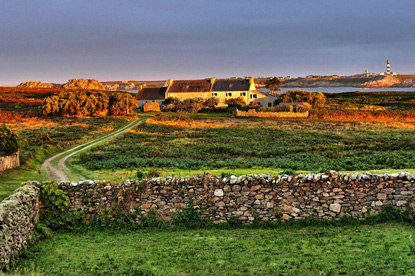
Wind-lashed Ouessant (Ushant) stands at Brittany’s far western edge: a wild island of jagged cliffs, iconic lighthouses, heather moorland and grazing sheep. Cycle quiet lanes to the Pointe de Pern, watch Atlantic swells, and savour rare, salt-soaked solitude. |
| Pointe du Raz |
|---|
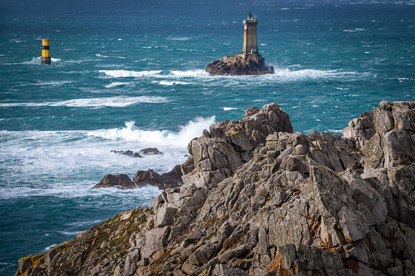
Brittany's most dramatic western promontory, rising 70 metres above crashing Atlantic waves. This Grand Site de France offers breathtaking clifftop views of historic lighthouses and Île de Sein, with wild moorland perfect for coastal walking adventures. |
| Quimper |
|---|

Quimper is the historic capital of Finistère and a captivating city of art and history, where three rivers converge in a charming maze of cobblestone streets lined with 72 half-timbered houses. Its Gothic cathedral and renowned faïence pottery tradition showcase centuries of Breton culture. |
| Locronan |
|---|

From the 14th to the 16th century, Locronan thrived as a production centre for hemp and linen used for sail manufacturing. It has retained the atmosphere of this period and is now listed as one of the most beautiful villages of France. |
| Brest |
|---|
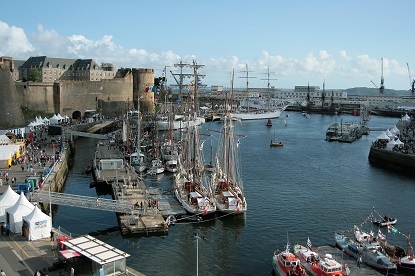
 At Brittany’s western edge, Brest is a dynamic port city, rebuilt after WWII, where stark modern streets meet a grand harbour, naval heritage museums and sweeping Atlantic bay views, alive with student energy and fresh seafood. |
| Concarneau |
|---|

 Charming fortified fishing port in southern Brittany, famed for its medieval Ville Close—a picturesque walled town on a tidal island linked by stone bridge. Boasts granite ramparts, maritime heritage, superb seafood restaurants, and lovely nearby beaches. |
| Douarnenez |
|---|

Charming Breton fishing port renowned for its four historic harbours and rich sardine-fishing heritage. Narrow cobbled streets, bustling quaysides, maritime museums, and beautiful sandy beaches create an authentic coastal atmosphere in this picturesque Finistère town. |
| Kerjean Castle |
|---|
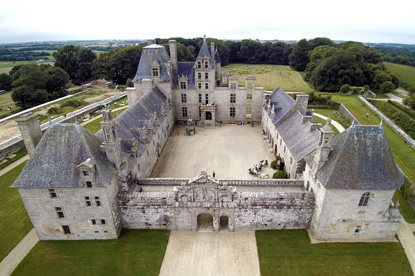
Renaissance Kerjean Castle, a 16th-century fortified château near Saint-Vougay, blends bastioned ramparts with a grand dwelling, chapel and dovecote within a 20-hectare park; carefully restored, it hosts engaging exhibitions and family-friendly visits. |
| Morlaix |
|---|

Morlaix's townscape is dominated by its 58m-tall granite viaduct. It features medieval half-timbered 'pondalez' houses and steep, cobbled lanes tumbling to a sheltered harbour. Tucked between green hills and the Bay of Morlaix, it blends maritime heritage, lively markets and relaxed Breton flair. |
| Roscoff |
|---|
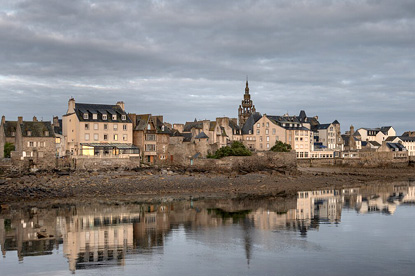
Roscoff, a granite-built corsair port on Brittany’s north coast, charms with flower-lined lanes, a sheltered old harbour and sea-air thalassotherapy. Ferries, sandy coves and the boat to Île de Batz make it a breezy base for coastal walks, seafood and island day trips. |
| Trévarez Castle |
|---|
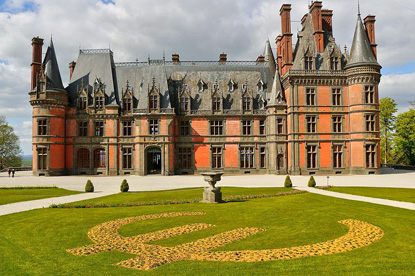
Trévarez Castle, the 'pink castle' of Brittany, is a magnificent Belle Époque château built 1893-1907 in Saint-Goazec. Set within spectacular 85-hectare gardens renowned for camellias and rhododendrons, this 20th-century heritage site combines neo-Gothic grandeur with historical significance. |
Other attractions
 Audierne
Camaret-sur-Mer
Daoulas Abbey
 Fouesnant
Guilvinec
Guimiliau
Kernault Manor
Le Conquet
Loctudy
Penmarc'h
Plobannalec-Lesconil
Plougastel-Daoulas
Saint-Pol-de-Léon
Saint-Thégonnec
Département de l'Ille-et-Vilaine
| Rennes |
|---|

Rennes pairs medieval charm with modern flair: half-timbered lanes, the stately Parlement and serene Thabor Gardens. Cafés, street art and the bustling Marché des Lices infuse this lively university city with colour and culture. Expect creative cuisine and a friendly pace. |
|
Saint-Malo |
|---|

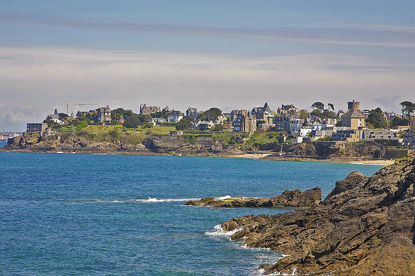
 Walled Saint-Malo charms with granite ramparts, sweeping tides and golden sands. Wander Intramuros’ cobbled lanes, savour seafood on the quay, and watch islands and forts emerge at low tide. A corsair past and bracing sea air give it real bite. Sunsets blaze over the Emerald Coast. |
|
Fougères |
|---|

Fougères, on Brittany’s edge, charms with a mighty medieval fortress, half-timbered houses and cobbled lanes dipping to the River Nançon. Climb to the upper town for sweeping views, linger in leafy gardens, and enjoy crêperies and markets in a relaxed, historic setting. |
| Pointe du Grouin Nature Reserve |
|---|
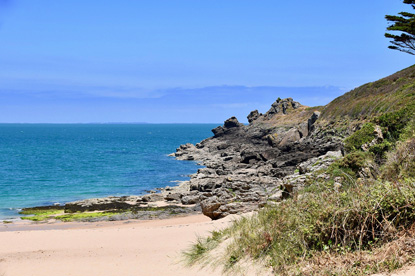
Wind-lashed headland of cliffs, heath and wildflowers, with sweeping views over Mont-Saint-Michel Bay and the Emerald Coast. Follow the GR34 along the bluff for dramatic outlooks and rich seabird life around Île des Landes, plus unforgettable sunrise and sunset light.. |
| Vitré |
|---|

Vitré, a beautifully preserved medieval town on Brittany’s eastern marches, charms with its hilltop château, stout ramparts and crooked, half-timbered houses along cobbled lanes. Markets, artisan shops and riverside views make an easy day trip from Rennes. |
| Combourg Castle |
|---|
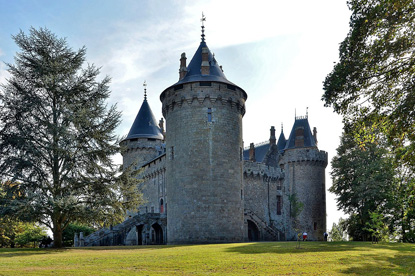
Moated and crenellated above a tranquil lake, Combourg Castle blends stern medieval towers with 19th-century romantic flair. Childhood home of Chateaubriand, its guided rooms and leafy English-style park evoke brooding legends and Breton history and haunting tales. |
| La Bourbansais Castle |
|---|

Built in the 16th century and refurbished in the 18th, the Château de La Bourbansais has long been renowned for its formal French gardens. It now houses a private zoos with over 500 animals, including lions, Siberian tigers, giraffes, zebras, camels, monkeys and wolves. |
| Dol-de-Bretagne |
|---|

A petite cité de caractère of medieval lanes and half-timbered fronts, Dol-de-Bretagne centres on the luminous Saint-Samson cathedral; stroll the Grande Rue des Stuarts, seek the towering Champ-Dolent menhir, and climb Mont-Dol for sweeping bay views. |
| Cancale |
|---|

Cancale, on Brittany’s Emerald Coast, is famed for its oysters and lively La Houle harbour, with sweeping views across Mont-Saint-Michel Bay. Wander the GR34 to Pointe du Grouin, sample seafood at the quayside market, and enjoy tides that reveal vast oyster beds. |
| Paimpont Abbey |
|---|
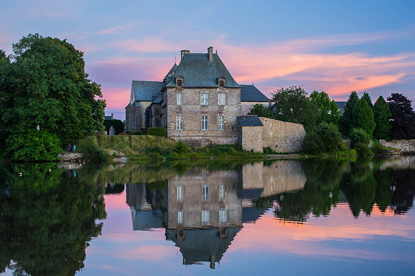
Lakeside Paimpont Abbey crowns the Brocéliande landscape with a serene Gothic nave, timber vaults and centuries of canons’ lore. Its 13th-century church blends Gothic grace with Baroque detail; wander cloister and shore as Arthurian whispers drift across the mirror-still pond. Follow lakeside paths. |
| Saint-Just Megalithic site |
|---|

Ancient megalithic site dating to 4,500 BCE, Brittany's second-largest prehistoric complex after Carnac. Features Europe's most diverse collection of Neolithic monuments including stone alignments, dolmens and burial mounds across atmospheric moorland dotted with gorse and granite. |
Département du Morbihan
|
Vannes |
|---|

Facing the Gulf of Morbihan, Vannes is a delightful fortified city of timber-framed houses. Its name derives from the Veneti, a seafaring Celtic people. Resettled by the Romans, the town later became known as Gwened in Breton, a name akin to Gwynedd in Wales. |
| Carnac stones ※ |
|---|

Stretching for kilometres near Brittany’s south coast, the Carnac stones are a vast prehistoric landscape of more than 3,000 menhirs, alignments, dolmens and tumuli—Europe’s largest megalithic site, with origins dating to the Neolithic era (c. 4500–3300 BCE). |
|
Josselin Castle |
|---|

The impressive medieval Castle of Josselin, with its three round towers, has a history going back 1000 years. Once occupied by the Dukes of Brittany it has belonged to the House of Rohan for the last 500 years. Renovated in the 19th ccentury, it is now the home of the 14th duke. |
| Gulf of Morbihan & Belle-Île-en-Mer |
|---|
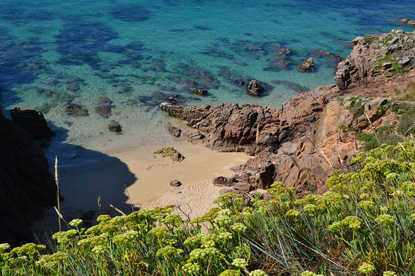
An inland sea dotted with islets, the Gulf of Morbihan blends oyster beds, tidal races, salt marsh and ancient stones. Belle-Île-en-Mer adds pastel harbours, citadel ramparts, cliff-top trails and sheltered sands — a haven for sailing, seafood and sea air. |
| Suscinio Castle |
|---|

Moated medieval stronghold and former residence of the Dukes of Brittany on the Rhuys Peninsula, set between dunes and salt marsh by the Atlantic, with restored towers, ramparts and immersive exhibits that bring Breton court life and coastal history to life |
| Largoët Castle |
|---|

Erected between the 13th and 15th centuries, Largoët Castle played an important role in the medieval history of Brittany. Also known as the Elven Towers, the domain was purchased in 1656 by Nicolas Fouquet, two years before he started constructing Vaux-le-Vicomte. |
| Pontivy Castle |
|---|
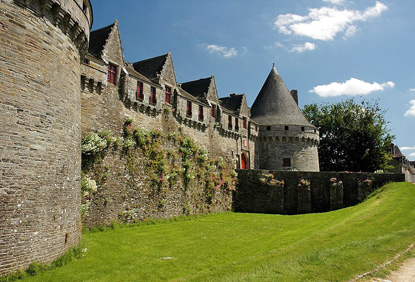
Dubbed the Castle of the Dukes of Rohan, Pontivy was erected in the 15th century and is one of the best-preserved medieval castles in France. In 1940, Pontivy hosted the failed declaration of independence of Brittany organised by the Breton National Committee. |
| Quiberon |
|---|
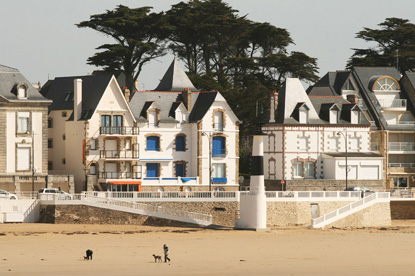
Spectacular peninsula jutting into the Atlantic, famed for its dramatic Wild Coast with rugged cliffs and pristine sandy beaches. Charming fishing harbours, excellent water sports, and ferry connections to Belle-Île make it a perfect coastal retreat. |
Other attractions
Kernascléden
Locmariaquer
|




 : Local interest
 : Moderately interesting
 : Outstanding place
 : Must-see in the country
 : Top cities in Europe