Introduction

The Pays de la Loire is an administrative French region made up of the historical provinces of Maine, Anjou, part of Brittany (Nantes), part of Poitou (Vendée), part of Perche (Sarthe) and a small part of Touraine.
It is the 5th most populous region of France (3.5 million inhabitants), the 6th largest and the 9th wealthiest (GDP per capita).
The Muscadet, Saumur, Savennières wines are produced in this region. Cointreau, the renowned brand of triple sec (orange-flavoured liqueur) is produced in Saint-Barthélemy-d'Anjou. LU (Lefèvre-Utile), France's most famous biscuit manufacturer (which products include Petit Beurre, Prince, Pim's, Cent Wafers, and Mikado) was founded in Nantes in 1846.
Famous people from the Pays de la Loire include (chronologically): Napoleon's Minister of Police Joseph Fouché, WWI Prime Minister Georges Clemenceau, novelist Jules Verne, painter Henri Rousseau, Nobel Peace Prize-winning Prime Minister Aristide Briand, fashion designer Coco Chanel, and Prime Minister Jean-Marc Ayrault.
History
The Pays de la Loire region of France possesses a rich and complex history spanning over two millennia, shaped by successive waves of conquest, rebellion, and cultural transformation. The earliest inhabitants were powerful Celtic tribes, notably the Cenomani and Carnute, who dominated the territory during the Iron Age before being conquered by Julius Caesar's Roman legions in 52 BCE. Under Roman rule, the region flourished with the establishment of important settlements including Juliomagus (modern-day Angers), Le Mans, and Nantes, alongside numerous agricultural estates that laid the foundation for the area's enduring connection to the land. Christianity gained prominence in 313 CE, but the subsequent centuries brought turbulent invasions, particularly the devastating Viking raids of the 9th century that destroyed countless religious monuments and killed many of the Christian figures who had helped establish the faith in France.
The medieval period witnessed the rise of the powerful Plantagenet dynasty, with the region becoming the cradle of one of Europe's most influential royal houses. Henry Plantagenet, Count of Anjou, inherited the territories of Anjou, Maine, and Touraine in 1151 before ascending to the English throne as Henry II in 1154. His marriage to Eleanor of Aquitaine created the vast Angevin Empire, stretching from the Scottish borders to the Pyrenees, making the Pays de la Loire a crucial component of Anglo-French politics for centuries. The region remained under English control until 1202, when it was reclaimed by the French crown following the collapse of Plantagenet power in France. During the Hundred Years' War (1337-1453), the Loire Valley served as a refuge for the French court, with Charles VII establishing his base at Chinon after fleeing Paris, whilst Joan of Arc played a pivotal role in liberating the region from English occupation. The Renaissance brought unprecedented cultural flourishing to the area, with the construction of magnificent châteaux and the patronage of Italian artists, including Leonardo da Vinci, who settled in Amboise in 1516 under François I's protection.
The region's modern history has been marked by both tragedy and transformation, beginning with the catastrophic Wars of the Vendée (1793-1796) during the French Revolution. This brutal civil war erupted when peasants in the Vendée, Maine-et-Loire, and surrounding departments revolted against Republican conscription laws and anti-clerical policies, resulting in over 200,000 deaths and earning the grim distinction of being history's first "total war" involving entire civilian populations. The conflict culminated in mass drownings of Royalist prisoners in the Loire River, a tragedy that scarred the regional consciousness for generations. Concurrently, Nantes emerged as France's primary slave-trading port, orchestrating 1,714 expeditions between the mid-17th and mid-19th centuries—43% of France's total slave trade—which transported over 550,000 enslaved Africans to French colonies in the Americas. This dark chapter brought enormous wealth to Nantes merchants whilst contributing to the suffering of hundreds of thousands, with the city maintaining its position as France's leading slave port until 1831, fifteen years after the practice was officially outlawed. The 20th century brought further upheaval during World War II, when the Saumur Cavalry School became the site of one of the first French acts of resistance against Nazi occupation, with over 2,000 officer cadets holding off German forces for two crucial days.
Cuisine
Bordered by the Atlantic, the Pays de la Loire prides itself on fish and shellfish such as the sardine of Saint-Gilles-Croix-de-Vie, briny oysters of Port du Bec and plump mussels from Aiguillon. Inland rivers yield freshwater catches such as salmon and pike that are traditionally paired with the region’s signature beurre blanc sauce. This velvety emulsion of butter, shallots and white wine was devised near Nantes. Seasoning is equally distinctive, with the crystalline fleur de sel harvested from the Guérande marshes prized by chefs across France.
Carnivores gravitate to the Rillettes du Mans, silky pork cooked slowly in its own fat and spread thickly on baguette. Rillauds d’Anjou—cubes of confit belly pork—bring a salty counterpoint to crisp local wines. Quality poultry is another hallmark: Loué free-range chicken enjoys a Label Rouge designation, while the tender Challans duck has supplied Parisian tables since the nineteenth century. Rustic classics include jambon vendéen, lightly spiced and air-dried, and cassoulet-style mojettes de Vendée made with creamy white beans. Early-summer markets celebrate the delicate hand-picked Bonnotte potato of Noirmoutier.
Sweet-toothed visitors can sample the braided brioche vendéenne scented with orange-flower water, or the rum-laced gâteau nantais that reflects Nantes’ maritime past. The iconic Petit Beurre biscuit has represented Nantes since its buttery scalloped shape was patented in 1886. Cheese boards feature the supple washed-rind Curé Nantais alongside Loire goat cheeses. Local bottles complete the feast: crisp Muscadet for seafood, sparkling Saumur and red Saumur-Champigny for richer dishes, and the orange liqueur Cointreau, created in Angers in 1849, for a digestive flourish.
Attractions
Départements are listed from North to South.
Département de la Mayenne
| Sainte-Suzanne |
|---|
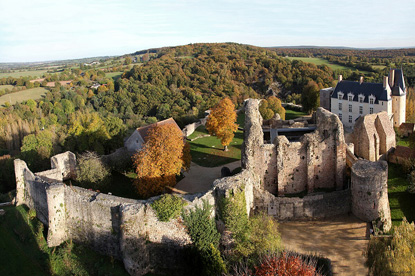
 Medieval fortified village perched on a rocky outcrop in Mayenne, famed for resisting William the Conqueror's siege. One of France's Most Beautiful Villages, featuring an 11th-century castle, Renaissance château, cobbled streets and panoramic views over the Coëvrons countryside. |
Département de Sarthe
| Château du Lude |
|---|
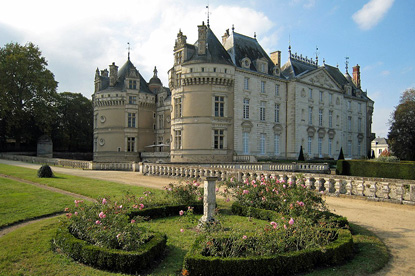
 Le Lude is the northernmost château of the Loire Valley, showcasing four centuries of French architecture from medieval fortress to Renaissance palace. Still inhabited by the same family for 260 years, this remarkable castle features imposing corner towers, ornate façades, and splendid terraced gardens classified as "Remarkable Gardens". |
| Le Mans |
|---|
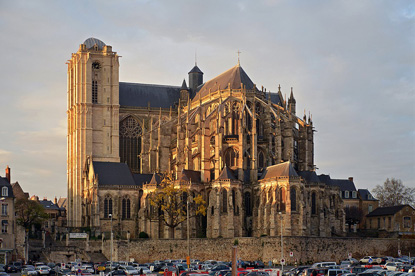
 Historic Le Mans blends medieval charm with motorsport fame. The stunning Cité Plantagenêt features cobbled streets, half-timbered houses, and Gothic cathedral within Roman walls. Beyond the legendary 24-hour race, this vibrant city offers museums, galleries, and excellent dining in France's Sarthe region. |
| La Ferté-Bernard |
|---|

A picturesque medieval town in the Perche region, nicknamed 'Venice of the West'. Built between two arms of the River Huisne, it features timber-framed houses, the impressive Gothic church of Notre-Dame-des-Marais, and historic canals explored by electric boat in summer. |
| Sillé-le-Guillaume Castle |
|---|
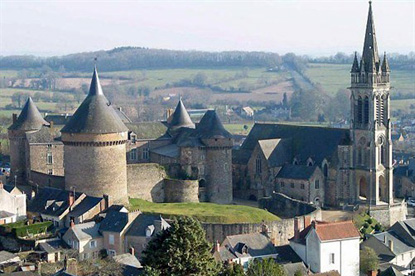
Medieval fortress rebuilt in the 15th century after surviving six sieges during the Hundred Years War. This impressive quadrilateral stronghold features four corner towers, 38-metre-high walls, and artillery adaptations—a testament to Maine's turbulent frontier history. |
Département de Maine-et-Loire
| Château de Brissac |
|---|
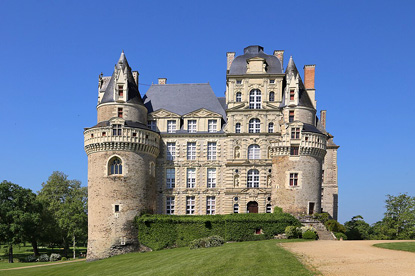
France's tallest château, standing 48 metres high as the 'Giant of the Loire Valley'. This magnificent Baroque castle has been home to the Dukes of Brissac since 1502, featuring 204 opulent rooms, fine art collections, and a unique 19th-century theatre. |
| Fontevraud Abbey ※ |
|---|

Europe's largest preserved monastic complex in the Loire Valley. This UNESCO World Heritage abbey, founded in 1101, houses the tombs of Henry II, Eleanor of Aquitaine and Richard the Lionheart. Once Napoleon's prison, now a cultural centre with unique Romanesque kitchens. |
| Château de Montreuil-Bellay |
|---|
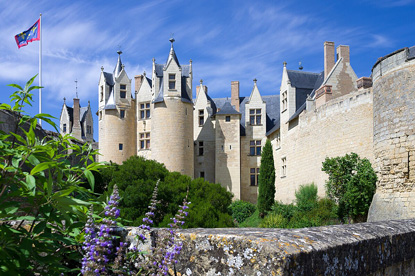
Medieval fortress dating from 1025 with 15 defensive towers and 600 metres of ramparts overlooking the Thouet River. This architectural jewel offers guided tours through furnished interiors, underground passages, and vaulted cellars, surrounded by vineyards. |
| Château de Serrant |
|---|
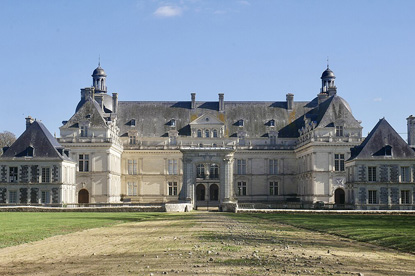
Renaissance château in the Loire Valley, 15km west of Angers, built over three centuries on medieval foundations. Features elegant architecture blending dark schist and white stone, magnificent staircase, and exceptional private collections including a 12,000-volume library. |
| Château de Baugé |
|---|
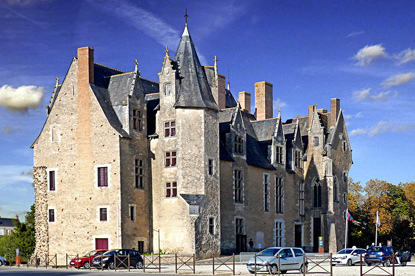
 15th-century Gothic hunting lodge built by King René of Anjou (1454-65) in the charming town of Baugé-en-Anjou. This elegant pre-Renaissance château now houses an interactive museum exploring medieval court life, with engaging family-friendly exhibits in period rooms. |
| Château de Montsoreau |
|---|

Unique Renaissance château built directly in the Loire riverbed. This 15th-century architectural pioneer marked the transition from fortress to pleasure palace with elegant Flamboyant Gothic design. Houses a contemporary art museum. Immortalised in Dumas' novel. |
Other attractions
Durtal Castle

Pouancé Castle (ruins)
Département de la Loire-Atlantique
| Château de Châteaubriant |
|---|
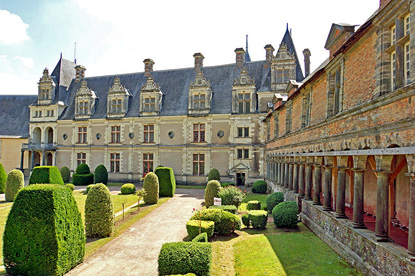
Medieval fortress dating from the 11th century, dramatically transformed during the Renaissance. This striking castle on Brittany's eastern border combines defensive medieval architecture with elegant Renaissance palace wings, offering visitors ten centuries of French history. |
| Ancenis Castle |
|---|

Medieval fortress dating from 990, magnificently situated on the Loire's banks in Ancenis. Features a unique 15th-century gatehouse with chicane drawbridge and elegant Renaissance house from 1529. This strategic castle controlled vital river traffic for centuries. |
Other attractions

La Baule-Escoublac
Pornichet

Ranrouet Castle (ruins)
Département de la Vendée
| Noirmoutier Castle |
|---|
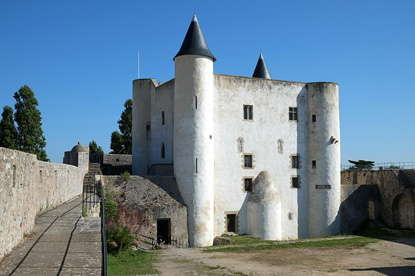
A superbly preserved 12th-century medieval castle on Île de Noirmoutier, dominated by its impressive 20-metre-high keep. This magnificent example of medieval architecture houses a museum chronicling the island's fascinating history from Viking raids to maritime heritage. |
Other attractions
La Roche-sur-Yon
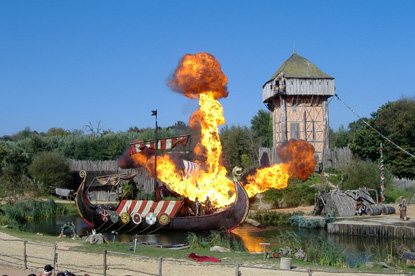
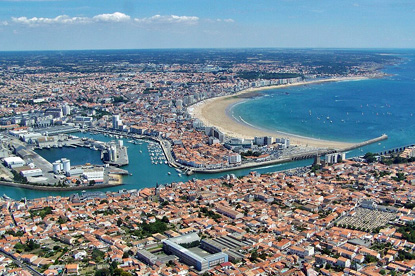
Saint-Jean-de-Monts
Talmont Saint-Hilaire Castle (ruins)
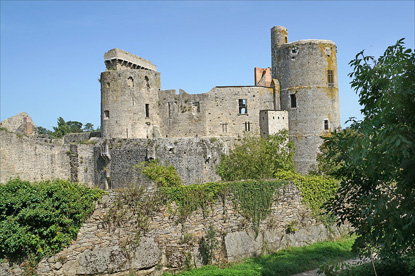
Tiffauges Castle (ruins)


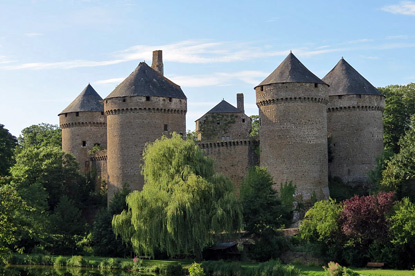
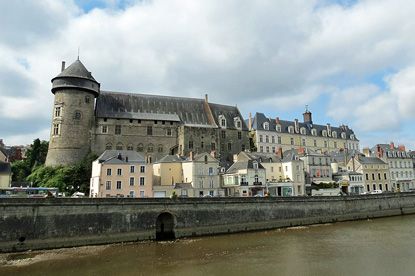


 : Local interest
 : Moderately interesting
 : Outstanding place
 : Must-see in the country
 : Top cities in Europe