


| Contents |
|---|
Introduction
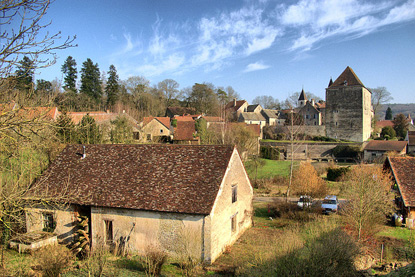
Fondremand (pop. 200) is a medieval village centred around its 13th-century château, which can be visited by appointment, alongside traditional features including a historic watermill, oil mill, and Roman spring. Fondremand maintains its medieval character through its preserved architecture and hosts annual craft and artistic events that showcase local artisan work. The village serves as a base for exploring the surrounding Franche-Comté countryside, with nearby attractions including the historic towns of Vesoul and Besançon.
Interesting Facts about Fondremand
- The village holds the label “Cité de Caractère de Bourgogne-Franche-Comté,” recognising its preserved heritage fabric and picturesque setting.
- Fondremand’s castle retains a stout donjon with origins in the 13th century, commanding views over the rooftops and surrounding countryside.
- A striking 19th-century pavilion shelters the powerful karst spring known as the Source de la Romaine at the very foot of the château.
- The Romaine river rises in Fondremand and once powered a string of mills, echoing the village’s long artisanal traditions.
- The restored watermill and historic oil mill showcase ancestral techniques for milling grain and pressing walnut oil.
- Many village houses display Gothic and early modern details—tours, tourelles, gargoyles and pigeonniers—dating from the 15th to the 18th centuries.
- The Church of the Nativity of Our Lady blends Romanesque origins with later alterations and holds notable funerary slabs and 17th–18th-century furnishings.
- A short heritage trail loops through Fondremand, linking the château, spring, lavoir and characterful lanes in an easy circular stroll.
- Each July, Fondremand’s artisan and arts days fill the streets with crafts and performances, a tradition dating back to 1974.
History
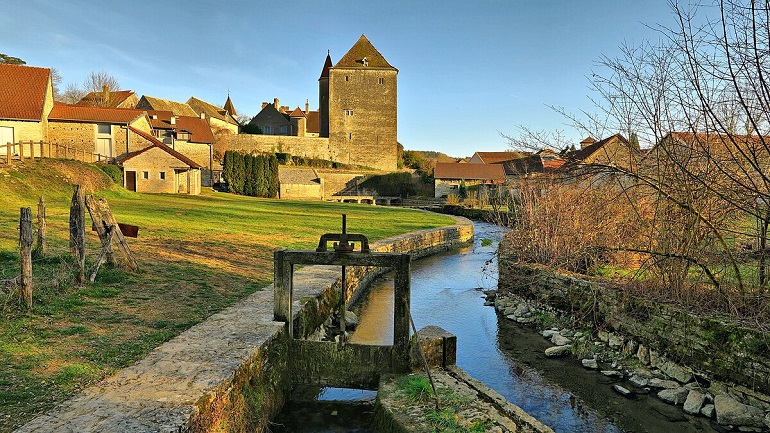
Fondremand's origins stretch back to medieval times, when this strategic settlement first emerged on a rocky outcrop overlooking the source of the Romaine River in the Haute-Saône department. The village's importance was established early, with records showing that a mill and oil press were built on a site dependent on the "châtellerie" of Fondremand as early as 1201. The imposing Château de Fondremand, whose oldest sections date from the 13th century, was first mentioned in official documents in 1275. During this period, the fief belonged to the Comté de Bourgogne, placing it within the broader political framework of the medieval Burgundian territories. The château's distinctive donjon (keep) became a defining feature of the settlement, establishing Fondremand as a fortified stronghold that controlled this portion of the Franche-Comté region.
The village continued to develop through the subsequent centuries, with significant architectural additions that reflect its prosperity and importance. During the 15th and 18th centuries, wealthy inhabitants constructed elegant houses adorned with distinctive features including towers, turrets, gargoyles, and dovecotes, creating the picturesque medieval streetscape that visitors admire today. The religious life of the community centred around the Church of the Nativity of Our Lady (Église de la Nativité-de-Notre-Dame), whilst the presbytery was rebuilt in 1772 by Jean-Baptiste Perruche following plans drawn up by the architect Louis Beuque. The village's residents, known as Romanifontains and Romanifontaines—a name derived from the Roman source that gives life to the settlement—maintained traditional crafts and agriculture that sustained the local economy.
In modern times, Fondremand has achieved recognition as one of the Cités de Caractère de Bourgogne-Franche-Comté, acknowledging its outstanding architectural heritage and historical significance. The village, with a current population of approximately 200 inhabitants, has carefully preserved its medieval character whilst adapting to contemporary needs. The historic mill and oil press were meticulously rehabilitated between 1985 and 2005, ensuring that this important piece of industrial heritage continues to tell the story of Fondremand's economic past. Today, the château and its donjon stand as classified Historic Monuments, whilst the village's fountains, ancient houses, and the pristine source of the Romaine continue to attract visitors seeking to experience authentic French medieval architecture in the heart of Bourgogne-Franche-Comté.
Main Attractions
Fondremand is famed for its captivating historical architecture and idyllic natural features, making it a rewarding destination for visitors seeking authenticity and unspoilt charm. The following expanded guide highlights the main attractions that define the village's character, each described in detail.
Château de Fondremand (Fondremand Castle)
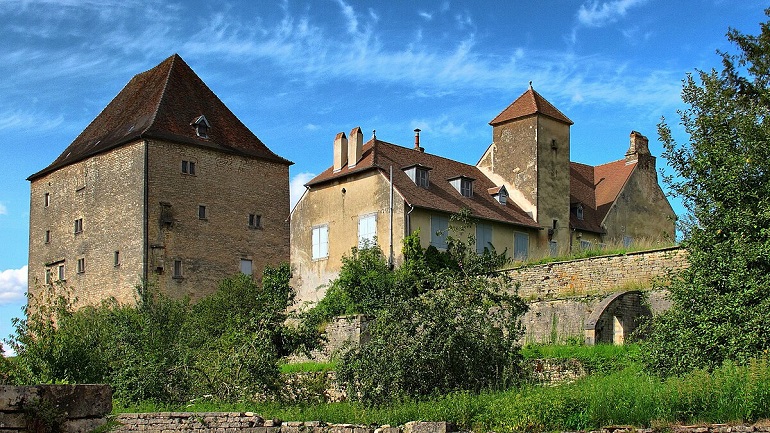
Crowning the village is the Château de Fondremand, a fortified complex whose most notable element is the impressive medieval donjon, or tower-keep. The donjon, built around 1380, is quadrangular and solidly constructed, featuring two levels of barrel-vaulted rooms, with further traces of what were once three higher timber-floored levels. A rare architectural feature is the strong internal partition wall, extending the height of the structure and dividing it in two. Some original arrow slits, a mediaeval latrine and massive beams have survived, testifying to its defensive origins. Alongside the donjon, a later spiral stair turret and a fine Gothic kitchen with a monumental fireplace reveal evolving domestic comforts through the centuries. The inner courtyard is evocative, bordered by Renaissance-era buildings, while nineteenth-century neo-Gothic stables complete the ensemble. The château is listed as a historic monument and can be visited by guided tour, offering a remarkable journey through the layered history and architecture of the region.
Source de la Romaine (Roman Spring)
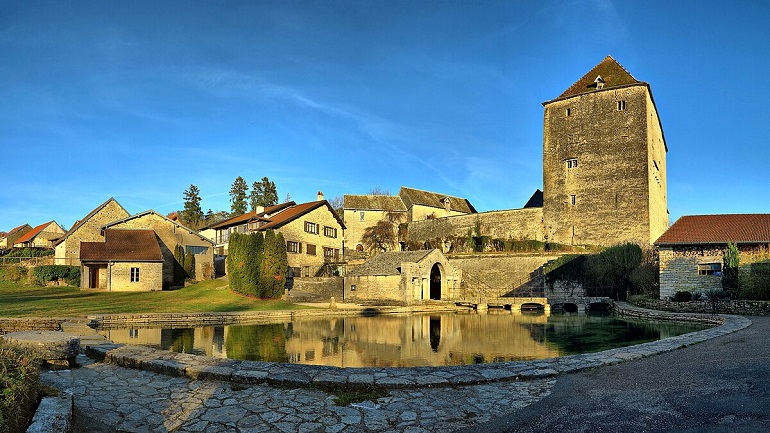
Set picturesquely beneath the castle, the spring known as the Source de la Romaine is a tranquil place of local significance. Clear water rises from a rocky basin, sheltered by a neat stone monument and a leafy setting. This spring is not just a natural curiosity: it has nourished the village for centuries and was integral to the location of the original settlement. Next to the spring, a traditional washhouse with its elegant roof and columns stands as a relic of communal village life. This quiet area provides beautiful views of both the château overhead and the verdant surroundings, perfect for a moment’s rest or contemplation.
Village Streets and Architecture
Fondremand’s streets form an open-air gallery of historic rural architecture. Many houses retain their towers and medieval stonework, show off sculpted window frames and decorated door lintels, and feature rustic rooflines fitted with old dovecotes or sculpted gargoyles. Strolling these lanes, visitors encounter a variety of architectural styles from the fifteenth to eighteenth centuries, each illustrating a different chapter in the village’s story. All is set off by flowering gardens and peaceful lanes, offering an immersive sense of times past and a delightful setting for slow exploration.
Huilerie-Moulin de Fondremand
Downstream, the old mill site utilises the steady flow of the Romaine to power what was once the village’s oil press and grain grinding machinery. Although its machinery may no longer operate, the mill’s sturdy structure remains a witness to the ingeniously harnessed waterways that sustained rural crafts and livelihoods through the generations. It sits quietly beside the riverbank, a symbol of the vital relationship between Fondremand’s people and their landscape.
Village Walking Circuit
Fondremand is the departure point for a three-kilometre walking circuit, which loops through both the village and its scenic countryside. The marked trail takes in all the key views, from the imposing castle and lively spring to the peaceful riverbanks and undulating fields beyond. It is suitable for most visitors and offers multiple vantage points to appreciate the unique integration of natural beauty with historical heritage. Opportunities for photography and birdwatching abound, making the walk a must for nature lovers as well as history enthusiasts.
Annual Craft and Art Festival
Come summer, Fondremand transforms into a vibrant hub with its celebrated annual festival. Streets and squares are filled with artisan stalls, local food producers, and performances, offering an energetic reflection of rural tradition and creative spirit. Visitors experience an authentic atmosphere, with the whole village participating in music, art, and gastronomy that showcase the best of local culture. This is the ideal time to encounter the living community and the energy that makes Fondremand more than a picturesque relic—rather, a living, breathing village with a proud heritage.
Top Museums
Château-Musée de Fondremand
The Château-Musée de Fondremand is the architectural and cultural heart of the village, a testament to the region’s feudal legacy and evolving rural life. This imposing fortress, which dominates the settlement from a strategic height, has origins reaching back to the eleventh century—making it one of the oldest châteaux in the Haute-Saône. Its site at the headwaters of the Romaine river is as dramatic as its history, with the grounds encompassing structures from the medieval through the nineteenth century.
The Donjon and Fortified Ensemble
The château’s quadrangular donjon, possibly from the fourteenth century (though earlier sources suggest as early as the eleventh), survives as a massive stone tower flanked by original ramparts. The donjon’s thick walls are ingeniously divided by a spine wall running from base to summit, housing two barrel-vaulted chambers on each of its lower floors. One of the first-floor rooms retains all its mediaeval features, such as original arrow slits, embrasures, and even a stone latrine—rare survivals offering a tangible connection to daily life centuries ago.
Above, remnants of three further levels can be discerned, crowned by an impressive timber roof structure. Today, the uppermost level functions as a museum gallery: here, visitors encounter a fascinating collection documenting over a century (1850–1950) of rural and artisan life, with agricultural tools, domestic utensils, and local curiosities that narrate the rhythms and creativity of Fondremand’s rural history.
A spiral staircase in a slender turret, dating from the fifteenth or sixteenth century, links the donjon to the adjacent residential wing—a fine example of late mediaeval architecture with groin-vaulted ceilings, a monumental hearth in the kitchen, and a small but elegant oratory, all preserved in remarkable condition.
The Stables and the Outer Buildings
Beyond the residential and ceremonial spaces, the château’s picturesque ensemble is completed by its nineteenth-century neo-Gothic stables, built with great attention to the preservation of form and function. Housing five horse stalls and two spacious boxes, these stables evoke the era when Fondremand’s nobility oversaw the agricultural rhythms of the Haute-Saône from this very estate.
The Museum’s Collection and Experience
A visit to the Château-Musée today is an immersive experience weaving together architecture and artefact. The museum’s collection is tastefully displayed in the donjon, where objects from rural daily life, craftsmanship, and farming are arranged to evoke a tangible sense of the past. Traditional tools, household items, and personal effects reveal the ingenuity and resilience of past generations, while guided tours provide rich context both on the structural details and the human stories behind the place. The château regularly serves as a cultural anchor during local festivities, opening its gates for heritage events, exhibitions, and gatherings centred on the village's historical legacy.
Local Cuisine
Visitors to Fondremand will find themselves spoilt for choice with regional fare that showcases the bounty of both forest and pasture. Village kitchens often begin a meal with a crock of cancoillotte—the velvety, gently garlic-laced cheese melted over warm bread—before moving on to hearty plats of saucisse de Morteau nestled atop slow-braised lentils or tender truite de l’Ognon scented with wild herbs. Hunters’ spoils appear in autumn through rich civets, while local grand-mères bake fluffy gâteau de ménage whose buttery crumb is perfumed with vanilla. To finish, a nip of kirsch de Fougerolles provides sweet warmth, its cherry notes capturing the orchards that quilt the surrounding hills. Simple yet indulgent, this countryside cuisine pairs perfectly with a glass of crisp Jura white.
Getting There
By train Fondremand itself has no station, so the most straightforward rail option is to travel to Besançon‐Viotte, a major stop on regional TER and long-distance TGV-Lyria services. From the station, local buses run towards Rioz, where a short taxi ride or pre-arranged lift completes the 8 km hop to the village.
By coach or bus The Haute-Saône departmental network operates weekday buses linking Besançon and Vesoul with Rioz; select services continue as far as Fondremand or stop at nearby Maizières. Timetables vary, so check the latest horaires and, if needed, coordinate a taxi for the last stretch.
By car Fondremand sits just off the D33, roughly 35 minutes north-west of Besançon. From the A36 motorway, exit at Baume-les-Dames and follow signs for Rioz, then Maizières; the final few kilometres wind through rolling countryside before you reach convenient parking at the village entrance.
| Travel destinations in Franche-Comté | ||||||||||||||
|---|---|---|---|---|---|---|---|---|---|---|---|---|---|---|
|
|
|
|
| ||||||||||
|
|
|
| |||||||||||


