


| Contents |
|---|

Introduction
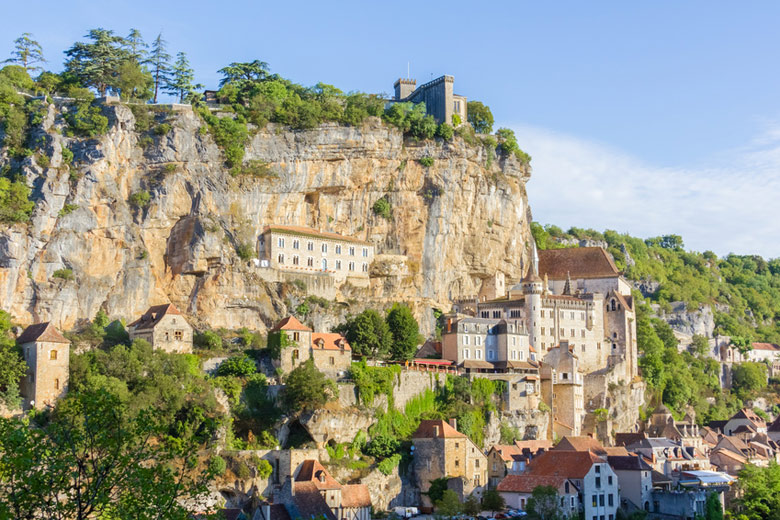
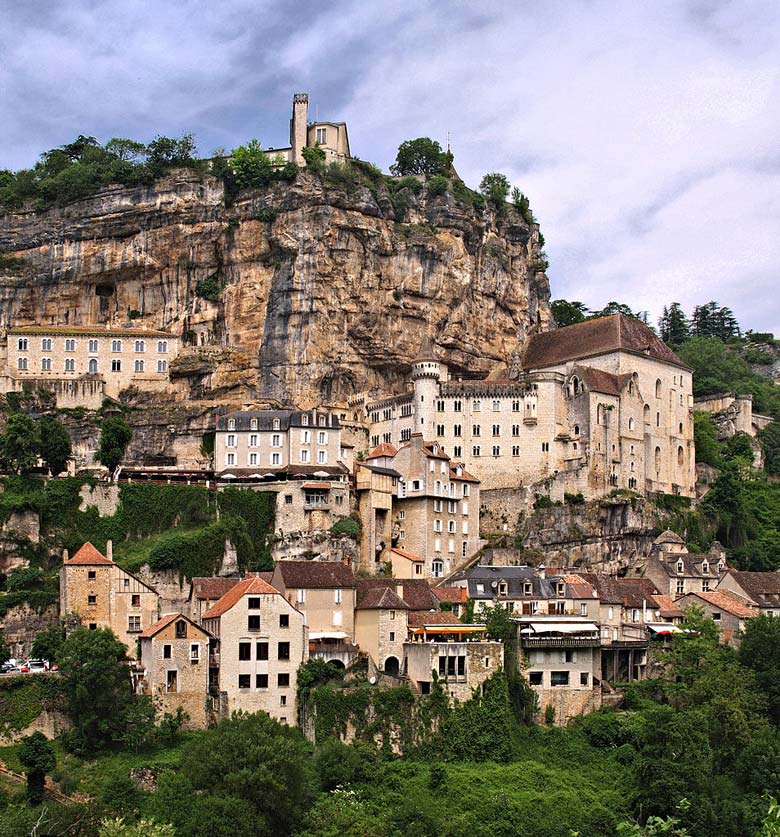
Rocamadour is a picturesque village in southwestern France, situated in the Lot department within the Occitanie region. It is renowned for its breathtaking location on the side of a limestone cliff overlooking the Alzou canyon, a tributary of the Dordogne River. This sacred site has been a major pilgrimage destination for over a thousand years, attracting visitors from across Europe due to its historical sanctuaries and the famous Black Madonna statue housed in the Notre-Dame chapel. The village's architecture includes medieval buildings and a 14th-century château, offering a unique blend of natural beauty and historical significance. Despite its small population, Rocamadour welcomes over 1.5 million visitors annually, making it one of France's most visited attractions.
Set majestically against a sheer cliff above the Alzou canyon, the small village of Rocamadour (pop. 630) is the 5th most visited site in France, attracting 1.5 million tourists annually.
Inhabited since the Paleolithic, the present settlement developed from the 12th century and quickly became a major pilgrimage destination, luring kings and bishops alike.
Two local monuments are listed as UNESCO as World Heritage sites as part of the Routes of Santiago de Compostela.
Interesting Facts about Rocamadour
- Rocamadour is a gravity-defying village built into a towering cliff face, rising 120 metres above the Alzou Valley in southwestern France.
- The village's name is believed to come from Saint Amadour, whose preserved body was allegedly discovered there in the 12th century.
- Rocamadour is home to the famous Black Madonna statue, a 12th-century wooden figure believed to possess miraculous powers.
- The village features a Great Staircase of 216 steps, which pilgrims traditionally climbed on their knees as an act of penance.
- Rocamadour's sanctuary complex includes seven chapels and is a UNESCO World Heritage site as part of the Routes of Santiago de Compostela.
- The village houses a mysterious 'Bell of Miracles' that is said to ring of its own accord when a miracle occurs at sea.
- Rocamadour is the second most visited site in France after Mont Saint-Michel, attracting millions of visitors annually.
- The village is renowned for its Rocamadour cheese, a small, flat cheese made from unpasteurised goat's milk.

History
According to legend, the town was founded by Saint Amadour, a hermit who discovered a statue of the Virgin Mary in a cave. In 1166, the preserved body of Saint Amadour was discovered, leading to numerous miraculous healings being attributed to his remains. This event transformed Rocamadour into a significant pilgrimage site, attracting devotees from across Europe. The town's fame grew rapidly, with notable figures such as Henry II of England visiting and donating generously to the shrine.
During the Middle Ages, Rocamadour reached its zenith as a centre of religious power and pilgrimage. The village's architecture reflects the three orders of medieval society: knights at the top, religious clerics in the middle, and lay workers near the river. The 12th century saw the construction of religious buildings, financed by pilgrims' donations, and the creation of the famous 'Book of Miracles'. The Black Madonna statue, dating from this period, became the main attraction for pilgrims. However, Rocamadour's prosperity began to wane in the 16th century as pilgrimages declined due to the Black Plague and other challenges.
The village faced significant hardships during the Wars of Religion in 1562 when Protestant forces pillaged the area and burnt Saint Amadour's remains. The French Revolution brought further devastation, with the site being looted around 1789. However, Rocamadour's fortunes turned in the 19th century when extensive restoration work began. In 1858, under the guidance of Abbot Chevalt, a pupil of Viollet-le-Duc, the Sanctuaries were meticulously restored, reviving the village's spiritual and historical significance. Today, Rocamadour stands as a UNESCO World Heritage Site, attracting both pilgrims and tourists who come to marvel at its rich history and stunning cliff-side architecture.
Main Attractions
Sanctuary of Rocamadour
The Sanctuary of Rocamadour is a remarkable complex of religious buildings carved into the cliff face. It comprises seven chapels, each with its own unique history and significance. The Chapelle Notre Dame is the heart of the sanctuary, housing the famous Black Madonna statue. This 12th-century walnut wood carving is believed by many to possess miraculous powers. The Basilique Saint-Sauveur, a UNESCO World Heritage site, stands as a testament to medieval religious architecture. Its austere Romanesque style contrasts beautifully with the ornate Gothic elements added in later centuries. The Chapelle Miraculeuse contains the tomb of St. Amadour, the hermit after whom the town is named, and one of the oldest known clocks, dating back to the 8th century.
The Great Staircase

The Great Staircase, a monumental flight of 216 steps, connects the lower town to the religious complex above. This staircase is not merely a means of ascent but a spiritual journey in itself. Traditionally, pilgrims would climb these steps on their knees as an act of penance and devotion. Each step represents a moment of reflection and preparation for the sacred sites above. The staircase offers breathtaking views of the town and surrounding landscape, allowing visitors to appreciate the dramatic setting of Rocamadour as they ascend.
Château de Rocamadour
Perched 70 metres above the Sanctuary, the Château de Rocamadour stands as a silent sentinel over the town. While much of the castle is in ruins, its ramparts remain intact and accessible to visitors. From this vantage point, one can appreciate the strategic importance of Rocamadour during medieval times. The panoramic views from the castle walls are unparalleled, offering a bird's-eye view of the entire religious complex, the town below, and the verdant Alzou Valley stretching into the distance.
Medieval Gates
Rocamadour's four medieval gates - Porte Basse, Porte du Figuier, Porte Salmon, and Porte Hugon - are living remnants of the town's fortified past. These beautifully preserved arched stone gates once controlled access to the town, protecting its inhabitants and pilgrims. Today, they serve as picturesque entry points, transporting visitors back in time as they pass through these ancient portals. Each gate has its own character and history, with Porte du Figuier being particularly noteworthy for its well-preserved state.
La Forêt des Singes
La Forêt des Singes offers a unique wildlife experience just outside Rocamadour. This 20-hectare park is home to over 150 Barbary macaques that roam freely in a natural forest setting. Visitors can observe these fascinating primates up close, learning about their behaviour and social structures. The park plays a crucial role in the conservation of this endangered species, participating in international breeding programmes and reintroduction efforts in North Africa.
Rocher des Aigles
The Rocher des Aigles is an eco-park dedicated to birds of prey. Set against the dramatic backdrop of Rocamadour's cliffs, the park offers spectacular aerial displays featuring vultures, eagles, falcons, owls, and parrots. These shows not only demonstrate the birds' natural flying abilities but also educate visitors about conservation efforts. The park houses over 500 birds from 60 different species, many of which are endangered, and participates in breeding programmes to help preserve these magnificent creatures.
Grotte des Merveilles
The Grotte des Merveilles, or Cave of Wonders, is a natural cavern located near the town centre of Rocamadour. This cave is remarkable for its prehistoric wall paintings, dating back approximately 25,000 years. The artwork includes depictions of animals such as ibex, horses, and mammoths, providing a fascinating glimpse into the lives and beliefs of our ancient ancestors. The cave's proximity to the town makes it an easily accessible attraction for those interested in prehistory and cave art.
Rue de la Couronnerie
Rue de la Couronnerie is the main street of Rocamadour's lower town. This charming thoroughfare is lined with well-preserved medieval houses, many of which now house shops, restaurants, and artisanal craft workshops. Walking along this street is like stepping back in time, with its cobblestone pavement and buildings that have remained largely unchanged for centuries. It offers visitors a chance to experience the everyday life of a medieval pilgrimage town while enjoying modern amenities.
L'Hospitalet
L'Hospitalet is a small hamlet perched on the edge of the cliff above Rocamadour. This vantage point offers some of the most stunning panoramic views of the entire village and the surrounding landscape. Originally built to house pilgrims, L'Hospitalet now serves as a perfect spot for photographers and those seeking to appreciate the dramatic setting of Rocamadour. The view is particularly spectacular at sunset when the golden light bathes the cliff face and the medieval buildings.
Durandal Equestrian Show
From mid-June to late September, visitors can experience the Durandal Equestrian Show, a thrilling medieval-themed spectacle. Set in an open-air theatre, the show features skilled horsemen performing jousts, stunts, and battle reenactments. The performance brings to life the legends of Roland and his sword Durandal, which according to local lore, was embedded in the cliff face of Rocamadour. The show combines historical elements with theatrical flair, providing entertainment for all ages.
Padirac Chasm
Located a few kilometres from Rocamadour, the Padirac Chasm is one of the most impressive geological sites in France. This enormous sinkhole plunges 75 metres into the earth, leading to a network of underground caves and rivers. Visitors can descend into the chasm by lift or stairs and then embark on a boat journey along the subterranean river. The cave system features stunning rock formations, including stalactites and stalagmites, as well as vast chambers with ceilings soaring up to 94 metres high.
Prehisto-Dino Park
Situated 7 kilometres from Rocamadour in the nearby town of Lacave, the Prehisto-Dino Park offers a family-friendly exploration of prehistoric times. The park features life-sized replicas of dinosaurs set in a natural woodland environment. Visitors can walk along a trail that takes them through different geological eras, encountering various dinosaur species along the way. Interactive displays and educational panels provide information about these ancient creatures and the world they inhabited. The park also includes a prehistoric-themed playground and activities designed to engage younger visitors in paleontology and natural history.
Top Museums
Francis Poulenc Sacred Art Museum
Located in the heart of Rocamadour's famous religious city, this museum is housed in the Bishops' Palace, a medieval building restored in the 19th century. The museum boasts a collection of 300 sacred art objects from churches across the Lot region, spanning from the Middle Ages to the 20th century. Named after the composer Francis Poulenc, who experienced a religious conversion in Rocamadour, the museum plays a vital role in preserving these important works of art.
La Maison des Abeilles (The House of Bees)
This fascinating beekeeping centre offers visitors a unique glimpse into the world of bees and honey production. The museum features interactive exhibits and a digital hive, allowing guests to explore the intricate lives of these essential pollinators. Visitors can also learn about sustainable beekeeping practices and the efforts to protect these vital creatures.
Prehisto Dino Parc
Although not strictly in Rocamadour, this nearby theme park offers an educational journey through prehistoric times. The park features life-sized replicas of dinosaurs and prehistoric mammals, including a 9-metre-long animated Megalosaurus. Visitors can explore the diversity and characteristics of these ancient creatures through informative panels and interactive displays. The park also includes a reconstructed Neolithic village, providing insights into early human practices and evolution.
L'Archéosite des Fieux
This archaeological site offers a unique opportunity to step back in time and explore the region's prehistoric past. The site features a natural cavity that served multiple purposes throughout history, including as an animal trap, human shelter, and canvas for ancient art. Visitors can marvel at cave paintings and engravings created by Neanderthals and Cro-Magnons, offering a glimpse into the artistic expressions of our earliest ancestors.
Musée Insolite du Coiffeur Barbier (Unusual Barber-Hairdresser Museum)
This quirky museum offers a nostalgic journey through the history of hairdressing and barbering. With a collection of over 5,000 objects dating from 1850 to 1950, including a reconstructed 1920s hair salon, the museum provides a fascinating look at the evolution of grooming practices and styles.
Local Cuisine
Rocamadour, a charming medieval village in southwestern France, offers a culinary experience as captivating as its stunning landscapes. The region is renowned for its Rocamadour AOP cheese, a creamy goat’s cheese celebrated for its delicate flavour and versatility, whether served fresh, melted on bread, or paired with local walnuts. Another highlight is duck confit, a tender and flavourful dish slow-cooked to perfection, alongside the luxurious foie gras, a staple of Occitan gastronomy. The area also boasts prized truffles, often used to elevate regional dishes, and Cahors wines, robust Malbecs that pair beautifully with these delicacies. For dessert, visitors can savour the regional speciality Pastis du Quercy, a flaky apple tart infused with brandy. Dining in Rocamadour is a delightful journey through the tastes of the Lot region, blending tradition and exceptional quality.
Getting There & Around
Getting to and around Rocamadour offers various options for travellers. The most convenient way to reach this picturesque village is by car, with journey times of approximately 1 hour from nearby cities like Sarlat, Brive, Figeac, and Cahors. For those preferring public transport, several train stations serve the area, including Rocamadour station (5 km from the city), Gramat (12 km away), and Saint-Denis-près-Martel or Souillac (25 km away). Upon arrival, visitors can utilise local taxis or shuttle services to reach the city centre. Within Rocamadour itself, walking is the primary mode of transport due to its compact size and steep layout. For eco-conscious travellers, cycling is an excellent option for exploring the surrounding Dordogne Valley, whilst bus services provide an economical means of visiting nearby attractions.
| Travel destinations in Midi-Pyrénées | ||||||||||||||
|---|---|---|---|---|---|---|---|---|---|---|---|---|---|---|
|
|
|
|
| ||||||||||
|
|
|
|
| ||||||||||
|
|
| ||||||||||||


