


Introduction
Situated on the Île de la Cité, the Cathédrale Notre-Dame de Paris is a Catholic cathedral and a notable example of French Gothic architecture. Construction began in 1163 under Bishop Maurice de Sully and was largely complete by 1260, though it was modified over subsequent centuries. The structure is recognised for its rib vaults, flying buttresses, large and colourful rose windows, and extensive sculptural decoration. After a severe fire in April 2019 caused substantial damage to its roof and spire, the cathedral underwent a significant five-year restoration programme. Having reopened to the public, it once again serves as an active place of worship and a monument of major historical and architectural interest.
Interesting Facts about Notre-Dame de Paris
- Begun in 1163 and largely completed by the mid-13th century, Notre-Dame is a masterpiece of French Gothic architecture renowned for its pioneering flying buttresses.
- The cathedral crowns the Île de la Cité and stands on layers of sacred history, including earlier churches and a Gallo-Roman temple to Jupiter.
- Its three great rose windows, especially the vast south rose gifted by Saint Louis, are celebrated for their 13th-century stained glass.
- The west front’s twin towers rise to about 69 metres, with planned spires never added, giving the iconic flat-topped silhouette.
- Victor Hugo’s 1831 novel “Notre-Dame de Paris” helped spur 19th-century restoration by Viollet-le-Duc, who added the now-famous central spire.
- The cathedral’s exterior monsters include modern-era chimeras and gargoyles, many added during the 19th-century restoration rather than the medieval period.
- Point Zéro des Routes de France, set in the square outside, marks the spot from which road distances in France are traditionally measured.
- During the French Revolution, the church was rededicated as the “Temple of Reason,” its royal statues and treasures suffering extensive damage.
- The intricate rib vaults and slender walls were made possible by external buttressing, allowing unusually large stained-glass openings for the era.
- The cathedral safeguards important relics, historically including the Crown of Thorns, which drew pilgrims from around the world.
- The 2019 fire devastated the roof and spire, prompting a vast restoration that has become a symbol of resilience and craftsmanship.
- Elements of the west portals recycle earlier Romanesque sculpture, notably the Sainte-Anne tympanum adapted into the Gothic façade.
- The nave, choir, and apse follow a Latin-cross plan, with double aisles and chapels that reflect evolving Gothic styles across centuries.
- Its flying buttresses, enlarged in the 14th century for greater reach and strength, became a hallmark admired across Europe.
- The cathedral’s site has revealed traces of a pre-Christian settlement beneath, underscoring Paris’s deep historical strata.

History
The Cathedral of Notre-Dame de Paris stands as one of the most magnificent examples of French Gothic architecture, with its foundations dating back to 1163 when Bishop Maurice de Sully laid the cornerstone in the presence of King Louis VII and Pope Alexander III. Construction of this ambitious project spanned nearly two centuries, with the choir completed by 1182 and consecrated on 19 May of that year, followed by the nave around 1200, and the iconic western towers finally finished around 1250. The cathedral was built on the Île de la Cité in the Seine River, on the site of earlier Christian churches and an ancient Roman temple dedicated to Jupiter. At the time of its completion in the mid-13th century, Notre-Dame was the largest religious building in the West until the construction of the cathedrals at Amiens and Reims.
Throughout its history, Notre-Dame has witnessed some of France's most significant events and undergone considerable modifications reflecting changing architectural tastes and political upheavals. During the French Revolution in the 1790s, the cathedral suffered extensive desecration, with much of its religious imagery damaged or destroyed, and it was temporarily converted into a food warehouse before Napoleon returned it to the Church in 1802. The cathedral had already been altered in the 17th century under Louis XIV, when Baroque elements were added in accordance with contemporary fashion, and the original cathedral spire was dismantled in the 18th century due to disrepair. Notable historical events hosted within its walls include the execution of Jacques de Molay, the last Templar Grand Master, in 1314, the coronation of Henry VI of England during the Hundred Years' War, and Napoleon Bonaparte's coronation as Emperor.
The cathedral's architectural evolution reflects the development of Gothic style over centuries, featuring revolutionary elements such as flying buttresses, ribbed vaults, and the distinctive five-vessel nave with a double ambulatory. The famous wooden roof structure, nicknamed "the Forest," was constructed from more than 1,300 individual trees dating to the mid-12th century, though this was tragically destroyed in the devastating fire of April 2019. The cathedral's two towers, whilst appearing identical, are actually slightly different heights, with the north tower completed in 1240 and the south tower finished a decade later. Notre-Dame remained the tallest structure in Paris until the Eiffel Tower's construction in 1889, and by the early 19th century, the cathedral's deteriorating condition inspired Victor Hugo's novel "The Hunchback of Notre-Dame" (1831), which helped galvanise public support for the major restoration undertaken by Eugène Viollet-le-Duc in the mid-1800s. The cathedral was designated a UNESCO World Heritage Site in 1991 and was France's most visited monument in 2018, attracting approximately 13 million visitors annually before the 2019 fire.
Description
Exterior Architecture
The Western Façade
The cathedral's western façade commands immediate attention with its harmonious proportions and intricate detailing. Measuring 43.5 metres in width and 45 metres in height (69 metres including the towers), this masterpiece of Gothic design follows a tripartite structure that exemplifies perfect architectural balance. The façade's strength lies in the interplay between vertical elements—four buttresses and two square towers—and horizontal features including portals, galleries, and window arrangements.
The ground level features three magnificent portals, each elaborately carved with biblical scenes and figures that tell the story of Christian faith through stone. The central Portal of the Last Judgement depicts Christ in majesty, surrounded by the symbols of the four evangelists and scenes of resurrection and divine justice. The left portal, dedicated to the Virgin Mary, showcases the story of the Assumption, whilst the right Portal of Saint-Anne presents scenes from the life of the Virgin and Child. Each portal is framed by multiple layers of sculptural decoration, creating deep recesses that play with light and shadow throughout the day.
Above these grand entrances sits the celebrated Gallery of Kings, where 28 statues of biblical monarchs stand in solemn procession across the façade's width. These figures represent the Kings of Judah and Israel, symbolising the divine lineage of Christ and the sacred nature of royal authority. The gallery creates a horizontal band that visually separates the portal level from the upper reaches of the façade.
The centrepiece of the upper level is the spectacular rose window, measuring 9.6 metres in diameter. This circular masterpiece pierces the façade between the twin towers, creating a focal point that draws the eye upward towards the heavens. The window's delicate stone tracery radiates from a central medallion, creating patterns that resemble the petals of an enormous stone flower. The Gallery of the Virgin, a narrow balcony with an openwork balustrade, runs directly beneath the rose window, providing a horizontal counterpoint to the vertical thrust of the composition.
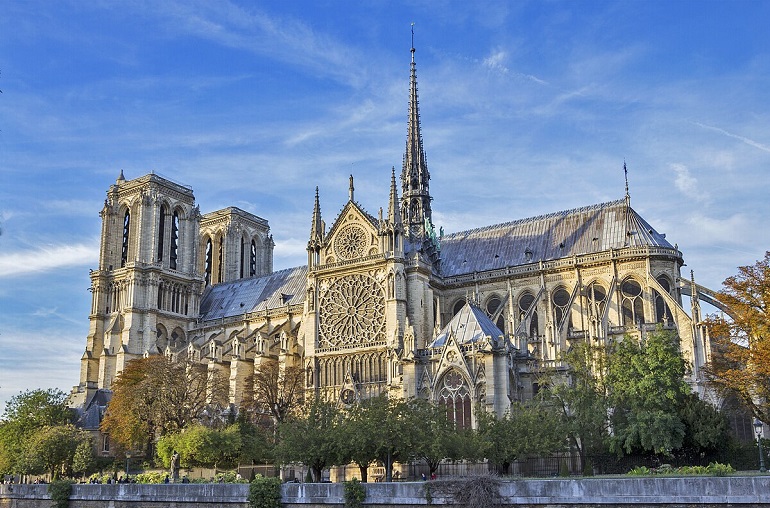
The two square towers, each reaching 69 metres in height, remain deliberately unfinished—their original design called for spires that were never completed, lending the cathedral its distinctive silhouette against the Parisian sky. The north tower, constructed between 1235 and 1250, is slightly larger than its southern counterpart, which was built from 1220 to 1240. Each tower contains multiple chambers, including the famous bell towers that house the cathedral's magnificent carillon.
Side Façades and Transepts
The north and south façades reveal the cathedral's evolution from Romanesque to fully Gothic principles. These lateral walls demonstrate the revolutionary Gothic approach to wall construction, where solid masonry gives way to a skeletal framework supporting vast expanses of glass. The façades feature two levels: the lower level with its series of chapels, and the upper level with its enormous windows that flood the interior with light.
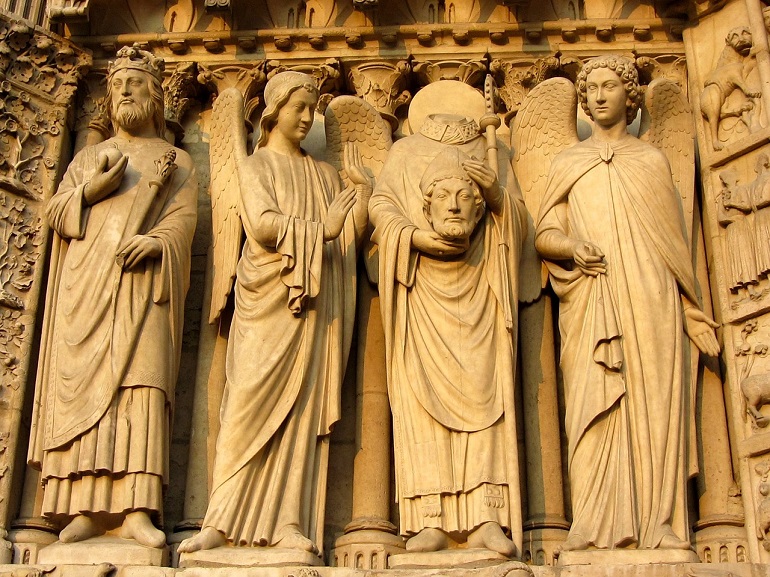
The north transept façade, completed in the mid-13th century, showcases some of the cathedral's finest Gothic detailing. Its portal, known as the Cloister Portal, features a tympanum depicting the Infancy of Christ and is surrounded by carved figures of saints and angels. The facade is crowned by a magnificent rose window measuring 12.9 metres in diameter, surrounded by clear glass that creates an overall composition nearly 19 metres across.
The south transept façade presents an even more elaborate composition, with its portal dedicated to Saint Stephen, the first Christian martyr. The south rose window, dating from around 1260, contains 94 individual medallions arranged in four concentric circles, creating one of the most complex and beautiful examples of medieval glazing artistry.
Flying Buttresses and Structural Innovation
One of Notre-Dame's most revolutionary architectural features lies in its flying buttresses, which encircle the cathedral like stone wings frozen in flight. These graceful arches extend outward from the upper walls to vertical piers, creating a complex system that counteracts the lateral forces generated by the soaring interior vaults. The cathedral boasts 28 flying buttresses around the apse and choir, with an additional two at the transepts.
The flying buttresses represent two distinct building campaigns. The earlier buttresses, dating from the late 12th century, feature a double-flight design that spans over the ambulatory galleries. The later buttresses, constructed in the 14th century, employ a more sophisticated single-flight design that reaches up to 15 metres from the wall to the counter-supports. These later buttresses demonstrate the refinement of Gothic engineering, achieving greater structural efficiency whilst creating more elegant proportions.
These structural marvels represent a quantum leap in medieval engineering, allowing architects to construct walls of unprecedented height whilst incorporating expansive windows that flood the interior with divine light. The buttresses themselves become sculptural elements, crowned with decorative pinnacles that serve both aesthetic and practical purposes—their weight helps direct the structural forces safely within the buttress system.
The Eastern Apse
The cathedral's eastern end presents perhaps its most sophisticated architectural achievement. The semicircular apse, with its radiating chapels and soaring windows, demonstrates the full flowering of Gothic spatial concepts. Seven polygonal chapels radiate outward from the ambulatory, each designed to house specific devotional functions whilst contributing to the overall harmonic composition.
The apse flying buttresses, dating from the 14th century, are among the most daring structural elements of the entire building. These slender stone arcs span enormous distances whilst supporting the tremendous weight of the apse vaults and roof structure. The integration of structure and ornament reaches its pinnacle here, where functional elements become vehicles for artistic expression.
Gargoyles and Chimeras
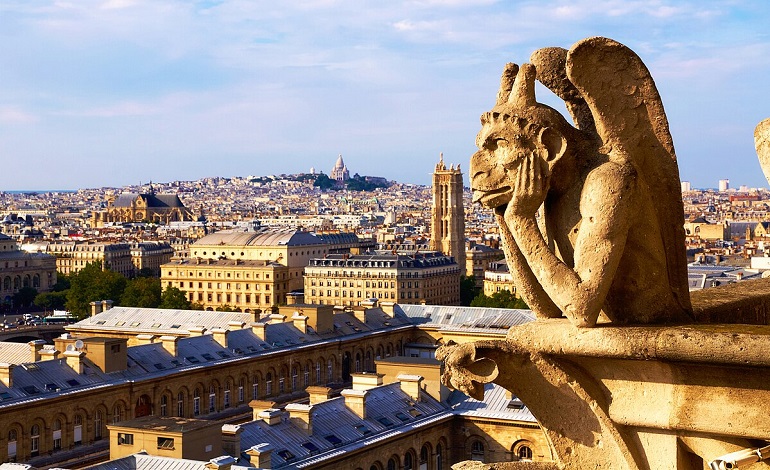
Perched throughout the cathedral's exterior are its famous gargoyles and chimeras, creating a fantastical menagerie of stone creatures that have become synonymous with Notre-Dame itself. The true gargoyles serve the practical purpose of channelling rainwater away from the building's walls, their hollow bodies and elongated necks directing the flow through their gaping mouths to protect the limestone structure from erosion.
The cathedral features more than 100 gargoyles distributed across its rooflines and balustrades. These functional sculptures take myriad forms: demonic beasts with gaping jaws, hybrid creatures combining human and animal features, and fantastical beings drawn from medieval bestiaries. Each gargoyle is carefully positioned to direct water away from vulnerable areas of the stonework, forming part of an elaborate drainage system that has protected the building for centuries.
The chimeras, purely decorative sculptures without drainage function, populate the cathedral's galleries and balustrades. These grotesque figures—featuring mythical beasts, human-animal hybrids, and fantastical creatures—add an otherworldly dimension to the cathedral's appearance. Perhaps the most famous is "Le Stryge" or "The Thinker," a contemplative chimera that gazes pensively over Paris from its perch on the gallery balustrade, embodying both meditation and eternal vigilance.
Interior Splendour
The Nave and Spatial Experience
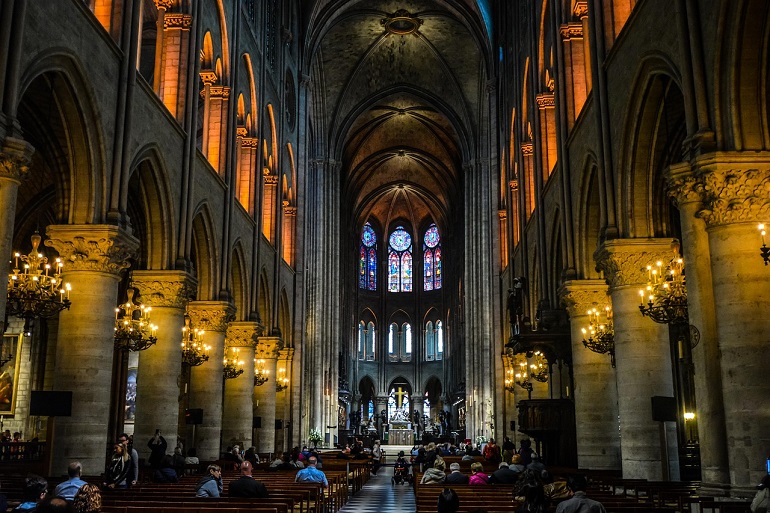
Stepping inside Notre-Dame reveals a vast interior that exemplifies Gothic architecture's quest for height, light, and spiritual transcendence. The cathedral follows a traditional Latin cross plan, with dimensions that speak to its monumental scale: 127 metres in length and 48 metres in width, creating an interior space of nearly 5,500 square metres that can accommodate up to 9,000 worshippers.
The nave, stretching 60 metres in length, rises to a breathtaking height of 35 metres beneath the vaulted ceiling. This central aisle, flanked by double aisles on each side, creates a powerful sense of progression towards the sacred spaces of the choir and altar. The nave's width of 12.5 metres provides generous proportions that avoid the cramped feeling of some earlier Gothic churches whilst maintaining the essential sense of vertical aspiration.
The alternating columns and pillars that support this vast space demonstrate the cathedral's early Gothic origins, with their robust proportions gradually giving way to more refined forms as construction progressed. The massive cylindrical columns of the nave, measuring nearly 5 metres in circumference, support compound piers that rise without interruption to the springing points of the vaults. These supports create a rhythmic progression down the length of the nave, their varied capitals displaying the evolution of Gothic sculptural style over the building's construction period.
Vaulted Ceilings and Ribbed Structure
The ceiling system of Notre-Dame represents one of the great innovations of Gothic architecture: the sexpartite ribbed vault. Each bay of the nave is covered by a six-part vault, created by diagonal ribs crossing with transverse ribs and an additional intermediate rib. This complex network of stone ribs creates a web-like pattern across the ceiling, transferring the enormous weight of the roof downward and outward to the supporting columns and external buttresses.
The ribbed vaulting achieves two crucial objectives: it reduces the overall weight of the ceiling structure whilst creating a sense of ethereal lightness that draws the eye heavenward. The ribs themselves, carved from stone and precisely fitted, form geometric patterns that speak to both structural necessity and aesthetic beauty, embodying the Gothic principle that engineering and art are inseparable.
The vault construction reveals the sophisticated understanding of structural forces possessed by medieval builders. Each rib is carefully shaped to direct compressive forces along optimal paths, whilst the thin stone webs between the ribs serve primarily as infill rather than load-bearing elements. This system allows for the creation of vast interior spaces with minimal material, a remarkable achievement considering the limited lifting equipment available to medieval builders.
The Triforium and Clerestory
Above the nave arcade rises the triforium, a narrow gallery that runs the full length of the nave and continues around the transepts and choir. This middle level, with its series of paired arches, originally served as a passage for cathedral clergy and provided access to the upper levels of the building. The triforium's arches create a horizontal band that visually divides the nave elevation whilst contributing to the overall rhythmic pattern of the interior.
Above the triforium soars the clerestory, the upper wall level that contains the nave's main windows. These enormous openings, each divided by stone mullions into multiple lights, flood the interior with natural light. The clerestory windows demonstrate the Gothic achievement of creating walls that are more void than solid, transforming the traditional concept of a wall from a load-bearing element to a delicate screen supporting vast expanses of glass.
Stained Glass Windows and Rose Windows
Notre-Dame's stained glass windows transform the interior into a kaleidoscope of divine light and colour. The cathedral features three magnificent rose windows, each a masterpiece of medieval glazing artistry. The western rose, measuring 9.6 metres across, depicts scenes from the Last Judgement, its central medallion showing Christ in majesty surrounded by symbols of the zodiac and labours of the months.
The north and south transept roses are even more spectacular, with the southern rose reaching 12.9 metres in diameter—when including its surrounding clear glass, the total dimension extends to 19 metres. These windows represent the pinnacle of 13th-century glazing techniques, their intricate lead work supporting thousands of individual pieces of coloured glass.
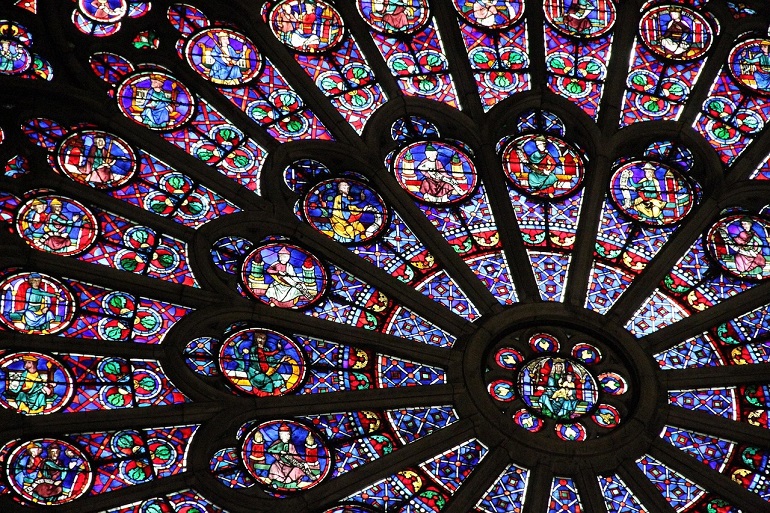
The south rose window contains 94 individual medallions arranged in four concentric circles, telling the story of Christ's life and the saints who witnessed his earthly ministry. The inner circle portrays the twelve apostles, whilst the outer rings depict martyrs, virgins, angels, and saints significant to Parisian spirituality. The interplay of deep blues, rich reds, and brilliant golds creates an atmosphere of transcendent beauty, particularly as sunlight streams through the ancient glass to paint the interior walls with shifting patterns of coloured light.
The north rose, dedicated to the Virgin Mary, features scenes from the Old Testament, creating a theological programme that links the Hebrew scriptures with the New Testament message of salvation. The window's iconography reflects the sophisticated theological understanding of medieval cathedral builders, who saw their buildings as three-dimensional books designed to educate and inspire the faithful.
The Choir and Sanctuary
The cathedral's eastern end features a sophisticated arrangement centred around the choir and its surrounding ambulatory. The choir, measuring 38 metres in length and 12 metres in width, serves as the cathedral's most sacred space, housing the high altar and beautifully carved wooden choir stalls used for centuries of liturgical celebration.
The choir screen, originally a stone barrier separating the clergy from the laity, has been partially removed over the centuries, allowing modern visitors unobstructed views of the sanctuary. The remaining portions display some of the finest Gothic sculpture in the cathedral, with scenes from the life of Christ carved in remarkable detail.
The high altar, positioned at the centre of the apse, rises beneath a soaring canopy of stone and glass. The altar's placement at the focal point of the cathedral's architectural composition emphasises its role as the centre of Catholic worship, where the celebration of the Eucharist transforms the entire space into a vision of the heavenly Jerusalem.
The Ambulatory and Radiating Chapels
Surrounding the choir is a double ambulatory, a unique feature in medieval religious architecture that allows for the circulation of large numbers of pilgrims whilst maintaining the sanctity of the liturgical spaces. This walkway, with its inner and outer aisles, creates a sophisticated traffic pattern that accommodates both devotional activities and tourist visits.
The ambulatory connects to a series of seven radiating chapels, each dedicated to particular saints and adorned with centuries of artistic devotion. These chapels, originally endowed by wealthy families and powerful guilds, showcase the evolution of French artistic style from the 13th through the 19th centuries. Each chapel features unique decorative programmes, from medieval sculpture to Renaissance paintings to modern installations.
The Lady Chapel, positioned on the cathedral's central axis behind the high altar, holds the position of honour among the radiating chapels. This sacred space, dedicated to the Virgin Mary, contains some of the cathedral's most precious artistic treasures and serves as a focus for Marian devotion.
The Transepts and Crossing
The intersection of the nave and transepts creates the cathedral's crossing, a dramatic space crowned by the famous spire (currently under reconstruction following the 2019 fire). This central area, with its soaring vaults and flood of light from the transept windows, embodies the Gothic ideal of creating heaven on earth through architecture.
The north and south transepts extend 48 metres from the crossing, creating the arms of the Latin cross plan. Each transept features its own rose window and portal, contributing to the cathedral's iconographic programme whilst providing additional space for large congregations during major liturgical celebrations.
The transept chapels, built into the eastern walls of each transept arm, provide intimate spaces for private prayer and small group worship. These chapels, like those of the ambulatory, reflect the patronage of various social groups and demonstrate the cathedral's role as a community gathering place as well as a house of worship.
Architectural Details and Sacred Spaces
Column Capitals and Sculptural Details
Throughout the interior, countless architectural details reward careful observation. The column capitals throughout the cathedral display a remarkable variety of sculptural programmes, from stylised foliage patterns to narrative scenes from biblical and secular sources. These carved elements, positioned high above the nave floor, demonstrate the medieval commitment to creating beauty even in areas not easily visible to worshippers.
The corbels and vault springers that support the ribbed ceiling system feature an equally rich variety of carved decoration. Angels, demons, saints, and secular figures populate these structural elements, creating a population of stone beings that seem to inhabit the upper reaches of the cathedral. The quality of this carving, much of it executed by anonymous medieval craftsmen, rivals the finest sculpture of any period.
The Floor and Liturgical Furnishings
The checkerboard marble floor creates geometric patterns that complement the vertical lines of the architecture whilst providing a durable surface capable of withstanding centuries of foot traffic. The floor pattern, alternating between light and dark stones, guides the eye towards the high altar whilst creating visual interest that enhances rather than competes with the architectural composition.
The cathedral's liturgical furnishings, though much altered over the centuries, continue to serve their sacred functions. The wooden choir stalls, carved screens, and altar appointments demonstrate the continuing tradition of ecclesiastical craftsmanship that has enriched the cathedral throughout its long history.
Lighting and Atmospheric Effects
The cathedral's lighting system, both natural and artificial, creates constantly changing atmospheric effects throughout the day and seasons. The interplay of direct and reflected light from the stained glass windows creates a complex pattern of coloured illumination that transforms the limestone surfaces into a kaleidoscope of subtle hues.
During different times of day, the cathedral's interior reveals different aspects of its architectural character. Morning light entering through the eastern windows illuminates the choir and sanctuary, emphasising the sacred nature of these spaces. Evening light streaming through the western rose window creates dramatic effects in the nave, highlighting the texture of the stone columns and the intricate patterns of the vaulted ceiling.
Dimensions and Structural Achievement
Overall Scale and Proportions
The sheer scale of Notre-Dame continues to impress modern visitors familiar with contemporary large-scale architecture. The cathedral's overall footprint exceeds 6,000 square metres, with the interior alone covering 5,500 square metres. The nave vault reaches 33 metres in height, supported by 75 columns and pillars throughout the structure, creating an interior volume that rivals modern civic buildings whilst predating them by seven centuries.
The building incorporates 113 windows of various sizes, from the enormous rose windows to smaller clerestory lights, creating a luminous interior that changes character throughout the day as natural light shifts and transforms the space. The total glazed area exceeds 1,200 square metres, making the cathedral one of the most light-filled buildings of its era.
Structural Innovation and Engineering
The cathedral's structural system represents a remarkable achievement in pre-modern engineering. The stone vaulting system spans enormous distances using only compression forces, with no steel reinforcement or modern structural materials. The flying buttresses transfer loads across gaps of up to 15 metres, demonstrating a sophisticated understanding of structural behaviour that would not be matched until the development of modern engineering techniques.
The foundation system, built on the marshy ground of the Île de la Cité, required innovative solutions to provide stable support for the enormous loads imposed by the superstructure. Medieval builders drove wooden piles deep into the riverbed and constructed massive stone foundations that have successfully supported the cathedral for more than eight centuries.
The Towers and Vertical Elements
The western towers, though unfinished, rise to 69 metres and provide commanding views over Paris for those who climb the 387 steps to the upper galleries. The towers' internal structure reveals the sophisticated spatial planning of medieval architects, with spiral staircases, intermediate chambers, and complex systems for housing the cathedral's bells and providing access to the roof.
The cathedral's spire (destroyed in the 2019 fire and currently being reconstructed) reached 96 metres above ground level, making Notre-Dame one of the tallest structures in medieval Paris. The spire's oak framework, covered with lead sheets, represented a masterpiece of medieval carpentry and metalwork that survived for nearly 200 years before requiring major restoration in the 19th century.