


| Contents |
|---|
Introduction
Opened in 1804, Père-Lachaise Cemetery is Paris’s most atmospheric resting place, a labyrinth of cobbled avenues, moss-tipped monuments, and sculpted angels where history, art, and quiet contemplation converge. Set on a gentle hillside in the 20th arrondissement, it shelters the graves of figures such as Oscar Wilde, Édith Piaf, Jim Morrison, Frédéric Chopin, Marcel Proust, and Honoré de Balzac, alongside countless Parisians whose stories are etched in stone. This guide will help you navigate its wooded paths, trace themed routes between celebrated tombs and hidden gems, appreciate the symbolism of funerary art, and observe local etiquette, while offering practical advice on entry points, opening times, accessibility, and map-reading so you can linger, learn, and leave respectfully enriched.
Interesting Facts about the Père-Lachaise Cemetery
- Opened in 1804 under Napoleon I, Père Lachaise began with just 13 burials and only gained popularity after the staged reinterments of Molière and La Fontaine in 1817.
- Spanning about 44 hectares, it is both Paris’s largest cemetery and a vast landscaped park dotted with thousands of mature trees.
- More than a million people have been buried here over time, with space managed by time‑limited grave leases and an on‑site ossuary for unrenewed remains.
- The cemetery is famed for illustrious residents including Oscar Wilde, Edith Piaf, Frédéric Chopin, Marcel Proust, and Jim Morrison.
- The Mur des Fédérés marks where 147 Communards were executed in May 1871, making the site a powerful place of political memory.
- The cemetery was also caught up in fighting during the 1814 Battle of Paris, reflecting its entanglement with the city’s turbulent history.
- Its name honours François d’Aix de La Chaise, the Jesuit confessor to Louis XIV, whose former country house once stood nearby.
- Visitors often leave kisses (now blocked by glass) on Oscar Wilde’s tomb and gather at Jim Morrison’s grave, one of the most visited in the world.
- An eclectic mix of funerary art—from neo‑Gothic chapels to Art Nouveau sculpture—makes the grounds feel like an open‑air museum.
- Despite its age, Père Lachaise remains an active cemetery, with strict residency rules and a long waiting list for the few plots that come available.
History
Père-Lachaise Cemetery, situated on 110 acres in Paris's 20th arrondissement, was established in 1804 by Napoleon I as the city's first municipal and garden cemetery. The cemetery derives its name from Père François de la Chaise d'Aix, confessor to Louis XIV, who resided in a Jesuit retreat on the hillside property from 1665 to 1709. Originally known as Champ Évêque and later renamed Mont-Louis in honour of the Sun King, this elevated site had witnessed royal visits during times of unrest, including the Fronde civil wars when Louis XIV observed military skirmishes between rival armies. The neoclassical architect Alexandre-Théodore Brongniart designed the cemetery's layout, drawing inspiration from English garden principles with winding paths, diverse vegetation, and carved monuments set amongst an irregular landscape.
The cemetery's early years proved challenging, as Parisians initially shunned the location for being too distant from the city centre and because many Roman Catholics refused burial in grounds that had not received ecclesiastical blessing. In its inaugural year, Père Lachaise contained merely 13 graves, growing slowly to 44 burials in 1805, 49 in 1806, and 62 in 1807, before reaching 833 interments by 1812. To enhance the cemetery's prestige and attract more burials, administrators devised a strategic marketing campaign involving the ceremonial transfer of famous remains: in 1817, they relocated the bodies of renowned playwright Molière and fabulist Jean de La Fontaine with great fanfare, followed by the purported remains of medieval lovers Pierre Abélard and Héloïse d'Argenteuil along with their Gothic monument constructed from abbey fragments. This promotional strategy proved remarkably successful, transforming burial at Père Lachaise into a mark of social distinction and causing the number of graves to soar from a few dozen to 33,000 by 1830.
The cemetery underwent five major expansions between 1824 and 1850 to accommodate growing demand, eventually housing over one million bodies and countless cremated remains in its columbarium. Beyond serving as a burial ground, Père Lachaise became a site of historical significance during the Paris Commune of 1871, when 147 Communard soldiers were executed against the Mur des Fédérés (Communards' Wall) by French Army forces during the Semaine sanglante. Today, this wall remains a traditional rallying point for members of the French political left, whilst the cemetery itself has evolved into the world's most visited necropolis, attracting 3.5 million visitors annually who come to pay respects to its famous residents and appreciate its unique blend of historical importance, artistic monuments, and natural beauty. The cemetery continues to accept new burials under strict regulations, requiring that deceased individuals must have either died in Paris or lived in the capital, with limited plots available and a waiting list for prospective internees.
Description
The Landscape and Architecture
The cemetery's design embodies the romantic English garden aesthetic, conceived by architect Alexandre-Théodore Brongniart in 1804 with the vision of creating a space that would balance nobility with accessibility, grandeur with intimacy. The undulating terrain cascades gently across rolling hills, creating a sense of discovery around every bend. More than 5,000 mature trees form a verdant canopy overhead—ancient horse chestnuts, towering maples, graceful weeping willows, and sturdy oaks—transforming the cemetery into Paris's largest green space within the city limits.
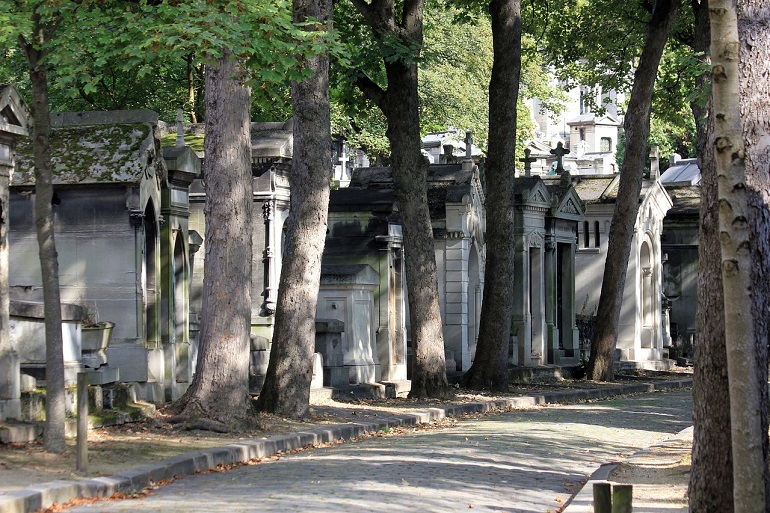
Winding cobblestone paths and tree-lined avenues meander through the grounds like arteries of contemplation, connecting 97 distinct divisions that house approximately 70,000 ornate tombs and monuments. The pathways themselves tell stories, from the grand Avenue Principale that leads visitors into the heart of the cemetery to intimate, moss-covered lanes where forgotten graves rest beneath dappled sunlight. Street signs bearing evocative names like Avenue des Acacias and Chemin Denon guide wanderers through this labyrinthine city of the dead.
The funerary architecture represents an extraordinary anthology of artistic movements spanning more than two centuries. Elaborate chapelles funéraires—family burial chapels—stand like miniature cathedrals, their Gothic spires reaching skyward. Neoclassical temples with Doric columns house the remains of 19th-century industrialists and aristocrats, while Art Nouveau sculptures capture the flowing, organic forms that defined the early 20th century. Byzantine-inspired domes mark the graves of Eastern European émigrés, and sleek contemporary granite slabs remind visitors that Père Lachaise remains an active cemetery, welcoming nearly 10,000 new interments each year.
The Artistic Treasury
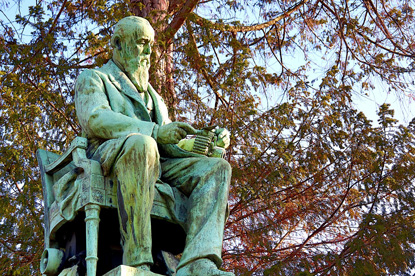
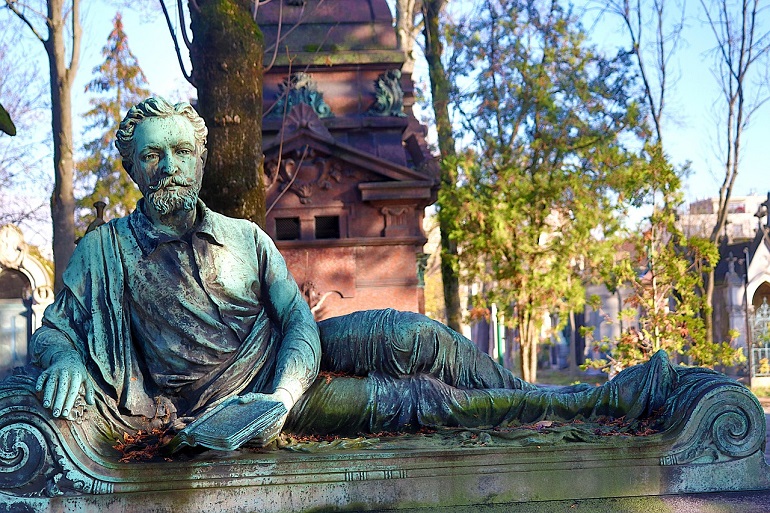
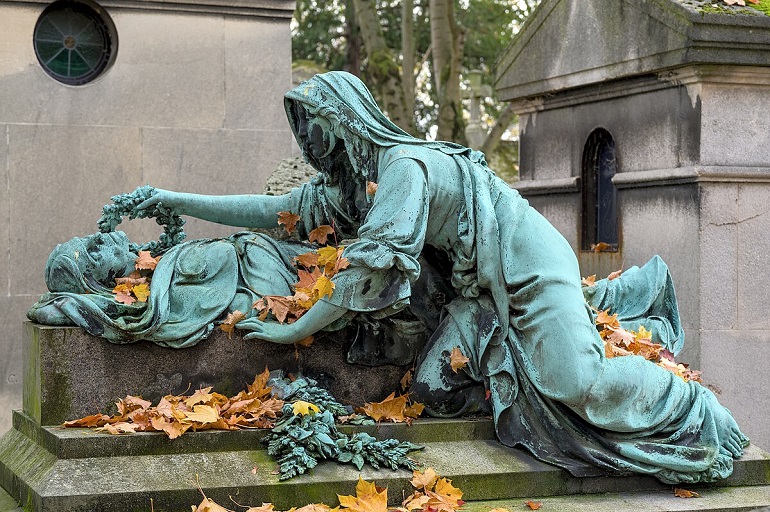
Père Lachaise functions as the world's largest sculpture garden, where master craftsmen have created monuments that blur the line between memorial and masterpiece. Weeping angels carved from white marble seem to shed eternal tears, their faces etched with expressions of profound sorrow. Bronze figures recline atop elaborate sarcophagi, whilst others stand sentinel over family plots, their weathered features softened by decades of Parisian rain and sunshine.
The cemetery's sculptural highlights include haunting representations of grief and remembrance: life-sized figures draped in flowing robes, cherubs with outstretched wings, and symbolic representations of death and resurrection. Many tombs feature intricate reliefs depicting scenes from the deceased's life—musicians shown with their instruments, writers surrounded by books, soldiers in uniform. The attention to detail extends to smaller elements: ornate iron railings surrounding family plots, elaborate door handles on mausoleum entrances, and delicate floral motifs carved into stone borders.
Notable Residents and Cultural Pilgrimage Sites
The cemetery serves as a cultural pantheon, housing the remains of luminaries who shaped literature, music, art, and history. Each grave tells a story, creating an intimate connection between visitors and the creative giants of the past.
Literary figures abound throughout the grounds: Marcel Proust's simple black granite tomb often bears small cakes—madeleines—left by admirers referencing his famous novel. Oscar Wilde's striking tomb, designed by Jacob Epstein, features a modernist winged figure that once bore lipstick kisses from devotees before protective glass was installed. Honoré de Balzac rests beneath an imposing bronze bust, whilst Colette's grave is marked by a simple stone that reflects her preference for understated elegance.
The musical heritage of Père Lachaise resonates throughout its pathways. Frédéric Chopin's monument, adorned with a weeping muse and fresh flowers, draws pianists and music lovers from around the globe—though his heart remains preserved in a Warsaw church, fulfilling his fear of premature burial. Édith Piaf's modest black marble tomb contrasts with her outsized cultural impact, often surrounded by roses and handwritten notes from fans. The controversial grave of Jim Morrison continues to attract pilgrims decades after his death, though protective measures now limit access to prevent vandalism.
Visual artists find eternal rest among masterpieces of funerary art. Eugène Delacroix lies beneath an elegant monument, whilst Camille Pissarro rests in a family plot that reflects the impressionist movement's preference for natural settings over formal grandeur.
Historical Monuments and Memorials
Beyond individual graves, Père Lachaise houses several significant historical monuments that serve as focal points for collective memory. The Mur des Fédérés (Communards' Wall) stands as a stark reminder of political upheaval, marking the spot where 147 Communard insurgents were executed in 1871 during the final days of the Paris Commune. This simple wall, pockmarked with bullet holes, draws visitors seeking to understand this pivotal moment in French history.
Various monuments to the deported commemorate victims of concentration camps and war crimes, creating spaces for reflection on humanity's darkest chapters. These memorials, often adorned with fresh flowers and small stones left by visitors, serve as powerful reminders of the importance of remembrance and resistance.
The Natural Environment
The cemetery's botanical richness creates an ecosystem within the urban landscape. Ancient trees provide homes for diverse bird species—robins, blackbirds, and sparrows create a gentle soundtrack of chirping and rustling leaves. Ivy cascades over older tombs, creating romantic tableaux where nature reclaims human monuments. Seasonal changes transform the atmosphere: spring brings carpets of wildflowers between graves, summer offers deep shade beneath full canopies, autumn paints the landscape in gold and crimson, and winter reveals the stark beauty of bare branches against grey Parisian skies.
Small gardens tucked between burial plots showcase careful landscaping, with roses climbing over wrought-iron gates and lavender bushes releasing their perfume near family chapels. The Garden of Remembrance provides a more contemporary approach to memorialisation, where ashes are scattered among carefully tended plantings.
Atmospheric Qualities and Visitor Experience
Walking through Père Lachaise evokes a unique emotional journey. The scale of the cemetery means that crowds dissipate quickly, leaving visitors with moments of profound solitude amongst the monuments. Morning mist rising from the pathways creates an ethereal quality, whilst afternoon sunlight filtering through leaves casts dancing shadows across weathered stone.
The acoustic environment shifts dramatically from the bustling streets of Paris. Here, the dominant sounds are footsteps on gravel paths, distant conversations in multiple languages, and the gentle rustle of wind through ancient trees. This natural quietude provides a meditative quality that encourages contemplation and introspection.
The cemetery's topography creates intimate spaces and sweeping vistas. Climbing to higher elevations reveals panoramic views across the burial grounds, whilst descending into small valleys feels like entering secret gardens where time seems suspended. Each turn presents new discoveries: an unexpectedly beautiful sculpture, a touching inscription, or a peaceful grove perfect for quiet reflection.
Père Lachaise Cemetery ultimately transcends its primary function as a burial ground to become something far more significant—a living museum where art, nature, history, and human emotion converge in an experience that lingers long after departure. It stands as a testament to the enduring power of memory, creativity, and the profound beauty that can emerge from humanity's eternal dialogue with mortality.
Getting There
The easiest way to reach Père Lachaise is by metro: take Line 2 to Philippe Auguste for the main entrance on Boulevard de Ménilmontant, or Lines 2 or 3 to Père Lachaise for a short walk to the gates. For a downhill visit through this hilly cemetery, many travellers start at Gambetta on Line 3 and enter near the upper gates, then exit at the lower side by Père Lachaise station. Several buses also serve the area, including routes that stop by Roquette–Père Lachaise and Martin Nadaud, with clear signage pointing to the entrances. The site is extensive; picking the entrance that suits the planned route saves time and walking, especially when linking Gambetta, Philippe Auguste, and Père Lachaise stations for an efficient loop.