


| Contents |
|---|

Introduction
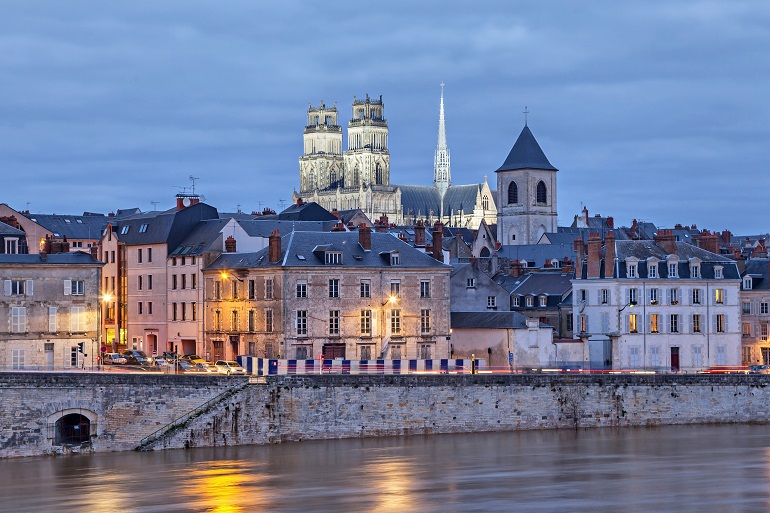
Situated on the banks of the Loire River, Orléans (pop. 115,000) has been a significant urban center since Roman times. The city is famous for its role in the Hundred Years' War, particularly the liberation by Joan of Arc in 1429, which is commemorated annually. Orléans boasts several notable landmarks, including the magnificent Cathédrale Sainte-Croix, a Gothic cathedral with historical significance, and the Hôtel Groslot, a 16th-century mansion that once hosted French royalty. The city's connection to the Loire River has shaped its history as a major trade hub, and it remains a vibrant cultural and historical destination.
Interesting Facts about Orléans
- Orléans derives its name from the Roman Aurelianum and was conquered by Julius Caesar in 52 BCE.
- The city became an intellectual capital under Charlemagne, emperor from 800 to 814.
- In 1429, during the Hundred Years' War, Joan of Arc, known as the Maid of Orléans, famously liberated the city from English siege.
- Orléans is sometimes referred to as the 21st arrondissement of Paris due to its proximity and connections to the capital.
- The Loire Valley, in which Orléans is situated, is the largest UNESCO World Heritage Site in France.
- Orléans was a significant centre for the Protestant Reformation in France during the 16th century.
- The city is home to one of France's oldest provincial museums, the Musée des Beaux-Arts.
- Orléans is famous for its quince jelly, known as Cotignac d'Orléans, which has a history dating back to the Middle Ages.
- The University of Orléans, founded in 1305, attracted many humanists such as Erasmus during the Renaissance.
- Orléans played a pivotal role in the kingdom both politically and economically during the Middle Ages.
History
Originally known as Cenabum, it was a significant settlement for the Carnutes tribe before being destroyed by Julius Caesar in 52 BCE. The Roman Emperor Aurelian later rebuilt the city in the 3rd century CE, renaming itAurelianum, which evolved into Orléans. During the Merovingian period, it became the capital of one of the Frankish kingdoms. Its strategic location on the Loire made it a vital hub for trade and military campaigns throughout history, ensuring its prominence during the Middle Ages.
The city is perhaps most famously associated with Joan of Arc, who played a pivotal role in lifting the siege of Orléans in 1429 during the Hundred Years’ War. Her victory marked a turning point in French history and cemented her legacy as "La Pucelle d’Orléans" (the Maid of Orléans). Visitors can explore her story through various landmarks, including the Maison de Jeanne d’Arc and Sainte-Croix Cathedral, whose stained-glass windows depict her life. This Gothic cathedral, rebuilt after destruction during the Wars of Religion, remains a symbol of resilience and faith.
Orléans flourished during the Renaissance and beyond, becoming a centre for education and culture with its prestigious university attracting scholars like John Calvin. The city also played an important role during the Reformation and endured hardships during the French Wars of Religion. In modern times, Orléans has embraced its historical heritage while evolving into a vibrant regional capital. Its connection to the Loire River continues to shape its identity, celebrated through events like the Loire Festival. Today, Orléans stands as a blend of historical grandeur and contemporary charm.
Main Attractions
Cathédrale Sainte-Croix d'Orléans
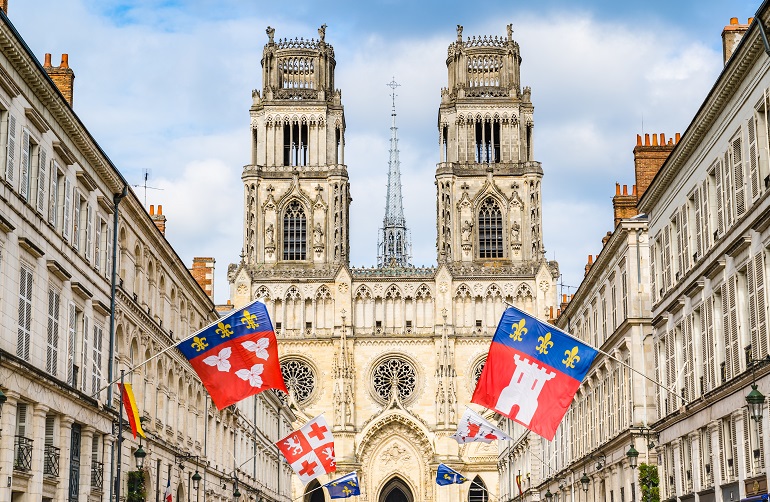
The Cathédrale Sainte-Croix d'Orléans is a magnificent Gothic cathedral built between the 13th and 18th centuries. It dominates the city centre with its imposing structure. Notable features include the rose windows in the transept, which were commissioned by Louis XIV, and the stained-glass windows depicting Joan of Arc's story. The cathedral treasury also houses Byzantine enamels. Visitors can explore the cathedral's interior to appreciate its architectural beauty and historical significance.
Place du Martroi
Place du Martroi is the heart of the city, featuring an equestrian statue of Joan of Arc by Denis Foyatier. This square is a popular spot for both locals and tourists, offering a glimpse into Orléans' rich history. The Bannier gate-house, a 14th-century structure, is visible through a window in the subterranean car park beneath the square. This unique feature provides a fascinating insight into the city's medieval past.
Hôtel Groslot
The Hôtel Groslot is a 16th-century building that now serves as the city hall. It features impressive Renaissance architecture, making it a must-visit for anyone interested in historical buildings. The building's façade is adorned with intricate stone carvings and ornate details, reflecting the wealth and status of its original owners. Visitors can admire the exterior of the building and explore its surroundings to appreciate its historical significance.
Maison de Jeanne d'Arc (Joan of Arc House)
The Maison de Jeanne d'Arc, or Joan of Arc House, is a reconstruction of the house where Joan of Arc stayed during the siege of Orléans in 1429. The original building was destroyed during World War II, but the current structure provides a glimpse into the life and times of this legendary figure. Visitors can explore the house to learn more about Joan of Arc's role in Orléans' history.
Collégiale Saint-Aignan
The Collégiale Saint-Aignan is a historic church worth visiting for its architectural significance. Built in the 13th century, it features a mix of Gothic and Romanesque styles. The church's interior is adorned with beautiful stained-glass windows and intricate stone carvings, making it a peaceful retreat from the bustling city centre.
Parc Floral de la Source
Located on the outskirts of Orléans, the Parc Floral de la Source is a 35-hectare park that offers a variety of attractions. The park features diverse themed gardens that change with the seasons, providing a vibrant display of flora throughout the year. Visitors can also explore the source of the Loiret River, which adds to the park's natural beauty. Additionally, the park includes a butterfly house and tropical garden, offering a unique opportunity to see exotic plants and animals. Activities such as mini-golf and a children's play area make it an ideal destination for families.
Jardin des Plantes
The Jardin des Plantes is a 3.5-hectare ornamental and botanical garden featuring an impressive array of plants. The garden includes an impressionist corner, a colourful shrub border, and a remarkable collection of trees and a rose garden. Visitors can also explore the hives and bedding plant test beds, which provide insight into gardening techniques. The garden's peaceful atmosphere makes it a perfect spot for relaxation and nature appreciation.
Parc Louis Pasteur
Parc Louis Pasteur is a large garden with expanses of lawn bordered by well-tended flowerbeds. The park offers a serene environment for walking or picnicking. Its tranquil atmosphere provides a welcome respite from the city's hustle and bustle, making it a popular spot for locals and visitors alike.
The Docks
Once France's most important inland port, the docks offer a glimpse into Orléans' maritime history. Visitors can admire the old pavement from the 18th and 19th centuries, which reflects the city's past as a major trading hub. The area is now home to various shops and restaurants, providing a lively atmosphere for exploration.
Pont de l'Europe
The Pont de l'Europe is an inclined bow-string ark bridge designed by Santiago Calatrava, known for its original architecture. This modern bridge provides a striking contrast to the city's historical landmarks, showcasing Orléans' ability to blend old and new. Visitors can admire the bridge's unique design while crossing over the Loiret River.
Pont Royal (George V Royal Bridge)
The Pont Royal, also known as the George V Royal Bridge, is the oldest bridge in the city, built between 1751 and 1760. It was renamed in honour of King George V after World War I. The bridge offers stunning views of the Loiret River and the surrounding cityscape, making it a popular spot for photography.
Rue de Bourgogne
Rue de Bourgogne is the main street of Orléans since antiquity, featuring many medieval houses. This historic street provides access to various pubs, restaurants, and shops, offering a lively atmosphere for dining and shopping. Visitors can explore the street to discover its unique charm and experience the local culture.
Additional Attractions
Orléans also offers a range of festivals and events throughout the year, celebrating its history and culture. Visitors can enjoy the city's vibrant atmosphere during these events, which often include historical reenactments and cultural performances. Additionally, the city's proximity to the Loire Valley makes it an ideal base for exploring the region's famous châteaux and vineyards. Whether you're interested in history, nature, or culture, Orléans has something to offer every kind of traveller.
Top Museums
Musée des Beaux-Arts d'Orléans
Located near the Sainte-Croix Cathedral, the Musée des Beaux-Arts d'Orléans is one of France's oldest and richest provincial museums. Founded during the French Revolution, it houses an impressive collection of artworks spanning from the 15th to the 20th century. The museum features an extensive array of Flemish, Dutch, and Italian paintings, alongside significant French works from the 17th and 18th centuries. Notably, it includes a remarkable cabinet of pastels, the second largest in France after the Louvre. The collection also comprises over 2,000 paintings, 700 sculptures, 10,000 drawings, and 50,000 prints.
The museum regularly hosts temporary exhibitions and offers workshops for children, making it a vibrant cultural hub in Orléans.
Muséum d'Orléans pour la Biodiversité et l'Environnement (MOBE)
The MOBE is a scientific culture museum that offers an engaging exploration of biodiversity and the environment. Spread across five levels, it showcases approximately 1,200 specimens and samples out of a total collection of 435,000. The museum features interactive exhibits that delve into the workings of life on Earth, from reproduction and nutrition to movement and perception. Visitors can explore various themes, including the evolution of life forms and the mysteries of genetics.
The MOBE is designed to be highly interactive, with hands-on activities and multimedia displays that cater to all ages.
Hôtel Cabu, Musée d'Histoire et d'Archéologie d'Orléans
Situated in a stunning Renaissance building, the Hôtel Cabu houses the Musée d'Histoire et d'Archéologie d'Orléans. This museum is renowned for its collection of Gallic and Gallo-Roman bronzes, known as the Trésor de Neuvy-en-Sullias. It also presents a wealth of objects and artworks related to the history of Joan of Arc and Orléans, including medieval statues and local crafts. Additionally, the museum explores the city's industrial past and its maritime history along the Loire River.
The museum's setting within a beautiful Renaissance hotel adds to its charm, making it a must-visit for anyone interested in history and archaeology.
Local Cuisine
Visitors can savour a variety of local delicacies, including the famous pâté de Pâques, a savoury pie often enjoyed during Easter festivities. Fish lovers should not miss the sandre au beurre blanc, a delicate pike-perch dish served with a creamy white butter sauce. The city is also renowned for its Orléans vinegar and Orléans mustard, both of which add a distinctive flavour to many local dishes. For a taste of tradition, try the andouille de Jargeau, a flavourful sausage, or indulge in rillons, succulent cubes of confit pork belly. Sweet tooths will delight in cotignac, a quince jelly confection, and fruit macaroons that showcase the region's bountiful produce. To round off your culinary journey, sample some local wines from the Orléans and Gien areas, known for their light and fruity character.
Getting There & Around
Orléans is well-connected to Paris, just an hour away, via the A10 motorway. For those arriving by train, Orléans railway station in the city centre and Fleury-Les Aubrais-Orléans station to the north offer services to major French cities. Once in Orléans, getting around is a breeze with the efficient public transport network operated by TAO. Two tram lines crisscross the city, complemented by an extensive bus network. The historic centre is best explored on foot or by bicycle, with numerous bike rental stations available. For attractions further afield, such as the Parc Floral, the tram and bus services prove invaluable. Visitors can also take advantage of park-and-ride facilities on the outskirts, making it convenient to leave their vehicles and use public transport to access the city centre.