


| Contents |
|---|
Introduction
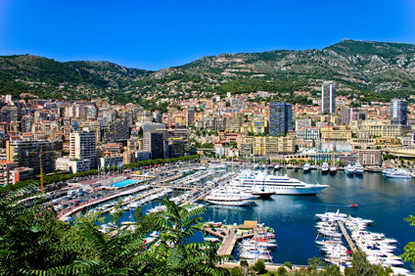
Monaco (pop. 38,000) is the world's second-smallest sovereign state occupying just 2.02 square kilometres on the French Riviera between Nice and the Italian border. This constitutional monarchy, ruled by the House of Grimaldi since 1297, is renowned for its glamorous Monte Carlo district, which houses the famous casino, luxury hotels, and the Formula One Grand Prix circuit that winds through the principality's streets each May.
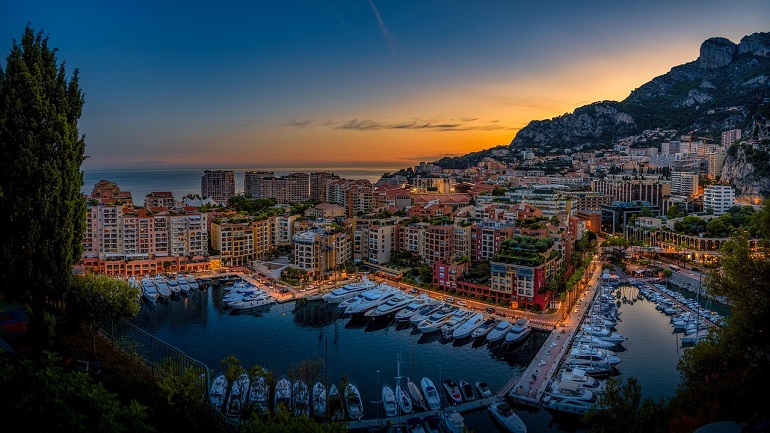
The microstate is divided into four main districts: Monaco-Ville (the old town perched on a rocky promontory), Monte Carlo (the entertainment and business quarter), La Condamine (the port area), and Fontvieille (a modern district built on reclaimed land).
With no personal income tax for residents and strict banking secrecy laws, Monaco has attracted wealthy individuals from around the world, creating one of the highest concentrations of millionaires per capita globally. Monaco enjoys the world's highest GDP per capita (five times the EU average), the world's highest life expectancy, no unemployment, but also the world's most expensive real estate market. The official language is French, though Monégasque, Italian, and English are also spoken, and the euro serves as the currency despite Monaco's independence from the European Union.
Interesting Facts about Monaco
- Monaco is the world’s second-smallest country, covering just over 2 square kilometres, yet it is also one of the most densely populated places on Earth.
- The principality’s residents are famously prosperous, with a remarkably high share of millionaires living within its tiny borders.
- Despite hosting the iconic Monte-Carlo Casino, Monégasque citizens are legally barred from gambling inside it.
- Monaco’s coastline is among the shortest of any country, stretching only a few kilometres along the Mediterranean.
- The House of Grimaldi has ruled Monaco for centuries, with Prince Albert II currently serving as head of state.
- Grace Kelly became Princess Grace of Monaco after marrying Prince Rainier III in 1956, cementing a storied Hollywood-royal connection.
- The Monaco Grand Prix, first run in 1929, is one of Formula One’s most prestigious street races, threading through the city’s narrow roads and harbourfront.
- Monaco levies no personal income tax on residents, contributing to its reputation as a glamorous tax haven.
- With land reclaimed from the sea, Monaco has expanded beyond its original footprint to accommodate more homes and infrastructure.
- The Musée Océanographique, founded in 1910, is a celebrated aquarium and marine science museum perched dramatically above the sea.
- Avenue Princesse Grace has ranked among the most expensive streets in the world, reflecting the state’s elite property market.
- Monaco’s murder rate is astonishingly low, regularly recording zero homicides in some years.
- The principality relies on France for defence and maintains only a small domestic force.
- Most residents are foreign nationals, making Monaco a cosmopolitan enclave with a diverse community.
- There is no airport in Monaco, so most arrivals come via nearby Nice—sometimes by helicopter to local heliports.
History
Monaco's rich history stretches back centuries to its ancient origins as a Ligurian settlement, first mentioned by the Greek historian Hecataeus of Miletus who referred to it as "Monoikos," meaning "the solitary one." The earliest traces of human presence in Monaco date back approximately 300,000 years, whilst the Greeks established the colony of Monoikos during the 6th century. The name likely derives from Heracles, who had a temple on the Rock of Monaco, though it may be an alteration of an older Ligurian name. After the fall of the Roman Empire in 476, Monaco passed through various hands including the Ostrogoths, Lombards, and Franks before being damaged by Saracen raids in the 8th century. The territory was later rebuilt by monks of Saint-Pons in Nice, who held it from 1075, and by the 11th century, the church of St. Mary was built with a borough rising around it.
The modern history of Monaco begins with the arrival of the Grimaldi family and Genoese influence in the medieval period. In 1191, Holy Roman Emperor Henry VI granted suzerainty over the area to the city of Genoa, and on 10 June 1215, Genoese Ghibellines led by Fulco del Cassello began constructing a fortress atop the Rock of Monaco, marking the beginning of Monaco's modern history. The pivotal moment came in 1297 when François Grimaldi, known as "Malizia" (The Cunning), disguised himself as a Franciscan monk and captured the fortress alongside his cousin Rainier I. Though Francesco was evicted a few years later by Genoese forces, the struggle for control continued for over a century until the Grimaldi family achieved indisputable sovereignty. Charles I is considered the real founder of the Principality, as he added the areas of Menton and Roquebrune between 1346 and 1355, increasing Monaco's territory by almost ten times. Monaco's sovereignty was recognised by King Charles VIII of France in 1489, and by the late 1400s, it had gained recognition from the duke of Savoy, the Pope, and the French king.
The modern era brought significant political and economic transformations to the principality. From 1524 to 1641, Monaco came under Spanish protection when the Grimaldi family allied with Spain, but during the French Revolution in 1793, the Grimaldis were deposed and Monaco was annexed to France. Following Napoleon's defeat in 1814, Monaco was returned to the Grimaldis and became a Sardinian protectorate until 1860. A crucial turning point occurred in 1861 when Monaco's independence was restored under the Franco-Monégasque Treaty, though the principality had to cede the towns of Menton and Roquebrune to France in exchange for 4,100,000 francs and recognition of its sovereignty. In 1869, Monaco stopped collecting income tax from its residents thanks to the extraordinary success of its casino, transforming the principality into a playground for the wealthy. The late 19th century saw economic development with the opening of the Monte Carlo casino and a railway connection to Paris. Monaco adopted its first constitution in 1911, providing for an elected National Council to share legislative power with the prince, and despite occupation by Axis powers during World War II, the principality maintained its independence and joined the United Nations in 1993 as one of its smallest member states.

Main Attractions
Prince’s Palace of Monaco
Perched atop Le Rocher, the Prince’s Palace is the official residence of the Grimaldi family and the core of Monaco’s royal heritage. Portions of this elegant palace, originally a Genoese fortress, are opened to visitors, revealing sumptuous state apartments adorned with remarkable frescoes and period furnishings. The daily changing of the guard is a time-honoured tradition, offering unique insight into the principality’s customs. From the Palace square, enjoy sweeping panoramic views over Monaco’s harbours and the sparkling coastline.
Casino de Monte-Carlo
Arguably Monaco’s most iconic landmark, the Casino de Monte-Carlo exudes Belle Époque opulence and international glamour. This architectural masterpiece enchants visitors with its ornate gilded halls, marble atrium and intricate rococo detail. While gaming rooms attract the world’s elite, the casino also offers guided tours, presenting the fascinating stories that made it legendary. The nearby Café de Paris continues the tradition of luxury entertainment, providing a vibrant, stylish take on Monaco’s famed casino culture.
Monaco-Ville (The Old Town)
This historic core, known as Monaco-Ville, is a maze of medieval alleyways, pastel-coloured facades and inviting squares atop dramatic cliffs above the Mediterranean. Wandering these pedestrian lanes reveals family-run eateries, artisanal boutiques and delightful outdoor dining spots, all with stunning views. The district is home to major sites including the Prince’s Palace and Monaco Cathedral, and perfectly embodies the city’s blend of French and Italian influences.
Monaco Cathedral
This Romanesque-Byzantine cathedral is not only an architectural triumph, but also the spiritual heart of Monaco. Built in 1875, it houses the tombs of the principality's royal family, including Prince Rainier III and Princess Grace. The cathedral features an elegant white stone façade, intricate mosaics and impressive artwork, creating a solemn and beautiful interior that stands in striking contrast to Monaco’s glamour.
Jardins Saint-Martin
Set along the cliffside near the palace, these terraced public gardens provide shaded walks, Mediterranean flora, graceful sculptures and spectacular sea vistas. Meandering paths invite visitors to enjoy peaceful strolls or moments of contemplation, while children’s play areas and public art enhance the garden’s appeal for all ages.
Princess Grace Rose Garden
Created in memory of Princess Grace, this lush rose garden in Fontvieille delights visitors with thousands of rose bushes in hundreds of varieties, each labelled with care. The tranquil environment, meandering paths and contemporary sculptures make this garden a haven for reflection and a celebration of Monaco’s natural beauty and royal legacy.
Princess Grace Japanese Garden
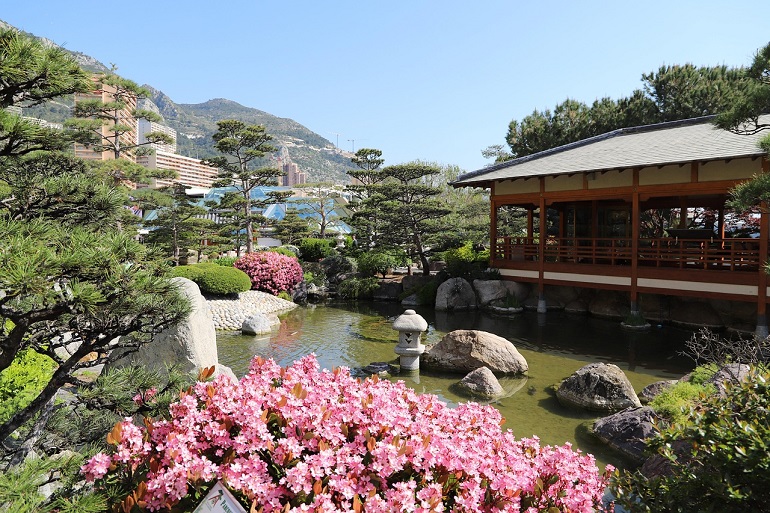
This serene retreat offers a tranquil escape amidst traditional Japanese landscaping, featuring a koi-filled pond, petite bridge and teahouse reminiscent of Kyoto’s artistry. Carefully sculpted horticulture, ornamental trees and stone arrangements make this garden a distinct gem among Monaco’s many green spaces.
Casino Square and Gateway to Rock
Casino Square is the social epicentre of Monaco, bordered by manicured lawns, elegant architecture and often graced by luxury vehicles, creating an atmosphere of Riviera style. The Gateway to Rock—an atmospheric 15th-century entrance leading from La Condamine to the palace quarter—offers remarkable historic ambience and vistas across the city and Mediterranean. Wandering between these squares and lookout points, visitors experience the quintessential allure and glamour of Monaco.

Top Museums
Oceanographic Museum of Monaco
Occupying a majestic position atop the Rock, the Oceanographic Museum is both a monumental tribute to marine science and a palace of wonders for marine enthusiasts. Its Neo-Baroque architecture is as spectacular as its purpose, sheltering one of Europe’s foremost marine life collections. The museum’s core contains thousands of natural history specimens, from algae and marine plants to rare invertebrates, fish, reptiles, cetaceans, birds, fossils, and seabed samples discovered during Prince Albert I’s legendary expeditions. Interactive exhibits reveal the evolution of oceanography, highlight global conservation efforts, and immerse visitors in the fragile intricacies of aquatic ecosystems. The world-class aquarium showcases vibrant tropical and Mediterranean species amidst immersive tanks, while historic oceanographic instruments—used by the Prince during his campaigns from the Azores to Spitzbergen—are displayed alongside artistic works inspired by the sea. The institution holds special exhibitions focusing on climate change, biomimicry, and the artist’s response to the marine world, as well as family-friendly science events and hands-on workshops.
Nouveau Musée National de Monaco (NMNM)
Spanning Villa Sauber and Villa Paloma, the NMNM is a beacon of contemporary creativity, presenting diverse exhibitions rooted in Monaco’s artistic and theatrical history. The museum’s impressive collection includes over 10,000 works spanning the 19th to 21st centuries, exploring themes of performing arts, representations of the human body, landscape, and nature. The legacy of the Ballets Russes de Monte-Carlo infuses the collection, with costume designs, stage sets, and works by artists such as Claude Monet, Jean Cocteau, Léon Bakst, Natalia Goncharova, and Serge Lifar. Villa Sauber, a Belle Epoque gem, frequently hosts installations that play with theatre and performance, while Villa Paloma is favoured for avant-garde exhibitions that integrate film, sculpture, and immersive multimedia. NMNM’s remarkable doll and automaton collection—bequeathed by Madeleine de Galéa’s grandson—offers a charming and meticulous study in artistry, technology, and culture. The museum also conserves 4,000 Opera de Monte-Carlo costumes, providing profound insight into Monaco’s vibrant stage tradition.
Museum of Prehistoric Anthropology
This specialist museum gives voice to Monaco’s ancient past, curating archaeological finds and reconstructed prehistoric scenes. Established by Prince Albert I in 1902, it presents fossils, tools, ceremonial objects, and remnants of shelters discovered on the Rock and across the Riviera. Carefully crafted dioramas and educational displays reveal the lifestyles and cultural development of humanity in Southern Europe, offering a window into environmental adaptation and technological innovation. Special collections draw connections with discoveries across the Mediterranean, tracing the story of early civilisation through artefacts and scientific advances.
Musée du Vieux Monaco
Nestled in the historic heart of Monaco-Ville, this museum is devoted to conserving and celebrating the principality’s popular heritage. Its rooms, filled with ceramics, paintings, religious icons, period furniture, costumes, and artisanal objects, offer immersive glimpses into daily life, celebrations, and traditions of the centuries past. The museum’s displays are frequently set up as reconstructions of living spaces, from kitchens to salons, capturing nostalgic atmospheres and illustrating the evolution of Monegasque society. Highlights include collections of timepieces and locally crafted religious art, revealing Monaco’s devotion to craftsmanship and its unique blend of cultural influences.
Chapelle de la Visitation
The Chapelle de la Visitation, a jewel of Baroque architecture, now hosts a notable collection of religious art originally gathered by Piasecka Johnson. The chapel’s magnificent altarpieces and frescoes provide a period-perfect setting for masterpieces by Rubens, Zurbaran, Ribera, and other eminent Baroque artists. Intimate rooms and dramatic lighting highlight the devotional mood and exceptional technique inherent in these treasures. Though not a traditional museum in structure, it offers a rare opportunity to encounter sacred art in a historical context, underscored by the peaceful grandeur of the chapel itself.
Musée Naval de Monaco
Dedicated to maritime history, the Naval Museum contains more than 1,200 scale models, paintings, instruments, and memorabilia celebrating Monaco’s seafaring traditions. Its unique strength lies in the model ship collections, ranging from Viking longboats and Spanish galleons to modern naval vessels, assembled by Professor Claude Pallanca and Prince Rainier III. Exhibits chronicle the evolution of shipbuilding, navigation tools, and sea exploration, with interactive sections enabling visitors to learn about the science and artistry behind each vessel. The museum’s international scope is reflected in artefacts from navies across the globe, making it a centre for maritime culture and technological appreciation.
Automobile Collection of Prince Rainier III
Showcasing Prince Rainier III’s lifelong passion for motoring, this museum displays over a hundred vehicles spanning the golden age of the automobile. Highlights include the Bugatti Type 35—the victor of the first Monaco Grand Prix—as well as American muscle cars, classic Rolls Royce and Alfa Romeo models, military vehicles, and sleek sports cars from Ferrari, Maserati, and Lamborghini. Each vehicle is meticulously maintained and displayed as a piece of engineering history, offering insight into luxury, innovation, and Monaco’s central role in motorsports. Special sections re-create the atmosphere of the Grand Prix and legendary rally events.
Museum of Stamps and Coins
The Museum of Stamps and Coins is a paradise for philatelists and numismatists, tracing Monaco’s history through rare stamps, coins, and monetary memorabilia. The institution showcases exclusive specimens from the Prince’s private collection, historical machines for stamp-making, and vintage coin presses. Special exhibitions delve into international postage, currency evolution, and the artistry of design employed throughout Monaco’s history. Visitors can observe the intersection of commerce and culture, with outstanding displays highlighting the Principality’s key events as commemorated in philately and numismatics.
Champions Promenade
This outdoor museum celebrates the world’s football legends with a series of plaques featuring the footprints of notable players. Located by the seafront, the promenade blends sport, culture, and public art, honouring great footballers whose impact reaches far beyond the pitch. Visitors take a stroll amongst stars immortalised in bronze, connecting Monaco’s cosmopolitan spirit with global sporting heritage.
Local Cuisine
Diners can savour barbagiuan, a deep-fried pastry filled with Swiss chard, ricotta, and herbs, or enjoy the traditional socca, a thin, savoury pancake made from chickpea flour and olive oil. Another must-try is stocafi, a rich stew of dried cod, tomatoes, and black olives, while seafood lovers will appreciate fresh bouillabaisse and grilled fish. The sweet finale often features fougasse, a delicately flavoured orange blossom and almond biscuit that captures Monaco’s blend of coastal tradition and refined taste.
Getting There
By train Regular TER and high-speed services trace the Côte d’Azur from Nice and other Riviera hubs to Monaco-Monte-Carlo station in under half an hour, with through tickets easily arranged from major French and Italian cities; the line hugs the sea, so the journey doubles as a panoramic preview of the Principality’s dramatic shoreline.
By coach or bus Frequent regional coaches, including Ligne d’Azur routes from Nice Airport and the ZOU! network from coastal towns, glide along the corniche roads and drop passengers beside the iconic Place d’Armes, making them a stress-free choice for day-trippers who prefer not to tackle the traffic themselves.
By car Drivers reach Monaco via the A8 autoroute (exit 56 or 58) or the more scenic Grande and Moyenne Corniche roads, but should be prepared for tight bends, limited parking, and strict speed controls once inside the compact city-state.