


| Contents |
|---|

Introduction
The Grand Palais and Petit Palais stand as two magnificent architectural monuments facing each other along the Seine, both constructed for the 1900 Universal Exhibition to showcase French artistic and cultural achievements.
The Grand Palais, with its distinctive glass dome ribbed with metal and measuring 240 metres in length, houses the Nave for major exhibitions and events, the Palais de la Découverte science museum, and the Galeries Nationales for large-scale temporary exhibitions.
The Petit Palais, designed by architect Charles Girault in the Beaux-Arts style, serves as the City of Paris Museum of Fine Arts and features collections spanning from antiquity to the early 20th century, including the significant Dutuit bequest of medieval and Renaissance art, Dutch and Flemish paintings, and works by renowned artists such as Monet, Delacroix, Renoir, and Rodin.
Both buildings combine traditional and modern architectural elements, with the Petit Palais organised around a semi-circular courtyard garden and the Grand Palais distinguished by its impressive steel, stone and glass construction topped by ornate copper quadrigas.
Interesting Facts about Grand Palais & Petit Palais
- Both the Grand Palais and the Petit Palais were purpose-built for the 1900 Exposition Universelle, facing each other across Avenue Winston-Churchill to create a grand urban vista aligned with Pont Alexandre III and Les Invalides.
- The Grand Palais blends Beaux-Arts stone façades with an Art Nouveau iron-and-glass nave whose vast glass roof and soaring dome have made it an emblem of Belle Époque engineering.
- The Grand Palais was dedicated “to the glory of French art” and has hosted everything from major art salons and fashion shows to motor shows, equestrian events, and fencing tournaments.
- The central Nave of the Grand Palais stretches roughly 200 metres and rises to around 45–60 metres under glass, making it one of Europe’s most spectacular interior spaces.
- During the First World War, the Grand Palais was requisitioned as a military facility and temporary hospital, reflecting the building’s adaptability in times of crisis.
- In August 1944, fighting during the Liberation of Paris caused a serious fire at the Grand Palais, damaging parts of its metal structure.
- The Grand Palais complex historically comprised three key areas: the Nave (event space), the Galeries Nationales (blockbuster art exhibitions), and the Palais de la Découverte (interactive science museum).
- The Petit Palais, designed by Charles Girault, became the Musée des Beaux-Arts de la Ville de Paris in 1902 and is owned by the City of Paris.
- The Petit Palais is famed for its gilded, wrought-iron main door, semicircular courtyard, and tranquil inner garden framed by a peristyle.
- The museum at the Petit Palais holds rich collections spanning antiquity to the early 20th century, with highlights including works by Rembrandt, Rubens, Delacroix, Monet, Manet, Renoir, and more.
- Major donations shaped the Petit Palais: the Dutuit collection (c. 20,000 objects) in 1902 and the Tuck bequest (notably 18th-century French art) in 1930.
- Both palaces exemplify Belle Époque artistry, pairing classical stone colonnades and mosaic friezes with modern ironwork to embody Paris’s turn-of-the-century ambition.
- The Grand Palais has been an Olympic venue, hosting art competitions in 1924 and later modern disciplines such as fencing and taekwondo after its renovation.
- Unlike many world’s fair buildings, both palaces were conceived to be permanent landmarks, replacing the Palais de l’Industrie and reshaping the Champs-Élysées district.
- Today, the Petit Palais often offers free permanent collections, making high art accessible in one of Paris’s most elegant museum settings.

History
The Grand Palais and Petit Palais stand as magnificent testimonies to Paris's architectural ambition at the turn of the 20th century, both constructed for the Exposition Universelle of 1900. The Grand Palais began construction in 1897 following the demolition of the Palais de l'Industrie, with only three years to complete this monumental project. Designed through a unique collaboration of four architects - Henri Deglane, Albert Louvet, Albert Thomas, and Charles Girault, who oversaw the entire project - the Grand Palais officially opened on 1st May 1900. The building represents a masterpiece of Beaux-Arts architecture, combining steel, stone, and glass with large stone colonnades and an enormous conservatory-style glass roof that remains one of the largest existing iron-glass structures in the world. Its smaller counterpart, the Petit Palais, was designed solely by Charles Girault and built simultaneously between October 1897 and April 1900 at a cost of £400,000 sterling. The Petit Palais features a distinctive trapezoid shape with four wings arranged around a semi-circular garden, successfully blending traditional and modern architectural elements with bold openings onto the Champs-Élysées gardens.
Both palaces have weathered numerous historical upheavals whilst maintaining their cultural significance. During World War I, the Grand Palais was requisitioned as a military hospital, accommodating up to 2,000 wounded soldiers in its galleries and beneath its luminous nave. The Petit Palais became the Museum of Fine Arts of the City of Paris in 1902, just two years after its construction, establishing itself as a permanent cultural institution. The Second World War brought further challenges: the Grand Palais served as exhibition space and offices for the Vichy government, as well as a garage for German vehicles, whilst suffering damage from fire during the Liberation of Paris on 4th August 1944, though its iconic glass roof and steel frame remained intact. Throughout the 20th century, both buildings evolved from their original exhibition purposes - the Grand Palais hosted annual riding competitions from 1901 to 1957, major art exhibitions until 1947, and in 1966, under culture minister André Malraux, new galleries were inaugurated with a major Picasso exhibition that drew 800,000 visitors.
The museums within these architectural gems house extraordinary collections that reflect their rich cultural heritage. The Petit Palais displays collections of paintings and sculptures acquired by the City of Paris since 1870, either as commissions or purchased directly from artists at various Salons, forming a major collection of French art from the late 19th and early 20th centuries. A second significant collection comprises pre-modern art bequeathed in 1902 by brothers Auguste and Eugène Dutuit, including ancient Greek and Roman works, medieval and Renaissance art objects, 17th-century Flemish and Dutch paintings, manuscripts, and 12,000 engravings featuring complete sets by Rembrandt, Dürer, and Callot, alongside Islamic, Chinese, and Japanese artworks. The buildings feature extensive decorative programmes, with the Petit Palais housing significant murals and sculptures created between 1903 and 1925, including Symbolist-style decorative murals by Albert Besnard in the entrance lobby (1903-1910), and works by artists Cormon and Roll adorning the vaulted ceilings depicting the history of ancient and modern Paris. The Grand Palais achieved historical monument status in 1975 for its nave, with the entire building classified as a historic monument in 2000, and currently undergoes major restoration work scheduled for completion in June 2025.
Description
Grand Palais
The Grand Palais stands as one of Paris's most spectacular architectural achievements, an imposing Beaux-Arts masterpiece that dominates the landscape between the Champs-Élysées and the Seine. Built for the 1900 Universal Exhibition, this monumental structure represents the pinnacle of Belle Époque grandeur, combining classical stone facades with revolutionary iron-and-steel construction.
Architecture & Design
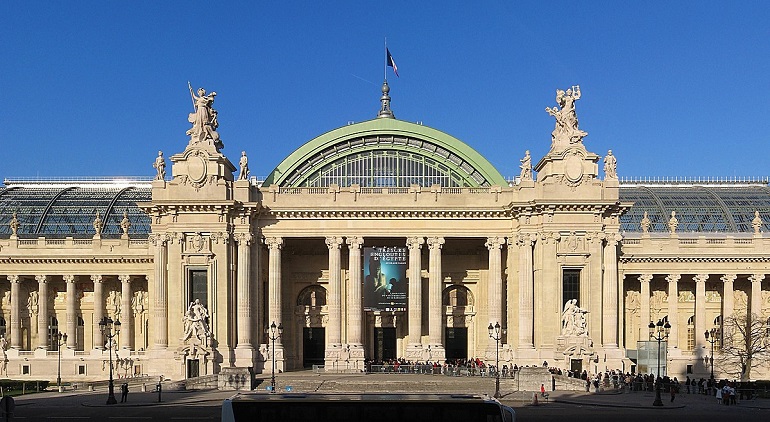
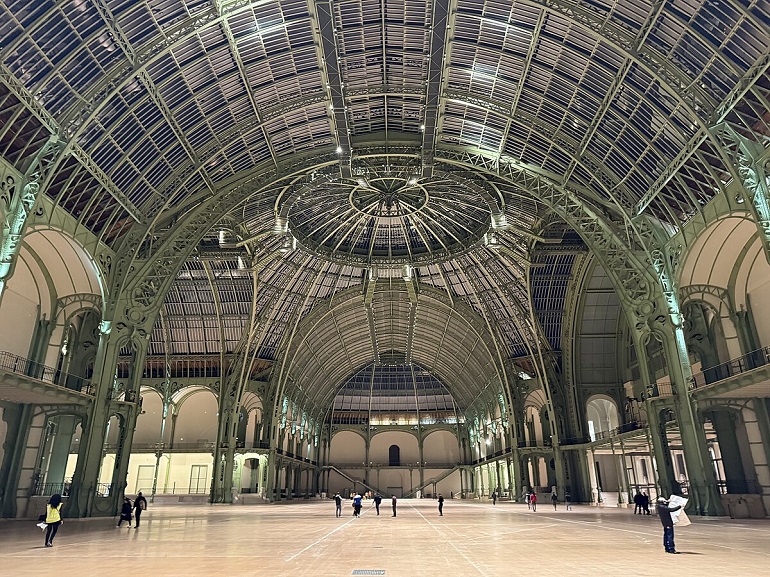
The building's most striking feature is its colossal glass dome, crowned with a French flag and spanning what is now Europe's largest glass roof. The nave, measuring 200 metres long, 45 metres wide, and reaching 43 metres in height at its central dome, creates a breathtaking cathedral of light and space. The structure required 8,500 tonnes of metal—more than the Eiffel Tower—and stands on 3,400 oak piles driven deep into Parisian soil.
The exterior showcases magnificent bronze quadrigas (four-horse chariots) by sculptor Georges Recipon adorning each wing. These dramatic sculptures depict "Harmony triumphing over Discord" on the Seine-facing side and "Immortality prevailing over Time" on the opposite facade. Additional monumental allegorical sculptures by renowned artists including Paul Gasq and Alfred Boucher complete the elaborate exterior decoration.
The building's façades display exceptional architectural unity despite their massive scale. The main entrance on Avenue Winston Churchill features a grand portico with Ionic columns supporting an elaborate pediment decorated with sculptural reliefs. The stonework incorporates both French limestone and imported materials, creating subtle colour variations that change with the light throughout the day.
Inside, visitors encounter an immense nave flooded with natural light from the glass ceiling, complemented by countless rooms, rotundas, and vestibules. A majestic cast-iron staircase in Art Nouveau floral forms, designed by Louis-Albert Louvet, provides an elegant ascent through the building's levels. The interior ironwork throughout displays exceptional craftsmanship, with decorative elements that echo the botanical motifs popular during the Art Nouveau period.
The building's acoustic properties are remarkable, designed to accommodate everything from intimate chamber music to full orchestral performances. The glass and steel construction creates unique sound characteristics that enhance both spoken presentations and musical events, making it a favoured venue for prestigious cultural gatherings.
Current Facilities & Exhibitions
Following a €466 million renovation completed in 2025, the Grand Palais now offers significantly expanded capacity and improved accessibility. The restoration preserved historical elements whilst incorporating cutting-edge climate control, lighting systems, and digital infrastructure. New lift systems provide improved access for visitors with mobility challenges, and enhanced security systems ensure the protection of priceless artworks whilst maintaining visitor comfort.
The building houses three main sections, each serving distinct cultural purposes:
The Galeries Nationales represent the crown jewel of Parisian exhibition spaces, hosting major temporary exhibitions throughout the year. These galleries feature state-of-the-art climate control and lighting systems capable of displaying the most delicate manuscripts alongside robust contemporary installations. Current programming includes "Niki de Saint Phalle, Jean Tinguely, Pontus Hulten" (running until January 2026), exploring the revolutionary artistic partnership that transformed 20th-century art. The exhibition features massive kinetic sculptures, immersive installations, and rarely-seen archival materials documenting their collaborative process.
"Art Brut" featuring the Decharme donation to Centre Pompidou (until September 2025) presents works by self-taught artists, psychiatric patients, and outsiders who created art beyond conventional cultural boundaries. The exhibition includes paintings, sculptures, and mixed-media works that challenge traditional definitions of artistic training and inspiration.
The galleries also host "Euphoria: Art Is in the Air" (through September 2025), an innovative exhibition dedicated to inflatable art installations that transform the classical gallery spaces into otherworldly environments. Visitors can walk through pneumatic sculptures and experience art that literally surrounds them.
The Nave serves as one of Europe's most versatile cultural spaces, its soaring glass ceiling creating a natural amphitheatre for diverse events. The iconic Saut Hermès show-jumping event transforms this architectural marvel into a unique sporting venue, with sand specially imported and seating for thousands arranged around a regulation jumping course. The juxtaposition of equestrian sport within this Belle Époque masterpiece creates an unforgettable spectacle.
Prestigious art fairs including Art Paris (April 2025) and Art Basel Paris (October 2025) showcase contemporary works from leading international galleries. These events transform the nave into a bustling marketplace where collectors, curators, and art enthusiasts browse cutting-edge works from established and emerging artists. The fairs feature special sections for digital art, video installations, and performance art, reflecting contemporary artistic practices.
The nave also hosts the annual "Révélations" craft fair, celebrating traditional and contemporary craftsmanship. Master artisans demonstrate their techniques whilst exhibiting exceptional pieces in ceramics, glasswork, textiles, and precious metals. This event bridges the gap between fine art and applied arts, showcasing the continued vitality of French craftsmanship traditions.
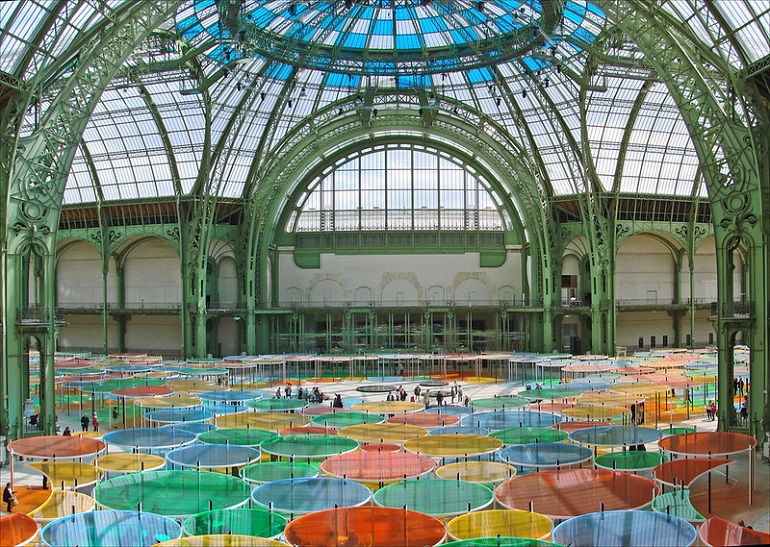
Seasonal programming includes the "Grand Palais d'été" (June through August), featuring outdoor performances in the surrounding gardens, rooftop concerts accessible via special lifts, and evening events that extend into the Parisian summer nights. These events often incorporate the building's exterior as a projection surface, creating spectacular light shows visible from the Champs-Élysées.
The Palais de la Découverte occupies the west wing as France's premier interactive science museum. After extensive renovation completed in 2025, it reopened with dramatically enhanced facilities including five fully-equipped science laboratories where visitors can participate in live experiments, themed curiosity islands focusing on specific scientific principles, and a revolutionary new 620m² space dedicated to children aged 2-10.
The museum's permanent exhibitions cover mathematics, physics, astronomy, chemistry, geology, and biology through hands-on displays that encourage active learning. The famous "Pi Room" displays 707 digits of π on its dome-like ceiling, creating an immersive mathematical environment that has inspired generations of students and mathematicians.
The astronomy section features a planetarium with a 15-metre dome and 360-degree projection system displaying real-time views of the night sky and journeys through distant galaxies. The physics demonstrations include live electricity shows where trained presenters create lightning bolts and explain electromagnetic principles through spectacular visual effects.
The chemistry laboratory allows visitors to observe safe experiments demonstrating molecular reactions, crystallisation processes, and colour changes. Interactive stations let curious minds explore atomic structures through digital models and handle meteorite samples under supervised conditions.
The new children's area, called "Palais des Enfants", incorporates play-based learning with age-appropriate scientific concepts. Toddlers can explore water flow patterns in specially-designed tables, whilst older children program simple robots and conduct supervised experiments with magnets and optical illusions.

New Features for 2025
The renovation introduced several groundbreaking additions that enhance the visitor experience:
The Salon Seine, a 900m² family-friendly space accessible free of charge, features rotating interactive installations created by contemporary artists. The current display by Marion Pinaffo and Raphaël Pluvinage offers a mechanical and poetic experience linking art and science through kinetic sculptures that respond to visitor movements. This space includes dedicated areas for collaborative art-making, comfortable seating for families, and a specialised shop featuring art books and creative materials for children.
Three distinct retail areas cater to different interests: the Champs-Élysées bookshop in the main lobby offers comprehensive selections of art books, exhibition catalogues, and Parisian cultural guides; the Design and Crafts shop accessible via the central square specialises in contemporary design objects, artisanal pieces, and exclusive collaborations with featured artists; the Salon Seine shop provides educational toys, creative supplies, and family-oriented cultural materials.
Dining facilities include a sophisticated restaurant serving contemporary French cuisine with views of the nave, a casual café offering quick meals and beverages, and seasonal outdoor dining areas in the surrounding gardens. The main restaurant features rotating exhibitions of tableware created by contemporary ceramicists and glassmakers, extending the cultural experience into dining.
Enhanced accessibility features encompass audio description systems for visually impaired visitors, tactile models of key architectural features, sign language interpretation for major events, and comfortable rest areas throughout the building. New digital guides available in multiple languages provide detailed information about both permanent architectural features and temporary exhibitions.

Visitor Services & Amenities
The Grand Palais provides comprehensive visitor services designed for international tourists and local culture enthusiasts. Multi-language audio guides offer detailed commentary on architectural features and current exhibitions, available in French, English, German, Spanish, Italian, and Mandarin Chinese. Guided tours led by art historians and architects provide deeper insights into the building's construction techniques, historical significance, and ongoing cultural role.
The building features extensive cloakroom facilities, secure bag storage, free Wi-Fi throughout, and comfortable rest areas with charging stations for electronic devices. Baby-changing facilities and pushchair storage accommodate families, whilst wheelchair rental and companion services assist visitors with mobility needs.
Petit Palais
Directly opposite the Grand Palais, the Petit Palais presents a more intimate yet equally magnificent architectural experience. This "Little Palace" serves as the Musée des Beaux-Arts de la Ville de Paris, housing one of the capital's finest art collections whilst offering free admission to its permanent galleries—making it one of Paris's most generous cultural institutions.

Architecture & Design
Designed by Charles Girault in the Beaux-Arts style, the Petit Palais follows a trapezoidal plan organised around four wings surrounding a semi-circular garden. The building demonstrates Girault's masterful blend of traditional and modern architecture through natural visitor flow and bold openings onto both the Champs-Élysées gardens and the interior courtyard.
The main facade features a central entrance with grand archway topped by an elegant dome, flanked by wings adorned with ionic columns and tall windows that flood the interior galleries with natural light. The tympanum above the entrance, depicting Paris surrounded by muses, was created by sculptor Jean Antoine Injalbert and represents one of the finest examples of Belle Époque allegorical sculpture in the capital.
The building's proportions create an immediately welcoming scale compared to its grandiose neighbour. The facade's warm limestone glows golden in afternoon light, whilst decorative elements including carved garlands, medallions, and sculptural reliefs reward close examination. The entrance steps, crafted from grey granite, create a dignified approach that signals the cultural treasures within.
The interior showcases remarkable decorative elements created between 1903-1925, representing the pinnacle of French decorative arts from this golden period. The entrance rotunda, illuminated by American-style stained glass windows depicting the four seasons, displays four symbolic paintings by Albert Besnard representing "The Months of the Year" and "The Hours of Day and Night". These murals combine classical allegory with Art Nouveau sensibility, creating a visual bridge between traditional academic painting and emerging modern styles.
The building features extensive Italian mosaics throughout galleries and rotundas, created by renowned artist Facchina using traditional techniques and premium materials imported from Ravenna. These mosaics incorporate classical motifs including laurel wreaths, geometric patterns, and mythological figures executed in gold tesserae that shimmer as visitors move through the spaces.
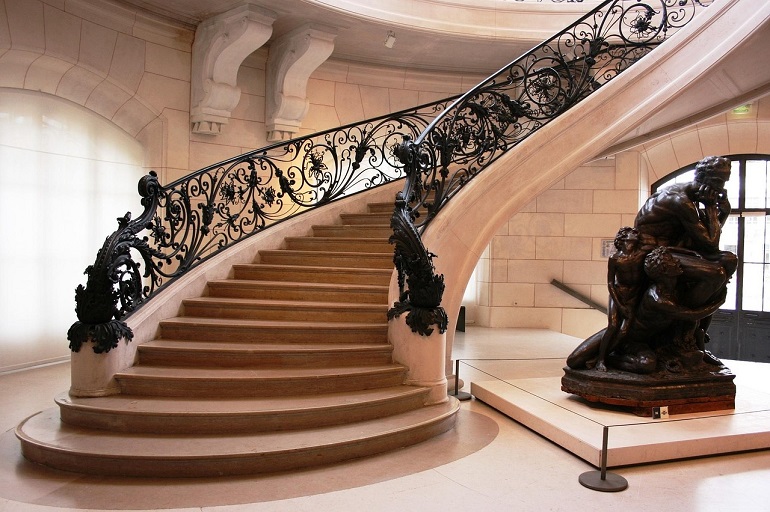
A spectacular wrought-iron staircase, designed by Girault himself, appears to float without central support, exemplifying Art Nouveau elegance and advanced engineering. The staircase balustrades feature intricate botanical motifs including climbing roses, grape vines, and ivy leaves, whilst the supporting structure demonstrates innovative techniques that influenced later architectural developments.
The Dutuit cupola above this staircase contains magnificent murals by Maurice Denis depicting French art history through portraits of artists and their famous works. These paintings, executed in Denis's distinctive Symbolist style, feature representations of medieval illuminators, Renaissance masters, and contemporary artists, creating a visual chronicle of French cultural achievement.
Additional Architectural Features
The museum's gallery spaces demonstrate exceptional attention to visitor comfort and artwork preservation. Ceiling heights vary strategically to accommodate different types of art, from intimate portrait galleries with lower ceilings that create intimate viewing experiences to spacious sculpture halls with soaring vaults that provide dramatic settings for three-dimensional works.
Original parquet floors throughout the building feature intricate patterns created from various wood species including oak, walnut, and exotic imports. These floors, carefully maintained and periodically restored, provide both visual interest and acoustic benefits that enhance the museum experience.
The building's heating and ventilation systems, revolutionary for their time and recently updated, maintain optimal conditions for artwork preservation whilst ensuring visitor comfort. Original brass radiator covers feature decorative elements that complement the building's overall aesthetic scheme.
Gardens & Courtyard
The Petit Palais's semi-circular interior garden represents one of Paris's hidden gems, accessible free of charge and offering a tranquil respite from urban intensity. This exotic garden features three Art Deco basins with mosaics in blue, turquoise, violet, and gold tones, created by sculptor Raoul Lamourdedieu in 1937. The central fountain's gentle water sounds create a meditative atmosphere enhanced by carefully planned acoustics.
The garden combines Mediterranean plants including potted orange trees, lemon trees, and palm trees with local species, creating a lush oasis that changes character throughout the seasons. Spring brings blooming camellias and azaleas, summer showcases aromatic lavender and rosemary, autumn features changing foliage colours, and winter maintains evergreen structure with architectural pruning.
Seasonal plantings ensure year-round interest, with bulb displays creating spectacular spring shows, annual flowers providing summer colour, and carefully chosen trees offering autumn foliage. The garden's microclimate, protected by surrounding galleries, allows cultivation of plants that couldn't survive elsewhere in Paris.
The garden peristyle, with its richly decorated colonnades, houses magnificent frescoes by Paul Albert Baudouin depicting the seasons, months, and hours through allegorical figures and natural motifs. These paintings, executed directly onto the wall surfaces, demonstrate techniques derived from Italian Renaissance masters whilst incorporating Belle Époque sensibilities.
Comfortable seating throughout includes both traditional benches and contemporary deckchairs, with strategic positioning to take advantage of changing light conditions throughout the day. Morning light illuminates the eastern colonnade, midday sun warms the central fountain area, and afternoon light creates dramatic shadows across the western arcade.
The garden serves multiple functions beyond aesthetic pleasure: it provides natural climate control for surrounding galleries, creates a peaceful environment for contemplation between exhibition visits, and offers an exceptional venue for small concerts and cultural events during warmer months.

Collections & Museums
The Petit Palais permanent collection, with free admission throughout, spans art history from antiquity to the early 20th century, representing one of Europe's most comprehensive municipal art collections. The museum's holdings comprise two major components: works acquired by the City of Paris since 1870 through strategic purchases and donations, and the extraordinary Dutuit Brothers bequest of 1902, which transformed the institution into an international-calibre museum.
Ancient World Collections occupy the building's eastern wing, featuring exceptional Greek and Roman bronzes displayed in specially-designed cases that enhance their sculptural qualities. The collection includes rare drinking vessels (rhyta) from 500 BCE decorated with mythological creatures, Etruscan tomb paintings that provide insights into ancient burial practices, and an extensive collection of ancient jewellery featuring techniques still admired by contemporary craftspeople.
Roman mosaics, some excavated from sites in France and others acquired from Mediterranean sources, demonstrate the geographic spread of Roman influence and artistic techniques. These works are displayed with detailed explanations of mosaic construction methods and historical context.
The ancient ceramics collection encompasses Greek red-figure and black-figure pottery, Roman terra sigillata, and early Christian artifacts that document the transition from pagan to Christian artistic traditions. Interactive displays allow visitors to examine construction techniques and decorative methods through high-resolution photography and 3D modeling.
Medieval and Renaissance Collections showcase the evolution of European artistic traditions through precious objects and manuscripts. French ivory works include religious diptychs, secular mirror cases, and gaming pieces that demonstrate medieval luxury craftsmanship. The ivory collection provides insights into medieval daily life, religious practices, and artistic exchange between different cultural centres.
Limoges enamel pieces represent the pinnacle of medieval metalwork, with religious reliquaries, secular containers, and decorative objects displaying techniques that influenced later European enamel work. The collection includes both champlevé and cloisonné examples, allowing visitors to understand different technical approaches.

Illuminated manuscripts feature both religious and secular texts, including Books of Hours created for wealthy patrons, historical chronicles, and literary works. The manuscript collection includes examples from major European scriptoriums, demonstrating regional differences in illustration styles and text presentation.
Early printed books, including incunabula and 16th-century editions, document the transition from handwritten to printed texts. The collection includes works by major European printers and demonstrates evolving typography and illustration techniques.
Renaissance decorative arts encompass Moorish ceramics acquired during Spanish campaigns, Venetian glass demonstrating sophisticated blowing and decorating techniques, Turkish Iznik ceramics featuring distinctive blue and white patterns, and French Saint-Porchaire pottery representing the apex of 16th-century ceramic artistry.
Dutch and Flemish Collections form one of the museum's crown jewels, largely donated by the Dutuit brothers and rivaling the Louvre's holdings in quality and comprehensiveness. The collection includes masterpieces by Albrecht Dürer, complete sets of Rembrandt engravings that document his technical evolution, and paintings by Jan van Eyck, Hans Memling, and other Northern Renaissance masters.
The Dutch Golden Age paintings feature works by Johannes Vermeer, Frans Hals, Jacob van Ruisdael, and other masters, demonstrating the period's innovations in oil painting techniques, genre subjects, and landscape representation. These works are displayed in galleries with lighting designed to simulate Northern European conditions.
Flemish tapestries from the 15th and 16th centuries showcase the Low Countries' dominance in textile arts, with examples featuring mythological subjects, historical narratives, and decorative patterns that influenced European decorative arts for centuries.
18th and 19th-Century French Art forms the collection's heart, featuring works that document the evolution of French artistic traditions from Rococo through Impressionism. The collection includes major works by Jean-Baptiste Greuze, whose sentimental genre scenes defined middle-class taste, François Boucher's mythological and pastoral scenes that epitomised Rococo elegance, and Jean-Honoré Fragonard's spontaneous brushwork that influenced later artistic developments.
The 19th-century holdings encompass Neoclassical works by Jacques-Louis David and his followers, Romantic paintings by Eugène Delacroix and Théodore Géricault, Realist works by Gustave Courbet that challenged academic conventions, and Impressionist masterpieces by Claude Monet, Pierre-Auguste Renoir, Edgar Degas, and Camille Pissarro.
The museum's Impressionist collection provides an excellent introduction to the movement, with examples spanning its development from early plein-air experiments through mature works that established new approaches to colour, light, and brushwork. The collection includes both well-known masterpieces and lesser-known works that provide insights into the artists' working methods.
Post-Impressionist works by Paul Cézanne, Paul Gauguin, and Henri de Toulouse-Lautrec demonstrate the movement's evolution toward modern artistic approaches, with examples that influenced 20th-century developments.
Sculptures throughout the museum include works by Auguste Rodin that demonstrate his revolutionary approach to three-dimensional form, Jean-Baptiste Carpeaux's dynamic figures that bridged Neoclassical and modern approaches, and works by Antoine-Louis Barye, François Rude, and other masters who established French sculptural traditions.
The Icon Collection represents France's finest public collection of religious icons, donated by Roger Cabal and spanning eight centuries of Orthodox Christian art. These include Byzantine icons from Constantinople that preserve ancient iconographic traditions, Greek icons from post-Byzantine periods that demonstrate cultural continuity, Russian religious images that reflect distinctive national approaches, and Cretan-Venetian school works that show cross-cultural artistic exchange.
The collection demonstrates technical evolution in icon painting, from early tempera works through later mixed-media approaches, whilst exploring theological and artistic concepts underlying Orthodox iconography. Educational materials explain symbolic elements, artistic conventions, and religious significance for visitors unfamiliar with Orthodox traditions.
Current Exhibitions and Programming
The Petit Palais maintains an active temporary exhibition programme alongside its permanent collection, presenting approximately four major exhibitions annually that explore specific themes, artists, or historical periods.
Current programming includes "Worth: Inventing Haute Couture" (until September 2025), examining the English designer Charles Frederick Worth who established haute couture as we know it today. The exhibition features original garments, fashion illustrations, and archival materials that document Worth's innovations in fashion design, marketing, and luxury goods production.
"Jean-Baptiste Greuze: Childhood Illuminated" (September 2025-January 2026) will present the first major retrospective of this sentimental genre painter, featuring works borrowed from major international collections alongside the museum's own holdings. The exhibition explores Greuze's influence on bourgeois taste and his role in developing new approaches to narrative painting.
The museum's exhibition programming typically alternates between monographic presentations focusing on individual artists and thematic exhibitions exploring broader cultural phenomena. Recent successes have included major presentations on Art Nouveau decorative arts, 19th-century Orientalist painting, and contemporary artists working with traditional techniques.
Café 1902 and Dining
The museum's Café 1902, located within the garden courtyard, offers exceptional dining in one of Paris's most beautiful settings. The café occupies part of the colonnade surrounding the garden, with seating beneath the painted ceiling that depicts allegorical scenes of the seasons and hours.
Operating Tuesday through Sunday, the self-service establishment serves breakfast from 10:00 AM featuring fresh pastries from renowned Parisian bakeries, specialty coffees, and seasonal fruit. Lunch offerings include seasonal salads incorporating produce from local markets, artisanal sandwiches on bread from award-winning boulangeries, daily soup selections, and desserts created by the café's pastry chef.
The indoor dining area features comfortable seating with direct views of the garden fountain and seasonal plantings, whilst the outdoor terrace provides al fresco dining under the decorated colonnade from April through October. The café's location creates a unique experience where visitors can observe changing light conditions on the frescoes whilst enjoying high-quality refreshments.
Afternoon service includes a selection of teas, including rare varieties sourced from specialised Parisian tea merchants, coffee drinks prepared by trained baristas, and light refreshments perfect for sustaining energy during extended museum visits.
The café frequently hosts special events including wine tastings featuring selections that complement current exhibitions, artist talks over informal meals, and seasonal celebrations that incorporate the garden's changing character.
Educational Programs and Services
The Petit Palais maintains extensive educational programming designed for diverse audiences, from school groups through adult learners and specialised researchers.
School programs include age-appropriate tours of permanent collections, hands-on workshops in museum studios where students create artworks inspired by collection pieces, and extended partnerships with local schools that include multiple visits and classroom follow-up activities.
Adult programming encompasses monthly lectures by leading art historians, intimate gallery talks focused on specific artworks or techniques, and behind-the-scenes tours that provide access to conservation laboratories and storage areas normally closed to the public.
The museum's conservation department offers periodic demonstrations of restoration techniques, allowing visitors to observe professional conservators working on collection pieces whilst explaining scientific methods used in artwork preservation.
Research facilities include a specialised library focusing on decorative arts and 19th-century French painting, accessible by appointment to serious researchers, students, and art professionals. The library's holdings include rare exhibition catalogues, artist correspondence, and archival materials documenting the museum's collection development.
Visitor Experience and Amenities
Both palaces offer contrasting yet complementary experiences that together provide a comprehensive introduction to Parisian cultural life. The Grand Palais impresses with its monumental scale, cutting-edge temporary exhibitions, and dynamic programming that ranges from prestigious art fairs to interactive scientific demonstrations. Its glass dome and vast nave create an almost spiritual architectural experience whilst housing contemporary artistic expressions and innovative educational displays.
The building's new accessibility features include comprehensive audio description systems available in multiple languages, tactile models of key architectural elements for visually impaired visitors, and comfortable rest areas strategically positioned throughout the complex. Enhanced lift systems provide access to all levels, whilst clear signage and digital information systems help visitors navigate the extensive facility.
The Petit Palais provides a more contemplative journey through art history within an architectural jewel that rewards careful exploration. Its free permanent collection, combined with the tranquil garden setting, offers exceptional cultural value whilst providing a peaceful respite from Paris's dynamic street life. The building's decorative details reward close examination, from intricate mosaic work through painted ceilings to sculptural elements that demonstrate the highest levels of Belle Époque craftsmanship.
The museum's compact scale allows comprehensive exploration in a single visit, whilst the free admission policy encourages repeated visits that reveal new aspects of the collection. The garden provides a unique urban oasis where visitors can reflect on artworks viewed whilst enjoying one of Paris's most beautiful hidden spaces.
Practical Information for Visitors
Both institutions provide comprehensive visitor services designed to accommodate international tourists and local culture enthusiasts. Multi-language materials are available in French, English, German, Spanish, Italian, Japanese, and Mandarin Chinese, with audio guides offering detailed commentary on architectural features, collection highlights, and temporary exhibitions.
Group reservation systems accommodate tour operators and educational groups, with specialised programs available for art history students, museum professionals, and cultural tourists seeking deeper engagement with collections and architecture.
The museums' locations provide excellent access to other major Parisian attractions, with the Champs-Élysées gardens, Seine riverbanks, and Place de la Concorde all within easy walking distance. The surrounding area offers numerous dining options, luxury shopping, and additional cultural sites that create opportunities for extended cultural itineraries.
Seasonal programming at both institutions takes advantage of Paris's climate and cultural calendar, with outdoor events during pleasant weather and special exhibitions timed to coincide with major cultural seasons. The combination of permanent collections, temporary exhibitions, educational programs, and architectural significance ensures that both the Grand Palais and Petit Palais remain essential destinations for understanding Parisian cultural life and French artistic achievement.
Together, these architectural twins embody the ambition and artistic vision of the 1900 Universal Exhibition whilst continuing to serve as vibrant cultural centres that define contemporary Parisian cultural life. They represent both historical achievement and ongoing cultural vitality, providing visitors with exceptional opportunities to engage with art, architecture, science, and French cultural traditions in settings of unparalleled beauty and significance.