


Introduction
The Conciergerie is one of the oldest surviving remnants of the Palais de la Cité, the medieval royal palace that served as the residence and seat of power for French kings from the 10th century until the 1350s when royalty relocated to the Louvre. Located on the Île de la Cité in central Paris, this Gothic structure was constructed primarily in the 13th century and later transformed into a prison from 1391 onwards, becoming the site of the Revolutionary Court during the French Revolution. The building is perhaps most famously associated with Marie-Antoinette, who was imprisoned here before her execution, and her former cell now houses a commemorative chapel built during the 19th-century Restoration. Today, the Conciergerie operates as a museum showcasing both its medieval heritage through its impressive Gothic halls and vaulted ceilings, and its revolutionary history as one of Paris's most significant prisons, whilst remaining part of the active Palais de Justice complex and holding UNESCO World Heritage status.
Interesting Facts about Conciergerie
- The Conciergerie stands on the Île de la Cité as the oldest surviving part of the medieval Palais de la Cité, once the royal residence of the French kings.
- Its name derives from the “concierge,” a high royal official who oversaw policing, prisons, and the palace’s practical affairs.
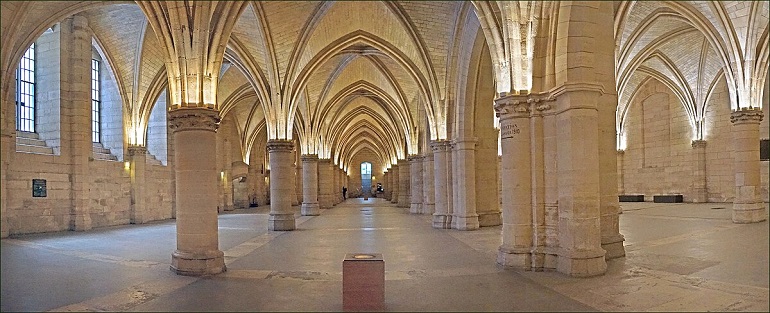
- The complex showcases outstanding Gothic secular architecture, notably the vast Salle des Gens d’Armes with soaring ribbed vaults.
- After Charles V moved the royal residence, the site became a state prison in the late 14th century and later infamous during the French Revolution.
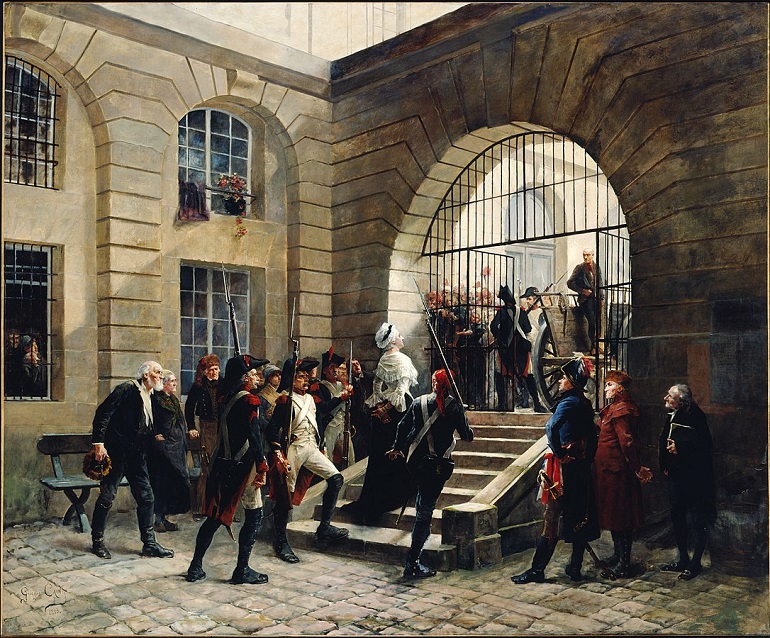
- Marie Antoinette was held here in 1793 before her execution, and an expiatory chapel marks the location of her final cell.
- The Conciergerie hosted the Revolutionary Tribunal, where thousands were tried in swift proceedings during the Reign of Terror.
- Its riverside façade is punctuated by medieval towers such as the Bonbec, Caesar, and Silver Towers, recalling its fortified past.
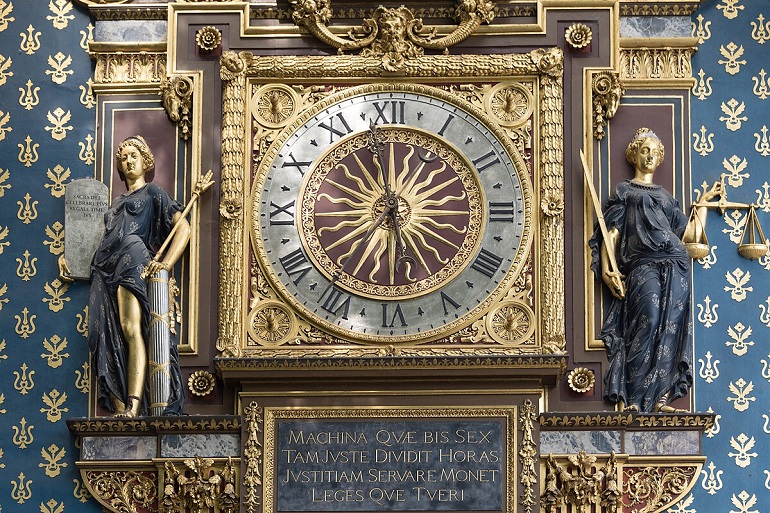
- Paris’s first public clock, installed in the 14th century, still adorns the Conciergerie’s corner tower overlooking the Seine.
- Now a museum administered within the Palais de Justice complex, it presents reconstructions of prison conditions across social classes.
- Exhibitions and digital guides interpret the site’s layered roles as palace, court, and prison, linking medieval monarchy to revolutionary justice.
- Flood marks from the great Paris flood of 1910 can be seen on interior columns, silently recording the Seine’s historic rise.
- Together with the banks of the Seine, the monument forms part of a UNESCO World Heritage ensemble celebrating Paris’s urban heritage.
- The neighbouring Sainte-Chapelle, once the palace chapel, highlights the complex’s original royal and judicial heart of medieval Paris.
- Archaeological and documentary evidence trace occupation on the island back to late Roman and early Capetian power centres.
- The museum’s narratives emphasise both architectural splendour and the human stories of detainees who passed through its cells.

History
The Conciergerie stands as one of Paris's most historically significant monuments, occupying a pivotal position on the western end of the Île de la Cité. Its origins trace back to the 6th century, when Clovis, the first King of France, established his royal residence on this strategic island in the Seine. The site's importance predates even the French monarchy, as it housed a Castellum or Palatium since the 4th century CE, serving as home to Roman Emperors Julian and Valentinian and housing the Praetorian Tribunal. The palace truly became the seat of royal power in the 10th century when Hugh Capet, the first Capetian king, established his council and government departments within the Palais de la Cité. From this period through to the 14th century, the Conciergerie remained the primary residence and administrative centre of the French monarchy.
The magnificent Gothic architecture that visitors admire today owes its splendour primarily to King Philippe Le Bel (Philip IV) in the 13th and early 14th centuries. During his reign, the Royal Palace was considered one of the most beautiful in Europe. The structure was further enhanced under Louis IX (Saint-Louis) and subsequent monarchs who added fortifications and expanded the complex. The building's distinctive three medieval towers with cone-shaped roofs - the Caesar Tower, Silver Tower (where royal treasures were stored), and the oldest Bonbec Tower (constructed between 1226-1270) - remain purely medieval features. However, the palace's role as a royal residence ended in the 1350s when French royals abandoned it in favour of the Louvre, following civil unrest led by Étienne Marcel in 1358. When Charles V departed, he appointed a concierge to manage the palace - a highly prestigious position that gave the building its enduring name.
The Conciergerie's transformation into a state prison in 1391 marked the beginning of its most notorious chapter. For centuries, it housed a mixture of common criminals and political prisoners under vastly different conditions depending on their wealth and status. During the French Revolution, the building became the headquarters of the Revolutionary Tribunal and earned its fearsome reputation as the most dreaded prison of the Terror. Between 1793-1795, over 2,781 prisoners passed through its cells, including the most famous inmate, Queen Marie Antoinette, as well as revolutionaries Georges Danton and Maximilien Robespierre. The prison could hold over a thousand prisoners at any given time, with trials and executions often occurring on the same day. Following the Restoration, the Conciergerie continued as a prison for high-profile detainees, including the future Napoleon III, whilst Marie Antoinette's cell was converted into a commemorative chapel. The building underwent major reconstruction in the mid-19th century, with its current fortress-like external appearance dating from around 1858, though it continues to serve judicial functions as part of the modern Palais de Justice.
Description
Standing proudly on the Île de la Cité, the Conciergerie blends formidable medieval Gothic architecture with a museum experience that immerses visitors in centuries of Parisian life and culture. A visit reveals vast vaulted halls, legendary towers, and evocative museum galleries – each element contributing to a multifaceted experience in one of the city’s most architecturally impressive landmarks.
Architectural Marvel and Riverside Presence
The exterior of the Conciergerie presents a dramatic profile along the Seine, with its slate-capped towers and crenellated stone walls rising above the riverbank. The building’s imposing Gothic lines and pointed arches create an atmosphere at once awe-inspiring and contemplative, lending a sense of continuity between the city’s past and its lively present. Visitors are immediately struck by the play of daylight on pale stone, which shifts with the changing skies, infusing the entire site with an atmospheric grandeur.
The four medieval towers that define the northern façade each tell their own story through architectural detail. The Tour Bonbec, the oldest circular tower at the western end, earned its name from "Bon Bec" meaning "good talker" – a grim reference to its former use as a torture chamber where prisoners were encouraged to speak freely. The Caesar Tower and Silver Tower, flanking the main entrance, once served as dungeons and royal treasury respectively, their solid stone construction speaking to both defensive necessity and regal authority.
The Clock Tower: Charles V's Timepiece
Perhaps the most striking of all the towers is the Tour de l'Horloge, the clock tower that rises majestically to 47 metres at the corner of Quai de l'Horloge and Boulevard du Palais. Built between 1350 and 1353, this five-storey tower with its distinctive battlements and lantern top serves as both architectural focal point and functional timekeeper.
The tower houses France's first public clock, commissioned by Charles V in 1370 and installed the following year by Henri de Vic, a master clockmaker from Lorraine. This ornate timepiece, restored to its original splendour in 2012, presents a magnificent spectacle of royal craftsmanship. The clock face, set within a richly decorated 1.5-metre square frame, features a deep blue background adorned with golden fleurs-de-lis – unmistakable symbols of French royalty.
The gilded clockwork is framed by intricate allegorical figures representing Law and Justice, sculpted by Germain Pilon during Henri III's embellishments in 1585. Two Latin inscriptions bracket the timepiece: the lower reads "This mechanism which divides time into perfectly equal twelve hours helps you to protect justice and defend the law," whilst the upper honours Henri III with "He who has already given two crowns will be given a third." The clock's hands themselves are works of art – the longer depicts an arrow whilst the shorter bears a fleur-de-lis at its tip, radiating from a central golden sunburst design marked with Roman numerals.
Inside the Salle des Gens d'Armes: Europe's Grandest Medieval Hall
Upon entering, guests encounter the Salle des Gens d'Armes (Hall of the Men-at-Arms), one of the largest surviving medieval halls in Europe and arguably the Conciergerie's most breathtaking space. This vast four-aisled Gothic chamber stretches magnificently beneath soaring rib-vaulted ceilings supported by rows of massive cylindrical pillars. Each column, precisely spaced and proportioned, creates a rhythmic arcade that draws the eye inexorably towards the hall's far reaches.
The atmosphere within this monumental space shifts throughout the day as natural light filters through high-set windows, casting ever-changing patterns across the honey-coloured stone. The hall's acoustics create an almost cathedral-like hush, despite its secular origins as both ceremonial gathering place and administrative centre for the royal household. Stone benches line the periphery, offering visitors moments of contemplation beneath the architectural grandeur that has witnessed over six centuries of French history.
The Royal Kitchens: Medieval Culinary Grandeur
Adjacent to the great hall lie the royal kitchens, another remarkable survival of medieval palace life. These chambers, with their robust stone construction and massive fireplaces, once fed an entire royal court. Four enormous hearths, each capable of roasting whole animals, dominate the space, their blackened stones and chimney systems testament to the scale of medieval royal entertaining.
The kitchens retain their original Gothic windows and stone-flagged floors, whilst carefully positioned modern lighting illuminates architectural details that might otherwise remain hidden in shadow. Wooden preparation tables and period utensils help visitors imagine the bustle and energy that once filled these chambers during grand banquets and daily meal preparation.
Museum Experience: Exhibitions and Interpretive Spaces
The museum component of the Conciergerie transforms former cells and ancillary chambers into immersive exhibition spaces that bring the building's layered history to life. Throughout the complex, a carefully curated collection of artefacts, manuscripts, paintings, and multimedia installations guides visitors through different epochs of the site's evolution.
Interactive digital kiosks and the complimentary Histopad tablet provide augmented reality experiences that overlay virtual reconstructions onto existing spaces, allowing visitors to see rooms as they appeared centuries ago. Audio guides in multiple languages offer personal narratives and expert commentary, whilst strategically placed information panels provide context without overwhelming the architectural experience.
The museum's galleries host rotating exhibitions that illuminate specific aspects of French legal, political, and social history. Contemporary design elements – including subtle strip lighting, floating information panels, and sleek touchscreens – create dialogue between ancient fabric and modern museography, resulting in a seamless journey from architectural monument to dynamic learning environment.
Marie Antoinette's Cell and the Expiatory Chapel
A profound highlight of any visit is Marie Antoinette's reconstructed prison cell, meticulously recreated to evoke the sombre final days of the queen before her execution. Period furnishings – a simple wooden bed, writing table, single chair, and religious artefacts – create an intensely personal atmosphere that invites quiet reflection on individual human experience amidst grand historical events.
The adjacent Expiatory Chapel, created in 1815 as a memorial, features an altar adorned with a prominent cross and elegant candelabra. Behind the altar hangs a large black drape embroidered with gold royal symbols, whilst inscriptions around the walls honour the queen's memory. The chapel's restrained design and gentle natural lighting create a space of genuine contemplation and remembrance.

Revolutionary Tribunal and Prison Experience
Other museum spaces showcase the site's dramatic transformation during the French Revolution. The Revolutionary Tribunal room presents original documents, period artefacts, and interactive displays that guide visitors through the turbulent trials held within these walls. Contemporary accounts, judicial records, and personal testimonies bring immediacy to events that shaped modern French society.
The museum features various recreated prison cells that highlight stark differences between conditions for common prisoners and privileged detainees. These installations offer tangible insights into the realities of incarceration across different social strata, from straw-covered floors in communal cells to the relative comfort afforded those who could pay for better treatment.
Gothic Architecture and Structural Details
Beyond the major halls, the Conciergerie's architectural richness reveals itself in countless details that reward careful observation. Pointed archways frame doorways and windows with elegant precision, whilst carved stone corbels support vaulted intersections with both structural necessity and decorative flair. Original medieval masonry work, including dressed stone blocks and mortar joints, demonstrates the exceptional craftsmanship of 14th-century builders.
The building's defensive origins remain visible in thick walls, narrow windows, and strategic positioning of towers. Yet these martial elements are softened by Gothic refinement – rose windows, delicate tracery, and soaring vertical lines that transform fortress into palace, creating architectural harmony between function and beauty.
Visitor Experience and Contemporary Amenities
The Conciergerie excels in balancing historical authenticity with contemporary visitor needs. Comprehensive facilities include accessible routes throughout the complex, comfortable rest areas strategically positioned near major exhibits, and discrete cloakrooms that preserve the historic atmosphere. Well-informed museum staff provide assistance and additional context throughout the galleries, enhancing the self-guided experience without intruding upon personal discovery.
The museum shop offers a thoughtfully curated selection of publications, artistic reproductions, and artisanal souvenirs that reflect the monument's rich legacy. Educational materials for children and scholarly resources for researchers ensure that visitors of all ages and interests find appropriate engagement with the site's multifaceted history.
Cultural Programming and Special Events
Beyond its role as museum and monument, the Conciergerie serves as a vibrant cultural venue hosting concerts, lectures, temporary exhibitions, and special events throughout the year. The acoustic properties of the great medieval halls make them particularly suitable for period music performances, whilst the dramatic architectural backdrop enhances theatrical presentations and ceremonial occasions.
The venue is available for private functions, making it a sought-after location for cultural gatherings, product launches, and corporate events in the heart of Paris. These contemporary uses demonstrate the building's continued relevance and adaptability whilst generating revenue that supports ongoing conservation efforts.
Architectural Conservation and Ongoing Restoration
The Conciergerie represents an ongoing triumph of architectural conservation, with restoration work carefully balanced between historical accuracy and contemporary accessibility requirements. Recent projects, including the 2012 restoration of Charles V's clock, demonstrate commitment to maintaining authentic materials and traditional craftsmanship techniques whilst incorporating discrete modern systems for climate control, security, and visitor safety.
Stone cleaning, roof maintenance, and window restoration follow strict conservation protocols that preserve original fabric whilst ensuring structural integrity for future generations. These efforts, supported by admission fees and cultural programming, guarantee that the Conciergerie continues to serve both as historical monument and active cultural institution.
Lasting Cultural Impact
The Conciergerie stands as more than a museum or architectural monument – it represents a tangible link between medieval royal power, revolutionary upheaval, and contemporary democratic values. Its Gothic halls and reconstructed chambers offer visitors direct encounter with the textures of French history, whilst its ongoing cultural programming ensures continued relevance for modern audiences.
Whether drawn by architectural grandeur, historical significance, or museum innovation, every visitor departs with enhanced appreciation for the complex forces that shaped French society. The interplay of stone and story, space and time, creates lasting impression that extends far beyond a single visit, establishing the Conciergerie as an essential destination for understanding both Parisian heritage and the broader sweep of European civilisation.
From Charles V's pioneering public timekeeper to Marie Antoinette's final refuge, from medieval royal kitchens to revolutionary tribunal chambers, the Conciergerie encompasses centuries of human experience within its Gothic walls. As both monument to the past and dynamic cultural institution for the present, it continues to serve its fundamental purpose: bringing people together in shared encounter with the enduring power of history, architecture, and collective memory.