


| Contents |
|---|

Introduction
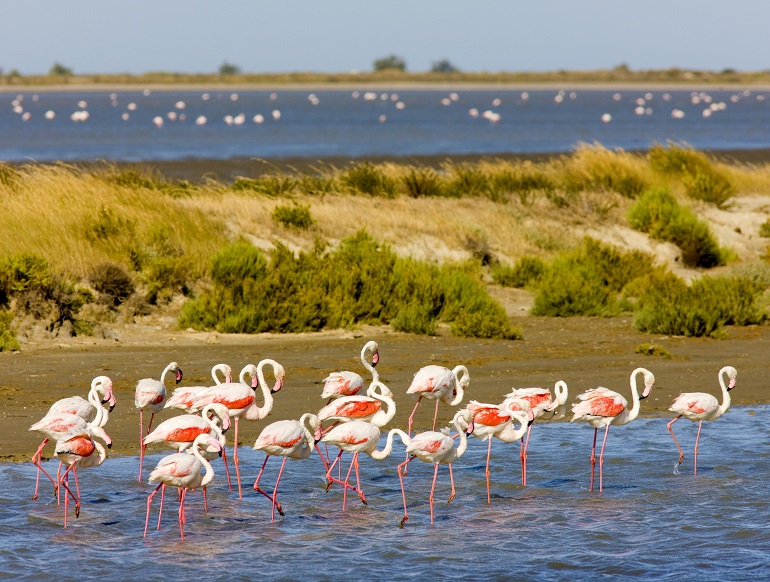
The Camargue Regional Natural Park, established in 1970, spans 85,000 hectares at the mouth of the River Rhone. This unique European wetland features vast wild expanses of salt marshes, reed beds, lagoons, and the large Vaccarès lake, with its highest point just 4.5 metres above sea level. The park is home to exceptional biodiversity, including 44 species of mammals, 10 species of amphibians, and 15 species of reptiles. Birdwatchers will appreciate the park as a major migratory stopover between Europe and Africa, with approximately 150,000 migrating birds annually and 75% of France's bird species present, including the iconic pink flamingos that nest here. The landscape is characterised by ricefields, salt plains, and glasswort-covered moors where the emblematic white Camargue horses and bulls roam freely. Visitors can explore the park through observation towers, themed trails, and guided tours across the communes of Arles and Saintes Maries de la Mer.
Geography and Landscape
The Camargue Regional Natural Park is a vast and unique landscape that captivates visitors with its diverse geography. Spanning over 85,000 hectares, this extraordinary delta region is formed where the Rhône River meets the Mediterranean Sea, creating a mesmerising tapestry of land and water.
Geography
The Camargue is one of western Europe's largest river deltas, covering an area of more than 930 square kilometres. It is characterised by its remarkably flat terrain, with the highest point reaching a mere 4.5 metres above sea level. The park is bounded by the two arms of the Rhône River delta—the Petit Rhône and the Grand Rhône—which split at the town of Arles before flowing into the Mediterranean.
Landscape Features
Étangs and Marshes
A significant portion of the Camargue consists of shallow lagoons, known as étangs, and marshlands. The Étang de Vaccarès, the largest of these lagoons, is a central feature of the park, covering approximately 6,000 hectares. These wetlands play a crucial role in the park's ecosystem and contribute to its striking visual appeal.
Sansouires and Salt Plains
In the lower Camargue, visitors will encounter sansouires—vast, clayey, and salty plains that flood easily during rainy periods and crack under the summer sun. These salt plains create a unique and otherworldly landscape, often marked by white traces of salt in the dry season.
Beaches and Dunes
The Camargue boasts about 50 kilometres of pristine beaches along its Mediterranean coastline. Beyond the protective dykes, the shoreline is in a constant state of flux, shaped by the caprices of the sea. Natural and artificial dunes add texture to this coastal landscape, creating a buffer between land and sea.
Rice Fields and Agricultural Areas
While much of the Camargue is wild, there are also significant areas dedicated to agriculture. Rice fields, in particular, form an important part of the landscape, especially in the upper Camargue. These flooded fields not only contribute to the local economy but also add to the park's diverse scenery.
Salt Ponds
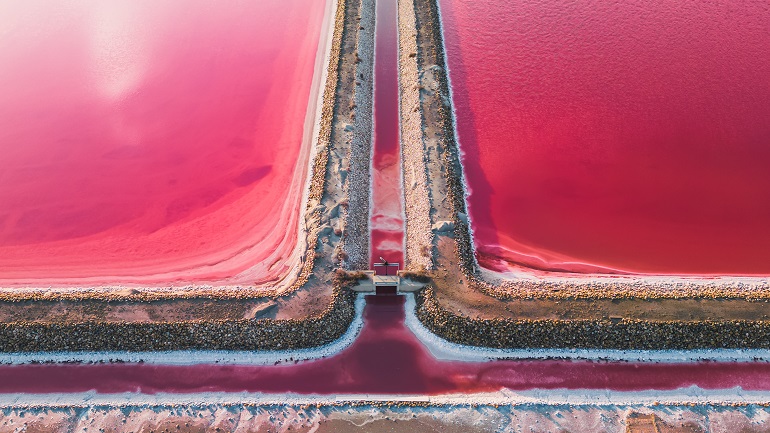
Along the sea, visitors will find expansive salt ponds—adapted lagoons designed to maximise salt concentration. These ponds create a striking visual effect, especially when tinged pink by microorganisms in the water.
Woodland Areas
Although limited in extent, woodland areas add variety to the Camargue's predominantly open landscape. The riparian forest along the Rhône and the Bois des Rièges to the south of the Étang de Vaccarès provide pockets of greenery amidst the wetlands and plains.
The Camargue Regional Natural Park offers a truly unique geographical experience. Its vast, open spaces, punctuated by shimmering lagoons, winding waterways, and ever-changing coastlines, create a landscape unlike any other in Europe. This extraordinary delta region, shaped by the eternal interplay of river, sea, and sky, provides visitors with an unforgettable glimpse into one of France's most remarkable natural wonders.
Flora and Fauna
The Camargue Regional Natural Park is a remarkable wetland ecosystem spanning over 100,000 hectares. This exceptional natural territory boasts extraordinary biodiversity across its varied landscapes of marshes, lagoons, reed beds, beaches, and salt plains.
Iconic Wildlife
Birds
The Camargue ranks among Europe's most diverse bird areas, hosting more than 400 species, earning it recognition as an Important Bird Area by BirdLife International. The park is particularly famous for its Greater Flamingos - the only nesting site for these birds in France. While 50,000-60,000 flamingos arrive in spring and summer, only about 5,000-6,000 overwinter, with the majority migrating to Africa.
The saline marshes support numerous wading birds including:
- Kentish Plovers, Avocets and Black-winged Stilts
- Little Egrets and various herons (Grey, Purple, Night, Squacco)
- Gulls (Herring, Black-headed, Slender-billed)
- Terns (Sandwich, Common, Little)
- Rare species such as Bittern and Little Bittern
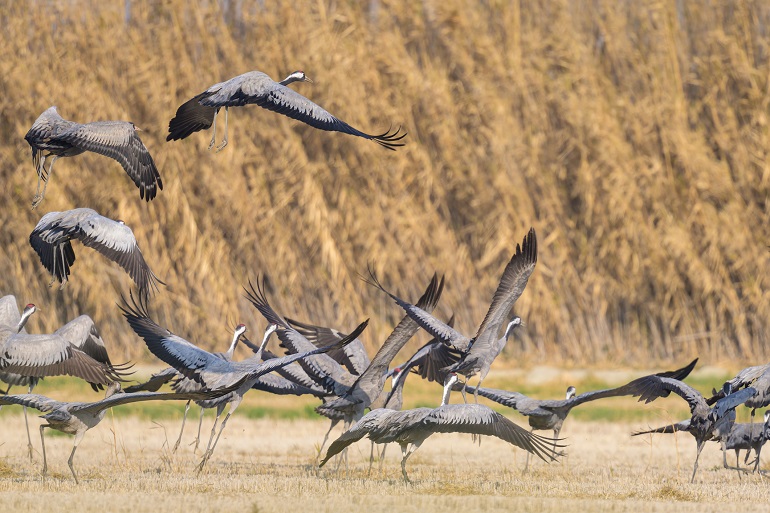
During migration periods, the lagoons fill with shorebirds, making the Rhône delta an important migratory flyway between Europe and Africa.
In winter, the flooded sansouires (salt steppes) attract ducks like teal and mallard, while summer brings nesting birds such as spring wagtails, skylark and spectacled warbler.
Mammals
Though less visible than birds, the Camargue supports a surprising variety of mammals:
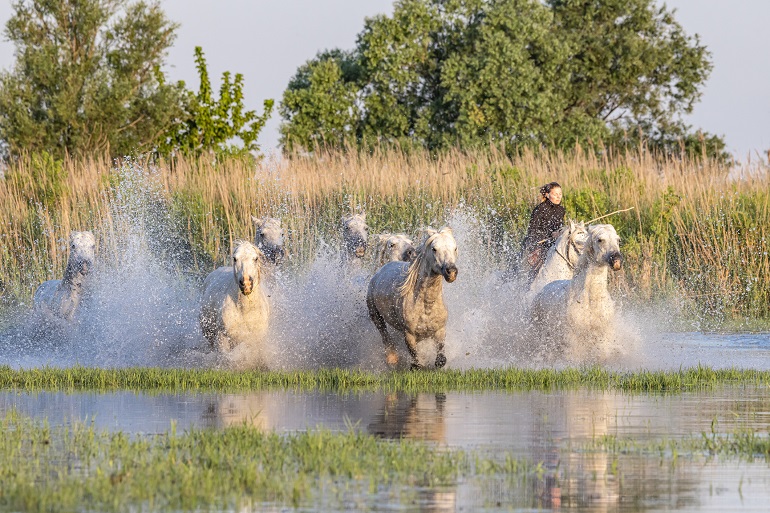
- The iconic white Camargue horses (now domesticated)
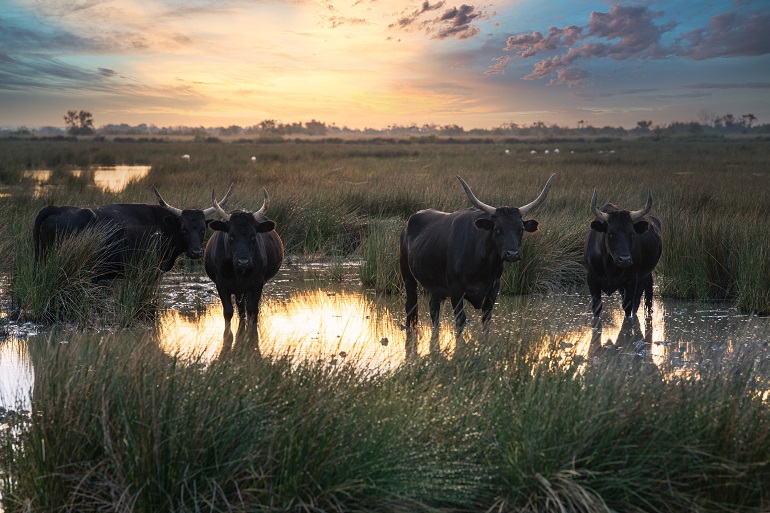
- Black miniature bulls (often used for local cuisine)
- Wild Boar, Fox, Beaver, Coypu
- Badger, Polecat, Rabbit, Shrew and Woodmouse
- Pipistrelle Bats, which hunt insects over the marshes in the evenings
Reptiles and Amphibians
The varied habitats support:
- Adders and various lizards
- Tree Frogs and other amphibian species
- Moorish Geckos (particularly in Les Alpilles villages)
Distinctive Flora
The Camargue's plant life has adapted to challenging conditions - salt-laden soil, strong winds, and seasonal flooding.
Salt Marshes and Sansouires
The sansouires (salty steppes) feature halophilic plants that thrive in saline conditions:
- Glasswort (salicornia), which turns red in autumn
- Sea purslane
- Common sea lavender (locally called saladelle), with blue flowers blooming in August, is the emblem of the Camargue gardian (bull herdsman)
Dunes and Coastal Areas
The fragile mobile dunes beyond the seawall support unique vegetation:
- Marram grass
- Couch grass
- Euphorbia
- Sea-lilies
Woodlands
Though limited, woodland areas include:
- Riparian forests along the Rhône with Ash, Willow and White Poplar
- The Bois des Rièges (Rièges Wood) featuring mastic shrubs, greenbrier, spurge olive, buckthorns, wild rosemary, and Phoenician juniper
Reed Beds
Extensive reed beds provide crucial habitat for Reed Warblers and Bearded Tits, while also serving as feeding grounds for herons and Marsh Harriers.
Best Times to Visit
Early mornings are ideal for birdwatching, while mammals are most active at dawn and dusk. From April through November, be prepared for mosquitoes by wearing protective clothing and using insect repellent.
The Camargue's landscapes transform dramatically with the seasons - from flooded winter marshes to cracked summer salt pans - ensuring each visit offers a different experience of this extraordinary natural park.
Activities and Attractions
The Camargue Regional Natural Park is a mesmerising destination where natural beauty, cultural heritage, and outdoor adventures converge. Known for its vast wetlands, salt flats, and unique landscapes, the park offers a diverse array of activities for visitors to enjoy. Whether you’re an avid hiker, a history enthusiast, or simply someone seeking tranquillity amidst nature, the Camargue has something for everyone.
Hiking Trails in the Camargue
Hiking is one of the best ways to explore the varied landscapes of the Camargue Regional Natural Park. The park boasts an extensive network of trails that allow visitors to immerse themselves in its unique environment. From salt marshes and lagoons to coastal dunes and riverbanks, these trails showcase the region’s extraordinary beauty. Below are some of the most notable hiking routes:
Pont de Gau Nature Trail
The Pont de Gau Nature Reserve is one of the most accessible areas for hikers and nature lovers. The trail here is relatively short—approximately 2.8 km—but it offers an unforgettable experience. The path meanders through wetlands and lagoons, providing opportunities to see flamingos up close as they feed and wade in shallow waters. Wooden boardwalks guide you through the marshes, making it an easy walk suitable for families and casual walkers.
Digue à la Mer (Sea Dyke Trail)
This iconic trail stretches along a sea dyke that separates the Mediterranean from the inland marshes. It is one of the most scenic routes in the park, offering breathtaking views of both the coastline and the salt flats. The Digue à la Mer trail can be enjoyed as a shorter loop or as part of a longer trek. It’s particularly stunning at sunset when the sky reflects off the water’s surface in hues of pink and orange.
Tour du Vaccarès
For those seeking a more immersive hiking experience, this trail circles around Étang de Vaccarès, a large lagoon that forms the heart of the Camargue. This route covers flat terrain but can be quite long, so it’s ideal for experienced hikers or those looking to spend an entire day exploring. Along the way, you’ll encounter reed beds, salt marshes, and perhaps even glimpses of wild horses or bulls grazing nearby.
Sentier de la Palissade
Located near Salin-de-Giraud, this trail takes you through one of the park’s most pristine areas. The route features diverse habitats, including sand dunes, lagoons, and Mediterranean scrubland. It’s also less crowded than some other trails, making it perfect for those seeking solitude amidst nature.
La Capelière Nature Reserve
The La Capelière area offers several marked trails that are ideal for exploring at your own pace. These short circuits are perfect for learning about the flora and fauna of the Camargue while enjoying peaceful surroundings. Information panels along the trails provide insights into local ecosystems.
Saintes-Maries-de-la-Mer Coastal Walk
This coastal path combines natural beauty with cultural charm as it begins in Saintes-Maries-de-la-Mer, a picturesque town on the Mediterranean coast. The trail takes you along sandy beaches and past small lagoons where you can enjoy sweeping views of both land and sea.
Salt Marsh Trails near Aigues-Mortes
Near Aigues-Mortes, several trails wind through vibrant salt flats where you can witness striking landscapes coloured by pink-hued waters caused by algae blooms. These trails are particularly photogenic and offer a fascinating glimpse into traditional salt production methods.
Other Outdoor Activities
While hiking is a highlight of any visit to the Camargue Regional Natural Park, there are many other ways to explore this stunning region:
Cycling Adventures
The flat terrain of the Camargue makes it ideal for cycling enthusiasts. Many hiking trails double as cycling paths, allowing visitors to cover more ground while enjoying panoramic views of wetlands, rice fields, and coastal areas. Bicycles can be rented from local providers in towns like Saintes-Maries-de-la-Mer or Arles.
Popular cycling routes include:
- The Digue à la Mer trail
- Paths around Étang de Vaccarès
- Routes connecting Aigues-Mortes to nearby salt marshes
Cycling is an excellent way to experience both natural beauty and cultural landmarks at your own pace.
Horse Riding
The Camargue is synonymous with its iconic white horses—an ancient breed that has roamed these wetlands for centuries. Horseback riding is a quintessential activity here and offers a unique perspective on the landscape. Guided excursions are available for riders of all skill levels and often take you through remote areas inaccessible by foot or bike.
Riding tours may include:
- Exploring sandy beaches at sunrise
- Traversing marshlands to spot wildlife
- Visiting traditional ranches (manades) where local cowboys (gardians) work with bulls
Water-Based Activities
The waterways of the Camargue provide ample opportunities for aquatic adventures:
- Kayaking & Canoeing: Paddle through calm canals and lagoons while enjoying close-up views of reeds and waterbirds.
- Boat Tours: Several companies offer guided boat tours that navigate through the Rhône delta or along coastal waters.
- Sailing & Windsurfing: The Mediterranean coastline offers ideal conditions for sailing enthusiasts and windsurfers alike.
Cultural Attractions Alongside Nature
While outdoor activities dominate in this region, cultural landmarks add depth to any visit:
Aigues-Mortes
This medieval walled city lies on the edge of the park and serves as a gateway to its wonders. Visitors can explore its well-preserved ramparts, charming streets, and historic saltworks.
Saintes-Maries-de-la-Mer
Known as both a seaside resort town and a spiritual centre, Saintes-Maries-de-la-Mer is famous for its annual gypsy pilgrimage honouring Saint Sarah. Its lively atmosphere contrasts beautifully with the serenity of surrounding nature.
Musée de la Camargue
Located at Mas du Pont de Rousty, this museum provides fascinating insights into how humans have shaped—and been shaped by—the Camargue’s environment over centuries.
Accommodation
The Camargue Regional Natural Park offers a diverse range of accommodation options for visitors seeking to immerse themselves in the unique beauty of this remarkable area. From charming hotels to rustic guesthouses, there's something to suit every taste and budget.
Types of Accommodation
Hotels: The park boasts a variety of hotels, ranging from simple, family-run establishments to more luxurious options. Many hotels offer stunning views of the surrounding landscape, including the park's iconic wetlands and wildlife.
Gîtes and Guesthouses: For a more intimate experience, travellers can opt for traditional Provençal gîtes or guesthouses. These often provide a more authentic local experience and the opportunity to interact with hospitable hosts.
Campsites: Nature enthusiasts can find numerous campsites within the park, allowing for a truly immersive outdoor experience. These sites often provide basic amenities and are an excellent choice for those looking to connect with the Camargue's natural environment.
Holiday Rentals: Self-catering apartments and holiday homes are available for those preferring more independence during their stay. These can be found in various locations throughout the park, from quaint villages to more secluded rural settings.
Location and Amenities
Accommodation in the Camargue Regional Natural Park is strategically situated to allow easy access to the area's main attractions. Many establishments are within walking distance of beaches, nature reserves, or charming local villages.
Visitors can expect amenities such as swimming pools, terraces with panoramic views, and on-site restaurants serving local Camargue specialities. Some accommodations also offer bicycle rentals, perfect for exploring the park's extensive network of cycling trails.
Unique Experiences
For a truly memorable stay, some accommodations offer distinctive experiences that showcase the region's culture and natural beauty:
- Traditional gardian huts, providing an authentic glimpse into the life of Camargue cowboys
- Stays on working manades (bull farms), where guests can observe and learn about the region's iconic black bulls
- Eco-lodges designed to minimise environmental impact while maximising comfort
Gastronomy
Signature Dishes
Gardiane de Taureau
This iconic Camargue dish is a must-try for visitors. It's a flavourful stew made with meat from the region's famous black bulls, slow-cooked with red wine, onions, and aromatic herbs. The dish perfectly embodies the rugged spirit of the Camargue's cowboy culture.
Anchoïade
A popular appetiser, anchoïade is a savoury paste made from anchovies, garlic, olive oil, and sometimes capers. It's typically served as a dip for raw vegetables or spread on bread, offering a taste of the Mediterranean.
Rouille de Poulpe
Seafood lovers will appreciate this octopus dish, served with a creamy, chilli-garlic sauce that gives it its distinctive reddish hue.
Local Specialities
Camargue Rice
The region is renowned for its rice production, with vast paddies dotting the landscape. Visitors can sample various types, including the distinctive red rice, known for its nutty flavour and firm texture.
Fleur de Sel
The Camargue's salt pans produce some of the finest sea salt in the world. The delicate 'flower of salt' is hand-harvested and prized by chefs for its subtle flavour and crunchy texture.
Salaisons de Taureau
For a taste of local charcuterie, try these dried bull meat specialities, seasoned with black pepper, garlic, and olive oil.
Seafood and Fish
The Camargue's proximity to the Mediterranean and its network of lagoons and rivers provide an abundance of fresh seafood. Look for dishes featuring:
- Bouzigues mussels
- Rhône eels
- Sea bass and sea bream
- Oysters from nearby Thau Lagoon
Fruits and Vegetables
The region's fertile soil yields excellent produce, including:
- Asparagus
- Artichokes
- Figs
- Carrots
- Sand potatoes
Beverages
Vin des Sables
The Camargue produces unique 'wines of the sand', grown in sandy soils near the coast. These wines pair excellently with local seafood dishes.
Rice Beer
An innovative product showcasing the versatility of Camargue rice.
Dining Customs
Meals in the Camargue are often leisurely affairs, reflecting the region's laid-back lifestyle. Expect to find rustic, hearty dishes in countryside restaurants, while coastal areas offer lighter, seafood-focused menus.
Getting There and Around
The Camargue Regional Natural Park, located near Arles in southern France, is a stunning wetland area where the Rhône River meets the Mediterranean Sea. Despite what many visitors might initially believe, you don't need a car to explore this remarkable natural area.
Public Transport Options
From Arles
Arles serves as the main gateway to the Camargue. Several affordable bus services connect the city to various parts of the park:
- Bus A50: Runs from Arles (Brossolette stop) to Pont de Rousty in the park, taking approximately 9 minutes and costing just €1. Services operate every 4 hours.
- Bus L20: Connects Arles to Pont de Gau bird reserve (ticket €1), with the journey taking about 40 minutes. This same bus continues to Saintes-Maries-de-la-Mer, the main town in the Camargue.
- Bus No. 10: Travels from Arles to Salin de Giraud several times daily, where you can access walking trails.
From Marseille
If you're coming from Marseille, you have several options:
- Train + Bus: Take a train from Marseille St Charles to Arles (approximately 1h 8m), then connect to one of the local buses mentioned above. The entire journey takes about 2h 31m and costs between €18-34.
- Driving: The drive from Marseille to the Camargue takes around 1h 5m and covers about 101 km.
Getting Around the Park
On Foot
Many walking trails crisscross the park, allowing visitors to experience the diverse landscapes up close. Remember to:
- Carry water and sun protection
- Bring mosquito repellent
- Remain on designated paths
- Respect fences and property boundaries
By Bicycle
Cycling is a popular way to explore the Camargue, with several trails suitable for city bikes. Routes range from 30 minutes to 7 hours depending on your fitness level and interests.
By Bus
The local bus network can transport you between key sites within the park. The buses can get quite busy, especially during peak tourist season, so it's advisable to start your journey early.
By Taxi
Taxis are available from Arles to the park, taking approximately 13 minutes and costing €27-33.
Key Destinations Within the Park
- Pont de Gau Bird Reserve: A must-visit for birdwatchers, especially to see the famous flamingos (entrance fee €7.50).
- Saintes-Maries-de-la-Mer: The main town in the Camargue, accessible by bus L20 from Arles.
- Verdier marshes: Located north of Le Sambuc village on the D36, featuring a free-access trail and a hide for wildlife observation.
- Étang du Grenouillet observation platform: Situated on the Fiélouse road from Le Sambuc.
Best Time to Visit
Spring (March to May)
- Birdwatching: Spring is ideal for bird enthusiasts as migratory birds return to the area, offering a wide range of species to observe.
- Festivals: The Romani people's pilgrimage to Saintes-Maries-de-la-Mer, honouring Saint Sara, takes place in May, adding a cultural dimension to your visit.
Summer (June to August)
- Warm Weather: Summer offers warm temperatures, making it perfect for enjoying the beaches, cycling, and horse riding. However, it is the peak tourist season, so expect larger crowds.
- Activities: This is the best time for outdoor activities like swimming, sunbathing, and exploring the park's scenic trails on foot or by bicycle.
Autumn (September to November)
- Less Crowded: September is an excellent time to visit if you prefer fewer tourists. The weather remains pleasant, and migratory birds are still present.
- Festivals: The Feria du Riz in Arles and the Fêtes des Premices du Riz throughout the Camargue celebrate the start of the rice harvest season.
- Flamingo Watching: Although some flamingos migrate, you can still spot them in places like the Pont de Gau Ornithological Park.
Winter (December to February)
- Quieter Period: This is the off-season, with fewer tourists, but some attractions may have limited hours or be closed. It is less ideal for outdoor activities due to cooler weather.
- Hunting Season: Be aware that hunting season runs from mid-September to mid-January, which may affect your visit times.
In summary, the best time to visit the Camargue Regional Natural Park is from early spring to autumn for optimal weather and wildlife viewing. However, if you prefer a quieter experience with pleasant temperatures, September is an excellent choice.
Conservation and Responsible Tourism
Conservation Efforts
The park's primary mission is to reconcile human development with nature conservation. To achieve this, the park management:
- Protects and enhances natural and cultural heritage
- Engages in land use planning
- Promotes economic, social, and cultural development
- Raises public awareness about the area's wealth and fragility
- Conducts experiments and research for environmentally sound practices
Conservation initiatives include:
- Restoring former saltworks into lagoon and coastal ecosystems
- Managing water levels in marshes to support wildlife
- Protecting endangered species like flamingos and certain fish populations
- Creating marine reserves to safeguard aquatic biodiversity
Responsible Tourism
The Camargue Regional Natural Park actively promotes responsible tourism to ensure the area's long-term sustainability. Key initiatives include:
- Encouraging visitors to use alternative transportation to cars
- Offering 14 discovery tours by foot, bicycle, or car to explore the diverse Camargue landscapes
- Awarding the "Parc" label to tourism professionals who provide quality, sustainable services
- Participating in the European Charter for Sustainable Tourism
Visitors can experience the park's natural beauty and cultural heritage through various eco-friendly activities:
- Birdwatching at ornithological parks and nature reserves
- Cycling along designated routes
- Visiting the Musée de la Camargue to learn about regional culture and history
- Observing traditional bull-raising practices at local manades
Visitor Guidelines
To help preserve the Camargue's delicate ecosystem, visitors are advised to:
- Stay on designated paths and respect private property
- Avoid disturbing wildlife and making unnecessary noise
- Refrain from lighting fires or having barbecues
- Take all rubbish home
- Use mosquito repellent and sunscreen during summer months
By following these guidelines and engaging in responsible tourism practices, visitors can help ensure the Camargue Regional Natural Park remains a pristine and captivating destination for generations to come.
Visitor Centres and Educational Facilities
The park features several visitor centres and facilities designed to enhance understanding and appreciation of its rich biodiversity and traditions.
Key Visitor Centres
- Musée de la Camargue
- Located near Arles, this museum is housed in a former sheepfold and serves as an entry point to the park. It explores the human history of the Camargue from the 19th century to today. The museum includes interactive exhibits and a 3.5 km discovery trail showcasing agricultural activities, marshlands, and traditional Camargue huts. Guided tours and workshops are available for visitors of all ages.
- La Maison du Parc
- Situated in Saintes-Maries-de-la-Mer, this visitor centre provides panoramic views of the marshes of Ginès, a key habitat for waterbirds. It offers information about the park's missions and guided tours. Currently undergoing modernisation, it aims to improve its facilities for future visitors.
- Scamandre Discovery Centre
- Located in the western Camargue, this centre focuses on environmental awareness. It features hiking trails through marshlands, observation platforms, exhibitions, and educational programmes for schools and groups. Visitors can explore at their own pace or join guided tours.
- La Capelière Nature Reserve
- This site offers exhibitions on the local fauna and flora, along with walking paths equipped with observation platforms. It is an excellent spot for birdwatching and learning about the Camargue's ecosystems.
Educational Experiences
- Pont de Gau Ornithological Park
- A 60-hectare park near Saintes-Maries-de-la-Mer, it provides a close-up view of the region's birdlife, including flamingos, herons, and egrets. A 7 km trail winds through varied habitats such as ponds and reed beds, making it ideal for families and bird enthusiasts.
- Vigueirat Marshes
- These marshes offer recreational and educational trails focusing on local biodiversity. Activities include horse-and-cart rides, guided tours, and ethnobotanical trails that highlight traditional plant uses.
- Environmental Education Programmes
- The park actively engages schools with workshops on topics like biodiversity conservation, water management, and traditional Camargue practices. Programmes are tailored to different age groups and often include hands-on activities.
Other Notable Sites
- La Gacholle Lighthouse: Features exhibitions about the Camargue coast and offers access to walking and cycling paths along the sea dyke.
- Domaine de la Palissade: A protected area managed by France's coastal protection agency where visitors can explore on foot or horseback.
- Tour Saint-Louis: An 18th-century tower offering stunning views across the wetlands.
Tips for Visitors
- Many centres provide multilingual resources (French, English, German).
- Guided tours often require reservations.
- Cycling paths and pedestrian trails are abundant but closed to cars in some areas.
- Most facilities are family-friendly with picnic areas available.
The Camargue Regional Natural Park combines immersive learning with breathtaking landscapes, making it a must-visit destination for nature lovers and cultural enthusiasts alike.