


| Contents |
|---|
Introduction
The Basilica of Saint-Denis, just north of central Paris, is the birthplace of Gothic architecture and the royal necropolis of France. Founded over the tomb of Saint Denis and transformed by Abbot Suger, it introduced ribbed vaults, soaring light-filled spaces and radiant stained glass that influenced cathedrals across Europe. Inside, more than 70 lifelike effigies—from the early Merovingians to the Bourbons—trace a millennium of monarchy in carved stone. Despite Revolutionary turmoil, sensitive restorations reveal exquisite sculpture, rose windows and a serene, spacious choir. The surrounding town offers a glimpse of everyday Île-de-France, and the basilica is easily reached by Métro Line 13 (Basilique de Saint-Denis); allow time for the crypt and a guided tour.
Interesting Facts about the Basilica of Saint-Denis
- Often called the birthplace of Gothic architecture, Saint-Denis saw Abbot Suger’s innovative choir consecrated in 1144, pioneering rib vaults, pointed arches and luminous stained glass.
- It served as the royal necropolis of France, holding the tombs of most kings and queens from the early Middle Ages to the 19th century in remarkable carved effigies.
- Built on the burial site of Saint Denis, the martyred first bishop of Paris, the abbey drew pilgrims for over a millennium.
- The basilica’s transept glows with two vast 12‑metre rose windows that inspired those of Notre‑Dame de Paris.
- Ravaged during the French Revolution, many royal remains were disturbed, with memorials and monuments later restored in the 19th century.
- Elevated from abbey church to cathedral in 1966, it remains both a place of worship and a major historical monument.
- Measuring about 108 metres in length with soaring 29‑metre vaults, its spacious plan exemplifies early High Gothic ambition.
- Legends tell that Saint Denis carried his severed head to the site, a story woven into Parisian and French Christian tradition.
- The basilica preserves one of Europe’s richest ensembles of funerary sculpture, including recumbent effigies from the 12th to 16th centuries.
- Its design and symbolism of divine light profoundly influenced Gothic building across France and beyond.
History
The Basilica of Saint-Denis stands as one of France's most historically significant ecclesiastical monuments, with origins dating back to the 3rd century when Saint Denis, the first Bishop of Paris, was martyred and buried on this site. The earliest church structure was built around the 5th-6th centuries, but the abbey gained particular prominence under the Merovingian king Dagobert I, who was buried there in 639, establishing a royal connection that would endure for over a millennium. The site underwent major reconstruction in the 8th century under Abbot Fuldiad around 775, creating an archaeological crypt with an ambulatory that allowed pilgrims to circulate around the relics of Saint Denis and his companions. This Carolingian structure featured mosaic walls, a low wooden roof, and marble columns, serving as the foundation for the revolutionary architectural developments that would follow.
The basilica's transformation into the birthplace of Gothic architecture began in the 12th century under the visionary leadership of Abbot Suger (1081-1151), advisor to Kings Louis VI and Louis VII. Between 1135-1140, Suger demolished the old Carolingian façade and constructed an innovative western front featuring three portals separated by massive vertical buttresses, sealed with gilded bronze doors depicting scenes from Christ's Passion. Most significantly, Suger's reconstruction of the eastern end between 1140-1144 introduced the defining elements of Gothic architecture: pointed arches, ribbed groin vaults, clustered columns supporting ribs, flying buttresses, and unprecedented expanses of stained glass windows. The new choir was dedicated on 11 June 1144 in the presence of King Louis VII and Eleanor of Aquitaine, creating an otherworldly atmosphere with coloured light streaming through the innovative windows. The completed 12th-13th century structure measures 108 metres in length with vaults reaching 29 metres high, featuring an immense transept illuminated by two spectacular rose windows over 12 metres in diameter that served as the model for Notre-Dame de Paris.
Throughout its history, Saint-Denis served as the royal necropolis of France, with all but three monarchs from the 10th century until 1789 interred within its walls, including the relocated remains of earlier kings such as Clovis I. The basilica housed 43 kings, 32 queens, 63 princes and princesses, and a dozen servants of the monarchy, making it the most significant royal burial site in France. However, the French Revolution brought devastation to this royal sanctuary when, by decree of 1 August 1793, the National Convention ordered the destruction of royal tombs and mausoleums. From August to October 1793, the remains of 46 kings, 32 queens, and 63 other royals were systematically exhumed and thrown into two large pits in the adjacent cemetery, covered with quicklime. Seventy effigies and tombs were saved through the efforts of archaeologist Alexandre Lenoir, who claimed them as artworks for his Museum of French Monuments. Napoleon reopened the basilica in 1806, but left the royal remains in their mass graves until the Bourbon Restoration in 1814, when Louis XVIII ordered a search for his executed brother Louis XVI and Marie Antoinette, whose few recovered remains were reburied at Saint-Denis on 21 January 1815.
Description
Exterior Architecture
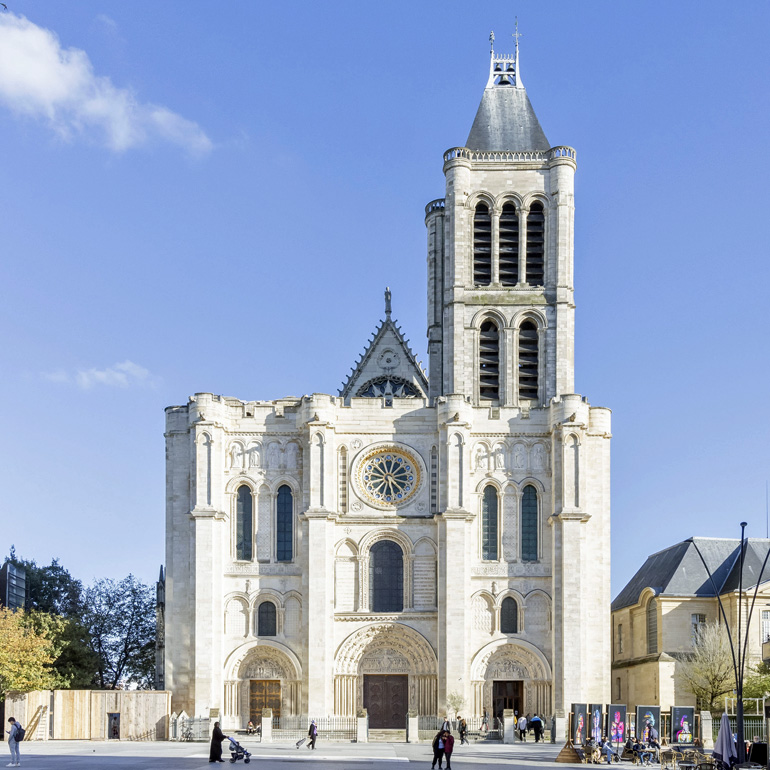
The basilica's exterior presents a striking example of early Gothic architecture, showcasing innovations that would influence cathedral construction across Europe. The structure stretches 108 metres in length, with its imposing west facade rising majestically above the surrounding landscape. The facade is dominated by three magnificent portals, each crowned with intricate tympana depicting biblical scenes carved with extraordinary detail. The central portal features Christ in Majesty surrounded by the symbols of the evangelists, whilst the side portals illustrate the Last Judgement and scenes from the life of Saint Denis.
Above the portals, a spectacular rose window spans nearly 12 metres in diameter, its delicate stone tracery creating an intricate web that frames brilliant stained glass. The facade is flanked by two towers, though only the north tower was completed, rising to a height of 86 metres and crowned with a distinctive spire that pierces the skyline. The south tower remains unfinished, creating an asymmetrical silhouette that has become one of the basilica's most recognisable features.
The building's exterior walls demonstrate the revolutionary Gothic technique of flying buttresses, which transfer the immense weight of the stone vaulting outward and downward. These graceful arches not only serve a crucial structural purpose but also create a rhythmic pattern along the building's flanks, adding visual drama to the exterior composition. Between the buttresses, enormous windows stretch from floor to ceiling, their pointed arches filled with luminous stained glass that transforms the interior into a kaleidoscope of divine light.
The chevet, or eastern end of the basilica, showcases the double ambulatory design that was revolutionary for its time. From the exterior, this creates a complex interplay of radiating chapels, each with its own large windows, that seem to flow seamlessly around the apse. The roofline creates an ascending rhythm that draws the eye heavenward, embodying the Gothic aspiration to reach toward the divine.
Interior Splendour
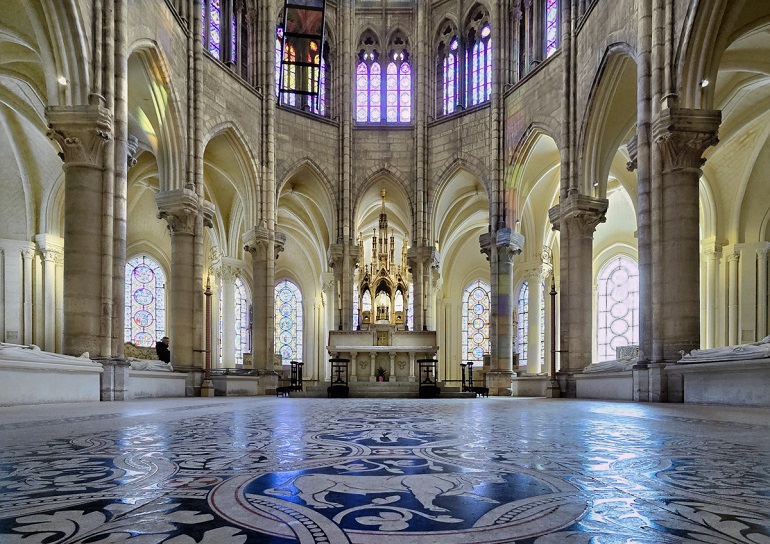
Stepping inside the basilica reveals a breathtaking interior that exemplifies the Gothic pursuit of height, light, and spiritual transcendence. The nave soars to an impressive 29 metres, supported by slender columns that replace the heavy walls of Romanesque architecture. These elegant pillars are crowned with richly carved capitals featuring stylised foliage and mythical creatures, each a masterpiece of medieval stone carving.
The ribbed vaulting overhead creates a network of stone ribs that seem to float effortlessly above, channeling the eye toward the altar and beyond. The vaulting is painted in subtle colours that enhance the architectural lines whilst creating an atmosphere of ethereal beauty. Between the ribs, the stone surfaces are left plain, allowing the structure's inherent elegance to speak for itself.
The choir represents the heart of the Gothic revolution, with its double ambulatory creating an unprecedented sense of spatial unity. This innovative design allows pilgrims to circulate around the high altar whilst maintaining the sacred space's sanctity. The ambulatory connects seven radiating chapels, each dedicated to different saints and filled with their own altars, religious artifacts, and stunning stained-glass windows that bathe the spaces in jewel-like light.

Stained-Glass Masterpieces
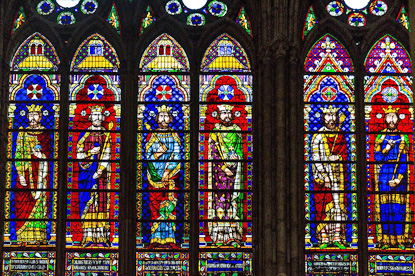
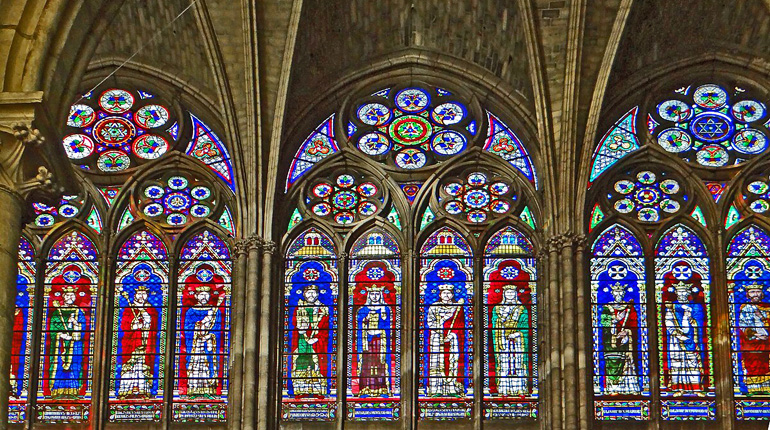
The basilica's stained-glass windows constitute one of the world's finest collections of medieval glazing. The two enormous rose windows in the north and south transepts each measure over 12 metres in diameter and contain some of the most sophisticated glass work of the 12th and 13th centuries. The north rose depicts the genealogy of Christ, with intricate medallions showing Old Testament figures arranged in perfect symmetry around the central figure of the Virgin Mary. The south rose illustrates the Last Judgement, with Christ in Glory surrounded by apostles, angels, and the blessed ascending to paradise.
The clerestory windows that line the upper walls create a continuous band of coloured light, their panels depicting saints, biblical narratives, and royal donors. Many of these windows retain their original 12th-century glass, making them invaluable treasures of medieval art. The deep blues, ruby reds, and golden yellows create an otherworldly atmosphere that changes throughout the day as natural light filters through the ancient glass.
The Royal Necropolis
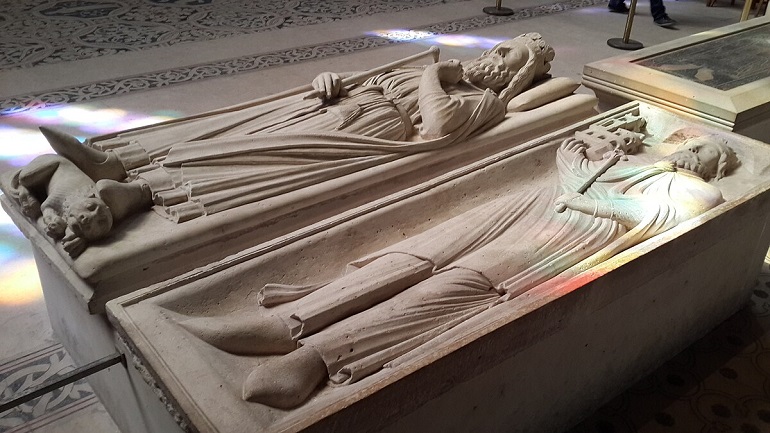
The basilica's most remarkable feature is its unparalleled collection of royal tombs, making it the Westminster Abbey of France. More than 70 recumbent effigies and monumental tombs fill the transepts and choir, creating a stone gallery of French royal history spanning over a millennium. These funerary sculptures represent the finest examples of their respective periods, from medieval giants to Renaissance masterpieces.
The tomb of Louis XII and Anne of Brittany stands as one of the most spectacular examples, featuring the royal couple depicted both as living monarchs above and as decomposing corpses below, a stark medieval reminder of mortality. The tomb of Henri II and Catherine de' Medici showcases Renaissance artistry at its finest, with bronze figures cast by Pierre Bontemps and marble work of extraordinary refinement.
Perhaps most poignant are the tombs of Louis XVI and Marie Antoinette, created during the Restoration period in white marble that seems to glow in the cathedral's ethereal light. These monuments transform the basilica into a powerful symbol of French royal continuity, despite the revolutionary upheavals that temporarily interrupted the monarchy.
The Crypt
Beneath the basilica's choir lies the ancient crypt, a dimly lit realm that houses the tombs of the Bourbon dynasty. This underground necropolis creates a more intimate and contemplative space, where visitors can encounter French royalty in a setting of profound solemnity. The crypt's stone walls and low vaulting create an atmosphere of timeless reverence, enhanced by carefully placed lighting that illuminates the marble sarcophagi.
The treasures displayed in the crypt include precious reliquaries, royal regalia, and artifacts that survived the various historical upheavals that threatened the basilica's collections. The space serves as both a mausoleum and a museum, preserving objects that tell the story of French monarchy from its medieval origins through its modern restoration.
Architectural Innovation
The Basilica of Saint-Denis holds the distinction of being the first structure to fully realise the Gothic architectural vision. Under the patronage of Abbot Suger in the 12th century, the basilica pioneered the use of pointed arches, ribbed vaults, and flying buttresses that would define Gothic architecture for centuries. The revolutionary design eliminated the need for thick supporting walls, allowing for the creation of vast window openings that flood the interior with divine light.
This architectural philosophy, which Suger described as seeking to create a "gateway to heaven," transformed religious architecture and influenced cathedral construction across medieval Europe. The basilica's choir ambulatory, completed around 1144, represents one of the earliest and most successful realisations of the Gothic aesthetic, creating a space that seems to transcend earthly limitations through its soaring height and luminous transparency.
Getting There
Basilique de Saint-Denis lies in the northern suburb of Saint-Denis, roughly 9 km from the city centre. The simplest route is by Métro: take Line 13, ensuring you board the Saint-Denis branch after the split at La Fourche, and alight at “Basilique de Saint-Denis”, two minutes’ walk from the west door. RER passengers can hop on Line D—or Transilien Line H—from Gare du Nord to Saint-Denis station, then either stroll or transfer to tram T1 for one stop to the basilica. Tram T1 itself, along with buses 170, 239, 253, 255 and several night routes, serves nearby stops such as Cité Langevin and Marché de Saint-Denis, each a short walk away. If driving, leave Paris at Porte de la Chapelle, join the A1 motorway, exit at Saint-Denis-centre and follow the signs for “Basilique-Cathédrale” towards Place de la Légion d’Honneur.
Best Time to Visit
The best time to visit the Basilica of Saint-Denis is during the shoulder seasons of spring (April to June) and autumn (September to November), when the weather is pleasant and the crowds are smaller than in the peak summer months. To further avoid congestion, it is advisable to visit on a weekday, either in the early morning shortly after opening or in the late afternoon. Be mindful that opening hours are reduced from October to March, so planning an earlier visit during these months is recommended. As the basilica is located in a suburb of Paris, arriving outside of peak rush hour traffic will also ensure a more relaxed journey.