


 Ireland Guide
 Scotland Guide
 Wales Guide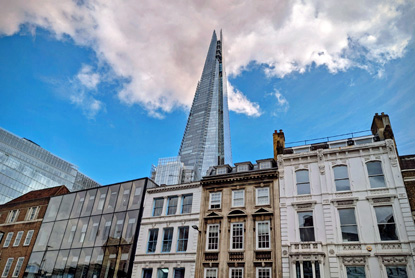
Southwark stands as one of London’s most richly textured and fascinating neighbourhoods, occupying a strategic sweep of the Thames’s southern bank and offering visitors an extraordinary fusion of medieval heritage, world-class cultural institutions, thriving food scenes, and contemporary urban energy.
This historic borough stretches from the iconic tower of London Bridge eastward past Bermondsey, encompassing riverside walkways, cobbled lanes, converted warehouses, and some of the capital’s most celebrated landmarks, all whilst retaining an authentic, lived-in character that sets it apart from more touristy quarters across the water.
The riverside character and setting
The essence of Southwark reveals itself most powerfully along the Thames Path, where the riverside promenade offers uninterrupted views northward to the City’s gleaming towers, the dome of St Paul’s Cathedral, and the medieval turrets of the Tower of London.
Yet the atmosphere on the southern bank feels distinctly different—less corporate, more creative, and refreshingly accessible. The neighbourhood’s personality shifts subtly as you move inland: from the polished cultural corridor of Bankside, past the Victorian railway arches and market halls around Borough, through to the warehouse conversions and craft brewery heartland of Bermondsey Street.
Throughout, there’s a palpable sense of layers—Roman roads beneath medieval foundations, Georgian coaching inns beside contemporary glass, and everywhere the feeling that history isn’t simply preserved here but actively lived and reimagined.
The physical setting itself tells stories. Railway viaducts built by Victorian engineers now shelter street food markets and independent restaurants. Former industrial spaces have been transformed into galleries and performance venues. Narrow medieval alleys run between modern developments, and the riverside, once dominated by wharves and warehouses that made Southwark London’s larder and gateway, now pulses with pedestrians, cyclists, and visitors drawn to its museums, theatres, and attractions.
Borough Market: a millennium of trade and taste
At the heart of Southwark’s identity sits Borough Market, an institution that traces its origins back roughly a thousand years to when traders gathered near the southern end of London Bridge.
What began as a vital medieval marketplace evolved through centuries of expansion, regulation, and reinvention, surviving fires, wars, and changing tastes to emerge as one of Britain’s most admired showcases for sustainable, artisan, and ethically sourced food.
The market’s modern renaissance began in the late 1990s when a charitable trust committed to celebrating quality produce and supporting small-scale producers transformed what had been a wholesale fruit and vegetable market into a destination for food lovers.
Today’s Borough Market is a sensory feast that sprawls beneath the elegant ironwork and glass of Victorian market halls and the soaring brick arches of the railway viaduct. On busy days the atmosphere crackles with energy as visitors navigate between stallholders offering everything from rare-breed charcuterie and artisan cheeses to freshly shucked oysters, sizzling street food, organic vegetables, specialist oils, craft chocolate, and still-warm baked goods.
Beyond the stalls, the market precinct extends into a constellation of restaurants, wine bars, and specialist shops tucked into the surrounding streets. Historic pubs have served generations of traders and now welcome visitors seeking traditional British ales alongside market-goers.
The market functions as Southwark’s living room, a democratic gathering space where City workers, local residents, international visitors, and culinary pilgrims mingle over shared tables, creating an atmosphere that’s simultaneously cosmopolitan and warmly communal.
Southwark Cathedral: Gothic grace and living history
Rising beside Borough Market, Southwark Cathedral offers a profound contrast to the bustle of commerce—a sanctuary of stone, light, and centuries of devotion. The cathedral’s origins reach back to an Augustinian priory dedicated to St Mary Overie in the 12th century, though evidence suggests an even earlier Saxon monastery on this spot.
What visitors see today is largely the result of successive medieval building campaigns that created one of London’s finest Gothic churches, complete with soaring nave, intricate stone carving, and jewel-like stained glass.
The interior rewards unhurried exploration. The early 13th-century retrochoir ranks among the earliest Gothic structures in London, its slender columns and pointed arches creating an atmosphere of luminous grace. Memorials commemorate figures from Southwark’s colourful past, including Shakespeare, whose connection to the neighbourhood is honoured with a memorial and annual celebrations.
Beyond its architectural splendour, the cathedral remains a vital community institution, hosting concerts, exhibitions, and services that continue traditions of worship stretching back nearly a millennium. Its garden offers a peaceful retreat and its refectory a welcoming space for refreshments.
Shakespeare’s Globe and the Sam Wanamaker Playhouse
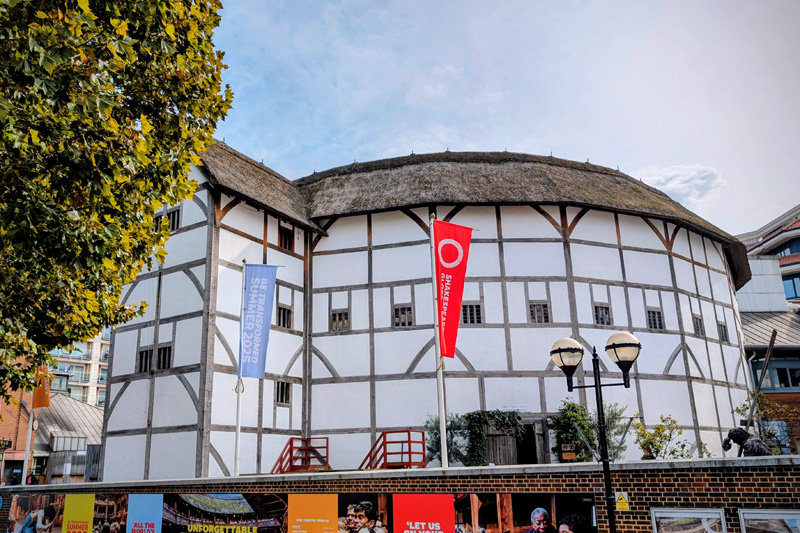
A short riverside walk brings you to Shakespeare’s Globe, the painstakingly reconstructed Elizabethan playhouse set just yards from where the original Globe operated from 1599 until a fire in 1613.
Opened in 1997 through the advocacy of Sam Wanamaker, the modern Globe recreates the original’s circular wooden structure, thatched roof, and open-air yard where groundlings still stand for performances.
Attending a performance here offers theatre in its most elemental form, with actors and audience sharing the same space and natural light. Yard tickets provide a visceral connection to early modern theatre, whilst gallery seats offer shelter and a broader view.
Adjacent, the candlelit Sam Wanamaker Playhouse recreates the intimate indoor playhouses of the period, using beeswax candles to craft an atmosphere of extraordinary intimacy and beauty. The playhouse operates year-round, pairing works from the Jacobean repertoire with new commissions.
Between performances, the Globe’s exhibition explores Elizabethan theatre and the reconstruction story, while guided tours and workshops offer hands-on encounters with stage practice.
Tate Modern: industrial cathedral of contemporary art
Dominating the Bankside skyline, Tate Modern transformed the former Bankside Power Station into one of the world’s most visited contemporary art museums.
The vast Turbine Hall, once home to electricity generators, now serves as a cathedral-like space for monumental art installations, with an annual commission that engages with its industrial scale.
Galleries present an international collection of modern and contemporary art through thematic displays that change regularly, alongside special exhibitions spanning major retrospectives to focused studies.
The Switch House extension added ten floors of galleries and viewing terraces in a twisted pyramid form, while the museum’s raw concrete and exposed brick maintain a dialogue with its industrial past. Viewing levels and the top-floor restaurant offer sweeping panoramas across the Thames to St Paul’s and the City.
The Shard: touching the sky
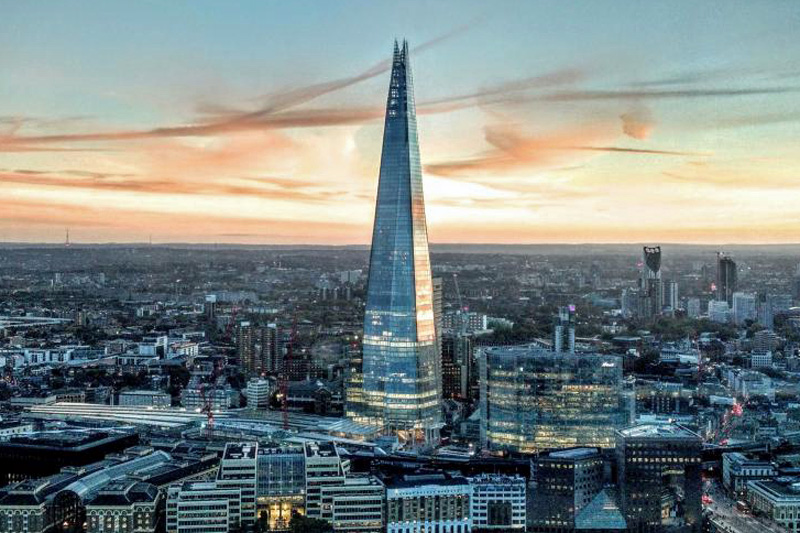
Soaring 310 metres above London Bridge, The Shard redefined the skyline as Western Europe’s tallest building on opening, its glass-clad profile fragmenting elegantly as it rises.
Viewing galleries on levels 68, 69, and 72 provide 360-degree views up to 40 miles on clear days, with high-speed lifts whisking visitors to indoor and partially open-air platforms.
The panorama reveals London as a living map—the Thames snaking through the city and landmarks spread in every direction. Sunset visits are especially spectacular as the city shifts from day to a glittering evening grid.
Beyond the views, The Shard houses restaurants, a luxury hotel, and offices, anchoring a revitalised cluster around London Bridge station and symbolising Southwark’s fusion of heritage and innovation.
Winchester Palace ruins and medieval Southwark
Along Clink Street, the weathered remains of Winchester Palace recall Southwark’s medieval significance as the London residence of the Bishops of Winchester.
The surviving rose window of the Great Hall hints at the palace’s former grandeur, while the site’s history evokes a time when bishops wielded immense spiritual and temporal power over Bankside.
The bishops controlled much of the area, licensing taverns, theatres, and brothels within the Liberty of the Clink, giving Southwark its reputation as London’s entertainment quarter outside the City’s stricter jurisdiction.
The Clink Prison Museum and Bankside’s darker stories
The Clink Prison Museum stands on or near the site of one of England’s most notorious medieval prisons, origin of the phrase “in the clink”.
Operating from at least the 12th century until destruction in the 1780 Gordon Riots, the Clink held religious dissenters, debtors, and those caught in the bishops’ regulatory net.
The museum’s immersive displays and reconstructed cells convey the grim realities of historical punishment and underscore Bankside’s past as a marginal zone with complicated rules.
The Golden Hinde: Drake’s ship reborn
Moored in St Mary Overie Dock, the full-scale reconstruction of the Golden Hinde invites visitors aboard an Elizabethan galleon like the one in which Sir Francis Drake circumnavigated the globe.
Built using traditional methods and having completed voyages of its own, the ship offers five decks to explore, from captain’s cabin to gun deck, brought to life by costumed interpreters.
Its presence amid Bankside’s Elizabethan heritage provides a tactile, family-friendly encounter with the age of exploration.
Hay’s Galleria and the riverside’s commercial heritage
Between London Bridge and Tower Bridge, Hay’s Galleria transforms a historic wharf, once dubbed the “Larder of London”, into an elegant arcade beneath a soaring glass roof.
Victorian warehouses and river frontage have been preserved within a modern redevelopment that mixes shops and cafés around a central space animated by kinetic sculpture.
The galleria exemplifies London’s post-industrial adaptation of the Thames waterfront, harmonising heritage with contemporary leisure.
Bermondsey Street and the design quarter
Bermondsey Street anchors a design-forward neighbourhood where converted warehouses now house galleries, studios, independent shops, and destination restaurants.
White Cube Bermondsey, among Europe’s largest commercial galleries, offers vast minimalist spaces for ambitious contemporary exhibitions, while retaining traces of the area’s industrial fabric.
Nearby, the Fashion and Textile Museum—founded by Zandra Rhodes and housed in a boldly coloured Legorreta building—celebrates fashion and fibre arts through rotating exhibitions and workshops.
Between these institutions, boutiques, cafés, wine bars, and bakeries cultivate a village-like atmosphere that blends long-standing trades with new creative ventures.
Maltby Street Market and Ropewalk
Just off Bermondsey Street, Maltby Street Market occupies a narrow street and railway arches known as Ropewalk, forming one of London’s most characterful weekend food markets.
Intimate and slightly hidden, it champions artisan producers and street food vendors, with visitors lingering over tastings and assembling meals from multiple traders at communal tables.
Permanent premises in the arches now include acclaimed wine bars, specialist cheese sellers, bakeries, and restaurants, evolving the market into a year-round food quarter.
The Bermondsey Beer Mile
Threading through railway arches from London Bridge towards Bermondsey, the Bermondsey Beer Mile brings together a dense cluster of microbreweries, taprooms, and bottle shops.
Pioneered by early craft brewers who favoured small-batch production and direct engagement, the Mile is most vibrant at weekends when multiple taprooms open and informal crawls emerge.
The industrial setting—exposed brick and visible brewing equipment—reinforces the authenticity of the experience and links today’s craft scene to the area’s working heritage.
The Queen’s Walk and Thames riverside
The Queen’s Walk connects Southwark’s marquee sights along a graceful riverside promenade, part of the Thames Path National Trail.
It offers landmark views to the north and a sequence of public spaces, street performances, book stalls, and art interventions to the south, with the Millennium Bridge creating a dramatic link to St Paul’s.
The character shifts across the day—from commuter briskness to leisurely strolling—while parks and terraces provide pauses along the way.
Southwark Playhouse and theatrical energy
Southwark’s off-West End vitality is epitomised by Southwark Playhouse, operating intimate venues in Elephant and Castle and nurturing new writing, musicals, and rediscovered gems.
This ecosystem, alongside smaller venues nearby, continues Southwark’s historic role as London’s theatrical quarter beyond the City’s stricter past regulations.
Audiences benefit from proximity to performers and an atmosphere that encourages experimentation and discovery.
Neighbourhood atmosphere and lived experience
Southwark balances headline attractions with authentic local life. Residents shop at markets, use the river path daily, and sustain independent businesses that keep the area grounded and human in scale.
Architecturally, the neighbourhood layers medieval stone, Victorian brick, and contemporary glass, preferring adaptive reuse over wholesale redevelopment to preserve texture and memory.
A genuine social mix—long-standing communities, creative workers, and professionals—animates markets, parks, and public spaces, while a distinct South London pride underpins the neighbourhood’s independent spirit.
Southwark rewards unhurried exploration: wander off the riverside into brick-lined lanes, discover small galleries and bookshops, notice plaques and stories embedded in the streetscape, and experience how history, creativity, and everyday life interweave at every turn.