


 Ireland Guide
 Scotland Guide
 Wales Guide
| Contents |
|---|

Introduction
Great Yarmouth is a seaside town located on the Norfolk coast of England, situated where the River Yare meets the North Sea. The town serves as both a traditional holiday resort and an active fishing port, featuring a long sandy beach, Victorian seafront architecture, and the historic Rows—a series of narrow medieval streets that form one of the most complete examples of an ancient street pattern in England. Great Yarmouth's economy historically centred on herring fishing, though it has evolved to encompass tourism, offshore energy industries, and maritime services, whilst maintaining its role as one of England's major fishing ports. The town offers a mixture of traditional seaside attractions including amusement arcades, piers, and holiday parks, alongside cultural sites such as the Time and Tide Museum and Nelson's Monument, making it a destination that appeals to both families seeking conventional beach holidays and visitors interested in maritime heritage.
Interesting Facts about Great Yarmouth
- Great Yarmouth’s market place has traded continuously since the 13th century and is still one of the largest open marketplaces in England.
- The town retains England’s second-most complete medieval town wall, with 11 of its original 18 towers still standing.
- St Nicholas Minster, founded in 1101, is the largest parish church in the country by floor area.
- In the late 19th century Yarmouth became the world’s biggest herring port, with more than 1,100 boats landing “silver darlings” in a single season.
- The Hippodrome on the Golden Mile, opened in 1903, is one of only two permanent circus buildings left in Britain and features a spectacular sinking water stage.
- Great Yarmouth Pleasure Beach hosts one of the world’s few surviving 1930s wooden Scenic Railway roller-coasters, still operated by a brakeman.
- The Tolhouse Gaol, dating to the 13th century, ranks among Britain’s oldest civic buildings and once held pirates and smugglers.
- Author Anna Sewell, who wrote the classic novel Black Beauty, was born in Great Yarmouth in 1820.
- Britain’s first self-righting lifeboat was designed here by local boatbuilder James Beeching in 1849.
- The town’s suspension bridge disaster of 1845 led to new national safety standards after 79 spectators died when the structure collapsed.
History
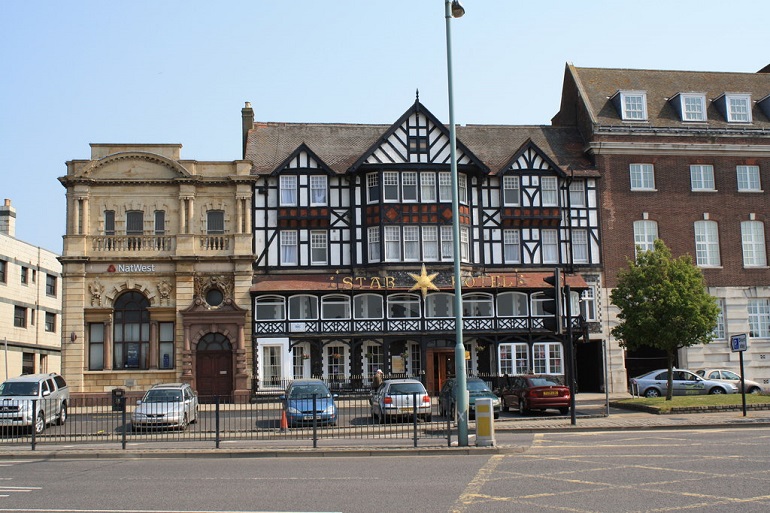
Great Yarmouth’s origins trace back to Roman times, when a fort known as Gariannonum guarded the mouth of the River Yare. By the 11th century the Angles had established a settlement, which by the Domesday survey of 1086 comprised a small town with some 70 burgesses and 24 fishermen. In 1101 Bishop Herbert de Losinga founded St Nicholas’ Church, consecrated in 1119, marking the town’s growing wealth and importance. King John granted Yarmouth its first charter in 1208, establishing a gild merchant and weekly market, and by the late 13th century the population had burgeoned thanks to the flourishing herring fishery. A network of narrow lanes known as “the Rows” linked merchants’ houses to quayside docks where up to 1,000 ships traded herring and Norwich cloth across Europe.
During the medieval period Great Yarmouth fortified itself against foreign threats, completing an imposing stone wall with towers by 1396 and building gun platforms in the 1540s under Henry VIII. The silting of the harbour prompted the digging of successive havens, the fifth completed in 1614 and the sixth in 1549, to maintain deep-water access. The 17th-century boom saw merchants construct brick-and-flint houses with ornate plaster ceilings, reflecting Dutch influences brought by engineers who rebuilt the harbour piers in the 1560s. Meanwhile Yarmouth’s importance as a naval base was underscored by frequent visits from figures such as Lord Nelson, and during the Napoleonic Wars a naval hospital and barracks housed thousands of sailors.
From the late 18th century Great Yarmouth evolved into one of England’s earliest seaside resorts. The arrival of the railway in 1844 made the town accessible to day-trippers and holidaymakers, spurring construction of Wellington Pier (1854) and Britannia Pier (1858). Victorian visitors enjoyed a promenade, Winter Garden, Hippodrome Circus and pleasure beach. Though the once-vast herring fleet declined in the mid-20th century, Yarmouth adapted, servicing North Sea oil rigs from the 1960s and embracing offshore wind energy in recent decades. Today its medieval walls, row houses, Georgian quayside and historic piers blend with modern attractions to tell a story of resilience and reinvention.
Main Attractions
Beaches and Seafront
Great Yarmouth Beach
Stretching for miles along the town's famous Golden Mile, Great Yarmouth Beach is a vast expanse of soft, golden sand. It is a traditional British seaside destination, backed by a promenade bustling with amusement arcades, cafés, and souvenir shops. The beach itself is well-maintained and provides ample space for sunbathing, sandcastle building, and paddling in the North Sea. During the summer months, it is a hub of activity, with deckchair hire and various seaside entertainments readily available.
Gorleston-on-Sea Beach
Situated just south of the main resort, Gorleston-on-Sea Beach offers a wide, curving bay of fine sand that is often less crowded than its northern neighbour. It is particularly popular with families, featuring amenities such as a children's splashpad, a model yacht pond, and well-kept lawns. The beach is bordered by a promenade with shops and cafés, and its expansive nature makes it ideal for long walks, dog-walking (in designated areas), and watersports.
Caister-on-Sea Beach and Hemsby Beach
For those seeking a more tranquil coastal experience, the beaches at Caister-on-Sea and nearby Hemsby provide a quieter alternative. These beaches are characterised by their soft sands and extensive dune systems, offering a more natural and relaxed setting. They are favoured by families and walkers looking to escape the main crowds. Amenities are simpler, often consisting of free parking and seasonal ice cream vans, which adds to their low-key appeal.
Amusement and Theme Parks
Great Yarmouth Pleasure Beach
Located at the southern end of the seafront, the Pleasure Beach is a historic amusement park that has been entertaining visitors for over a century. It operates on a free-to-enter basis, with visitors purchasing ride tokens or wristbands. The park blends modern thrills with nostalgia, featuring a classic wooden rollercoaster that dates back to 1932, alongside a log flume, a haunted house, dodgems, and a 4D cinema, providing entertainment for all ages.
Joyland
Aimed squarely at families with younger children, Joyland is a compact and charming amusement park situated at the base of Britannia Pier. It has been a fixture of the seafront since 1949 and is renowned for its iconic rides, including the world-famous Snails and the spinning Tyrolean Tub Twist. The park's gentle and whimsical attractions make it a perfect introduction to funfair rides for small children.
Britannia Pier
An iconic feature of the Great Yarmouth skyline, Britannia Pier extends from the central promenade out over the sea. It embodies the classic British seaside pier experience, housing a lively collection of amusement arcades, children's rides, and food stalls selling everything from candyfloss to fish and chips. The pier is also home to a theatre that hosts a variety of live shows and performances throughout the year.
Wellington Pier
Further south along the Golden Mile stands Wellington Pier, another traditional Victorian pier that offers classic seaside entertainment. Its main building contains a large amusement arcade filled with modern and retro games. The pier provides excellent views of the beach and sea, and it is a popular spot for a leisurely stroll and to enjoy the classic arcade atmosphere.
Natural and Wildlife Attractions
Venetian Waterways and Gardens
Close to the northern end of the seafront, the Venetian Waterways and Gardens offer a peaceful retreat from the bustle of the main resort. Following a major restoration, this network of winding, man-made canals and beautifully landscaped gardens provides a serene environment for a walk. Visitors can hire a small boat to navigate the gentle waterways or simply enjoy the tranquil atmosphere and ornate bridges from the surrounding footpaths.
Thrigby Hall Wildlife Gardens
A short drive from Great Yarmouth, Thrigby Hall Wildlife Gardens presents a diverse collection of Asian wildlife in a beautifully maintained setting. The park is known for its unique raised wooden walkways, which allow visitors to get close to animals like Sumatran tigers, snow leopards, gibbons, and red pandas. The attraction also features a swamp house with crocodiles, an aviary, and an adventure playground, making it a comprehensive family day out.
Redwings Horse Sanctuary (Caldecott Hall)
This sanctuary provides a home for over 100 rescued horses, ponies, donkeys, and mules. Located at Caldecott Hall, it offers visitors the opportunity to meet the resident animals and learn about the charity's welfare work. Admission to the centre is free (though donations are welcome), and facilities include a gift shop and a café. It offers a wholesome and educational experience for animal lovers.
Entertainment Venues
Hippodrome Circus
The Hippodrome is a unique historic venue and Britain's only surviving total circus building, built in 1903. It hosts spectacular circus, water, and variety shows throughout the year, featuring international acrobats, gymnasts, and entertainers. The Hippodrome's most remarkable feature is its original sinking floor, which transforms the circus ring into a swimming pool for the venue's famous water spectacles, a finale that has amazed audiences for generations.
Sea Life Great Yarmouth
Positioned centrally on Marine Parade, Sea Life Great Yarmouth is a large aquarium that showcases a wide array of marine and freshwater creatures. Visitors can encounter everything from sharks and rays to penguins, crocodiles, and sea turtles. The highlight for many is the walk-through ocean tunnel, which provides an immersive experience of being surrounded by aquatic life. The aquarium also includes interactive displays and feeding demonstrations, making it both educational and entertaining.
Gardens and Miniature Attractions
Merrivale Model Village
Covering approximately one acre of landscaped gardens, the Merrivale Model Village is a classic seaside attraction that charms visitors with its miniature world. The village features hundreds of detailed models and scenes, from a bustling town centre to a quaint country castle, all interconnected by a working model railway. In addition to the main display, the site includes a traditional putting green and a tea room, offering a gentle and delightful experience for all ages.
Additional Outdoor and Leisure
Mini-golf and Adventure Golf
A staple of any seaside resort, Great Yarmouth offers several mini-golf and adventure golf courses, primarily located along the seafront. These courses vary in theme and difficulty, with some featuring pirates, dinosaurs, or other fantastical elements, providing a fun and competitive activity for families and groups looking for light-hearted entertainment.
Trampolining and Indoor Play
For rainy days or a break from the sun, Great Yarmouth has indoor activity centres to keep families entertained. Venues such as Jump Warehouse offer large indoor trampoline parks with dedicated areas for different ages and abilities. These facilities provide a high-energy alternative to the outdoor attractions on the seafront.
Horse-drawn Landaus and Road Trains
A traditional and leisurely way to experience the Golden Mile is by taking a ride on one of the horse-drawn landaus or road trains that operate along the promenade. These rides offer a nostalgic trip along the seafront, allowing visitors to take in the sights and sounds of the resort at a relaxed pace, perfect for viewing the main promenade and its various attractions.
Go-karting, Bowling, and Arcades
Beyond the main theme parks, Great Yarmouth is well-equipped with a variety of classic entertainment venues. Go-karting tracks offer fast-paced fun for thrill-seekers, while modern bowling alleys provide an all-weather option for groups. These are complemented by the numerous amusement arcades scattered along the seafront, filled with everything from penny pushers to the latest video games.
Countryside and Out-of-Town Attractions
Breydon Water and Burgh Castle
Just inland from Great Yarmouth lies Breydon Water, a large, protected estuary and a key part of the Broads National Park. It is a significant site for birdwatching, especially during migration seasons, and is surrounded by scenic footpaths. Nearby, the impressive ruins of Burgh Castle, a 3rd-century Roman fort, stand on a hill overlooking the water, offering panoramic views and a tangible link to the area's ancient history.
Top Museums
Time and Tide Museum of Great Yarmouth Life
The crown jewel of Great Yarmouth's museum offerings, Time and Tide Museum stands as a testament to the town's maritime legacy. Housed in one of the UK's best-preserved Victorian herring curing works, this award-winning museum tells the complete story of Great Yarmouth from the Ice Age to the present day.
The museum occupies the original Tower Fish Curing Works, built around 1850, which operated until 1988 before undergoing extensive redevelopment in the 1990s. The building itself serves as a living exhibit, allowing visitors to step back in time and experience the heady atmosphere of a bustling 1950s fish wharf. The authentic setting adds a unique dimension to the museum experience, with the distinctive aroma of the former smokehouse still lingering in the air.
Time and Tide's exhibits explore Great Yarmouth's development as both a major fishing port and a popular seaside resort. Interactive displays and immersive experiences bring history to life, including a recreated Victorian Row from 1913 where visitors can step inside the homes of local fishermen and their neighbours. The museum features fascinating artefacts including nautical instruments, fishing equipment, and local historical documents that chronicle the lives of fishermen, sailors, and even pirates.
The museum regularly hosts temporary exhibitions and offers a variety of activities including hands-on displays, games, puzzles, free audio guides, and film shows, making it an engaging destination for all ages. In 2006, Time and Tide was a finalist in the European Museum of the Year competition, and in 2014, it received the prestigious Sandford Award for excellence in heritage education.
Lydia Eva Steam Drifter
Moored on Great Yarmouth's heritage South Quay, the Lydia Eva represents a unique piece of maritime history as the world's last surviving steam-powered herring drifter. Built in 1930 at the Kings Lynn yard and based in Great Yarmouth, she fished along the East Coast and North Sea for nine years before being acquired by the Royal Air Force in 1939.
The vessel served in various roles during World War II until being laid up in 1969. The Maritime Trust acquired her in 1971/2 and restored her as a floating museum, eventually returning her to Great Yarmouth where she now offers visitors the chance to explore how fishermen worked and lived in the 1930s.
Visitors can explore her wheelhouse, fish hold, crew quarters, galley, and engine room with its original working steam engine. The Lydia Eva gained additional fame in 2023 when she featured in the film "Wonka," serving as a passenger steamer bringing a young Willy Wonka to England. The ship now offers unique experiences where up to eight passengers can experience a trip to sea, with opportunities to serve as stoker, driver, or simply enjoy the journey.
Elizabethan House Museum
The Elizabethan House Museum provides an intimate glimpse into domestic life across centuries in this charming quayside merchant's house. Built around 1596 by merchant Benjamin Cowper, the house has been home to wealthy families and prominent Great Yarmouth figures throughout its history.
The house gained historical significance through its connections to Oliver Cromwell, who frequently visited his friend John Carter, a prominent Yarmouth merchant who purchased the house in 1635. The premises became a regular meeting place for Parliamentarians during the Civil War, and it was here, allegedly in November 1648, that the fate of Charles I was decided.
Visitors can explore the "Conspiracy Room" and discover the house's links to the Parliamentarians. The museum offers immersive, hands-on experiences including replica Tudor costumes for families to try on. The Victorian kitchen and scullery provide insights into "upstairs downstairs" life, complete with cutting-edge household technology of the time.
The building contains fascinating collections from Norfolk Museums Service, with rooms set out to reflect domestic life from Tudor times to the Victorian era. From 1667, some 14 different families lived in the house until it was bought by the Aldred family in 1870. The eldest daughter, Mary Aldred, eventually bequeathed it to the National Trust, while her sister Blanche remained a tenant until her death in 1949.
Great Yarmouth Row Houses and Greyfriars' Cloisters
English Heritage has preserved two remarkable 17th-century row house buildings that illustrate different stages of Great Yarmouth's social history. These houses are part of the distinctive "Rows" system, a network of narrow alleyways that once connected Yarmouth's three main thoroughfares.
The rows were a unique feature of Great Yarmouth, with 145 numbered rows that developed over centuries as the town's medieval layout evolved. Originally, the area facing onto the Quay was filled with large, elegant houses during the medieval period, but over time these were subdivided into tenements.
Row 111 House is presented as it appeared in 1942, just before taking a direct hit from an incendiary bomb during World War II. Three families lived in the house at that time, and the displays show what their lives were like, using furniture and fittings rescued from other nearby row houses. The exterior has been restored to show the distinctive zigzag pattern of red and black bricks that were common in the rows.
The Old Merchant's House, begun in the early 17th century by a wealthy merchant, is distinguished by its superb Jacobean plaster ceiling featuring an ornate royal coat of arms with an Irish harp. The plasterwork helps date the building to the reign of James I, who added the harp to the royal arms. The house also contains a remarkable display of wall anchors - decorative pieces of iron used to brace brick walls - representing the best collection of historic anchors in Britain.
The Tolhouse Gaol
The Tolhouse Gaol stands as one of Britain's oldest prisons and Great Yarmouth's oldest civic building, dating back to around 1150. Originally built by merchants as a merchant's house, this formidable flint and ashlar building later served multiple functions as a courtroom, town gaol, and even a police station.
From the 13th century, it was used as a toll house for herring catches from the quay, earning its name "The Tolhouse" around 1360. In 1261, King Henry III gave permission for the building to be used as a gaol, with the prison located in the basement. Its main occupants included smugglers, pirates, murderers, and those accused of witchcraft.
The building witnessed some of England's darkest historical moments, including the witch trials of 1645 when witch-hunter Matthew Hopkins used the Tolhouse gaol, resulting in several local women being hanged. Prison conditions were notoriously harsh, with some inmates waiting 10 years for trial in the 1400s. In the 18th century, hard labour on treadmills or picking oakum was introduced.
Through immersive displays and hands-on activities, the museum offers a haunting journey into England's long and brutal history of crime and punishment. Visitors can explore the grim reality of life behind the thick stone walls and discover the fates of thieves, smugglers, witches, and pirates when punishment often meant execution.
Caister Castle Car Collection
Located at the medieval Caister Castle, approximately four miles north of Great Yarmouth, this remarkable collection houses probably the largest private collection of motor vehicles in Britain. The museum contains more than 120 cars and 100 motorcycles ranging from an 1893 Panhard et Levassor - described as "the first real car in the world" - through to 1990s vehicles.
The collection's highlights include genuinely historic vehicles such as Jim Clark's Grand Prix Lotus, Peter Rachman's Cadillac, the very first Ford Fiesta off the production line, a Bentley Speed 6, and various Bugatti and Harley Davidson motorcycles. The vehicles are displayed in a purpose-built exhibition centre that has recently been extended from approximately 25,000 square feet to almost 35,000 square feet.
Beyond motor vehicles, the collection includes displays of bicycles, horse-drawn vehicles, baby carriages, pedal cars, and other related items. The museum also features steam cars and electric vehicles, providing a comprehensive overview of transportation history. Visitors can also explore the ruins of the 15th-century moated castle with its 100-foot tower, built in 1432 by Sir John Fastolf, who inspired Shakespeare's Falstaff character.
The Hippodrome Circus Museum
The Hippodrome represents an extraordinary piece of entertainment history as Britain's last surviving total circus building, one of only three in the world to still feature its original sinking ring. Built in 1903 by circus showman George Gilbert, it has been dubbed "one of the seven wonders of the British seaside".
The Peter Jay Backstage Museum houses over a hundred years of circus memorabilia, curated by Peter Jay. The collection includes historical artefacts, props, vintage sound and lighting equipment, the original water mechanism and tanks, and the circus engine room that operated from 1930 to the 1970s and powered the entire building.
Visitors can explore the old stables, now a treasure trove of memories, vintage and unique water props, engine room diary collections from 1930-1970, vintage posters, signs and costumes, and an impressive clown head collection. The museum also features contemporary circus artwork, old photo collections, and circus trophy collections. Additionally, Peter Jay's personal collection of music memorabilia from his journey with Peter Jay & The Jaywalkers and encounters with The Beatles adds a unique dimension to the museum.
Merrivale Model Village
Merrivale Model Village stands as one of Great Yarmouth's most beloved family attractions, situated in over an acre of award-winning landscaped gardens with streams, waterfalls, and a lake with Koi carp. This captivating miniature world reflects the English countryside in perfect scale, featuring a busy town centre, village inn, farm, travelling fair, sports stadium, zoo, holiday park, country club, castle, and cottages.
The model village showcases remarkable attention to detail with numerous village characters, including cricketers playing on the village green, firemen carrying out daring rescues from smoking buildings, and even humorous touches like a bank robber and "inoffensive streaker" among the inhabitants. The Royal Exhibition features a stunning 22-foot model of Buckingham Palace.
Recent additions include a famous garden railway with approximately 350 metres of 45mm G gauge track running throughout the garden, featuring 28 different types and styles of trains. The LGB Garden Railway system, installed in 2005, replaced a scratch-built 2½-inch gauge system that had operated for more than 40 years. Traditional crazy golf is included in the admission price, set on raised ground with views over the entire model village.
The Old Penny Arcade provides a nostalgic experience where visitors can try Victorian amusement devices, while the Merrivale Tea Rooms offer refreshments with gluten-free and allergy-free options.
Lacons Brewery Museum
The Falcon Brewery houses a fascinating museum charting the local brewing heritage of Lacons, a brewery with roots dating back to 1640. The Lacon family settled in Great Yarmouth in 1640, but it wasn't until John Lacon married into the Ward family and took over their small brewery in 1760 that the Lacons brand was established.
The brewery museum showcases an extensive range of artefacts and memorabilia from a brewery that once dominated Eastern England. The collection maps the rich journey from the establishment of Lacons in 1760 in Great Yarmouth's medieval rows to its move into a purpose-built brewery with foundations laid in June 1895. At its height, Lacons controlled 300 public houses and employed 150 workers.
The virtual museum tour reveals the history surrounding the acquisition by Whitbread and the subsequent closure of Lacons brewery in the 1960s, continuing through to 2013 when the company regained its independence. Visitors can discover brewery memorabilia including pub signage carrying the iconic falcon emblem and original bottles that remain unopened some 60 years since production. The museum also features a television commercial from the 1980s and a virtual step back to an original brewery tour from 1957.
Norfolk Fire Museum
The Norfolk Fire Museum operates a pop-up display in the Market Gates Shopping Centre, showcasing the heritage collection that illustrates changes to the fire service from Victorian times through to the present day. The museum grew out of the old Norfolk Fire Service Historical and Preservation Society and maintains close links with Norfolk Fire & Rescue Service.
The collection primarily focuses on Local Authority Fire Brigades but is expanding to celebrate all firefighting in Norfolk, including RAF, MOD, and Works Fire Brigades that operated in the county. The museum's mission is to celebrate the history of firefighting in Norfolk while promoting fire safety and education to all sections of the community.
The display includes historical photographs of the county's fire service in action and restored appliances, with the earliest being horse-drawn engines from the mid-1800s. The museum collection features about 20 historical appliances, including vintage fire engines from the 1940s to the current day.
Local Cuisine
Great Yarmouth is renowned for its exceptional fish and chips, with establishments like Harry Ramsden's and numerous seafront chippies serving up perfectly battered cod alongside golden chips that locals swear by. Being situated on the Norfolk coast, Great Yarmouth takes full advantage of its maritime location, offering an abundance of fresh seafood including the celebrated Cromer crab, sweet Brancaster mussels, and locally caught fish that's often flame-grilled or pan-fried to perfection. The famous Great Yarmouth Market has become a foodie destination in its own right, particularly known for its legendary market chips served with lashings of vinegar and salt, alongside diverse offerings from Portuguese rotisserie chicken to authentic Indian street food. Visitors can also sample traditional Norfolk treats such as Yarmouth Straws - unique cheese straws enhanced with strips of kipper - while the town's restaurants serve everything from contemporary British cuisine to international flavours, ensuring there's something to tempt every palate along this vibrant stretch of the Norfolk coast.
Getting There & Around
By train, frequent Greater Anglia services whisk you from Norwich to Great Yarmouth in about half an hour, with straightforward connections from London Liverpool Street, and the station sits within an easy stroll of the seafront.
By coach, National Express and other operators run daily services from London, Cambridge and regional centres, setting down at Market Gates Bus Station in the heart of town.
By car, follow the A47 east from Norwich—or join it via the A11 and A14 from the Midlands and London—then cruise across the Acle Straight to reach well-signed car parks near the beach and town centre.