


 Ireland Guide
 Scotland Guide
 Wales Guide
| Contents |
|---|

Introduction
The North York Moors National Park, established in 1952, encompasses 554 square miles (1,436 square kilometres) of diverse upland landscape in northeastern Yorkshire, England. Home to approximately 23,380 residents, this protected area contains England's largest expanse of heather moorland—covering over 44,000 hectares or roughly one-third of the park. The park extends from the dramatic North Sea coastline, with its 26 miles of rugged cliffs and historic fishing villages, westward across undulating moorland plateau to the steep escarpments of the Cleveland Hills and Hambleton Hills. Beyond its distinctive purple heather that blooms spectacularly each August and September, the North York Moors also encompasses 22% woodland coverage, making it England's most wooded national park, alongside picturesque stone-built villages nestled in scenic dales and an extensive network of 1,408 miles of public rights of way for walkers, cyclists, and equestrians. The area's rich cultural heritage spans from Bronze Age barrows and Roman camps to medieval abbeys, Victorian industrial remains, and over 700 scheduled monuments, creating a landscape where natural beauty and human history have shaped one of Britain's most treasured wilderness areas.
Geography and Landscape
Moorland and Plateaus
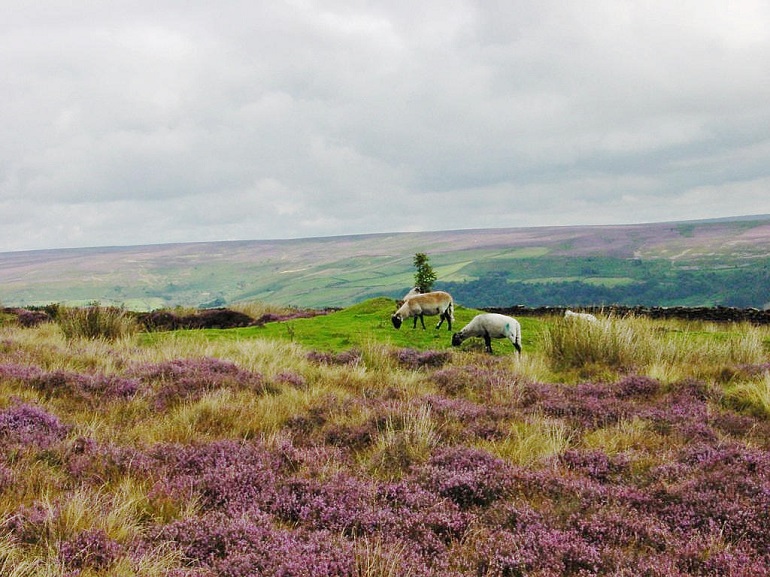
- The moors feature one of the largest areas of heather moorland in England, forming broad plateaus that stretch to the horizon.
- The landscape is defined by gently undulating terrain, with open vistas and windswept ridges that offer a sense of vast space and isolation.
- Deeply incised dales (valleys), such as Rosedale and Farndale, cut through the plateau and add striking visual interest.
Coastal Scenery
- The park’s eastern edge meets the North Sea, creating a dramatic coastline around towns like Whitby and Staithes.
- High cliffs, such as those at Ravenscar, drop steeply into the sea, offering breathtaking sea views and scenic walking paths.
- There are also sheltered coves, sandy beaches, and rugged headlands, each with their own unique geology and character.
Rivers and Valleys
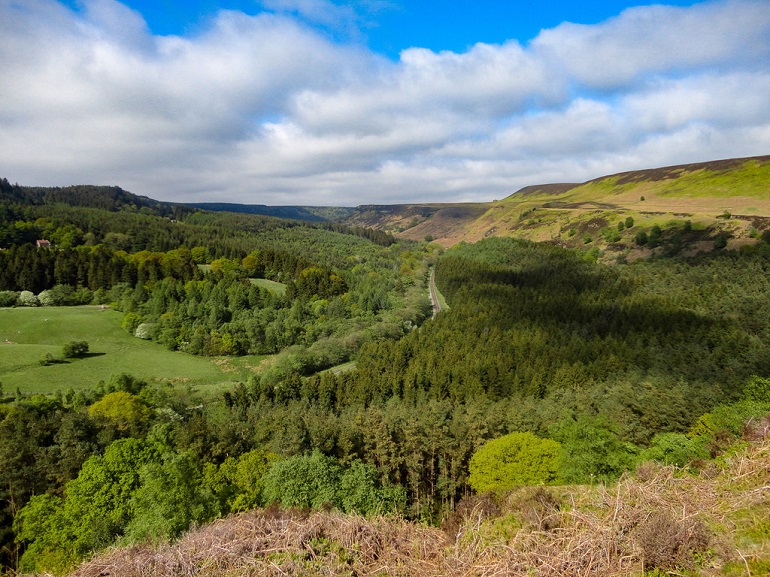
- Numerous rivers, including the Esk and the Rye, meander through the park, creating lush, green valleys lined with woodland.
- Many valleys are dotted with small villages and traditional stone-built farms, reflecting centuries of rural heritage.
- These river valleys are particularly notable for their narrow, steep sides and clear, fast-flowing water.
Hills and High Points
- The park’s highest point is Urra Moor, which rises to 454 metres above sea level.
- Other prominent landforms include Roseberry Topping, a distinctive hill with a striking peak often referred to as the ‘Yorkshire Matterhorn’.
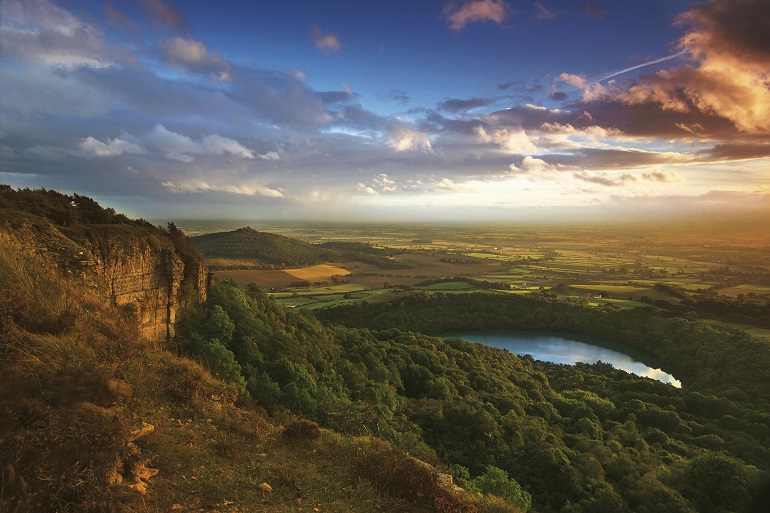
- Hilltops and escarpments provide extensive views across the park and, on clear days, into the Vale of York.
Geology
- The underlying geology is dominated by ancient sandstones, limestones, and shales, shaped by glacial activity and erosion.
- The landscape bears traces of human influence, visible in prehistoric barrows, standing stones, and evocative ruins such as Rievaulx Abbey.
Built Heritage and Land Use
- Dry stone walls traverse the moors, delineating fields and echoing patterns of historic land management.
- The landscape is further characterised by isolated farmhouses, market towns, and remnants of former industries such as ironstone mining and quarrying.
Flora and Fauna
Moorland Flora
Heather and Moorland Plants
- Heather: The moors are renowned for their rolling carpets of heather, particularly in late summer when the landscape bursts into vibrant shades of purple and pink. The three main types:
- Ling (Calluna vulgaris): The most widespread, with tiny pink flowers.
- Bell heather (Erica cinerea): Dark pink, bell-shaped blooms.
- Cross-leaved heath (Erica tetralix): Pale pink bells found in boggy areas.
- Bog Flora: The wetter areas support plants such as bog asphodel, round-leaved sundew (an insect-eating species), bog myrtle, butterwort, and the nationally scarce creeping forget-me-not.
- Fens and Bogs: Home to sphagnum mosses, which help support unique bog habitats essential for many species.
- Moorland Shrubs: Bilberry (also known as wild blueberry) adds further colour to the landscape and provides a treat for berry pickers in the summer.
Woodland Flowers
- Springtime Blooms: Ancient woodlands and riverbanks come alive with bluebells, wild daffodils (notably in Farndale), wood anemones, primrose, and snowdrops.
- Other Woodland Flora: Yellow archangel, cow-wheat, and violets are among the many species found in the shade of native trees.
Fauna
Mammals
- Deer: Roe deer and fallow deer are commonly glimpsed at dawn or dusk in woodlands and across open moorland.
- Small Mammals: Brown hare, rabbit, badger, fox, stoat, weasel, hedgehog, various shrews, and even reintroduced beavers in areas such as Cropton Forest.
- Elusive Residents: The pine marten—a rare sight—and otters can be found along rivers and woodland fringes.
Birds
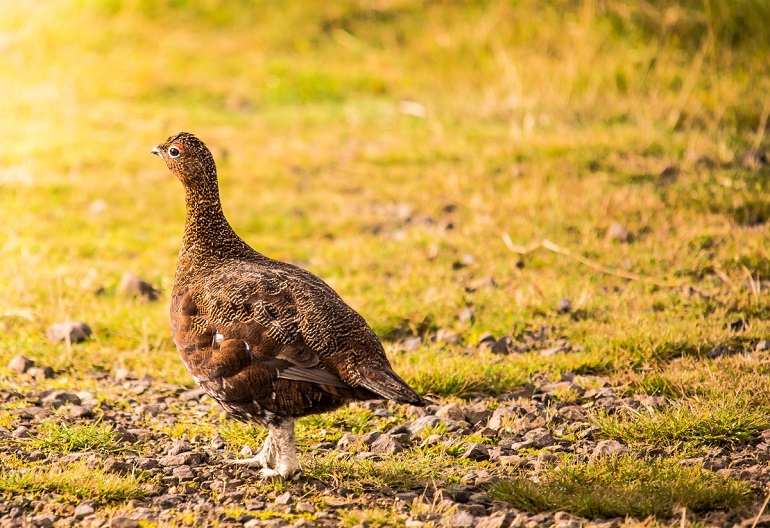
- Moorland Specialities: The National Park is globally significant for its birdlife, including:
- Red grouse, golden plover, curlew, lapwing, snipe, ring ouzel, dotterel, cuckoo, stonechat, and whinchat.
- Birds of Prey: Merlin (Britain’s smallest raptor), buzzard, red kite, peregrine falcon, and occasional osprey sightings.
- Woodland Birds: Barn owl, woodpecker, and pheasant frequently seen in wooded areas.
- Coastal and Marine Birds: Look out for puffins, gannets, razorbills, and kittiwakes at Bempton Cliffs and Flamborough during breeding season.
Reptiles and Amphibians
- Common Reptiles: Adder and common lizard are often spotted basking in warm weather.
- Amphibians: Frogs, toads, and newts inhabit wetter corners of the park.
Insects and Pollinators
The North York Moors support several moths and butterflies, including the emperor and wood tiger moths, small pearl-bordered fritillary, and many dragonflies and damselflies, especially around water.
Marine Life
The coastal sections of the park provide opportunities to spot marine mammals such as:
- Grey and common seals
- Harbour porpoises, bottle-nosed and white-beaked dolphins
- In summer and early autumn, even minke and humpback whales are occasionally sighted from the clifftops.
Activities and Attractions
Hiking and Walking Trails
Hiking is unquestionably one of the standout experiences in the North York Moors, with over one thousand miles of public footpaths meandering through wild moors, sprawling forests, imposing ridges and pastoral dales. The park features a vast network of footpaths, ranging from gentle strolls to epic cross-country treks, all taking in exhilarating scenery and local landmarks.
Major Long-Distance Trails
Cleveland Way National Trail
- A prestigious long-distance path stretching over 175 kilometres
- Follows dramatic clifftops from Helmsley to Filey, passing via the North Sea coast, heather moorland, and quaint villages
- Popular sections include Saltburn to Whitby for staggering sea views and Whitby to Scarborough for its rugged charm
- Combines nature with historical heritage, passing old monuments such as abbeys
- Part of the trail skirts along the edges of the North York Moors National Park
Lyke Wake Walk
- An iconic challenge for seasoned hikers spanning 64 kilometres
- Traverses the park from west to east across open moorland, offering wild, remote landscapes
- Noted for its sense of adventure and the physical test involved
- Runs through the highest part of North York Moors National Park
- Features a darker history - this route was traditionally used for transporting the dead, with various burial mounds along the way
- Since 1955, there's been a tradition of completing the entire route within 24 hours, which was particularly popular in the 1970s and 80s
Saint Aelred's Pilgrim Trail
- A newly launched 41-mile trail linking 12 churches in the Benefice of Helmsley and Upper Ryedale
- Officially launched in 2024
- Brings together spectacular scenery, strong cultural heritage, and welcoming communities
- Showcases both Helmsley's market town vibrancy and beautiful historic churches
Spectacular Day Walks and Circular Routes
The Wainstones Walk
- Start/finish: Chop Gate
- Distance: 8.3 miles
- Difficulty: Moderate to challenging
- Features the largest group of sandstone rocks in the area, requiring scrambling to reach the top
- Skirts along the edge of Urra Moor, the highest moor in the National Park
- Surrounded by extensive heather moorlands with views to Roseberry Topping in the distance
- Can get muddy, so best avoided after wet weather
- The sandstone crags look "rather like a set of dinosaur teeth" and are popular with local climbers
Roseberry Topping and Captain Cook's Monument
- Start/finish: Gribdale Gate Captain Cook's car park
- Distance: 5 miles
- Difficulty: Moderate
- Features a uniquely shaped peak with a distinctive pointing and drooping profile
- Located in the very north of the National Park
- The route first visits Captain Cook's Monument with wonderful views across the moors
- Captain Cook was from this local area
- The climb isn't as challenging as the peak appears, with only a steep section with steps near the summit
Sutton Bank and White Horse of Kilburn Circular
- Start/finish: Sneck Yate car park
- Distance: 8.5 miles
- Difficulty: Moderate
- Features some of the finest views in the country over Hood Hill, Lake Gormire, and Vale of Mowbray
- The road leading up to Sutton Bank is so steep and winding that caravans are banned from using it
- Walk along the escarpment (part of Cleveland Way) with incredible views across the North York Moors and as far as the Yorkshire Dales
- Includes views over Gormire Lake, formed during the ice age
- The White Horse of Kilburn can be seen from as far away as York
- Kilburn was home to Robert Thompson, also known as The Mouseman of Kilburn
Hole of Horcum Circular
- A 7km scenic walk taking in a vast natural amphitheatre known as the 'Devil's Punchbowl'
- The Hole of Horcum is 400 feet deep and more than half a mile across
- Paths lead along the rim and down into the valley, with spectacular views and geological intrigue
- 5-mile circular walk across Levisham Moors with grand landscapes and stunning views
- Legend says it was formed when Wade the Giant scooped up earth to throw at his wife during an argument
Cold Moor and Urra Moor Walk
- Connects two rugged, beautiful fells covered in colourful heather via the Cleveland Way
- Can be boggy in wet weather, requiring sturdy footwear
- Windswept terrain requiring warm clothing
- Offers a wonderful way to experience the stark beauty of the North York Moors
Black Hambleton Walk
- Offers brilliant views extending to the Vales of York and Mowbray and even to the Pennines on clear days
- Route begins below the summit, passing through forest and farmland before climbing to a rocky ridge
- Not too demanding with wonderful views throughout the walk
Forest and Woodland Walks
Goathland and Mallyan Spout
- Combines moorland with woodland, venturing to Mallyan Spout waterfall
- This challenging hike requires negotiating rocky, craggy terrain
- Passes through beautiful wooded valley and open moorland before reaching the ancient Roman Road
- Popular among visitors thanks to Goathland village, featured in TV's 'Heartbeat'
- Goathland Station is a historic railway station with steam trains and vintage charm, featuring Harry Potter-themed memorabilia
Helmsley to Rievaulx Abbey Walk
- Relatively easy route with wonderful views
- Begins in the bustling market town of Helmsley
- Passes along a section of the Cleveland Way to reach the ruins of the medieval Cistercian abbey
- The ruined skeleton of Rievaulx Abbey is an iconic part of the North York Moors landscape
Dalby Forest Walks
- 8,500 acres of woodland to explore on the southern slopes
- Features deep valleys and upland plateau
- Offers fantastic walks for all abilities
- Home to the Bridestones - large sandstone stacks shaped by wind, rain and frost erosion
- Signed pathways from the car park near Staindale Lake lead to these natural sculptures
- The Bridestones are "a collection of weathered sandstone lollipops" accessible via easy walks from forest car parks
Coastal Walks
Cloughton and Hayburn Wyke Walk
- Gently undulating walk along the Cleveland Way between coastal wykes
- Features cliff-side strolls with views to Scarborough Castle
- Includes pretty woodland, tall waterfalls, and rocky beaches
- Excellent opportunities to spot red deer and local birds in the woodland
Ravenscar to Robin Hood's Bay
- A coastal walk atop cliffs with historical intrigue
- Robin Hood's Bay is a quaint coastal village with steep, cobbled streets and historic charm
- Offers picturesque walks, fossil hunting, and rock pooling on clean beaches
Speciality and Seasonal Walks
Farndale Daffodil Walk
- An easy, family-friendly walk renowned in spring for thousands of wild daffodils along the River Dove
- Ideal for shorter, picturesque strolls through woodland and meadows
- Best visited during daffodil season for spectacular natural displays
Rosedale Railway Path
- Follows the trackbed of a historic ironstone railway
- Flat walking with striking industrial heritage
- Pass the old Rosedale Iron Kilns at Chimney Bank, quiet dales, and open moors
- From mid-1800s to 1920s, Rosedale was a massive mining concern supplying ironstone to Teesside blast furnaces
- The old railway is now a wide moorland bridleway allowing for a bracing 14-mile loop around Farndale Head
Accessible Walking Routes
The North York Moors National Park prioritises accessibility with Miles without Stiles routes that are well-suited for everyone. Many viewpoints, beaches, and attractions are accessible to all visitors, ensuring the park's beauty can be enjoyed regardless of mobility requirements.
Cycling and Mountain Biking
The North York Moors are a haven for cyclists, with both road and mountain biking routes catering to all levels of experience.
Premier Cycling Destinations
Sutton Bank WildRide Network
- Has become the flagship cycling centre for the North York Moors National Park
- Features the 'top of the world' WildRide network, making it one of the best destinations in the country for traffic-free riding
- Over 40 miles of signposted cycling trails for all ability levels
- Includes a skills area for young novices and a pump track for mountain-bikers
- Visitor centre offers expert tuition, guiding, shops, cafes, and bike hire
Forest Cycling Trails
- Cropton and Keldy offer forest trails with luxury eco-lodge accommodation featuring bike hire and hot tubs
- Dalby Forest provides world-class mountain bike trails in its 8,500 acres
- Newbridge Park in Pickering features a mini-bike park with MTB trails and skills area created by local volunteers
Network Routes
The Moor to Sea Cycle Network and the North York Moors Cycleway offer challenging hills, forest tracks, and tranquil country lanes for cyclists of all abilities.
Heritage Railways
The North Yorkshire Moors Railway is a preserved steam railway running from Pickering to Whitby, allowing visitors to step back in time. The stations along the route, such as Goathland, immerse visitors in classic rural England atmosphere. Goathland Station features train carriage seating, a tea room, and embraces Harry Potter-themed nostalgia.
Coastal Activities and Attractions
With 26 miles of Jurassic-era coastline, the park offers diverse coastal experiences:
Coastal Villages and Beaches
- Staithes and Robin Hood's Bay are famous old fishing villages
- Robin Hood's Bay offers fossil hunting, rock pooling, and beachcombing opportunities
- Whitby features iconic abbey ruins famously linked with Bram Stoker's Dracula
- Sandsend provides beach access for various water sports
Water Sports
The coastline and rivers attract enthusiasts interested in:
- Surfing and paddleboarding
- Kayaking and canoeing
- Fishing
- Surf schools and equipment hire available at beaches such as Sandsend
Historic Sites and Cultural Heritage
The National Park features over 800 Scheduled Monuments and 1,500 ancient boundary stones and crosses, offering rich historical exploration:
Major Historic Sites
- Rievaulx Abbey: Hauntingly beautiful ruins of a Cistercian abbey, easily accessible from Helmsley
- Whitby Abbey: Clifftop ruins with dramatic views and Dracula connections
- Industrial heritage including ironstone mines and railway remnants throughout Rosedale
Stargazing and Dark Skies
Recognised as an International Dark Sky Reserve, the North York Moors provide exceptional stargazing opportunities. The park's vast areas of clear, dark skies allow views of up to 2,000 stars, including the Milky Way. Several designated viewing sites and organised events cater to astronomy enthusiasts, with Dalby Forest particularly noted for its spectacular dark skies.
Family-Friendly Attractions and Activities
Adventure and Play Areas
- Go Ape experience at Dalby Forest with rope and chain trails through treetops
- Adventure playgrounds and nature-inspired play areas at centres like Danby Lodge
- All-terrain Segway tours available for forest exploration
Gentle Activities
- Scenic picnic spots and barbecue areas throughout the park
- Gentle walks suitable for prams and wheelchairs
- Lake Eskdale offers lovely shoreline strolls with glacially-carved landscape views
Educational Centres
- Sutton Bank National Park Centre serves as an information hub
- The Moors National Park Centre at Danby is housed in a former hunting lodge
- Danby Beacon offers amazing 360-degree views of moor, dale, and sea
Natural Features and Geological Attractions
Rock Formations
Beyond the Wainstones, the park features remarkable geological formations:
- The Bridestones in Dalby Forest - weathered sandstone formations great for climbing
- Various sandstone crags throughout the northeastern park area
Unique Landscapes
- 44,000 hectares of heather moorland designated as a Site of Special Scientific Interest
- Diverse terrain from deep valleys to upland plateaus
- Ancient woodlands providing habitat for diverse wildlife
- Lake Gormire - a natural ice age lake offering tranquil beauty
Accommodation
Serviced Accommodation
Hotels, inns and traditional bed-and-breakfasts cluster in market towns such as Helmsley, Pickering and Whitby, and in smaller moorland villages linked by the heritage railway. Properties housed in former coaching inns or Victorian seaside villas are common, offering everything from simple, budget rooms to five-star suites with spa facilities. Mid-week prices in the shoulder seasons tend to be markedly lower than at weekends; recent data show average nightly rates around £116 for three-star properties and just over £120 for four- and five-star equivalents, rising sharply during school holidays.
Self-Catering Cottages and Lodges
Self-catering remains the most plentiful option. Hundreds of cottages sit within farming hamlets, on the edges of forests or perched above the sea cliffs. Expect beamed ceilings, log burners and, increasingly, luxuries such as hot tubs or cinema rooms. Stays of three or four nights are widely accepted outside peak weeks, but many properties insist on seven-night bookings in August. Late-spring and early-autumn visits often deliver lower tariffs while still catching the heather in bloom or the woods in colour.
Camping and Caravan Sites
The National Park Authority urges visitors to use registered campsites; almost all land here is privately owned, and pitching without permission is unlawful. Organised sites range from basic fields with a tap to holiday parks with amenity blocks, playgrounds and Wi-Fi. Charges start at roughly £11 per person for a non-electric tent pitch in low season. Caravan and motorhome touring pitches, normally on hardstanding with electric hook-up, cost more but remain good value compared with coastal sites just outside the park.
Glamping
Glamping is flourishing, with more than forty sites offering options such as insulated pods, shepherds’ huts and safari tents. Many have en-suite facilities, private hot tubs and firepits, delivering home comforts without forfeiting dark-sky stargazing. Pods are popular with walkers tackling the Cleveland Way and cyclists riding the Moor to Sea route, as most allow one-night stays.
Hostels and Bunkhouses
For hikers and cyclists travelling light, independent hostels and converted barns provide dorm beds, shared kitchens and drying rooms. They are typically located near long-distance trails or heritage railway stations and are bookable by the bed or for exclusive use, making them ideal for clubs and schools.
Accessibility
Several cottages, lodges and holiday homes are purpose-designed for wheelchair users, featuring level thresholds, roll-in showers and adjustable worktops. Additionally, many campsites now offer accessible glamping units and family washrooms; always confirm specifications before arrival.
Seasonal and Practical Considerations
- Peak season spans late July to the end of August, when availability is tight and prices highest. Book at least six months ahead for summer or Christmas.
- Heather peaks from mid-August to early September, filling the moor tops with purple-pink bloom. Accommodation inland may book out even quicker than the coast during this period.
- Winter brings shorter days and occasional snow on the high moors. Many campsites close, but cottage and inn rates drop significantly, and wood-burners come into their own.
- Public transport is limited in remoter dales. If you plan to rely on buses or trains, choose accommodation in towns on the Esk Valley or Moors Bus network.
- Dogs are welcomed at a large proportion of cottages, campsites and inns, but livestock-grazed moorland means leads are essential in lambing season.
Sustainable Stays
Look for properties signed up to green accreditation schemes, using renewable energy or offering recycling points. Off-grid glamping sites often provide solar lighting and encourage low-impact stays. Wherever you stay, follow Leave No Trace principles, especially when barbecuing or disposing of waste, as fires can devastate peat moorland.
Booking Tips
- Decide first whether you favour coast, forest, dale or open moor; journey times across the park can be longer than expected.
- Compare cancellation policies: many providers now offer flexible terms, helpful given unpredictable weather.
- If travelling in a large family group, a spacious cottage may undercut multiple hotel rooms. Conversely, solo travellers frequently find hostels more economical.
- For walkers, consider luggage-transfer companies that collect bags from one accommodation and deliver to the next, allowing you to book a string of inns or B&Bs along a route.
Gastronomy
A Taste of Tradition
Nestled in the heart of northern England, the North York Moors National Park offers a rich and inviting culinary landscape. The region is renowned for showcasing the best of Yorkshire’s larder, deeply influenced by its agricultural heritage, coastal proximity, and wild moorland setting.
Local Produce and Specialities
The moors are a haven for lovers of fresh, local fare. Seasonal produce plays a central role in the region’s gastronomy, with menus often reflecting what is available from surrounding farms and coastlines.
- Lamb and Beef: Moorland-reared lamb and beef are known for their flavour and quality, shaped by the area’s heather-clad hills and lush pastures.
- Game: Depending on the time of year, locally-sourced game such as venison, pheasant, and grouse feature on many menus.
- Seafood: The park’s proximity to the Yorkshire coast means fresh fish and shellfish, particularly crab and lobster, are integral to local cuisine.
- Dairy: Creamy cheeses, thick yoghurts, and rich ice creams made from locally produced milk are widely enjoyed.
Traditional Dishes and Baking
Yorkshire’s culinary traditions run deep, with classic recipes passed down through generations:
- Roast Dinners: Especially popular on Sundays, often accompanied by the iconic Yorkshire pudding.
- Stews and Casseroles: Hearty fare like beef stew or game casserole, perfect after a bracing walk on the moors.
- Pastries and Pies: Handcrafted pies filled with minced meat, game, or seasonal vegetables.
- Tea and Baking: The region is famous for its afternoon teas, featuring fruitcake, scones, and sweet treats such as parkin and gingerbread.
Food Experiences
Visitors can enjoy a variety of gastronomic experiences throughout the North York Moors:
- Sample local produce at farmers’ markets and food festivals.
- Take part in seasonal foraging activities, such as berry or mushroom picking (with guidance).
- Enjoy traditional fish and chips by the coast or a rustic meal in a country inn.
Getting There and Around
Getting to the Park
By Train
The East Coast mainline provides the primary rail access, connecting Scotland and London with the North York Moors via nearby York. Regular services also stop at Thirsk and Northallerton, whilst other mainline stations serving the area include Malton, Scarborough, Whitby, and Middlesbrough.
York serves as the main gateway to the park, with London to York taking less than two hours by train. From York, you can connect to local services reaching Malton (23 minutes) and other destinations within the park. Transpennine Express operates regular services from major cities including Leeds, Manchester, and Liverpool.
By Bus and Coach
National Express services from around the country stop at Thirsk, Northallerton, and Middlesbrough, all close to the North York Moors National Park. There are also frequent services to York and Leeds, from where connections can be made via Megabus to Malton, Pickering, Goathland, and Whitby.
The Yorkshire Coastliner service runs from Leeds to Whitby via Malton, Pickering, Thornton-le-Dale, and Goathland, providing direct access into the heart of the park.
By Ferry
For international visitors, the North York Moors is accessible via ferry services, with P&O Ferries operating routes from Rotterdam to Hull and from Amsterdam to Newcastle, where you can pick up rail or bus services.
By Car
Major road networks provide straightforward access to the park. From York, it's approximately 36 miles to reach the North York Moors National Park, taking around 51 minutes by car. From London, the drive is about 235 miles, taking approximately 4 hours and 26 minutes.
Getting Around the Park
Heritage and Local Railways
Esk Valley Railway
One of the UK's most picturesque train journeys, the Esk Valley Railway runs for 35 miles from Middlesbrough to Whitby, passing through the heart of the National Park. This scenic route traverses beautiful moorland scenery around the Esk Valley, stopping at numerous places within the park.
North Yorkshire Moors Railway
This heritage steam service runs through scented woodland and over the high moors from Pickering to Grosmont, sometimes continuing on the Esk Valley line to Whitby. It's an excellent way to experience the park's scenery whilst enjoying a touch of railway history.
Bus Services
Coastliner 840
Voted Britain's most scenic bus route, the Coastliner 840 runs from York through spectacular scenery, offering excellent views from the top deck of double-decker buses. Services connect York to destinations within the park including the Hole of Horcum.
Moorsbus
Operating every Sunday and Bank Holiday from May to September, Moorsbus provides dedicated services into the North York Moors. Key routes include:
- M1: Hull to Pickering via Beverley and Driffield, connecting with the M3 service
- M3: Pickering to Danby Lodge via Kirkbymoorside and the Lion Inn on Blakey Ridge
Specialist Bus Routes
Several themed bus services operate within the park:
- The Western Explorer: Links Rievaulx, Byland, Helmsley, and Mount Grace Priory
- The Rosedale Rambler: Connects Beck Isle Museum, Ryedale Folk Museum, and Cropton
- The Dalby Forester: A scenic route through the forest
- The Moorland Discovery: Takes in Roseberry Topping, Captain Cook's Monument, Ralph's Cross, Danby, Bilsdale, Sutton Bank, and Helmsley
On Foot and by Bicycle
The North York Moors boasts over 1,400 miles of rights of way, plus forest tracks and quiet moorland roads, making walking and cycling fantastic ways to explore areas not accessible by car.
Cleveland Way National Trail
Covering 109 miles from Helmsley to Filey, this well-marked trail takes in scenic heather-clad moorland and coastal clifftop pathways, passing through villages like Osmotherley and landmarks such as Roseberry Topping.
Esk Valley Walk
Following the 37-mile waymarked trail along the River Esk from high in the moors down to Whitby, this route is particularly scenic in its final 8 miles from Grosmont to Whitby.
Forest Areas
More than 20% of the National Park is covered with trees, with Dalby Forest being the largest woodland area at 8,600 acres. The forest offers walking and cycling trails for all abilities, plus family-friendly activities.
Cycling
The park's extensive network of trails, bridleways, and quiet country roads provides excellent cycling opportunities for all levels. Mainline train services usually offer bike spaces, though these should be reserved in advance. Note that bikes are generally not permitted on buses.
Practical Transport Tips
- Most bus services run regularly, with some routes operating hourly
- Many destinations are well-connected, with York serving as a central hub for onward connections
- The park's visitor centre at Danby Lodge is accessible via the M3 Moorsbus service
- Traveline and apps such as Bus Times UK can help plan your journey using local bus services
Best Time to Visit
Peak Season: Summer (July-August)
July to late August represents the optimal period for most visitors seeking warm-weather activities and outdoor adventures. During these months, you'll enjoy the longest days, most reliable weather, and access to the full range of outdoor pursuits the park has to offer.
Summer brings several advantages:
- Warmest temperatures and most sunshine hours
- Driest conditions (the North York Moors is actually Britain's driest upland area)
- Perfect conditions for hiking, cycling, and coastal activities
- All visitor facilities operating at full capacity
- Ideal for camping and outdoor accommodation
However, this popularity comes with increased visitor numbers and higher accommodation costs.
The Heather Season: Late August-September
Late August through September offers one of the most spectacular natural displays in Britain. The moorland transforms into a magnificent purple carpet as bell heather, ling, and cross-leaved heather burst into bloom. This creates breathtaking vistas across the undulating landscape, accompanied by the sweet scent of heather and the gentle buzz of bees and butterflies.
This period combines the tail end of summer weather with fewer crowds, making it an excellent compromise for many visitors.
Spring: April-June
Spring brings the park to life with fresh energy and vibrant colours:
- April: Nature bursts into life with fresh green shoots, wild garlic carpeting woodland floors, and the return of breeding birds to the moors
- May: Long, warm days arrive alongside lush vegetation and spectacular bluebell displays in woodland areas
- June: Full summer colours emerge as the breeding season reaches its peak
Spring offers mild weather, fewer visitors than summer, and the joy of witnessing the landscape's renewal after winter.
Autumn: October-November
Autumn transforms the park into a painter's palette of rich colours. The deciduous woodlands explode in auburn, gold, and copper tones before the leaves begin to fall. This season offers:
- Spectacular autumn foliage displays
- Crisp, clear days perfect for photography
- Excellent wildlife viewing as animals prepare for winter
- Beautiful misty mornings creating atmospheric landscapes
Winter: December-March
Winter visits require proper preparation but reward hardy visitors with a different kind of beauty:
- Frosty mornings and dramatic winter skies
- Easier wildlife spotting due to bare trees and reduced vegetation
- Peaceful, uncrowded landscapes
- Clear winter nights perfect for stargazing
The park experiences its coldest and windiest conditions during winter months, with shorter daylight hours limiting outdoor activities.
Weather Considerations
The North York Moors experiences a maritime climate with:
- Warmest month: July (average highs around 18°C/65°F)
- Coldest month: February (average highs around 6°C/43°F)
- Wettest period: Autumn and winter months
- Driest period: Spring and early summer
The coastal areas tend to be milder than inland moors, whilst higher elevations can be significantly cooler and windier.
Wildlife Viewing
For wildlife enthusiasts, timing can be crucial:
- Early morning and late evening offer the best chances for animal sightings
- Spring (March-May): Return of breeding birds including curlews, golden plovers, and lapwings
- Summer: Peak activity for butterflies, bees, and other insects
- Autumn: Preparation activities as wildlife stocks up for winter
- Winter: Easier spotting of birds and mammals due to reduced vegetation
Making Your Choice
Consider these factors when planning your visit:
Choose summer if you prioritise warm weather, long days, and the full range of outdoor activities.
Choose late summer/early autumn for the famous heather displays and fewer crowds.
Choose spring for mild weather, emerging wildlife, and excellent value accommodation.
Choose winter if you enjoy solitude, dramatic weather, and don't mind limited daylight hours.
Whatever season you choose, the North York Moors National Park offers rewarding experiences year-round, from the purple heather moors of late summer to the crisp, clear days of winter.
Conservation and Responsible Tourism
Conservation Efforts
- Biodiversity Protection: Over a third of the Park is safeguarded by special designations, including Special Protection Areas (SPAs), Special Areas of Conservation (SACs), and Sites of Special Scientific Interest (SSSIs), protecting habitats for rare birds like the merlin and golden plover, as well as unique bogs, woodlands, and coastal areas.
- Habitat Restoration: Ongoing projects such as 'Birds on the Edge' are restoring key habitats, including ponds and wildflower plots, to support endangered species like the turtle dove, yellowhammer, and song thrush, as well as pollinators and wider wildlife.
- Climate and Landscape Resilience: The Park is committed to nature recovery and climate action, aiming to deliver a resilient, biodiverse landscape by 2040. This involves both conserving what already exists and actively restoring lost habitats.
- Local Action: Conservation also extends to cultural heritage. Many of the Park’s 42 conservation areas protect the historic character of local villages and landmarks, preserving the region’s unique sense of place.
Responsible and Sustainable Tourism
- Visitor Impact: With nearly 9 million visitors annually and a thriving local tourism sector, there is a shared responsibility to protect the qualities that draw people to the North York Moors – its tranquillity, wildlife, and scenery.
- Regenerative Tourism: The Park is pioneering a 'regenerative tourism' model, which seeks not just to minimise negative impacts but to ensure tourism actively contributes to the landscape, communities, and local economy, making the Park a better place as a result of every visit.
- Supporting Local Businesses: Many tourism businesses are improving sustainability through local sourcing, reducing waste, supporting regional suppliers, and cutting single-use plastics. Special initiatives encourage the use of public transport and non-flying travel to access the Park, further lowering the carbon footprint of tourism.
- Accessible and Inclusive Travel: Recent projects have helped make local attractions, accommodation, and experiences more accessible, ensuring everyone can enjoy the National Park while promoting inclusive, responsible tourism.
- Practical Tips for Visitors:
- Use established paths and respect wildlife habitats
- Support local businesses and producers
- Take litter home and avoid single-use plastics
- Choose low-impact travel options such as walking, cycling, and public transport
- Engage with conservation volunteering or citizen science opportunities
Visitor Centres and Educational Facilities
The North York Moors National Park is home to a selection of welcoming visitor centres and dedicated educational facilities. These hubs serve as perfect starting points for your exploration, providing helpful information, interactive exhibits, and access to unique programmes designed to bring the landscape and heritage of the Moors to life.
Main Visitor Centres
Danby Lodge National Park Centre
Nestled in the heart of the North York Moors beside the River Esk, Danby Lodge offers an engaging introduction to the park. Highlights include:
- Exhibition Areas: Explore displays detailing the natural habitats, geology, and history of the Moors, with interactive elements for all ages.
- Inspired by… Gallery: Rotating exhibitions feature artworks inspired by the landscape, alongside a gifts and crafts shop.
- Adventure Playgrounds: Includes an outdoor play area and a mud kitchen for younger visitors.
- Walking Trails: Several well-marked routes begin here, allowing for gentle strolls or more adventurous hikes through the surrounding countryside.
- Accessibility: Facilities include tramper mobility scooter hire and accessible routes.
- Dark Sky Discovery Site: The centre is an excellent spot for stargazing on clear evenings.
Entry to Danby Lodge is free, and the centre houses a café and shop, as well as event spaces for special exhibitions and family-friendly activities throughout the year.
Sutton Bank National Park Centre
Located on the A170 near Thirsk, Sutton Bank Visitor Centre acts as a key gateway to the western edge of the park. Visitors will find:
- Window on the Park Exhibition: A hands-on, interactive showcase explaining local geology, wildlife, and the national park’s vibrant history.
- Walking and Cycling Trails: Superb routes departing directly from the centre, with spectacular views over the Vale of York.
- Tearoom and Gift Shop: Locally sourced food and regionally crafted souvenirs.
- Family & Educational Activities: The centre hosts themed walks, craft demonstrations, and specialist talks by park rangers.
With its combination of educational exhibits and access to breathtaking vistas, Sutton Bank is welcoming for families, walkers, and cyclists alike.
Additional Visitor Information Points
For local insight or help planning your stay, several Tourist Information Centres can be found in nearby towns and villages, including Great Ayton Discovery Centre, Easingwold, and Northallerton.
Educational Facilities and Programmes
Outdoor Learning Service
The North York Moors National Park’s Outdoor Learning Team offers a range of curriculum-linked activities for school and youth groups, based at both Danby Lodge and Sutton Bank centres. Sessions are led by experienced coordinators and can cover:
- Nature trails, map skills, and fieldwork
- Art projects such as wool weaving and sculpture
- River and coastal studies, rock-pooling, and fossil hunting
- Specialised geography, ecology, and history sessions for GCSE and A-Level students
Programmes are flexible—ranging from one-hour introductions to full-day fieldwork expeditions. There are wheelchair-accessible classrooms, resources for teachers, and risk assessments available. The learning team is also happy to adapt activities for children with special needs, ensuring inclusivity for all visitors.
Stepping Stones to Nature
This outreach project connects children from surrounding communities, especially those with fewer opportunities to access nature, to the benefits of the National Park. Activities focus on sensory engagement with the landscape and developing confidence, communication, and environmental awareness through play and creativity.
East Barnby Outdoor Centre
Located on the park’s periphery, East Barnby provides residential outdoor education with dormitory accommodation for students and leaders. The centre specialises in:
- Rock climbing, river paddling, and coastal activities
- Campfires, games rooms, and large outdoor spaces
- Flexible, adaptive programmes for various age groups
It is well-regarded among local schools for fostering independence, group bonding, and an appreciation of the outdoors in a safe and supportive environment.
Facilities Overview
| Centre | Café | Shop | Exhibitions | Play Area | Accessible | Outdoor Learning | Special Events |
|---|---|---|---|---|---|---|---|
| Danby Lodge | ✔ | ✔ | ✔ | ✔ | ✔ | ✔ | ✔ |
| Sutton Bank | ✔ | ✔ | ✔ | ✔ | ✔ | ✔ | ✔ |
| East Barnby | – | – | – | ✔ | ✔ | ✔ | ✔ |