


 Ireland Guide
 Scotland Guide
 Wales Guide
| Contents |
|---|

Introduction
Harewood House is an 18th-century stately home located in West Yorkshire, approximately seven miles north of Leeds. Built between 1759 and 1771 for Edwin Lascelles, 1st Baron Harewood, the house was designed by York architect John Carr with interiors by Robert Adam and furniture by Thomas Chippendale. The Palladian mansion sits within 1,000 acres of parkland landscaped by Capability Brown, and houses one of the finest collections of Chippendale furniture in the world, alongside important paintings by Turner, Titian, and other masters. Still the family home of the Earl and Countess of Harewood, the house opens its state rooms, servants' quarters, and extensive grounds to visitors, offering insights into both aristocratic life and the below-stairs world of a great English country estate. The grounds feature formal and informal gardens, a four-acre walled garden, woodland walks, and a bird garden housing over 100 species of exotic birds from around the world.
Interesting Facts about Harewood House
- Harewood House was built between 1759 and 1771 by Edwin Lascelles, 1st Baron Harewood, using a fortune made from West Indian sugar plantations and the slave trade.
- The magnificent country house was designed by two of Britain's finest architects, John Carr of York and Robert Adam, creating one of the most elegant examples of 18th-century architecture.
- The estate's stunning 1,000-acre landscape was designed by Lancelot "Capability" Brown, the father of the English landscape gardening style.
- Thomas Chippendale was commissioned in 1767 to create all the furniture for the house at a cost of over £10,000, and today Harewood contains the finest collection of his work in the country.
- The house became connected to the Royal Family in 1922 when Henry Lascelles, 6th Earl of Harewood, married Princess Mary, the only daughter of King George V.
- During the Second World War, this stately home served as a convalescent hospital for wounded soldiers.
- The spectacular Gallery extends 77 feet along the entire west end of the house and was inspired by the ancient ruins of Palmyra, Syria.
- Harewood boasts Britain's only Buddhist Stupa, located in its unique Himalayan Garden which features hundreds of rare plants and authentic design elements created in collaboration with Bhutanese monks.
- The estate includes an exotic Bird Garden housing over 40 rare species, including penguins and flamingos, many of which are part of conservation breeding programmes.
- The first recorded owners of the Harewood estate were three Saxon chieftains with the wonderfully evocative names of Tor, Sprot, and Grim, as documented in the Domesday Book.
- The house contains an impressive art collection spanning centuries, from Italian Renaissance masterpieces by Titian and Tintoretto to modern works by Picasso collected by the 7th Earl.
- Harewood House won the prestigious "Large Visitor Attraction of the Year" award in 2009, recognising its excellence as a heritage destination.
- The current owner, David Lascelles, 8th Earl of Harewood, has openly acknowledged and addressed his family's historical connections to slavery, even commissioning a portrait of actor David Harewood (whose ancestors were enslaved by the family) to hang in the house.
- The magnificent property attracts over 250,000 visitors annually and remains the family seat of the Lascelles family after more than 260 years.
- Harewood's 4,000-acre estate encompasses not only the house and formal gardens but also extensive parkland, private woodlands, and the historic All Saints' Church with its remarkable alabaster tombs.
History
Harewood House stands as one of Yorkshire's most magnificent country estates, with its origins firmly rooted in the wealth generated from the West Indian sugar trade and the transatlantic slave trade. The estate was purchased in 1738 by Henry Lascelles, who had amassed an enormous fortune through his involvement in every aspect of the Caribbean sugar industry, including ownership of plantations, enslaved people, ships, and warehouses. Henry positioned himself strategically as both a Customs Collector in Barbados and a financier to other plantation owners, eventually becoming one of the wealthiest men in England before his death in 1753. His son Edwin Lascelles, born in Barbados in 1712, inherited this vast wealth and decided to build a grand new house to replace the existing Gawthorpe Hall on the estate. The Harewood estate itself was formed by merging two adjacent properties - the Harewood Castle estate and the Gawthorpe estate - which had been combined when the Wentworth family purchased the neighbouring Harewood estate from the Ryther family.
Construction of Harewood House began in 1759 under Edwin Lascelles, 1st Baron Harewood, who employed the finest craftsmen of his era to create this architectural masterpiece. The house was designed by John Carr of York, a prominent northern English architect who had previously worked for several distinguished Yorkshire families, with the foundations laid in 1759 and the main structure largely completed by 1765. Robert Adam, the renowned neoclassical designer, was commissioned to create the interior decorations, with his designs approved in 1765, and his influence can be seen throughout the house from the martial Roman severity of the Doric Entrance Hall to the magnificent 77-foot-long Gallery inspired by the ruins of Palmyra, Syria. The house took twelve years to complete, with interior decoration and furnishing continuing well into the 1790s, including the famous Chippendale furniture collection crafted by local furniture maker Thomas Chippendale. Lancelot "Capability" Brown, the father of English landscape design, began transforming the grounds, demolishing Gawthorpe Hall and creating over 1,000 acres of sculpted parkland that remains a defining feature of the estate today.
The house has remained the ancestral home of the Lascelles family for over 250 years, witnessing significant historical developments and adaptations. In the 1840s, Sir Charles Barry was employed by Henry Lascelles, 3rd Earl of Harewood, to expand the accommodation for his thirteen children, adding second storeys to the flanking wings and removing the south portico whilst creating formal parterres and terraces. During the Second World War, Harewood House served as a convalescent hospital, and in the 1940s regularly hosted musical performances by the Yorkshire Symphony Orchestra, reflecting the 7th Earl's passion for music as director of both the Royal Opera House and English National Opera. The family's art collection has grown substantially over the centuries, with the 6th Earl collecting Renaissance masterpieces by Titian and Tintoretto after the First World War, whilst the 7th Earl acquired modern works by Picasso, Jacob Epstein and Walter Sickert. Today, Harewood House continues as both a family residence and a major tourist attraction, openly acknowledging its historical connections to slavery whilst serving as a Grade I listed building and member of the Treasure Houses of England consortium.
Description
Harewood House: Yorkshire's Most Vibrant Stately Home
Harewood House stands as one of England's finest Georgian country houses, majestically positioned within 1,000 acres of breathtaking Yorkshire countryside. This stunning 18th-century Palladian mansion, designed by the renowned architects John Carr and Robert Adam, represents the pinnacle of Georgian elegance and craftsmanship.
The House
The grand façade of Harewood House presents a perfect example of Palladian architecture, with its symmetrical design and classical proportions creating an imposing yet graceful presence. The house showcases the collaborative genius of its architects - John Carr's robust structural design enhanced by Robert Adam's exquisite interior detailing.
Architectural Excellence
The exterior of Harewood House commands attention with its honey-coloured ashlar stone that glows warmly in the Yorkshire sunlight. The central portico, supported by towering Corinthian columns, creates a dramatic entrance that speaks to the grandeur within. The perfectly proportioned windows, arranged in precise symmetry across the façade, demonstrate the mathematical precision that defines Palladian design. The building's imposing scale is softened by elegant architectural details, including decorative urns and balustrades that crown the roofline.
Interior Splendour
Step inside to discover rooms that epitomise Georgian grandeur. The entrance hall immediately establishes the house's magnificent scale, with its soaring ceiling and marble columns creating a sense of ceremonial grandeur. The principal staircase, a masterpiece of Robert Adam's design, features intricate plasterwork and an elegant wrought-iron balustrade that spirals gracefully to the upper floors.
The Yellow Drawing Room dazzles visitors with its rich yellow damask walls adorned with large gilded decorations, creating an atmosphere of opulent sophistication. The room's Adam fireplace serves as a focal point, with its carved marble surround and delicate relief work exemplifying the refined taste of the Georgian era.
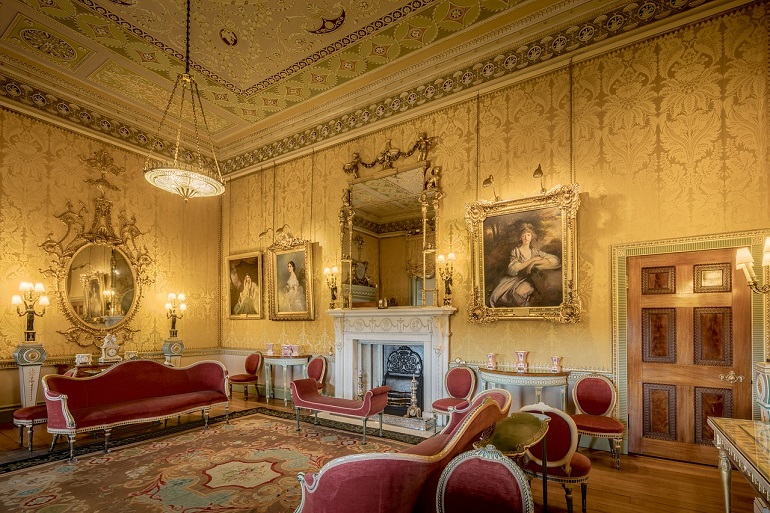
The Music Room showcases Adam's genius for interior decoration, with its elaborate ceiling featuring painted panels and intricate mouldings. The room's perfect acoustics and elegant proportions make it an ideal setting for the musical entertainments that have graced Harewood for centuries.
Throughout the house, you'll encounter:
- Nationally significant art collections featuring masterpieces by Italian Renaissance artists including Titian, Veronese, and Bellini
- Family portraits by celebrated artists including Sir Joshua Reynolds, John Hoppner, and Sir Thomas Lawrence
- Modern art carefully curated by the current Earl and Countess, including works by contemporary artists that create striking dialogues with the historic interiors
- Exquisite furniture crafted by Thomas Chippendale specifically for Harewood, representing some of the finest examples of 18th-century English furniture-making
- Fine china collections including Sèvres porcelain and Chinese export ware that reflect centuries of refined taste and international connections
- Rare books and manuscripts housed in the estate's historic library
- Textile collections featuring period tapestries, carpets, and furnishings that demonstrate the luxury of Georgian living
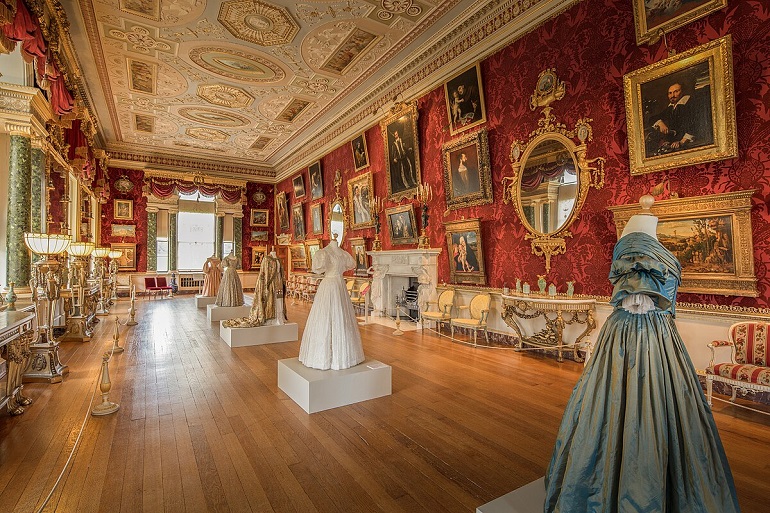
The State Dining Room exemplifies formal entertaining on a grand scale, with its mahogany dining table capable of seating dozens of guests beneath glittering crystal chandeliers. The room's deep red walls provide a dramatic backdrop for the family's collection of portraits and silver.
The Terrace Gallery hosts changing temporary exhibitions throughout the year, ensuring each visit offers something new and reflecting contemporary themes alongside the historic collections. Recent exhibitions have explored everything from fashion and design to social history and contemporary art.
Culinary Excellence
The house boasts exceptional dining facilities, including Michelin-starred fine dining experiences that celebrate Yorkshire's culinary heritage whilst embracing modern techniques. The Courtyard Restaurant offers elegant dining in beautifully restored Georgian surroundings, whilst the more casual Terrace Café provides lighter fare with stunning views across the estate.
The historic kitchens, complete with original Victorian ranges and copper cookware, now serve as venues for workshops, tastings, and cookery demonstrations, offering visitors the chance to engage with culinary traditions in an authentic setting. Masterclasses with professional chefs explore everything from traditional Yorkshire recipes to contemporary cooking techniques.
Gardens and Grounds
Harewood's outdoor spaces are as magnificent as the house itself, spanning over 140 acres of 'Capability' Brown landscapes that have been carefully preserved and enhanced over centuries. The gardens represent one of the finest examples of 18th-century landscape design in England.
The Capability Brown Landscape
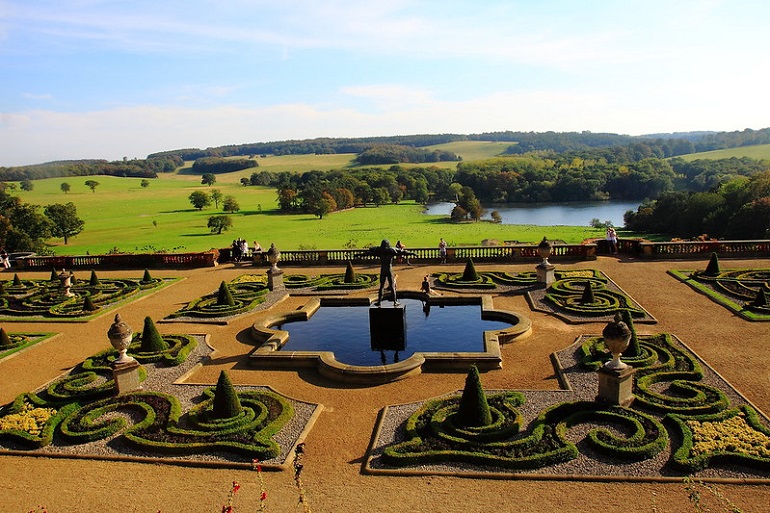
Lancelot 'Capability' Brown's masterful design transformed the natural Yorkshire terrain into a picturesque parkland that appears deceptively natural whilst being carefully crafted. The serpentine lake, created by damming a natural stream, serves as the landscape's focal point and reflects the house's elegant façade. Rolling lawns sweep down from the house to the water's edge, punctuated by carefully placed specimen trees that frame views and create intimate spaces within the broader landscape.
Formal Gardens
The Terrace provides stunning panoramic views across the estate whilst serving as an elegant promenade for visitors. The geometric parterre, recently restored to its original 19th-century design, creates intricate patterns using box hedging and seasonal bedding plants.
The Walled Garden offers a more intimate horticultural experience with seasonal displays and carefully tended borders. This productive garden combines beauty with function, featuring:
- Victorian glasshouses housing exotic plants and tender specimens
- Herbaceous borders that provide spectacular colour throughout the growing season
- Kitchen gardens growing heritage varieties of vegetables and herbs
- Rose gardens featuring both historical varieties and modern cultivars
- Orchard areas preserving traditional Yorkshire fruit varieties
The Himalayan Garden, complete with its distinctive stupa and prayer wheels, creates an exotic corner that transports visitors to distant mountain regions. This unique garden features rare plants from high-altitude regions and creates a contemplative space for quiet reflection.
Natural Beauty and Wildlife
Miles of accessible paths wind through the beautiful gardens and grounds, making exploration comfortable for visitors of all abilities. The estate's ancient woodlands harbour diverse wildlife including red kites, woodpeckers, and a variety of woodland species. Conservation projects throughout the estate work to preserve and enhance habitats for native wildlife.
The estate's centrepiece lake offers opportunities for boating trips aboard 'The Capability' at weekends, providing unique perspectives of the house and its stunning setting. Fishing is available for those seeking a peaceful waterside experience, whilst guided nature walks help visitors discover the estate's ecological treasures.
The Bird Garden and Wildlife
Harewood's Bird Garden represents one of the finest collections of exotic birds in the North of England. Home to over 100 species from around the world, the collection includes:
- Penguins in a purpose-built pool complex with underwater viewing areas
- Tropical birds in walk-through aviaries that recreate natural habitats
- Birds of prey demonstrations showcasing the hunting skills of eagles, hawks, and falcons
- Conservation breeding programmes for endangered species
- Educational talks and feeding sessions throughout the day
The Adventure Playground extends across several acres and includes areas specifically designed for different age groups, from toddler-friendly zones to challenging climbing structures for older children. The playground's design incorporates natural materials and follows the estate's commitment to environmental sustainability.
Family Activities and Education
Harewood excels as a family destination with attractions designed for all ages:
Children's Activities
- Adventure Playground with zip lines, climbing towers, and imaginative play areas
- Woodland Wonderland featuring willow mazes, fairy doors, and nature discovery trails
- Treasure hunts and activity sheets that encourage exploration
- Craft workshops using natural materials found on the estate
- Storytelling sessions in the gardens during school holidays
Outdoor Activities
- Deer safari opportunities for wildlife enthusiasts to observe the estate's red deer herd
- Working farm demonstrations showing traditional agricultural practices
- Seasonal events including lambing weekends and harvest celebrations
- Photography workshops taking advantage of the estate's stunning settings
Special Events and Entertainment
Harewood's calendar brims with special events throughout the year, transforming the estate into a vibrant cultural destination:
Seasonal Celebrations
- Spring flower festivals showcasing the gardens at their most spectacular
- Summer concerts featuring everything from classical orchestras to contemporary artists
- Autumn harvest celebrations highlighting the estate's agricultural heritage
- Christmas festivities with decorated interiors and festive markets
Motor and Transport Events
- Classic car rallies that fill the grounds with vintage automobiles
- Motorcycle gatherings celebrating British engineering heritage
- Steam rallies featuring historic agricultural machinery
- Aviation displays taking advantage of the estate's expansive grounds
Accessibility and Inclusion
Harewood House demonstrates exceptional commitment to accessibility, ensuring all visitors can enjoy the estate's treasures:
- Wheelchair accessibility throughout most of the house and gardens
- Audio description tours for visually impaired visitors
- Large print guides and materials
- Accessible parking close to main entrances
- Sensory garden areas designed for visitors with additional needs
- Quiet spaces available for those requiring respite
Getting There
By train, the nearest stations are Leeds and Harrogate, from which regular bus connections and taxis provide onward transport to the house.
By coach, there are excellent services from both Leeds and Harrogate, with the No 36 bus running every 15 minutes during weekdays and Saturdays, and every 30 minutes on Sundays, taking approximately 30 minutes from Leeds and 18 minutes from Harrogate.
By car, Harewood House is conveniently situated at the junction of the A61 and A659 in the heart of Yorkshire, just 7 miles from both Leeds and Harrogate, 5 miles from Wetherby and the A1, and 8 miles from the M1, with ample free parking available (use postcode LS17 9LQ for your satnav).
Best Time to Visit
The ideal time to visit Harewood House is during its main season, which runs from spring through to autumn (typically late March to October). This period offers the best opportunity to experience the magnificent house and over 100 acres of 'Capability' Brown-designed gardens in pleasant weather. The grounds generally open from 10 am to 6 pm, though the House itself has shorter hours, so arriving earlier in the day is recommended to make the most of a visit. It is essential, however, to check the official Harewood website before travelling, as the House can have partial or full closures for conservation and the installation of exhibitions. For a different perspective, the estate also hosts special events and a popular Christmas season running from November to early January, while limited 'Winter Weekends' are available from mid-January until the main season begins.