


 Ireland Guide
 Scotland Guide
 Wales Guide
| Contents |
|---|

Introduction
Peterborough is a cathedral city situated approximately 75 miles north of London in the heart of the Fens. With a population of around 200,000 (with suburbs nearly 500,000), the city combines nearly 900 years of history with modern development, anchored by its magnificent Norman cathedral that houses the tomb of Catherine of Aragon. Originally a Roman settlement called Durobrivae, Peterborough grew around a Saxon monastery before becoming an important medieval market town. Today, it serves as a significant transport hub with direct rail links to London, Edinburgh, and other major cities, whilst offering visitors a blend of historic architecture, including the guildhall and museum, alongside contemporary shopping centres and cultural facilities. The city's location provides easy access to the surrounding fenland countryside and serves as a gateway to exploring the broader East of England region. In 1968 it became a so-called "new town", thanks to a plan by the local government to build new housing and parkways. The city's population almost doubled between 1971 and 1991.
Interesting Facts about Peterborough
- Peterborough Cathedral has the extraordinary distinction of having had two queens buried beneath its paving: Catherine of Aragon and Mary, Queen of Scots.
- The city was the UK's leading producer of bricks for much of the twentieth century, thanks to vast local clay deposits and excellent railway connections.
- Peterborough Cathedral's imposing early English Gothic West Front, with its three enormous arches, is without architectural precedent and has no direct successor.
- The settlement was originally called Medeshamstede before changing to Burgh in the late 900s, eventually becoming Peterborough after the abbey was dedicated to Saint Peter.
- Norman Cross on the outskirts of Peterborough housed French prisoners of war from 1797 to 1814 in what is believed to be the world's first purpose-built prisoner of war camp.
- Peterborough is home to the Nene Valley Railway, which is the UK's leading steam railway attraction.
- Perkins Engines, established in Peterborough in 1932, grew so successfully that thirty years later it employed more than a tenth of the city's population.
- Peterborough Museum houses Britain's oldest known murder victim amongst its collection of 227,000 objects.
- The city experienced the fastest population growth of any British city over the ten years from 2002, partly due to immigration.
- Peterborough Cathedral is one of the most intact large Norman buildings in England, having been founded as a monastery in 655 CE and rebuilt between 1118 and 1238.
- The city's Central Park is home to a memorial for Jimmy the Donkey, who died in 1943.
- The flat topography around Peterborough means that in some places, particularly in the Fens to the east, the land lies below sea level.
History
Peterborough's rich history spans over four millennia, beginning with prehistoric settlements evidenced at the Flag Fen archaeological site. The Romans recognised the area's strategic importance, establishing the fortified town of Durobrivae around 43 CE and constructing a substantial fort at Longthorpe designed to house approximately 3,000 soldiers. During Roman occupation, Peterborough became a significant ceramic production centre, creating Nene Valley Ware that was traded across Britain from Cornwall to the Antonine Wall in Scotland. The Saxon settlement that followed was originally called Medeshamstede, meaning "meadow homestead".
The medieval period marked Peterborough's transformation into a major religious centre when Sexwulf founded a monastery in 655 on land granted by Peada of Mercia. Though the abbey was ravaged by Danish Vikings in 870, it was revived in 972 by Dunstan, Archbishop of Canterbury. The magnificent cathedral that dominates the city today began construction in 1118 and took 120 years to complete, featuring the distinctive triple-arched West Front with statues of Saints Peter, Paul, and Andrew. During this era, monks at the abbey produced the Peterborough Chronicle, which provides unique historical records of post-Norman Conquest England and represents the only known prose history in English between the conquest and the late 14th century.
Peterborough's modern transformation began dramatically with Henry VIII's dissolution of the monasteries, when the abbey church became a cathedral in 1541, officially granting the settlement city status. The arrival of the Great Northern Railway in 1850 revolutionised the town from a modest market settlement into an industrial powerhouse. The discovery of the Fletton brick-making process in 1881 sparked unprecedented growth, with the population surging from 17,429 in 1871 to 30,000 by 1898. This industrial boom, led by companies like the London Brick Company, made Peterborough the UK's leading brick producer for much of the twentieth century, with Fletton bricks becoming ubiquitous in British construction.
Main Attractions
Cathedral

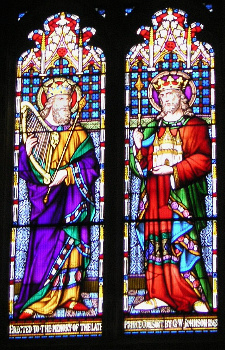
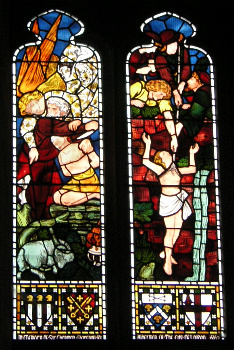
Peterborough Cathedral, officially known as the Cathedral Church of St Peter, St Paul and St Andrew, stands as one of England's most magnificent examples of Norman and Gothic architecture. Originally founded as a monastic settlement in 655 CE by King Peada of the Middle Angles, the present structure, dating from a rebuilding that began in 1118 and took 120 years to complete. It showcases predominantly Norman architecture following its 12th-century reconstruction, making it one of the most important and best-preserved pre-Reformation abbeys in England alongside Durham and Ely cathedrals.
The cathedral's most striking feature is its unique Early English Gothic West Front, completed around 1238, which displays three enormous arches of unequal width—a design without architectural precedent or successor. This triple front, dominated by the statues of the three honoured saints, is unique in Britain and most probably in all Europe. Built entirely of durable Barnack stone from quarries near Stamford, this remarkable structure transformed from a Benedictine abbey into a cathedral in 1541 under Henry VIII.
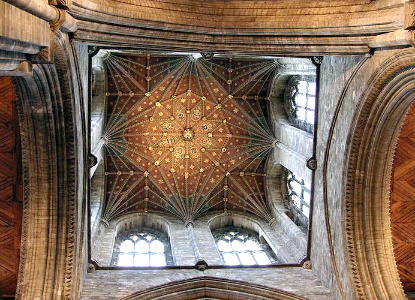
The tower was rebuilt in the Decorated Gothic style in about 1350 and the Perpendicular fan vaulting was added between 1496 and 1508. Inside, visitors can admire the rare painted timber nave ceiling, an almost unique survival, and the "New Building" at the eastern end, which features superb early 16th-century fan vaulting likely designed by master-mason John Wastell.
The cathedral also holds significant historical importance as the burial place of Catherine of Aragon, Henry VIII's first wife. Her grave can still be seen, and every 29 January a procession is held to commemorate her death. Visitors decorate her tomb with flowers and pomegranates (her symbol). Queen Mary I's cousin once removed, Mary Stuart, Queen of Scots, was buried opposite Catherine after her execution in 1587. When her son, James VI of Scotland became King James I of England upon Elizabeth I's death, the corpse of Mary was moved to Westminster Abbey.
The cathedral was vandalized during the English Civil War. In 1883, extensive restoration work began, with the interior pillars, the choir and the west front being completely rebuilt. The tower was taken down and faithfully reconstructed piece by piece.
|
|
|
Cathedral Square
Cathedral Square serves as the vibrant heart of Peterborough's city centre, functioning as a beautifully maintained pedestrianised plaza that connects the historic cathedral area with the modern Queensgate Shopping Centre. The square is dominated by the iconic 17th-century Guildhall, built in 1671 by John Lovin in Classical style with distinctive ground-floor arcading that originally housed butter and poultry markets. Adding to the square's historic character is the striking Church of St. John the Baptist, a 15th-century Anglican parish church built in 1407 in Perpendicular style, which stands prominently alongside the various shops, cafes, restaurants, and pubs that surround the area. The square comes alive with regular events including farmers' markets held every second and fourth Thursday of the month, food stalls on Sundays, and the popular annual Christmas Light Switch-on in December. As evening approaches, the square's network of water fountains illuminates in a colorful display, creating an enchanting atmosphere in this well-preserved historic space that successfully blends Peterborough's rich architectural heritage with contemporary urban life.
Top Museums
Peterborough Museum & Art Gallery
Housed in a grand Georgian mansion, Peterborough Museum & Art Gallery is the city’s major museum, inviting visitors to explore over 200,000 years of history. Discover the fascinating journey of the region from prehistoric times to the present day. The collections feature:
- Jurassic Fossils: See marine reptiles and other remains that swam in the area over 150 million years ago, offering a glimpse into a time when Peterborough was submerged beneath an ancient sea.
- Archaeology & Social History: Explore artefacts from the Bronze, Roman, and Saxon periods, including pottery, jewellery, and objects that illuminate daily life throughout the ages.
- Norman Cross Collection: Marvel at intricate craftwork created by French prisoners-of-war during the Napoleonic Wars at Norman Cross – the world’s first purpose-built POW camp. Highlights include finely crafted model ships, bone, wood, and ivory carvings, and even a miniature guillotine.
- Victorian Operating Theatre: One of only three to survive in Britain, this restored theatre showcases the sometimes harrowing reality of nineteenth-century surgery, complete with original gas lighting and surgical instruments.
- The John Clare Collection: Original manuscripts and memorabilia from the “Northamptonshire Peasant Poet”, John Clare, whose work celebrated rural England.
- Fine & Decorative Arts: The museum’s art gallery holds paintings and prints from the 17th century onwards. Notable pieces include watercolours of Peterborough Cathedral by artists such as JMW Turner, and international works by Jan van Huysum and Walter Sickert.
In addition to the permanent exhibitions, the museum offers a lively programme of temporary displays, hands-on family activities, and community events, ensuring there is always something new to discover.
Flag Fen Archaeology Park
Just outside the city, Flag Fen Archaeology Park is a must-see for history enthusiasts. This extraordinary Bronze Age site reveals a prehistoric causeway and a ritual platform, constructed from over 60,000 timber posts. Visitors can see ancient wooden artefacts, reconstructed roundhouses, and the oldest wheel discovered in Britain.
Railworld Wildlife Haven
Railworld offers an engaging combination of engineering heritage and environmental conservation. Families can enjoy locomotive displays, railway memorabilia, and model railways, alongside wildlife gardens focusing on sustainable practices and the local ecosystem. It is especially popular with children and railway enthusiasts.
Longthorpe Tower
Dating back to around 1300, Longthorpe Tower stands as a remarkable medieval site. The tower is renowned for its exceptionally well-preserved 14th-century wall paintings which provide vivid insight into medieval domestic life and belief. The murals are considered some of the best examples in Northern Europe, making it indispensable for those interested in art and history.
Thorney Heritage Museum
Located in the nearby village of Thorney, this museum is dedicated to local social history, from early settlement and the role of the abbey to agricultural changes and village life. Its displays bring to life the everyday experiences of local residents over the centuries.
King’s Cliffe Airfield Museum
This specialist museum chronicles the story of King’s Cliffe Airfield, which played a significant role during World War II. Aircraft enthusiasts and history buffs alike can explore artefacts, photographs, and personal accounts related to the airfield's operation and those who served there.
Summary Table
| Museum | Description |
|---|---|
| Peterborough Museum & Art Gallery | The city’s flagship museum, with vast collections spanning archaeology, art, and more. |
| Flag Fen Archaeology Park | Prehistoric timber causeway, artefacts from the Bronze Age, reconstructed roundhouses. |
| Railworld Wildlife Haven | Railway heritage displays and wildlife gardens focused on conservation. |
| Longthorpe Tower | 14th-century tower boasting outstanding medieval wall paintings. |
| Thorney Heritage Museum | Social history of Thorney village and surrounding fenland. |
| King’s Cliffe Airfield Museum | WWII-era airfield history, memorabilia, and local stories. |
Local Cuisine
Peterborough is particularly renowned for its hearty pub classics, with local establishments serving up exceptional fish and chips, succulent roast beef, and comforting homemade pies made with locally sourced ingredients. Food enthusiasts will find excellent mixed grills and perfectly prepared sea bass at various restaurants throughout the city. The local dining experience is enhanced by farm-fresh produce from the surrounding Cambridgeshire countryside, with establishments like Moor Farm Shop offering fully-traceable meats and seasonal vegetables. Peterborough's vibrant farmers' market showcases the region's agricultural heritage, featuring local cheese, honey, and beef from nearby farms. The city also boasts fine dining establishments such as The Cherry House at Werrington, which champions fine British dining with locally produced ingredients, whilst traditional pubs like The Ruddy Duck serve hearty pie and classic roast dishes that embody the essence of English country cooking.
Getting There & Around
By train offers the quickest and most convenient route to Peterborough, with direct services from London King's Cross taking just 44 minutes, alongside frequent connections from major cities including Leeds, Edinburgh, Newcastle and Birmingham via operators such as LNER, Thameslink and Great Northern.
By coach provides an economical alternative, with National Express and FlixBus operating regular services to Peterborough's Queensgate Bus Station from locations across the UK, including direct routes from London Victoria Coach Station.
By car travellers can reach Peterborough via excellent road links, particularly the A1(M) for north-south journeys and the A14 and A47 for east-west routes, with the city being approximately 83 miles north of London and easily accessible from the motorway network.