


 Ireland Guide
 Scotland Guide
 Wales Guide
| Contents |
|---|
Introduction
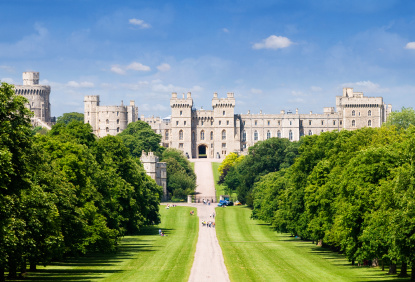
The twin towns of Windsor and Eton (combined population 60,000) are located in Berkshire, just west of London's ring road.
Windsor is a must see on anyone's sightseeing list of Britain. While its enormous medieval stone castle is one of the official residences of the British royal family, Eton College is judged by many to be the country's most prestigious school.
The twin towns of Windsor and Eton are located in Berkshire, just west of London, connected by a footbridge across the River Thames that dates back to 1822, replacing earlier timber bridges from circa 1170. Windsor, with its origins in the 7th century and royal ownership likely from the 9th century, is dominated by Windsor Castle, the oldest and largest occupied castle in the world, founded by William the Conqueror in the 11th century and home to 40 monarchs over the centuries. Eton, sitting on the opposite bank, is most famous for its prestigious public school, Eton College, established by King Henry VI in 1440. Both towns boast rich heritage and fascinating architecture, with Windsor's bustling tourist centre contrasting with Eton's calmer, quintessentially British atmosphere of charming historic streets lined with independent shops, cafés and traditional pubs. Visitors can explore the towns' history through various walking trails, including the Queen's Walkway in Windsor and the Eton Walkway, which highlight numerous points of interest in these historically significant locations.
Interesting Facts about Windsor and Eton
- Windsor Castle is the largest and oldest occupied castle in the world, with its construction beginning in 1075.
- The Round Tower of Windsor Castle was made 10 metres taller by George IV in the 18th century purely for aesthetic reasons.
- Eton College, founded in 1440 by King Henry VI, was originally established to provide free education to 70 scholars.
- The iron bridge connecting Windsor to Eton across the River Thames was built in 1822, replacing a succession of timber bridges dating back to around 1170.
- Eton High Street has remained largely unchanged for centuries and was once the route for royal processions from Westminster to Windsor.
- Windsor Castle survived a fire in 1992 that damaged about one-fifth of the structure, with restoration works completed in 1997.
- Eton College's chapel was originally intended to have the longest nave in Europe, but construction was halted when Henry VI was deposed.
- Windsor Castle grounds cover an impressive 13 acres and combine features of a fortification, a palace, and a small town.
- The Norman Gate at Windsor Castle has been home to the Constable and Governor since 1558, who represent the monarch in their absence.
- Eton was a favoured hunting ground for monarchs, with its proximity to Windsor Castle significantly influencing the town's history and architecture.
History
Windsor, originally located at Old Windsor, relocated to its current site around 1110, some 40 years after William the Conqueror founded Windsor Castle. The strategic position of this castle, perched atop a chalk outcrop overlooking the Thames, made it an important military stronghold and a venue for royal assemblies. By 1135, a planned town had been established near the castle gates, complete with streets, a market place and a church—a layout that endures to this day.
Eton, situated on the opposite bank of the Thames, began as a small farming community. Its fortunes changed dramatically in 1440 when Henry VI expanded the parish church to create a college of priests, which included a small school. This foundation, especially after the Reformation, flourished to become the world-renowned Eton College. The town's High Street, dominated by the college's boarding houses, has remained largely unchanged for centuries and was once part of the route for royal processions from Westminster to Windsor.
Both towns have strong royal connections, with Windsor Castle being the largest and longest-occupied royal castle globally. The castle's adoption as a principal residence by Queen Victoria in the mid-19th century, coupled with the arrival of the railways, spurred Windsor's growth after a period of stagnation. The towns' landscapes evolved with the construction of new streets and public buildings, including two large ceremonial railway stations in Windsor. Today, Windsor and Eton continue to captivate visitors with their blend of historical significance, academic prestige, and timeless charm, offering a glimpse into centuries of British history.
Attractions
Windsor Castle

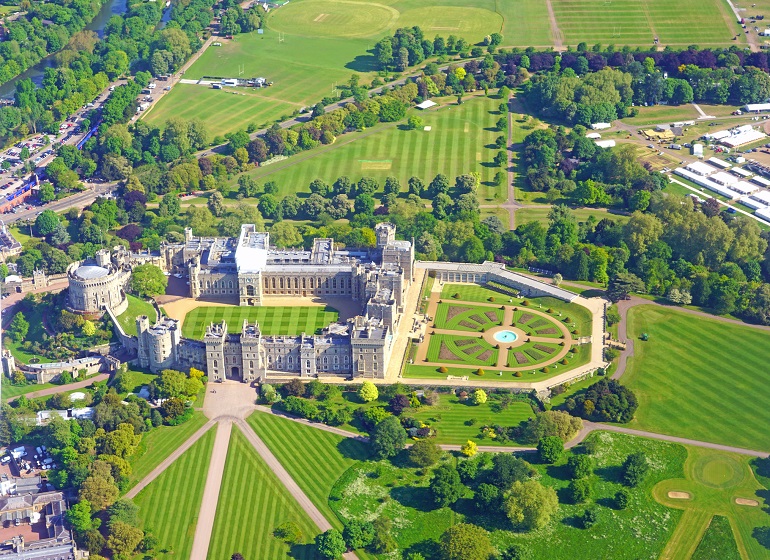
Windsor Castle is the largest and oldest occupied castle in the world. Its construction began in 1075, soon after the Norman conquest of Britain, and expanded over the following centuries. It now covers an area of 26 acres (10.5 hectares).
Though built as a stone fortress intended for war, Windsor later became a residential palace for the Royal family. This is why unlike other medieval fortresses its interior is not far from spartan, but on the contrary is sumptuously decorated.
On 20 November 1992, a fire ravaged about one fifth of the castle. Restoration works took five years and were completed six months ahead of schedule on 20 November 1997 at a cost of £37 million (US $59.2 million), £3 million below budget.
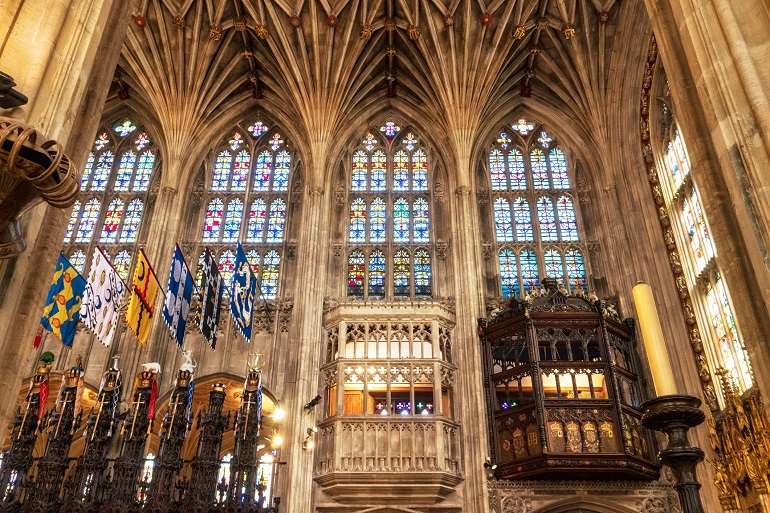
As you approach the castle, you'll be struck by its sheer scale and grandeur. The Norman Gate serves as the primary entrance, leading into the Lower Ward. The ethereal Gothic style of the 15th-century St George's Chapel contrasts with the hefty walls of the Norman-era castle. The chapel, which looks like a small cathedral, contains the tombs of ten sovereigns, including Henry VIII and Charles I. It is also considered the spiritual home of the Order of the Garter, the most prestigious order of British Chivalry, established in 1348 by Edward III and still existing.
The Changing of the Guard takes place at 11:00 am (except on Sundays), weather permitting.
The State Apartments
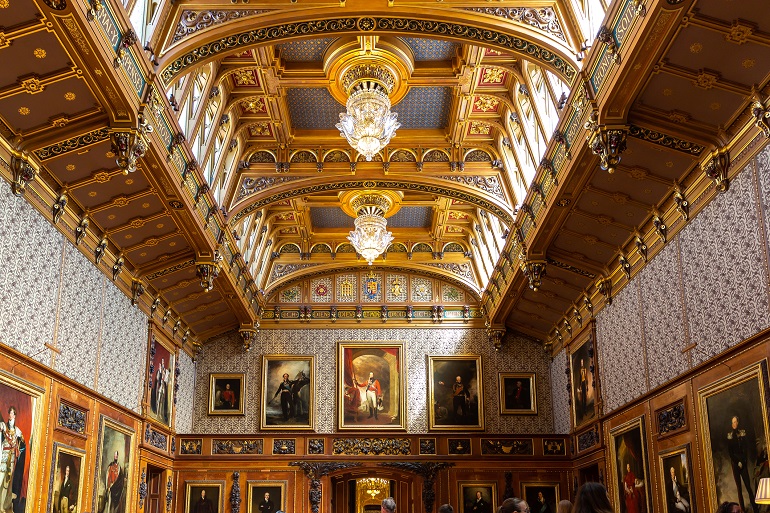
The State Apartments, located in the Upper Ward, showcase the opulence of royal life. Each room is more lavish than the last, adorned with paintings by Rembrandt, Rubens, Canaletto, Gainsborough, Holbein, Van Dyck and Lawrence, tapestries, porcelains, chandeliers, sculptures and armours. The Grand Reception Room, with its gilded walls and ceiling, is particularly breathtaking. The Waterloo Chamber, commemorating the famous battle, houses an impressive collection of portraits.
Don't miss Queen Mary's Dolls' House, a miniature masterpiece complete with working lifts, running water, and tiny books written by famous authors of the 1920s. This intricate creation offers a fascinating glimpse into aristocratic life of the early 20th century.
The Round Tower
The iconic Round Tower, situated in the Middle Ward, is perhaps the most recognisable feature of Windsor Castle. This massive stone structure, originally built by Henry II in the 12th century, offers panoramic views of the surrounding countryside. On a clear day, you can see as far as London's skyline.
The East Terrace Garden
The East Terrace Garden is a horticultural masterpiece that perfectly complements the castle's grandeur. This formal garden, redesigned for George IV in the 1820s, features immaculately manicured lawns, vibrant flowerbeds, and elegant statuary. The centrepiece is a beautiful bronze fountain, around which radiate symmetrical pathways and carefully sculpted topiary.
In spring and summer, the garden comes alive with a riot of colour. Over 3,500 rose bushes bloom in shades of pink, red, and white, filling the air with their delicate fragrance. The precision of the garden's design, with its geometric patterns and perfectly aligned flowerbeds, offers a striking contrast to the ancient stone walls of the castle looming above.
The Moat Garden
For a more intimate and secluded experience, the Moat Garden offers a peaceful retreat. Located in the castle's dry moat surrounding the Round Tower, this garden presents a more naturalistic landscape. Winding paths lead through lush greenery, past colourful flowerbeds and under the shade of mature trees.
Throughout the year, the Moat Garden changes its character. In spring, it's carpeted with daffodils and bluebells. Summer brings an abundance of wildflowers, attracting butterflies and bees. Autumn paints the garden in warm hues as the leaves change colour. Even in winter, the structural beauty of bare trees and evergreen shrubs creates a serene atmosphere.
Windsor Great Park
Extending beyond the castle grounds, Windsor Great Park offers 5,000 acres of royal parkland to explore. This vast green space has been a royal hunting ground since the 13th century and is home to ancient woodlands, sweeping lawns, and tranquil lakes. The Long Walk, a straight tree-lined avenue stretching for 2.65 miles from the castle to the Copper Horse statue, provides one of the most iconic views of Windsor Castle.
Within the park, you'll find several notable gardens. The Savill Garden is a horticultural gem, featuring 35 acres of interconnected gardens and exotic woodland. Nearby, Valley Gardens offers a more naturalistic landscape with winding paths through rhododendron-covered slopes. For a touch of whimsy, visit the topiaries of Virgina Water, where shrubs are clipped into fanciful shapes.
The Deer Park
A highlight of Windsor Great Park is its population of around 500 red deer. These majestic creatures roam freely in designated areas of the park, continuing a tradition that dates back centuries. The best time to spot them is during the autumn rutting season when stags can be heard bellowing across the parkland.
The Copper Horse
At the southern end of the Long Walk stands the Copper Horse, an impressive equestrian statue of George III. This vantage point offers sweeping views back towards Windsor Castle, framed by the avenue of elm trees. It's a popular spot for picnics and provides a perfect photo opportunity, especially at sunset when the castle is bathed in golden light.


Eton: A Picturesque English Town
Opposite the regal town of Windsor, Eton offers a quintessentially British sightseeing experience. This charming town is renowned for its prestigious Eton College, which dominates the landscape with its magnificent architecture and lush gardens. The town's narrow streets, historic buildings, and riverside location create an atmosphere of timeless elegance that captivates visitors from around the world.
Eton College
Eton College is one of the UK's most elitist secondary school. It is a boys only establishment attended mainly by the children of the upper-class.
The school was founded in 1440 by Henry VI as a charity school, which is why, like many other exclusive private schools in Britain that grew from ancient charity schools, it is officially known as a "public school", which is in the UK is the opposite of a state-funded school.
Contrarily to most British schools, Eton is fee-paying, and the annual cost per student is of approximately £50,000 (about €55,000 or $60,000). The 12 elite independent schools in the United Kingdom are refered to as the 'Eton Group'. Students from these schools typically go on to leading British universities. About a third of Eton alumni attend either Oxford or Cambridge.
Eton is a boarding school, with 25 houses accommodating the 1300 pupils. Each house is headed by a housemaster, selected from the more senior members of the teaching staff, who number some 160. The compulsory uniform consists of a black tailcoat with a waistcoat, a false-collar, a white tie and pinstriped trousers. Etonian dress originated in the the 19th century and was reserved for formal occasions, though nwadays boys wear it for classes. Class sizes start at around 20 to 25 in the first year and are often below 10 by the final year.


For much of Eton's history, junior boys had to act as fags, or servants, to older boys. Their duties included cleaning, cooking, and running errands. Corporal punishment, generally known as "beating", was a common practice until the early 1980's, when it was abolished. It typically involved "birching" or "caning", that is to say flogging of bare buttocks with a rod.
Past pupils of Eton College are known as Old Etonians. The list of famous alumni is long. It includes such a wide range of people as the writer George Orwell, the economist John Maynard Keynes, the novelist Aldous Huxley, the actor Hugh Laurie, pioneer geneticist J. B. S. Haldane, or the 1st Duke of Wellington (the one who defeated Napoleon at Waterloo). 19 British Prime Ministers graduated from Eton, among whom Robert Walpole, William Pitt, William Ewart Gladstone and David Cameron. Eton also educated many monarchs, such as King Leopold III of Belgium and several kings or prices of Nepal and Thailand, and numerous members of the British Royal family (the latest being Princes William and Harry).
The College Chapel stands as a masterpiece of late Gothic architecture. Its exterior features buttresses and pinnacles that create a dramatic silhouette against the sky. Inside, the chapel ceiling soars overhead with intricate fan vaulting, while the stained glass windows bathe the interior in a kaleidoscope of coloured light. The carved wooden choir stalls and organ case display extraordinary craftsmanship, with detailed figures and motifs that reward close inspection.
The School Yard, surrounded by red-brick buildings with mullioned windows, offers a glimpse into the heart of college life. The statue of Henry VI, the college's founder, stands at its centre, gazing out over generations of scholars who have passed through these hallowed grounds.

College Gardens
The college boasts a series of exquisite gardens that offer a tranquil retreat from the bustling town. These horticultural havens are a testament to the college's long-standing commitment to beauty and nature.
The Provost's Garden presents a perfect blend of formality and charm. Here, you'll find neat gravel paths flanked by meticulously manicured borders bursting with colourful perennials and graceful grasses. A magnificent spreading magnolia stands sentinel in one corner, while a pergola draped in wisteria provides a romantic touch. In spring, daffodils carpet the lawns, followed by tulips in a riot of colours. Summer brings roses and lavender, their scent perfuming the air as you wander through this enchanting space.
The Vice-Provost's Garden, the largest of the college's green spaces, offers breathtaking views of Windsor Castle's Round Tower. Two majestic cedars dominate the lawn, one of which was a gift from the President of Lebanon in 1971. Low yew hedges and billowing white flowers add structure and softness to this impressive landscape. A small water feature provides a focal point, its gentle splashing creating a soothing soundtrack for contemplation.
King of Siam's Garden
This slightly sunken garden is a delightful surprise. Semi-circular steps lead down to a rectangular gravel area bordered by mixed perennials and grasses, including hydrangeas. The garden is framed by winter-flowering cherries, creating a picturesque scene in every season. Named after King Rama VI of Siam (now Thailand), who studied at Eton in the late 19th century, this garden combines Eastern influences with traditional English garden design. Stone lanterns and carefully placed rocks create a sense of balance and harmony, while seasonal plantings ensure year-round interest.
Fellows' Garden
Perhaps the most secluded of Eton's gardens, the Fellows' Garden offers a peaceful retreat from the world. Ancient yew trees cast dappled shade over woodland plants and spring bulbs. In late spring, bluebells create a magical carpet beneath the trees, while summer brings the delicate beauty of foxgloves and other woodland flowers. Meandering paths invite exploration, leading to hidden benches where one can sit and absorb the tranquillity of this special place.
Luxmoore's Garden
Named after a former housemaster, Luxmoore's Garden showcases contemporary garden design within the historic setting. Geometric beds filled with ornamental grasses and architectural plants create a bold statement. The careful use of texture and form demonstrates how modern planting schemes can complement traditional surroundings. A central water feature reflects the changing sky, while clipped box hedges provide structure throughout the seasons.
Sculptures and Art
Throughout the gardens, you'll encounter fine modern sculptures that complement the historic surroundings. These artistic touches add a contemporary flair to the centuries-old landscape. Works by renowned sculptors include abstract forms in bronze and stone, figurative pieces that reference classical themes, and kinetic sculptures that move gently in the breeze. Each piece has been carefully positioned to create a dialogue with its setting, enhancing both the artwork and the garden.
Thames-side Charm
As you wander through Eton, you'll be drawn to the riverside. Here, you can enjoy delightful views across the Thames to Windsor Castle. The college's proximity to the river has shaped its character, with some gardens even extending to small islands in the Thames.
The riverside walk offers changing perspectives of both Eton and Windsor. Willows trail their branches in the water, creating reflections that shimmer and dance with the current. Swans and other waterfowl glide gracefully past, adding movement and life to the scene. In summer, rowing boats and punts navigate the river, their occupants enjoying the timeless pleasure of messing about on the water.
The Brocas
This expansive meadow along the Thames provides one of the finest views of Windsor Castle. The open grassland, dotted with ancient trees, offers a perfect spot for picnicking or simply sitting and absorbing the magnificent vista across the river. The juxtaposition of natural landscape with the castle's imposing silhouette creates a quintessentially English scene that has inspired artists for centuries.
Eton High Street
No visit to Eton is complete without a stroll down its charming High Street. Lined with historic buildings, antique shops, and quaint cafes, it offers a glimpse into the town's rich heritage and vibrant present. The street's gentle curve reveals new vistas at every turn, with glimpses of the college buildings visible between the shops and houses.
The architecture along the High Street spans several centuries, from timber-framed medieval buildings to elegant Georgian townhouses. Many facades feature distinctive details: ornate plasterwork, leaded windows, and carved doorways that speak to the craftsmanship of bygone eras. The Barnes Pool Bridge crosses a small stream that once powered the town's mills, its stone arches forming a picturesque focal point.
Baldwin's Shore
This lesser-known area of Eton offers a different perspective on the town. Once the site of busy wharves where goods were unloaded from river barges, it now provides a peaceful spot to contemplate the Thames. Historic boathouses line the shore, their weathered timbers speaking to centuries of river traffic. The view upstream towards Windsor Bridge frames the castle in a particularly flattering light, especially in the golden hours of early morning or late afternoon.
Eton's Architectural Gems
Beyond the college, Eton boasts numerous architectural treasures. The Cockpit, a rare surviving example of a 16th-century cockfighting arena, has been repurposed as a residence but retains its distinctive circular form. Eton Court, a collection of almshouses, displays fine brickwork and decorative chimneys that exemplify the local vernacular style. St. John the Evangelist Church, though overshadowed by the College Chapel, contains beautiful stained glass and memorial brasses worth seeking out.
Getting There
By train, Windsor is easily accessible via two stations: Windsor & Eton Central and Windsor & Eton Riverside, both within walking distance of the town centre and Windsor Castle. From London Paddington, take a Great Western Railway service to Slough and change for the short branch line to Windsor & Eton Central, with the total journey taking approximately 35 minutes. Alternatively, South Western Railway operates direct services from London Waterloo to Windsor & Eton Riverside, taking around 55 minutes.
By coach, the Green Line 702 service provides a direct connection from London Victoria Coach Station to Windsor, with the journey taking approximately 1 hour and 30 minutes.
By car, Windsor is around 25 miles from London via the M4 motorway, exiting at junction 6 and following signs for Windsor. The drive typically takes about an hour, though this can vary depending on traffic conditions, and visitors should note that there's no parking available at Windsor Castle itself, so you'll need to use one of the town centre car parks.
Best Time to Visit
The best time to visit Windsor and Eton is during the spring and summer months, from April to September, when the weather is generally mild and pleasant. This period offers ideal conditions for exploring the historic sites and enjoying outdoor activities such as boat trips along the River Thames. Autumn, particularly October, is also a lovely time to visit, with the gardens and landscapes displaying vibrant autumnal colours. For those interested in festive atmosphere, the Christmas season is a great time to see Windsor Castle lavishly decorated, though it's best to avoid the peak tourist times around the opening hours to avoid crowds. Overall, Windsor and Eton provide a charming experience throughout the year, with each season offering unique attractions and activities.