


 Ireland Guide
 Scotland Guide
 Wales Guide
| Contents |
|---|

Introduction

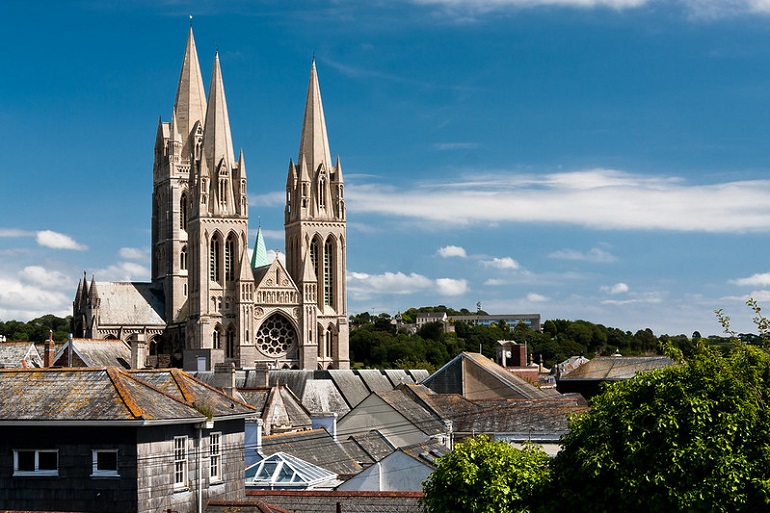
Truro (pop. 19,000, with suburbs 65,000) is the administrative centre of Cornwall and its only city. Truro grew with the emergence of tin-mining in the 19th century. The settlement received city status in 1877, largely due to the construction of Truro Cathedral, which remains the city's most prominent landmark and one of only three Anglican cathedrals built in England since the Reformation.
Although Truro is pleasant with its Georgian villas, there are few sights in town apart from the astounding Neo-Gothic cathedral.
Interesting Facts about Truro
- Truro is Cornwall's only city and holds the distinction of being the southernmost city in mainland Britain.
- The city's name derives from the Cornish phrase "tri-veru," meaning "three rivers," referring to the confluence of the Kenwyn, Allen, and Truro rivers.
- Truro Cathedral, built between 1880 and 1910, is one of only three cathedrals in the United Kingdom featuring three distinctive spires.
- The legendary rock band Queen played their very first gig in Truro's City Hall on 27th June 1970, when they were still called "Smile".
- Roger Taylor, Queen's renowned drummer, was born and raised in Truro.
- Truro once boasted its own medieval castle with 75-foot diameter walls three feet thick, built around 1270, though nothing remains of it today.
- The city served as a crucial stannary town from the 14th century, where tin and copper from Cornish mines had to be assayed and stamped before being exported overseas.
- A medieval leper hospital called Lazar House was established outside the city walls in 1309, housing around 24 people suffering from leprosy.
- During World War Two, Truro was bombed by Nazi fighter planes on 6th August 1942, killing 14 people and injuring over 100.
- American soldiers were stationed in Truro during World War Two whilst training for the D-Day invasion, enjoying entertainment at the old Regent Cinema.
- One of Truro's roundabouts, the Trafalgar roundabout, was voted "the best traffic island in the UK" in 2019, thanks to its giant wooden hedgehogs installed by wildlife conservation groups.
- With a population of just 18,766, Truro ranks as one of the smallest cities in the United Kingdom.
- During its Georgian heyday, Truro was so prosperous and fashionable that it earned the nickname "the London of Cornwall".
- The city enjoys a direct railway connection to London Paddington, established by the Great Western Railway from the 1860s.
- Truro hosts an annual "City of Lights" festival featuring a spectacular lantern parade that attracts over 30,000 spectators.
- There are two other cities named Truro around the world: one in Massachusetts, USA, and another in Nova Scotia, Canada.
- Truro and its 220 acres of surrounding land have been designated as an Area of Outstanding Natural Beauty.
History
Truro's origins stretch back to an Iron Age settlement, with the name likely deriving from the Cornish "Tri-veru," meaning three rivers, referring to the Allen, Kenwyn, and Truro waterways that converge here. The town's significance began to emerge in the 12th century when Richard de Luci, Chief Justice under Henry II, constructed a castle around 1140 on the site now occupied by Truro Crown Court. By 1327, Truro had gained coinage town status, becoming one of Cornwall's five stannary towns where locally mined tin and copper were brought twice yearly for assaying and stamping before onward shipment. The town's strategic inland port location provided safety from invaders whilst maintaining access to foreign commerce, and by the 14th century, Truro had developed into a major port with ships sailing into Lemon Quay. During the English Civil War, the town demonstrated its loyalty by establishing a royalist mint and raising forces for the King, though Parliamentary troops ultimately prevailed in 1646.
The 18th and 19th centuries marked Truro's golden age, when the town became so prosperous it was dubbed "the London of Cornwall". Wealthy mine owners and merchants built elegant Georgian and Victorian townhouses, particularly along Lemon Street (named after mining magnate Sir William Lemon) and other fashionable quarters. The town became Cornwall's premier social centre, boasting Assembly Rooms at High Cross for balls and theatrical performances, plus the Royal Cornwall Institute for educational lectures and exhibitions. Notable residents included Richard Lander (the first European to reach the mouth of the River Niger), Henry Martyn (missionary and biblical translator), Humphry Davy (inventor of the miner's safety lamp), and playwright Samuel Foote. Infrastructure improvements included the Great Western Railway connection to London Paddington from the 1860s, gas lighting from 1822, and various industrial developments including iron-smelting works, potteries, and tanneries.
Truro's transformation into Cornwall's only city occurred in 1877 when Queen Victoria granted city status following the establishment of the Diocese of Truro in 1876. The magnificent Truro Cathedral, designed by John Loughborough Pearson, had its foundation stone laid by Prince Edward (later Edward VII) in 1880 and took 30 years to complete, becoming the first Anglican cathedral built on a new site in England since 1220. The cathedral's three distinctive spires—Victoria, Edward, and Alexandra—now form Truro's iconic skyline. Until the 1920s, ships could navigate right up the river to discharge cargo at Back Quay (now the Hall for Cornwall entrance), but silting eventually forced the covering over of this historic quay, creating today's Lemon Quay marketplace. Modern Truro continues as Cornwall's administrative and commercial centre, with a current population of approximately 19,000.
Main Attractions
Truro Cathedral
The construction of Truro Cathedral started in 1879 on the site of a 16th century parish church (St Mary the Virgin). Completed in 1910 in the Gothic Revival style, it was the first Anglican cathedral built in England since St Paul's in London in the mid-17th century. The cathedral is renowned for its three distinctive spires that dominate the city's skyline and its remarkable collection of stained glass windows that illuminate the interior with vibrant colours throughout the day. The cathedral's central location makes it easily accessible and serves as an excellent starting point for exploring the rest of the city.
Hall for Cornwall
The Hall for Cornwall represents the region's premier theatre and entertainment venue, having undergone extensive refurbishment to maintain its position as a cultural cornerstone. The facility boasts a main auditorium that seats over 1,000 people and regularly hosts an impressive array of performances including West End shows, concerts, comedy events, and theatrical productions. The venue's programming caters to diverse tastes, ensuring that visitors can often find entertainment suited to their preferences during their stay in Truro.
Victoria Gardens
Victoria Gardens offers a delightful Victorian heritage experience, having been established in 1893 to commemorate Queen Victoria's Diamond Jubilee. The gardens feature a beautifully preserved Victorian bandstand that serves as a focal point for the landscaped grounds, which contain an impressive variety of both exotic and native plant species. Visitors can enjoy peaceful walks along the meandering pathways, observe wildlife around the ornamental ponds, and during summer months, attend public music performances at the bandstand. The gardens provide an ideal setting for picnics and quiet contemplation away from the bustling city centre.
Boscawen Park
Boscawen Park serves as Truro's principal recreational green space, offering extensive facilities for both active and passive enjoyment. The riverside location provides a scenic backdrop for the park's amenities, which include open lawns, a well-equipped children's adventure playground, tennis courts, and a duck pond that proves popular with families. A particular highlight is the walking path that extends along the river to the picturesque village of Malpas, providing an excellent opportunity for a longer countryside stroll. The park also houses a café and various sports facilities, all accessible free of charge throughout the year.
Daubuz Moor
Daubuz Moor represents an unexpected wildlife sanctuary situated remarkably close to Truro's city centre. This six-hectare site encompasses diverse habitats including flower-rich wetlands, wildflower meadows, and traditional Cornish hedgerows, all carefully managed to promote biodiversity. The moor provides excellent opportunities for wildlife watching and serves as a popular destination for dog walking, offering visitors a chance to experience Cornwall's natural heritage without venturing far from urban amenities.
Truro Farmers Market
The Truro Farmers Market operates twice weekly in the city centre, taking place on Wednesdays and Saturdays. This vibrant market showcases the best of local Cornish produce, featuring fresh vegetables, artisanal baked goods, and handmade crafts from regional producers. The market provides an excellent opportunity for visitors to sample authentic Cornish flavours and purchase unique local products as souvenirs or gifts.
Lemon Street Market
Lemon Street Market houses an interesting collection of independent retailers within its indoor setting. The market focuses on local businesses and includes a variety of shops, boutiques, cafés, and an art gallery, creating a distinctive shopping experience that emphasises Cornish creativity and craftsmanship. Visitors can browse unique items whilst supporting local entrepreneurs and discovering products unavailable in larger commercial establishments.
Top Museums
Cornwall Museum & Art Gallery
Located in the heart of Truro, the Cornwall Museum & Art Gallery is the city’s flagship cultural institution and Cornwall’s largest museum of cultural history. Housed in a handsome Grade II listed building, the museum boasts collections spanning from the Stone Age to contemporary times. It offers a fascinating journey through the stories of Cornwall and its people, through the objects and art that have defined the region.
Key Galleries and Features:
- The Heart of Cornwall Gallery: Celebrates Cornwall's mining, migration, innovation and independent spirit, offering insight into the region’s rich social history and local identity through artefacts and personal stories.
- Mineral Gallery: Renowned for its globally significant collection linked to Cornwall’s mining heritage, this gallery displays jewel-like minerals enhanced by immersive technology.
- Nature Gallery: Showcasing Cornwall’s diverse wildlife and landscape, it provides an interactive experience highlighting the region's flora and fauna.
- Art Gallery: Presents a nationally significant collection of Cornish, British, and European art, with works ranging from traditional to modern pieces.
- Ancient Civilisations Gallery: Journey beyond Cornwall with artefacts from Ancient Egypt, Greece, and Rome, supported by prestigious institutions such as the British Museum.
- Photographic Collection: Over 60,000 images document Cornish life, people, and landscapes over the centuries.
- The Courtney Library: An important research centre containing rare books, manuscripts, and archives relating to Cornwall and the South West, including the original works of Winston Graham, author of the Poldark novels.
Family-friendly and accessible, the museum features hands-on activities, sensory trails, and regular exhibitions and events. The adjacent café and art shop make it an inviting destination for all ages.
Other Cultural Spaces
While Truro’s main dedicated museum is the Cornwall Museum & Art Gallery, the city also offers a vibrant arts scene and several gallery spaces:
Atrium Gallery & Gallery Tr1
These spaces serve as dynamic venues for contemporary art, showcasing works by local and regional artists.
Lemon Street Market
Home to independent shops and pop-up art exhibits, this is a hub for discovering the city’s creative side.
Local Cuisine
The city's culinary scene is anchored by the iconic Cornish pasty, a hearty pastry traditionally filled with beef, potato, swede, and onion that can be found at local bakeries throughout the city centre. Food enthusiasts can indulge in Cornwall's famous cream tea, featuring freshly baked scones topped with clotted cream and jam, best enjoyed in one of Truro's independent cafés tucked away in the historic opes and alleys. The city's proximity to the coast ensures an abundance of fresh seafood, with local restaurants showcasing Cornish crab, scallops, and mussels sourced from nearby fishing ports. For those seeking traditional Cornish specialities, adventurous diners might encounter stargazy pie, a distinctive fish pie where pilchards poke through the pastry crust, or sample saffron buns, golden spiced treats that reflect Cornwall's maritime trading heritage. Truro's dining landscape seamlessly blends these time-honoured local delicacies with modern gastropub fare and international cuisine, all complemented by locally brewed ales from St Austell Brewery and artisan produce from Cornwall's fertile countryside.
Getting There & Around
Truro is a landlocked town situated some 20 km (12 mi.) south of Newquay. The fastest way to get there is to fly to Newquay first, then catch a National Express bus (30 min) from there.
By train, Great Western Railway operates direct services from London Paddington to Truro taking approximately four hours, with the journey passing through beautiful countryside and stopping at Reading, Taunton, Exeter, and Plymouth before arriving at Truro's station just a few minutes' walk from the city centre.
By coach, National Express provides regular services from London Victoria Coach Station and other major cities, with direct coaches departing several times daily for the seven to eight-hour journey to Truro Bus Station, conveniently located near the town centre.
By car, the route is pleasantly uncomplicated—simply take the M5 motorway to Exeter, then follow either the A30 over Bodmin Moor or the A38 via Plymouth, with Truro easily accessible from the A30 at either the Carland Cross junction or continuing to the Chiverton roundabout, making it a scenic and straightforward drive through the heart of Cornwall.