


 Ireland Guide
 Scotland Guide
 Wales Guide
| Contents |
|---|
Introduction
Hastings (pop. 84,000) is known by anyone of has studied the history of England as the place where William, Duke of Normandy, landed in 1066, defeated his cousin King Harold II in the battle of the same name, fundamentally changing the course of British history. The celebrated Battle of Hastings did not however take place in Hastings itself, but in a nearby field, which is now the village of Battle.
From the 12th to the 15th century, Hastings was one of the Cinque Ports ("five ports" in French), along with New Romney, Hythe, Dover, and Sandwich, that enjoyed special privileges, such as the right to import goods free of duties.
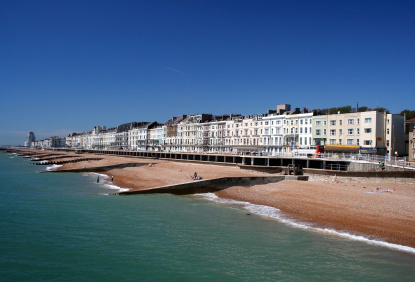
Today, Hastings combines its rich medieval heritage with a working fishing port, featuring the ruins of Hastings Castle perched on the East Hill, the atmospheric Old Town with its narrow streets and timber-framed buildings, and a traditional beach-launched fishing fleet that continues to operate from the Stade area. The town offers visitors a blend of historical attractions, including the 1066 Story exhibition, alongside seaside amenities such as the pier, promenade, and pebble beach, making it a popular destination for both history enthusiasts and holidaymakers seeking a traditional English coastal experience.
Interesting Facts about Hastings
- The famous Battle of Hastings in 1066 didn't actually take place in Hastings itself, but rather 8 miles to the north-west at Senlac Hill.
- Hastings is home to the UK's largest beach-based fishing fleet, making it both the oldest and largest beach-based fishing operation in Europe.
- The town was one of the medieval Cinque Ports, an important confederation of maritime trading towns.
- St Clement's Caves on the West Hill were hand-excavated by smugglers from soft sandstone and have also served as a home, air raid shelter, hospital, and even a ballroom throughout history.
- Hastings Castle was built in 1070 by the Normans, making it the first Norman castle constructed in Britain.
- During the Georgian period, the town housed a garrison of 12,000 soldiers who were commanded by the Duke of Wellington from his headquarters in High Street.
- The town's name derives from the Old English tribal name "Hæstingas," meaning "the constituency (followers) of Hæsta".
- Marine Court, a 1938 Art Deco block of flats at St Leonards, was originally called "The Ship" because its design was based on the ocean liner RMS Queen Mary and can be seen from up to 20 miles away on a clear day.
- Hastings Pier, which reopened in 2016 after a £14.2 million refurbishment following a devastating fire in 2010, won the prestigious Stirling Prize from the Royal Institute of British Architects in 2017.
- During Roman times, Beauport Park near Hastings employed up to 1,000 men and was considered the third-largest iron mine in the entire Roman Empire.
- The town was twice attacked by the French during the Hundred Years' War, with the second raid in 1377 destroying much of the settlement.
- Muhammad al-Idrisi, a Muslim scholar writing around 1153, described Hastings as "a town of large extent and many inhabitants, flourishing and handsome, having markets, workpeople and rich merchants".
History
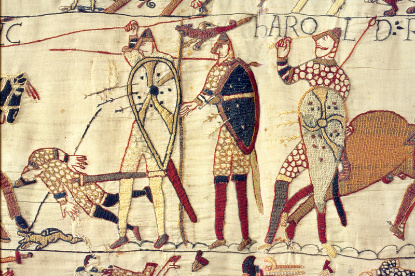
Hastings started its existence as a Saxon settlement called "Haesta ingas," meaning "Haesta's people". By the 10th century, it had evolved into a small market town and was recognised as one of the 31 fortified burhs (fortresses) established by King Alfred the Great around 878-79. The town's most defining moment came on 14th October 1066, when it lent its name to the pivotal Battle of Hastings, though the actual conflict took place eight miles northwest at Senlac Hill. This decisive encounter saw William the Conqueror defeat King Harold II, fundamentally altering the course of English history and establishing Norman rule. The battle lasted from dawn until dusk, with Harold's exhausted Saxon forces maintaining their famous shield wall against repeated Norman cavalry charges until the king was struck by an arrow in the eye and killed.
During the medieval period, Hastings flourished as one of the premier Cinque Ports, granted its first royal charter in 1155 and later receiving another from King Edward I in 1252. The town's strategic coastal location made it a vital supplier of ships to support the Crown, whilst its thriving fishing industry, particularly the herring trade, formed the backbone of the local economy. However, Hastings faced considerable challenges during the 14th century, suffering two devastating French raids during the Hundred Years' War, with the second attack in 1377 destroying much of the town. The Great Storm of 1287 had already severely damaged the harbour, forcing the town to adapt its maritime activities. Despite these setbacks, the community persevered, with remnants of defensive walls erected in the late 1300s still visible today.
The Georgian period brought renewed strategic importance to Hastings as Britain faced the threat of Napoleonic invasion, with the town housing a garrison of 12,000 soldiers under the Duke of Wellington's command. During this era, the town became a centre for smuggling operations, with enterprising locals excavating the famous St Clement's Caves from the soft sandstone cliffs to avoid luxury goods taxes. The transformation into a fashionable seaside resort began following the Napoleonic Wars, driven by the perceived health benefits of seawater and local Roman baths. This Victorian boom led to westward expansion and the construction of elegant developments such as Pelham Crescent and Wellington Square, designed by architect Joseph Kay. Today, Hastings maintains its maritime heritage as home to Europe's largest beach-launched fishing fleet, whilst its Old Town preserves centuries of history through its half-timbered houses, narrow "twittens" (local term for passages), and atmospheric medieval streets.
Main Attractions
Hastings Old Town
The Old Town forms the historic heart of Hastings, distinguished by its maze of narrow medieval streets called "twittens" that wind between timber-framed Tudor houses and Georgian cottages. The High Street and George Street serve as the main arteries through this area, lined with independent shops, antique dealers, and galleries housed in buildings that date back centuries. The authentic medieval street pattern has been preserved, creating an atmospheric area where visitors can explore historic pubs, traditional teashops, and craft workshops. The Old Town's character is enhanced by its mix of residential and commercial buildings, many of which display original architectural features such as exposed timber framing and leaded windows.
A few 15th century timber houses can be found on All Saints Street. The only surviving buildings from medieval times are All Saints' Church and St Clement's Church. Pelham Crescent in front of the castle, is Georgian terrace, with the classical church of St Mary at its centre.
Hastings Castle
The ruins of Hastings Castle occupy a commanding position on West Hill, overlooking the town and English Channel. Built shortly after the Norman Conquest in 1066, the castle played a crucial role in English history as one of the first Norman fortifications. Today, visitors can explore the remaining walls, foundations, and sections of the keep, with information boards providing historical context about the site's significance. The castle grounds offer panoramic views across Hastings and the surrounding coastline, making it both a historical attraction and a vantage point for photography. Access to the castle requires an admission ticket, and the site includes pathways suitable for exploring the ruins and defensive structures.
Hastings Pier
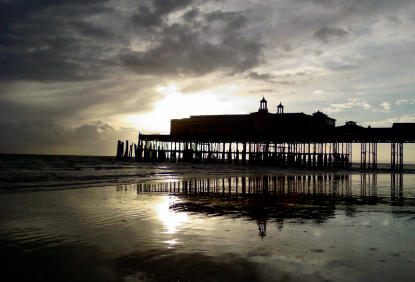
Hastings Pier extends into the English Channel from the town's seafront, having been rebuilt and reopened following significant fire damage in previous years. The pier serves as both a promenade and an events venue, hosting markets, festivals, and entertainment throughout the year. Entry to the pier is free, and it provides elevated views along the coastline and back towards the town. The structure includes seating areas, refreshment facilities, and space for various activities. The pier's design incorporates modern elements while maintaining its traditional seaside character, making it a focal point for both leisure activities and community events.
The Stade and Net Shops
The Stade represents the working heart of Hastings' fishing industry, situated on the shingle beach where fishing boats are still launched daily. This area is dominated by the distinctive black wooden Net Shops, tall narrow buildings that were constructed in the 19th century to store fishing nets and equipment. These structures, some dating back over 150 years, are listed buildings and create a unique silhouette against the seafront. The Stade remains an active fishing quarter where visitors can observe traditional beach-launched fishing boats and purchase fresh fish directly from local fishermen. The combination of working boats, historic buildings, and the sale of daily catches creates an authentic maritime atmosphere.
West Hill Cliff Railway
The West Hill Cliff Railway, one of two funicular railways in Hastings, connects the Old Town with the castle and West Hill area. This Victorian-era railway system transports visitors up the steep cliff face, providing both a practical means of reaching the higher elevations and an attraction in itself. The journey offers changing views of the town, harbour, and coastline as the carriage ascends. The railway operates regularly throughout the day and serves as access to Hastings Castle, the caves, and walking areas on West Hill. The engineering of this cliff railway represents typical Victorian ingenuity in solving transport challenges posed by the town's dramatic topography.
East Hill Cliff Railway
The East Hill Cliff Railway holds the distinction of being Britain's steepest funicular railway, ascending from the fishing quarter to the East Hill and Hastings Country Park. This railway provides access to the country park and offers spectacular views during the journey up the cliff face. The steep gradient and engineering required to construct this railway make it both a practical transport link and a tourist attraction. From the top station, visitors can access extensive walking trails, viewpoints, and the natural areas of the country park. The railway operates year-round, though schedules may vary seasonally.
Hastings Country Park
Covering over 850 acres of coastal landscape, Hastings Country Park encompasses cliffs, woodland, heathland, and grassland habitats. The park extends along the coastline east of the town, offering numerous walking trails with varying difficulty levels. Visitors can enjoy panoramic views across the English Channel, particularly on clear days when the French coast may be visible. The park supports diverse wildlife and provides opportunities for birdwatching, nature photography, and outdoor recreation. Several car parks and access points serve different areas of the park, with the East Hill Cliff Railway providing one means of reaching the western sections.
Alexandra Park
This Victorian public park covers over 100 acres of landscaped grounds inland from Hastings town centre. Alexandra Park features formal gardens, woodland areas, ornamental ponds, and open spaces suitable for recreation and relaxation. The park's design reflects typical Victorian municipal park planning, with tree-lined paths, flower beds, and facilities for various outdoor activities. Throughout the year, the park hosts community events and provides a green space for residents and visitors. The varied landscape within the park supports local wildlife while offering peaceful areas for walking, picnicking, and enjoying nature away from the coastal areas.
The Beaches and Seafront
Hastings' central beach area consists primarily of shingle and provides space for walking, relaxation, and beach activities. The seafront promenade connects different areas of the town and offers access to various amenities including amusements, arcades, and refreshment facilities. The beach area extends from the Old Town fishing quarter to the newer areas of the town, with different sections having distinct characters. During summer months, the beaches accommodate deck chairs and seasonal facilities, while year-round they provide space for walking and enjoying sea views. The seafront serves as both a recreational area and a working environment for the local fishing industry.
Around Hastings
Battle Abbey
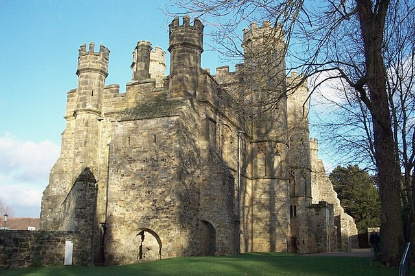
Located 10 km (6 miles) northwest of Hastings, Battle Abbey stands as one of England's most historically significant sites, built by William the Conqueror on the exact spot where the pivotal Battle of Hastings took place on 14 October 1066. Founded around 1071 as a Benedictine monastery to atone for the bloodshed of the Norman Conquest, the abbey's high altar was deliberately positioned where King Harold is believed to have fallen, marked today by a commemorative stone. Visitors can explore the atmospheric ruins of this once-wealthy monastery, climb the impressive 14th-century gatehouse for panoramic views across the battlefield and Battle High Street, and immerse themselves in the dramatic story through award-winning exhibitions and interactive displays at the visitor centre. The site brilliantly combines medieval architecture—including the surviving cloisters and undercroft—with the poignant battlefield where one of the most defining moments in English history unfolded, making it an essential destination for anyone seeking to understand the Norman Conquest and its lasting impact on Britain.
Top Museums
Hastings Museum & Art Gallery
A true gem for lovers of art, history, and culture, the Hastings Museum & Art Gallery features wonderfully varied collections. Here you’ll discover displays on local history, natural history, world cultures, and fine art—all under one roof. The museum is particularly known for the extraordinary Durbar Hall, an intricately carved Indian pavilion, and for its eclectic collection amassed by Annie Brassey during her world voyages. Galleries focus on everything from dinosaurs to shipwrecks, while contemporary exhibitions and family-friendly events take place regularly, making it a vibrant part of the community.
Shipwreck Museum
Located in the heart of the historic Old Town, the Shipwreck Museum offers a fascinating journey into local maritime history. The museum’s collection includes artefacts from ships wrecked off the coast, most notably the Dutch East Indiaman Amsterdam (1749) and the warship Anne (1690). Visitors will also find a range of local fossils, interactive displays, and hands-on exhibits. The venue is lauded for being accessible and engaging for all ages, with volunteers who are passionate about sharing the area’s nautical past.
Hastings Fishermen’s Museum
Set within a former fishermen’s chapel close to the iconic net shops on The Stade, this museum provides a vivid portrait of the town’s seafaring heritage. There are displays of beautifully crafted ship models, historic fishing gear, old photographs, and even the full-sized Lugger ‘Enterprise’, built in 1912. The museum is a testament to Hastings’ enduring fishing tradition—the largest beach-launched fishing fleet in Europe—and to the stories of the families that have worked these shores.
Smugglers Adventure
This attraction delves into the history of the Sussex and Kent area’s notorious smugglers. Hidden within atmospheric St Clements Caves, interactive displays and life-sized dioramas tell the story of contraband, secret tunnels, and daring escapades. The immersive experience is both entertaining and educational, highlighting tales of intrepid smuggling that abounded along this dramatic stretch of coastline.
The True Crime Museum
A unique venue carved into the cliffs of Hastings, The True Crime Museum offers an intriguing and at times chilling look into the darker side of real crime. The museum’s exhibits cover the worlds of serial killers, forensics, gangsters, and infamous prisoners, with original artefacts and immersive displays. It’s thought-provoking, sometimes harrowing, yet highly informative – aimed at older teenagers and adults who are fascinated by the secrets of criminal history.
Bizarre But True
This quirky museum appeals to the curious, housing a collection of oddities and wonders from around the world. Every exhibit comes with a bizarre-but-factual audio description, adding a playful and engaging twist. The museum’s passion for the peculiar is evident, making it a memorable and humorous stop for all ages.
Hastings Contemporary
Formerly known as the Jerwood Gallery, Hastings Contemporary is the town’s leading modern art gallery. It showcases changing exhibitions from British and international contemporary artists, with a special focus on painting and figurative art. The building itself is a striking piece of modern architecture, offering splendid views of the sea and the Old Town, and fosters an active programme of art events and community engagement.
Local Cuisine
Hastings boasts a vibrant culinary scene that celebrates its maritime heritage whilst embracing contemporary dining trends. The town's crown jewel is undoubtedly its fish and chips, prepared fresh daily by numerous establishments using catches from one of Europe's oldest fishing fleets. Local specialities include the traditional Sussex Smokie, a comforting dish of smoked haddock baked in a creamy cheese sauce with breadcrumbs, and an abundance of fresh seafood ranging from locally caught mackerel and Dover sole to Whitstable oysters. The historic Old Town, particularly around George Street, offers an eclectic mix of dining options from cosy pubs serving honest British fare to innovative restaurants like the Thai Café at Boulevard Books, where authentic Thai cuisine is served amongst the bookshelves. Visitors can also enjoy traditional seaside treats such as cockles and whelks from the seafront stalls, whilst the town's growing reputation for artisanal food is evident in establishments like Goat Ledge, famous for its local fish baps with lemon aioli, and the various independent eateries that showcase seasonal, locally-sourced ingredients from the surrounding Sussex countryside.
Getting There & Around
Hastings is about 90 km south of Central London to which it is connected via the A21 motorway, passing through (or near) Bodiam Castle, Royal Tunbridge Wells and Sevenoaks (where Knole House is located).
By train, regular services operated by Southeastern take approximately 90 minutes from London's Charing Cross, Cannon Street, or Waterloo East stations, whilst connections from other major cities such as Brighton, Eastbourne, and Ashford provide convenient links throughout the South East.
By coach, National Express operates regular services from London Victoria Coach Station and other major towns, offering a comfortable albeit slower journey through the scenic countryside of Kent and Sussex.
By car, Hastings is well-connected via the A21 from London and the M25, or alternatively via the A259 coastal road from Brighton and Eastbourne, with the town centre easily reached once you arrive, though do note that parking can be limited during peak tourist seasons, particularly near the seafront and Old Town areas.