


 Ireland Guide
 Scotland Guide
 Wales Guide
| Contents |
|---|
Introduction
Kingston upon Hull (pop. 268,000; urban 436,000), commonly known as Hull, is a port city and unitary authority in the East Riding of Yorkshire, England. It lies at the confluence of the River Hull and the Humber Estuary, around 25 miles inland from the North Sea, and has a population of approximately 269,000. Founded in the late 12th century as a trading quay for Meaux Abbey, the settlement received its royal charter from Edward I in 1299 and has since evolved through roles as a medieval wool port, military supply centre, fishing and whaling hub, and industrial city. Today, Hull retains a historic Old Town, the 14th-century Hull Minster, the award-winning Deep aquarium and a revitalised Museum Quarter, and is connected to the south bank of the estuary by the Humber Bridge. In 2017 it held the UK City of Culture title, reflecting its growing reputation for museums, galleries and arts events.
Interesting Facts about Kingston upon Hull
- Hull is the only place in Britain not to have BT provide its telephone services, instead operating its own telephone system with distinctive cream-coloured phone boxes that have been a symbol of the city's independence since 1904.
- The city was originally founded as Wyke on Hull by monks from Meaux Abbey in the late 12th century as a port to export wool, before being acquired by King Edward I in 1293 and renamed Kingston upon Hull.
- Hull is where the English Civil War effectively began in 1642 when Sir John Hotham refused King Charles I entry to the city at Beverley Gate, an act of defiance that sparked the conflict.
- The city boasts England's smallest window, measuring just 10" x 1", which can be found at the George Hotel on Land of Green Ginger and was used by gatekeepers to watch for stagecoaches.
- Hull was one of the most heavily bombed cities in Britain during World War II, with 95% of its homes damaged or destroyed and over 1,200 people killed.
- The city is home to numerous notable figures including William Wilberforce (anti-slavery campaigner), Amy Johnson (pioneering aviator who was first woman to fly solo from England to Australia), John Venn (inventor of Venn diagrams), and Mick Ronson (guitarist for David Bowie's Spiders from Mars).
- Hull was the first city in Britain to achieve full fibre broadband coverage and is connected to the Humber Bridge, which is the world's longest leisure bridge.
- Three everyday items that are now found worldwide - boiled sweets, liquid crystal displays (LCDs), and Lemsip - all originated in Hull.
- Hull Fair is arguably the largest travelling fair in Europe and celebrated its 700th anniversary in 1993.
- The city has two statues of British monarchs in its centre, both peculiarly positioned above public conveniences.
- Hull Minster is the largest parish church in England, with parts dating back to around 1300.
- Residents of Hull are known as Hullensians and have a distinctive dialect where they often drop the letter 'H', referring to their city as "'Ull".

History
Kingston upon Hull's fascinating history begins in the late 12th century when monks from nearby Meaux Abbey established a settlement called Wyke-upon-Hull at the strategic confluence of the Rivers Hull and Humber. This modest port, first mentioned in historical records in 1193, was initially developed as a 'new town' for exporting wool from the abbey's estates. The settlement's fortunes changed dramatically in 1293 when King Edward I purchased the town from the monks, recognising its potential as a strategic supply base for his military campaigns in Scotland. On 1st April 1299, Edward granted the town a royal charter and renamed it Kingston upon Hull, meaning 'King's town upon Hull'. The original charter, often called Hull's 'birth certificate', remains preserved in the Guildhall archives as one of the city's most treasured historical documents. By this time, the town had already been granted market rights in 1279, and the impressive Holy Trinity Church (now Hull Minster) was constructed around 1285.
The 17th century brought Kingston upon Hull to national prominence during a pivotal moment in English history. In April 1642, King Charles I arrived at the town gates demanding entry to seize control of the large arsenal stored there, but was dramatically refused entry by the Governor, Sir John Hotham. This defiant act at Beverley Gate is widely regarded as the spark that ignited the entire English Civil War. Despite bearing a royal name, Hull's citizens declared their support for Parliament and the Roundheads, enduring two sieges by Royalist forces in 1642 and 1643. The town's strategic importance during this period cannot be overstated, as it controlled vital supply routes and possessed one of England's most significant military arsenals. Following the Civil War, Hull underwent significant transformation as the medieval town walls were demolished to make way for a series of docks that would define the city's future.
The 18th and 19th centuries witnessed Hull's evolution into one of Britain's most important ports, with maritime trade extending across the globe. The first dock was constructed in 1778 (later renamed Queen's Dock in 1854), followed by Humber Dock in 1809 and Junction Dock (later Prince's Dock) in 1829. Hull became renowned as a major whaling centre until the mid-19th century, with ships venturing to Arctic waters. As steam power replaced sail, the port's trading links expanded dramatically to include the frozen meat trade with Australia, New Zealand, and South America. The city also maintained thriving coastal trade, importing coal from Newcastle and serving as the commercial heart of a vast inland trading network that served the entire United Kingdom. By 1801, Hull's population had grown to 22,161, reflecting its transformation from a modest monastic port into one of England's premier commercial centres.
Main Attractions
The Deep
Located at Sammy's Point where the River Hull meets the Humber Estuary, The Deep is a large public aquarium operating as an educational and conservation charity. The facility houses over 3,500 animals, including green sawfish, sharks, rays, and a colony of gentoo penguins. Its main feature is the 'Endless Oceans' exhibit, one of the deepest viewing tanks in Europe at 10 metres, which can be viewed from a glass lift and an underwater tunnel. Other exhibits guide visitors through various marine ecosystems, from the 'Lagoon of Light' to the 'Kingdom of Ice'. The aquarium focuses on marine research and conservation, with daily dive shows and presentations providing information on the animals and their habitats.
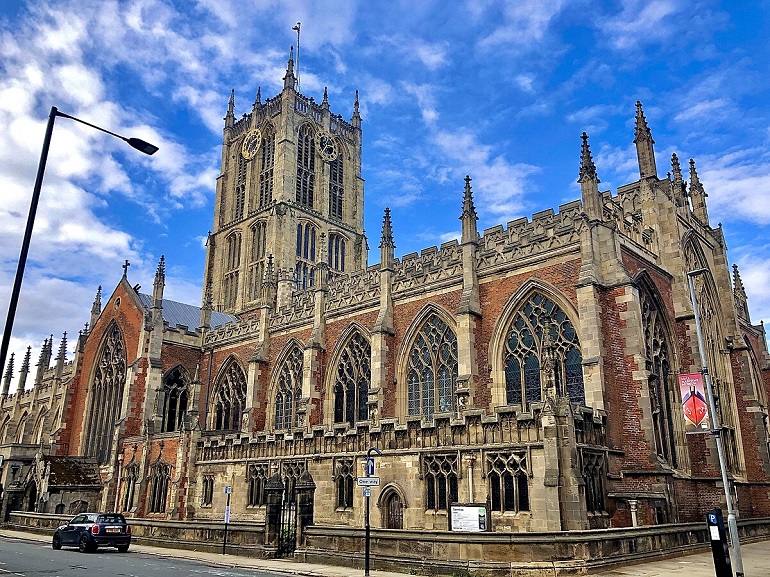
Hull Minster
Situated in the city's Old Town, Hull Minster is a Grade I listed parish church notable for being the largest in England by floor area. Its construction began in the late 13th century, and it features extensive medieval brickwork, one of the earliest examples of its use on such a scale in the country. Historically known as Holy Trinity Church, it was granted Minster status in 2017. The building is significant as the baptismal site of the anti-slavery campaigner William Wilberforce. Beyond its role as a place of worship, the Minster serves as a central community venue, hosting a variety of events including concerts, art installations, and festivals.
Hull Old Town
The Old Town is the historic heart of Kingston upon Hull, characterised by its preserved Georgian and Tudor architecture and cobbled streets. Centred around the River Hull, High Street, and the Market Place, the district contains a high concentration of the city's listed buildings. This area is best explored on foot, with historic pubs, independent shops, and art galleries lining the narrow lanes. Key streets like High Street follow the old course of the river and were once home to the city's wealthy merchants. Walking trails, such as the 'Fish Trail' pavement sculpture walk, guide visitors through the district's most significant historical locations.
Hull Marina
Adjacent to the Old Town, Hull Marina is a redeveloped waterfront area created from two former 19th-century docks, Humber Dock and Railway Dock. The marina provides berthing for hundreds of private yachts and leisure boats. The area was regenerated in the 1980s and is now surrounded by modern apartments, cafes, bars, and restaurants. The historic Spurn Lightship is permanently moored in the marina and serves as a floating museum. The marina is a popular public space for walking and socialising, connecting the city centre with The Deep and hosting large-scale events, including the Humber Street Sesh music festival.
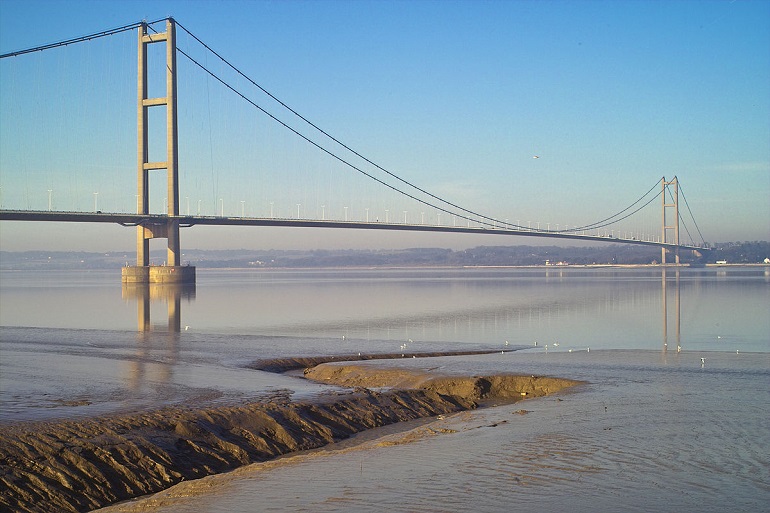
Humber Bridge
The Humber Bridge is a Grade I listed single-span suspension bridge that crosses the Humber Estuary, connecting Hessle in the East Riding of Yorkshire with Barton-upon-Humber in North Lincolnshire. When it opened in 1981, its main span of 1,410 metres made it the longest of its type in the world, a title it held for 16 years. The total length of the bridge is 2,220 metres. While it primarily serves as a toll road for vehicles, the bridge also incorporates dedicated footpaths and cycleways on both sides, which are free to access and provide extensive views across the estuary. The structure is a major landmark and feat of British engineering.
East Park
East Park is a Grade II listed Victorian park on Holderness Road, covering over 130 acres. It was officially opened in 1887 to commemorate Queen Victoria's Golden Jubilee. The park offers a wide range of recreational facilities, including a large boating lake, an animal education centre housing a variety of animals, and a historic splash boat ride. It also features a modern water play area, playgrounds, extensive lawns, and formal gardens. As one of the city's principal green spaces, it serves as a major centre for family activities, sports, and community events, and is free to enter.
Top Museums
Streetlife Museum of Transport
- Overview: Step into a vivid re-creation of Hull’s transport history. This immersive museum transports visitors back in time, featuring extensive displays of carriages, bicycles, trams, and motor vehicles.
- Highlights: Stroll along a meticulously reconstructed 1940s high street, hop aboard vintage trams and vehicles, and enjoy interactive exhibits that engage all ages. The sights, smells, and sounds offer a sensory journey through two centuries of urban travel and everyday life.
Wilberforce House
- Overview: Set in the birthplace of William Wilberforce, the prominent abolitionist, this museum explores his pivotal role in the campaign to abolish the British slave trade.
- Highlights: Discover evocative galleries exploring Wilberforce’s life and achievements, the horrors of enslavement, and the ongoing struggle for human rights. The house itself is steeped in Georgian character and forms a centrepiece of Hull’s Museum Quarter.
Ferens Art Gallery
- Overview: This impressive city-centre gallery was a gift to Hull by philanthropist Thomas Ferens and showcases a striking collection of fine art.
- Highlights: Permanent exhibits include European Old Masters, Victorian works, and Modern British art. The gallery also hosts contemporary exhibitions, making it a dynamic venue for both heritage and new talent. The light-filled spaces are ideal for appreciating paintings, sculpture, and decorative arts in a relaxed atmosphere.
Hull and East Riding Museum
- Overview: Located within Hull’s atmospheric Museums Quarter, this museum delves into the region’s archaeology and natural history.
- Highlights: Visitors can encounter a life-size woolly mammoth, stroll through a reconstructed Iron Age village, and marvel at Roman mosaics and treasure. The exhibits paint a vivid picture of East Yorkshire from prehistoric times through to medieval Hull.
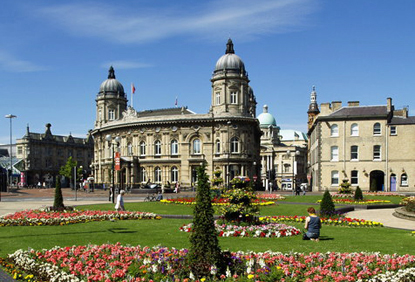
Hull Maritime Museum
- Overview: Housed in the grand Victorian Dock Offices, this museum is dedicated to Hull’s legendary maritime industry and seafaring past.
- Highlights: Explore ship models, personal stories of trawlermen, and artefacts from the city’s days as a major fishing port. Exhibits cover the Arctic whaling trade, North Sea fishing, and merchant shipping, bringing to life both the triumphs and tragedies of Hull’s relationship with the sea.

Arctic Corsair
- Overview: The Arctic Corsair, a deep-sea trawler built in 1960, now serves as a floating museum.
- Highlights: Climb aboard to experience the challenging world of Hull’s trawlermen, learn about life on the North Sea, and discover the vessel’s place in the city’s industrial history. The ship is currently undergoing restoration, but tours offer an authentic glimpse of the working trawler’s past.
Spurn Lightship
- Overview: Moored in Hull Marina, this retired lightship once guided vessels through the Humber Estuary.
- Highlights: The Spurn Lightship is a distinctive floating museum, allowing visitors to explore its compact quarters and learn about the essential work of maritime navigation and safety on the perilous Humber.
Hands on History Museum
- Overview: Situated in Hull’s historic Grammar School, where Wilberforce once studied, this family-friendly museum offers a tactile approach to learning.
- Highlights: Exhibits focus on Victorian childhood, the story of Hull, and an Egyptian collection featuring a 2,600-year-old mummy. The setting itself exudes history and provides a fascinating peek into the city’s educational heritage.
Dinostar – Hull’s Dinosaur Experience
- Overview: Ideal for families and dinosaur enthusiasts, Dinostar brings prehistory to life in the heart of Hull.
- Highlights: Encounter dinosaur skeletons, interactive displays, and hands-on activities designed to engage younger visitors with the world of palaeontology.
University of Hull Art Collection
- Overview: This collection on the university campus features British art, particularly works from 1890–1940.
- Highlights: The gallery covers both decorative and fine arts, spotlighting the turbulent but creative period of early twentieth-century Britain.
Local Cuisine
The city's most iconic dish is the Hull pattie, a unique deep-fried mashed potato and sage cake that's traditionally served alongside fish and chips with mushy peas. No meal in Hull is complete without a generous sprinkling of chip spice, a seasoned salt mixture that originated in the city and adds a distinctive flavour to traditional fish and chips. Yorkshire classics like Yorkshire pudding remain popular throughout the city, whilst the traditional pairing of fruitcake and cheese - particularly with Wensleydale - continues to delight locals and visitors alike. Hull's thriving food scene centres around the historic Old Town and vibrant Fruit Market areas, where you'll find everything from traditional chippies like the beloved Bob Carver's to modern gastropubs and international cuisine, all served with the warm hospitality that Yorkshire is famous for.
Getting There & Around
Kingston upon Hull is easily accessible by various modes of transport from across the UK. By train, Hull Trains operates direct services from London King's Cross to Hull, with the journey taking approximately 2 hours and 30 minutes, whilst additional rail connections are provided by TransPennine Express and Northern Rail from various destinations throughout the country.
By coach, National Express runs regular services from London Victoria Coach Station to Hull Interchange, with the journey taking around 5 hours and 50 minutes, and there are also coach connections available from other major cities including Birmingham, Leicester, and Bradford.
By car, Hull sits at the eastern terminus of the M62 motorway, which becomes the A63 as it approaches the city, and drivers can easily reach Hull from the north and west via the M62 or A1079 to the A63, whilst those travelling from the south can use the A15, cross the impressive Humber Bridge, and then head east along the A63 towards the city centre.