


 Ireland Guide
 Scotland Guide
 Wales Guide
| Contents |
|---|

Introduction
Norwich (pop. 145,000; urban 215,000), the historic county town of Norfolk in East Anglia, stands as one of England's most complete medieval cities, with over 1,000 years of recorded history. The city is dominated by its magnificent Norman cathedral, completed in 1145, and the imposing 12th-century castle that overlooks the bustling market square—home to one of the largest and oldest markets in the country, operating six days a week since Norman times. With its winding cobbled streets, medieval churches, and well-preserved city walls, Norwich offers visitors a remarkable concentration of historical architecture, whilst also serving as a vibrant cultural centre with theatres, museums, and the University of East Anglia. The city's rich heritage includes its former status as England's second-largest city during the Middle Ages, its tradition of textile manufacturing, and its significant role in the English Reformation, making it an ideal destination for those interested in English history, architecture, and culture.
Interesting Facts about Norwich
- Norwich was the second largest city in England during Tudor times, surpassed only by London in terms of population.
- The city boasts the oldest covered market in Europe and has the largest walled centre with the longest run of medieval defences in England.
- Norwich is the only English city located within a national park, as it sits within the Norfolk Broads.
- At its peak in 1870, Norwich had over 780 pubs, leading to the saying that the city had "a pub for every day of the year".
- Dame Julian of Norwich was the first woman to have a book published in English in 1393, titled "Revelations of Divine Love".
- The world's first Rolo chocolate was produced by Caley's chocolate factory in Norwich in 1937.
- Norwich was the first city in the UK to introduce pedestrianised streets in July 1967.
- The city had the first-ever postcodes in the country, with NR1 1AA being the very first postcode trialled in 1959.
- Norwich City FC's club song "On the Ball City" is the oldest football club song in the UK, written in 1890.
- Colman's mustard has been produced in Norwich since 1814, with some of today's farmers being fifth-generation suppliers of the original families.
- The popular TV quiz show "Sale of the Century" was broadcast from Norwich from 1971 to 1983, beginning each episode with "And now, from Norwich, it's the quiz of the week!".
- Norwich has more medieval churches than any other city in Western Europe north of the Alps, yet ironically was the least religious place in England and Wales according to the most recent census.
- The Norfolk Broads surrounding Norwich are actually man-made, created by medieval peat digging for fuel, with Norwich Cathedral alone burning 400,000 turves of peat in one year.
- In 2012, Norwich became England's first UNESCO City of Literature.
- The fictional character Alan Partridge is from Norwich, working as a DJ on Radio Norwich in the comedy series.

History
Norwich's rich history stretches back over two millennia, beginning with the Iron Age Iceni tribe whose capital settlement was located near present-day Caistor St Edmund, about five miles south of the modern city. Following Boudica's uprising in 60 CE, the Romans established Venta Icenorum as their East Anglian capital, though this fell into disuse around 450 CE. The Anglo-Saxons later settled the site between the 5th and 7th centuries, founding the settlement of Northwic (meaning "North Harbour") from which Norwich derives its name. By 575 CE, Anglo-Saxon King Uffa had made Norwich a royal city and capital of East Anglia, and by the 10th century it had become a prominent trading centre with its own mint. At the time of the Norman Conquest in 1066, Norwich was already a substantial borough containing 1,320 burgesses, making it one of the most important towns in the kingdom.
The Norman period transformed Norwich into a major medieval city through ambitious construction projects and administrative reforms. Following the conquest, the Normans demolished 98 Saxon homes to build Norwich Castle in 1067, initially constructed of wood before being replaced by the impressive stone keep around 1100. Construction of Norwich Cathedral began in 1096 under Bishop Herbert de Losinga, requiring an enormous 200-year undertaking that included digging a canal from the River Wensum to transport limestone from Caen in Normandy. The cathedral, measuring 461 feet long and 177 feet wide, became the largest building in East Anglia, with its cathedral close occupying a tenth of the medieval city's total area. Norwich received its first royal charter from Henry II around 1158, followed by another from Richard I in 1194 that officially granted it city status. The city's wealth during this period was largely driven by the wool trade, with Norfolk's sheepwalks providing the raw material that made Norwich one of England's most prosperous cities—by one account, "the fourth of all the land".
From the medieval period through the Tudor era, Norwich continued to flourish as England's second city, challenged only by Bristol and York in terms of prosperity. The city walls, built between 1280 and 1340, enclosed an area larger than the City of London at approximately 2½ miles in circumference. Norwich's religious significance was equally remarkable, as the wealth generated by trade financed the construction of numerous churches, leaving the city with more medieval churches than any other city in Western Europe north of the Alps. The city experienced significant upheaval during Kett's Rebellion in 1549, when Robert Kett led protesters against land enclosure, temporarily taking control of Norwich before being defeated and hanged from the castle walls. A transformative chapter in Norwich's history began after 1565, when large numbers of Dutch and Flemish Protestant refugees, known as "Strangers," fled religious persecution and settled in the city, eventually comprising up to one-third of the population. These skilled weavers brought new textile techniques and, notably, their canaries—a hobby that became so associated with Norwich that the city's football team is nicknamed the Canaries today.
Main Attractions
Norwich Castle
Norwich Castle dominates the city's skyline from its position atop a large artificial mound, or motte, constructed by the Normans around 1095. Originally built as a royal palace rather than a fortress, the castle represents one of the most important examples of Norman civil architecture in Europe. The keep, with its distinctive blind arcading and decorative stonework, was designed to impress visitors with the power and sophistication of Norman rule. The structure's unusual design, with its elaborate external decoration, sets it apart from the more austere military castles built elsewhere in Norman England.
The castle mound itself is an impressive feat of medieval engineering, requiring the movement of thousands of tons of earth to create the elevated platform. From the battlements and surrounding grounds, visitors can enjoy panoramic views across Norwich and the surrounding Norfolk countryside. The castle's strategic position allowed Norman rulers to oversee the Saxon settlement below and control the important river crossing at Norwich. The building's honey-coloured stone, quarried locally, has weathered to create the warm appearance that characterises much of Norwich's historic architecture.
The castle grounds include the remains of the medieval bailey, where additional buildings once housed the castle's garrison and administrative functions. Archaeological excavations have revealed evidence of the Saxon settlement that existed on the site before the Norman conquest, including pottery and building foundations that speak to Norwich's long history as an important regional centre.

Norwich Cathedral
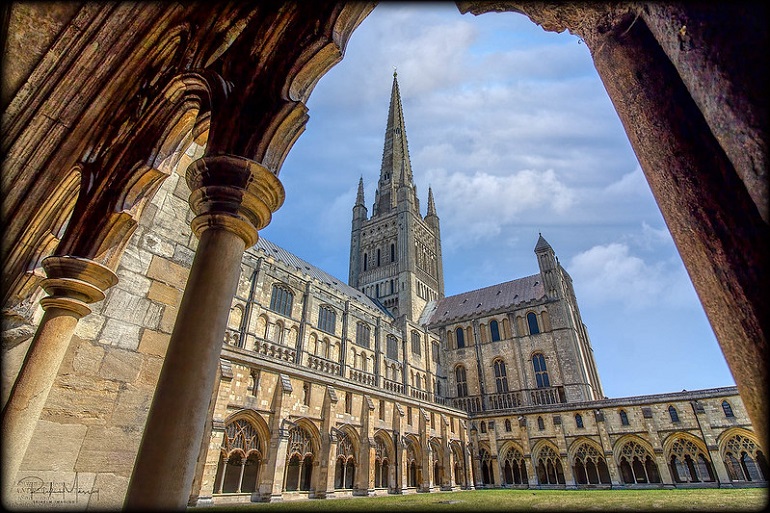
Norwich Cathedral stands as one of England's finest examples of Norman architecture, its construction beginning in 1096 under the direction of Bishop Herbert de Losinga. The cathedral was built using Caen stone transported from Normandy, creating a structure that has endured for nearly a millennium. The building's most striking feature is its spire, which rises to 315 feet, making it the second tallest cathedral spire in England after Salisbury. The cathedral's interior showcases remarkable Norman stonework, with massive pillars supporting soaring arches that create an atmosphere of medieval grandeur.
The cathedral sits within the expansive Cathedral Close, a 44-acre precinct that forms one of the largest and most complete cathedral closes in Europe. This area contains over 80 listed buildings, creating a remarkable collection of medieval and later architecture. The Close includes the Bishop's Palace, the Deanery, and numerous canons' houses, many dating from the medieval period. The cloisters, completed in the 15th century, are among the largest in England and feature intricate stone tracery and medieval roof bosses depicting biblical scenes and everyday life.
Within the cathedral grounds lies the modern Labyrinth, installed in the cloister garth as a place for quiet contemplation. The cathedral's west front underwent significant restoration in the 19th century, whilst the east end retains much of its original Norman character. The cathedral's position on elevated ground provides commanding views across the city, and its spire serves as a landmark visible from miles around the Norfolk countryside.
Tombland and Cathedral Quarter
Tombland, despite its ominous name, derives from the Saxon word "tomb" meaning empty space, reflecting its original function as Norwich's Saxon marketplace. This area predates the Norman conquest and represents the commercial heart of the original settlement. The space is surrounded by historic buildings that span centuries of architectural development, from medieval timber-framed structures to Georgian townhouses, creating a rich architectural tapestry that tells the story of Norwich's evolution.
The Cathedral Quarter encompasses the area around Tombland and extends towards the cathedral, creating a distinct district characterised by independent shops, cafés, and cultural venues housed within historic buildings. The quarter's narrow streets and hidden courtyards reward exploration, with each turning revealing new architectural details and historical connections. The area's proximity to the cathedral has influenced its development, with many buildings originally serving religious or educational functions.
St. Ethelbert's Gate and Erpingham Gate provide ceremonial entrances to the cathedral precinct, their medieval stonework and decorative details demonstrating the wealth and artistic sophistication of medieval Norwich. These gates served both practical and symbolic functions, controlling access to the cathedral close whilst proclaiming the power and prestige of the church. The gates' survival through centuries of political and religious upheaval speaks to their importance in Norwich's civic and religious life.
Elm Hill
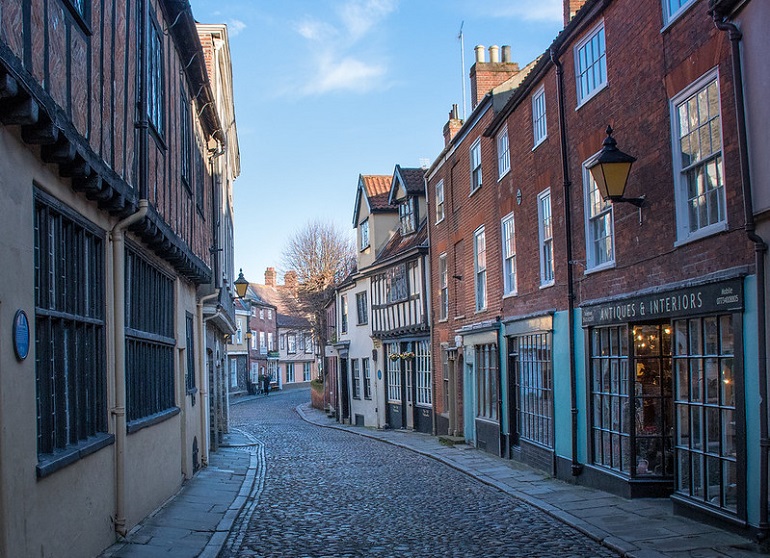
Elm Hill represents one of England's most perfectly preserved medieval streets, its cobbled surface and timber-framed buildings creating an almost unchanged streetscape from the Tudor period. The street's name derives from the elm trees that once lined the route, though these have long since disappeared. The buildings that line Elm Hill showcase the wealth and craftsmanship of Norwich's medieval merchants, with their jettied upper floors, decorative timber work, and leaded windows creating a harmonious architectural ensemble.
The street's most famous building is the Britons Arms, a coffee house that has operated continuously since the 17th century, making it one of the oldest coffee houses in England. The building's medieval timber frame and later Georgian additions create a fascinating architectural palimpsest that tells the story of Norwich's commercial development. Other notable buildings include Pettus House, with its elaborate carved bressumer, and the various shops and galleries that now occupy buildings once used by medieval craftsmen and merchants.
Elm Hill's survival is remarkable given the destruction that befell much of medieval Norwich through fire, war, and redevelopment. The street's narrow width and irregular building line reflect the organic growth of medieval settlements, where property boundaries were established through centuries of use rather than formal planning. The cobbled surface, though challenging for modern footwear, provides an authentic connection to the medieval experience of the street, when horse-drawn carts and pedestrians shared the same narrow space.
Norwich Lanes
The Norwich Lanes comprise a network of medieval streets and alleyways that have been transformed into a pedestrian-friendly shopping and cultural district whilst retaining their historic character. These narrow passages, originally created by the organic growth of the medieval city, now house independent shops, galleries, and cafés that give Norwich its distinctive commercial character. The lanes' irregular layout and varying widths reflect their medieval origins, when streets developed along property boundaries and ancient rights of way rather than formal planning.
The area's architecture spans several centuries, with medieval timber-framed buildings standing alongside Georgian and Victorian structures, creating an architectural diversity that reflects Norwich's continuous development. Many buildings show evidence of their changing uses over time, with former merchant houses converted to shops, workshops transformed into galleries, and residential buildings adapted for commercial use. This adaptive reuse has preserved the area's historic fabric whilst allowing it to serve contemporary needs.
The lanes' pedestrian-friendly environment encourages browsing and exploration, with each street offering different specialities and attractions. The area's success as a shopping destination demonstrates how historic city centres can be revitalised whilst preserving their essential character. The lanes serve as a model for heritage-led regeneration, showing how historic urban fabric can be adapted to meet modern needs whilst maintaining its distinctive identity.
Cow Tower
Cow Tower stands as a remarkable survival from Norwich's medieval defences, its circular form and strategic riverside position demonstrating the military engineering of the 14th century. Built around 1398-1399, the tower was designed to house artillery and defend the river approach to the city, representing an early adaptation to the changing nature of medieval warfare. The tower's unusual name may derive from its later use as a cattle pound, though its original military function is evident in its thick walls and defensive features.
The tower's position on the banks of the River Wensum provided commanding views over the river and surrounding countryside, allowing defenders to monitor and control river traffic. The building's construction techniques, including its use of flint and brick, reflect the materials and methods available to medieval builders in Norfolk. The tower's survival is remarkable given the destruction of most of Norwich's medieval defences, making it an important reminder of the city's military past.
Archaeological investigations have revealed details of the tower's construction and use, including evidence of the artillery that was once housed within its walls. The tower's integration into the modern Riverside Walk demonstrates how historic structures can be preserved and made accessible whilst maintaining their essential character. The building serves as a tangible connection to Norwich's medieval past, when the city's prosperity required protection from both military threats and commercial rivals.
Dragon Hall
Dragon Hall represents one of Norwich's most significant medieval buildings, its great hall and crown-post roof demonstrating the wealth and sophistication of 15th-century merchants. Built around 1430 by Robert Toppes, a wealthy merchant, the hall served as both a residence and a place of business, reflecting the integration of domestic and commercial life in medieval urban society. The building's most remarkable feature is its timber crown-post roof, one of the finest examples of medieval carpentry in England.
The hall's name derives from the dragon carved into one of its roof timbers, a decorative detail that demonstrates the artistic ambitions of its medieval builders. The building's scale and quality of construction reflect the prosperity that Norwich's textile trade brought to the city's merchant class. The hall's survival through centuries of changing use and ownership speaks to the quality of its construction and the respect accorded to significant historic buildings.
The building's current use as the National Centre for Writing continues its tradition as a place of cultural and intellectual activity, whilst its architectural significance makes it an important part of Norwich's heritage. The hall's restoration has revealed details of its original construction and decoration, providing insights into the lives and aspirations of medieval Norwich's merchant elite.

Riverside Walk
The Riverside Walk follows the meandering course of the River Wensum through Norwich, providing a green corridor that connects the city centre with the surrounding countryside. The walk passes beneath ancient bridges, alongside medieval buildings, and through areas of natural beauty that offer respite from urban life. The river itself has been central to Norwich's development, providing water power for mills, a transport route for goods, and a source of fish and fresh water for the growing medieval city.
Along the walk, visitors encounter remnants of Norwich's industrial past, including the sites of former mills and warehouses that once processed grain, textiles, and other goods. The river's banks support diverse wildlife, including kingfishers, herons, and various species of fish, creating opportunities for nature observation within the urban environment. The walk's level path makes it accessible to most visitors, whilst interpretive signs provide information about the river's history and ecology.
The Riverside Walk connects several of Norwich's major attractions, including the cathedral, castle, and various historic buildings, making it an ideal way to explore the city whilst enjoying the natural environment. The walk's route changes character as it progresses, from the formal riverside gardens near the city centre to the more natural wetland areas towards the outskirts, reflecting the transition from urban to rural landscapes that characterises much of Norwich's setting.
Norwich Market
Norwich Market claims the distinction of being one of the oldest and largest outdoor markets in England, with trading rights granted by royal charter in the 11th century. The market's current location in the city centre has been its home since the 12th century, making it one of the longest continuously operating markets in the country. The market's 190 stalls create a vibrant commercial heart for the city, offering everything from fresh produce and flowers to crafts and clothing, maintaining the tradition of market trading that has sustained Norwich's economy for nearly a thousand years.
The market's distinctive striped awnings and permanent stall structures create a colourful focal point in the city centre, surrounded by significant civic buildings including the Guildhall and City Hall. The market's layout reflects centuries of evolution, with stall positions often passed down through generations of traders, creating a continuity of commercial relationships that binds the market community together. The variety of goods on offer reflects Norwich's position as a regional centre, drawing traders and customers from across Norfolk and beyond.
The market operates six days a week, with each day bringing its own character and specialities. The social aspect of market trading remains as important as the commercial, with many stalls serving as informal community gathering points where local news and gossip are exchanged alongside goods and services. The market's resilience through economic changes, wars, and urban redevelopment demonstrates the enduring importance of traditional market trading in English civic life.
Theatre Royal Norwich
The Theatre Royal Norwich occupies a prominent position in the city centre, its elegant Georgian façade reflecting the cultural aspirations of 18th-century Norwich society. The theatre has been central to Norwich's cultural life for over two centuries, hosting everything from touring West End productions to local amateur performances. The building's architecture reflects the social importance of theatre in Georgian society, with its grand entrance, ornate interior, and carefully designed sight lines creating an appropriate setting for dramatic performance.
The theatre's history encompasses periods of great success and near-closure, reflecting the changing fortunes of live performance in English provincial cities. Recent renovations have modernised the building's facilities whilst preserving its historic character, ensuring that it can continue to serve Norwich's cultural needs whilst meeting contemporary technical and accessibility requirements. The theatre's programming balances commercial appeal with artistic ambition, bringing major touring productions to Norwich whilst supporting local performers and companies.
The Theatre Royal's role extends beyond entertainment to encompass education and community engagement, with workshops, talks, and special events that connect the theatre with Norwich's broader cultural life. The building's central location makes it easily accessible to both residents and visitors, whilst its architectural significance adds to Norwich's collection of important civic buildings.
Top Museums
Norwich Castle Museum & Art Gallery
An iconic landmark dominating the Norwich skyline, Norwich Castle is a magnificent Norman fortress that has been transformed into one of England's finest regional museums. This striking stone keep, built around 1100, serves as both a historical monument and a world-class museum and art gallery. The castle's imposing exterior gives way to thoughtfully curated galleries that house an extraordinary collection spanning archaeology, natural history, and fine art.
The museum's archaeology collection is particularly noteworthy, featuring Roman mosaics, Saxon treasures, and medieval artefacts that tell the story of Norfolk's ancient past. The natural history galleries showcase the county's diverse wildlife and geological heritage, with interactive displays that engage visitors of all ages. The art collection is equally impressive, featuring works by the celebrated Norwich School of Painters, including John Crome and John Sell Cotman, whose landscapes captured the beauty of the Norfolk countryside.
Visitors can explore the castle's dungeons, climb the battlements for panoramic views across the city, and discover the building's fascinating history as a royal palace, county gaol, and eventually a museum. The castle also houses an impressive collection of Norwich silver, civic regalia, and decorative arts, alongside temporary exhibitions that bring fresh perspectives to the permanent collections. Interactive displays and hands-on activities make this museum particularly engaging for families, whilst serious art enthusiasts will appreciate the quality and breadth of the collections.
Museum of Norwich at the Bridewell
Housed in a remarkable 14th-century merchant's house, the Museum of Norwich at the Bridewell offers an intimate and engaging exploration of the city's social and industrial history. The building itself is a testament to Norwich's medieval prosperity, with its flint walls and timber-framed sections providing an atmospheric backdrop to the museum's collections.
The museum's ten galleries trace Norwich's evolution from a medieval trading centre to a modern city, with particular emphasis on the industries that shaped its character. The textile galleries showcase Norwich's importance as a centre for worsted cloth production, featuring a restored Jacquard loom and displays on the city's famous shawl industry. The shoe-making heritage is celebrated through reconstructed workshops and displays of locally-made footwear, whilst the museum also houses the world's first wire netting machine, invented in Norwich in the 1840s.
One of the museum's most popular features is the recreated early 20th-century chemist's shop, complete with original fittings and pharmaceutical equipment. The building's history as the city's Bridewell (prison) is also explored, with displays on crime and punishment in Norwich. The medieval undercroft, accessible through guided tours, reveals the building's ancient foundations and provides insight into medieval construction techniques. The museum's community focus is evident throughout, with local stories and oral histories bringing the displays to life and creating a strong connection between past and present.
Strangers' Hall
Strangers' Hall stands as one of Norwich's most atmospheric and historically significant buildings, offering visitors a unique opportunity to step back in time through five centuries of domestic life. This magnificent Tudor merchant's house, with its timber-framed construction and medieval origins dating back to the 14th century, provides an unparalleled glimpse into how Norwich's wealthy citizens lived and worked.
The museum's room settings are meticulously recreated to represent different historical periods, from the medieval Great Hall with its impressive hammerbeam roof to the elegant Georgian dining room with its period furniture and decorative arts. The Victorian kitchen, complete with original range and cooking implements, demonstrates the domestic life of the 19th century, whilst the nursery showcases children's toys and games from various eras.
The house's name commemorates the 'Strangers' – Protestant refugees from the Low Countries who settled in Norwich in the 16th century, bringing with them new skills in textile production that contributed significantly to the city's prosperity. The museum's collection includes an extensive array of shop signs, costumes, domestic objects, and toys that illustrate the changing fashions and lifestyles of Norwich's inhabitants over the centuries. The building's architectural features, including original wall paintings, carved beams, and period fireplaces, create an immersive historical experience that brings the past vividly to life.
The South Asia Collection
The South Asia Collection represents one of Norwich's most unique and culturally significant museums, celebrating the rich artistic traditions and diverse cultures of the Indian subcontinent. Housed in a beautifully restored Victorian skating rink, the museum's dramatic arched wooden roof creates a stunning architectural backdrop for the extensive collection of South Asian arts and crafts.
The collection encompasses a wide range of artefacts from across India, Pakistan, Bangladesh, and Sri Lanka, including textiles, metalwork, woodcarvings, paintings, and religious objects. Visitors can explore the intricate craftsmanship of traditional Indian textiles, from elaborate saris to ceremonial hangings, alongside displays of metalwork that demonstrate the sophisticated techniques of South Asian artisans. The museum also features religious art from Hindu, Buddhist, Sikh, and Islamic traditions, providing insight into the spiritual and cultural diversity of the region.
The adjoining shop, Country & Eastern, offers visitors the opportunity to purchase authentic South Asian crafts, textiles, and decorative objects, making it a popular destination for those seeking unique gifts or home furnishings. The museum regularly hosts cultural events, workshops, and educational programmes that celebrate South Asian heritage and promote cross-cultural understanding within the Norwich community.
City of Norwich Aviation Museum
Situated near Norwich Airport, the City of Norwich Aviation Museum serves as a tribute to the region's significant role in aviation history, particularly during the Second World War when Norfolk was home to numerous RAF and USAAF bases. The museum's impressive outdoor display features a diverse collection of static aircraft, both civil and military, that span the history of flight from early pioneers to modern jets.
Visitors can explore the cockpits of several aircraft, including the iconic Vulcan Bomber, gaining firsthand experience of the conditions faced by aircrew. The museum's collection includes fighter aircraft, transport planes, and helicopters, each with detailed information about their operational history and technical specifications. Indoor displays feature aviation memorabilia, uniforms, photographs, and personal accounts from pilots and ground crew who served at Norfolk's wartime airfields.
The museum also chronicles the development of Norwich Airport from its wartime origins to its current role as a regional hub, with displays on civil aviation and the growth of commercial flight. Educational programmes and special events, including visits from veterans and aviation enthusiasts, help bring the stories of Norfolk's aviation heritage to life for visitors of all ages.
Royal Norfolk Regimental Museum
Located adjacent to Norwich Castle, the Royal Norfolk Regimental Museum provides a comprehensive account of the Royal Norfolk Regiment's distinguished military history from its formation in 1685 to its amalgamation in 1959. The museum's collection includes an extensive array of weapons, uniforms, medals, and personal effects that tell the story of the regiment's service across the globe.
The museum's displays chronicle the regiment's involvement in major conflicts, from the Napoleonic Wars through both World Wars to post-war peacekeeping operations. Particular attention is paid to the regiment's role in the Second World War, including the tragic events at Le Paradis in 1940 and the regiment's service in the Far East. The collection includes two of the six Victoria Crosses awarded to members of the regiment, alongside detailed accounts of the actions that earned these highest military honours.
Personal stories and oral histories from former soldiers provide human context to the military artefacts, whilst displays on regimental traditions, music, and ceremonial duties offer insight into military life beyond the battlefield. The museum serves not only as a repository of military history but also as a memorial to the thousands of Norfolk men who served with the regiment over nearly three centuries.
John Jarrold Printing Museum
The John Jarrold Printing Museum offers a fascinating insight into Norwich's significant role in the printing and publishing industry, housed within the premises of one of the city's most important printing firms. Staffed by knowledgeable volunteers, many of whom are retired printers with decades of experience in the trade, the museum provides an authentic and personal perspective on the evolution of printing technology.
The museum's collection spans 160 years of printing history, featuring an impressive array of machinery from hand-operated 19th-century presses to sophisticated modern equipment. Visitors can observe demonstrations of traditional printing techniques, including letterpress printing, lithography, and bookbinding, whilst learning about the skills and craftsmanship required to produce high-quality printed materials.
The museum chronicles the development of Jarrold & Sons, founded in 1823, which became one of Britain's leading provincial printing and publishing companies. Displays include examples of the firm's diverse output, from books and newspapers to commercial printing and packaging. The museum also explores the broader impact of printing on Norwich's cultural and economic life, including the production of local newspapers, books by Norfolk authors, and the growth of advertising and commercial design.
Interactive displays and hands-on activities allow visitors to try their hand at traditional printing techniques, whilst the museum's archive contains thousands of examples of printed materials that document the changing styles and technologies of the printing industry. The museum serves as both a celebration of craftsmanship and a reminder of the central role that printing has played in the dissemination of knowledge and culture.
Local Cuisine
Norwich’s vibrant food scene is a true reflection of Norfolk’s rich agricultural and coastal heritage, offering visitors a delicious mix of traditional and contemporary flavours. The city is renowned for its iconic Colman’s Mustard, a staple with a history stretching back over 200 years. Seafood lovers should not miss the sweet and tender Cromer Crab or the plump Brancaster Mussels, both caught fresh from the nearby coast. Classic British comfort can be found in hearty Norfolk Dumplings and the distinctive Norfolk Black Turkey, while adventurous eaters can sample local delicacies like Stiffkey Cockles and samphire. For cheese aficionados, Norfolk’s artisan producers offer delights such as Binham Blue and Copys Cloud. Whether you’re enjoying a full English breakfast at a bustling café or indulging in fish and chips by the riverside, Norwich’s cuisine promises a memorable taste of East Anglia.
Nature in and around Norwich
Plantation Garden
Plantation Garden represents a remarkable example of Victorian garden design, created in the 1850s in a former chalk quarry near Norwich city centre. The garden's dramatic topography, with its steep sides and varied levels, provided Victorian gardeners with opportunities to create diverse planting schemes and architectural features. The garden's Gothic fountain, rustic bridges, and woodland walks demonstrate the Victorian enthusiasm for romantic landscape design and the integration of natural and artificial elements.
The garden's restoration in recent decades has revealed the sophistication of its original design, with its careful integration of formal and informal elements creating a varied and interesting landscape within a relatively small space. The garden's plant collection includes both native species and exotic introductions that reflect Victorian interests in botany and horticulture. The garden's seasonal changes provide year-round interest, from spring bulbs and summer perennials to autumn colours and winter structure.
The garden's survival and restoration demonstrate the value placed on historic landscapes and the dedication of volunteers and supporters who have worked to preserve this unique example of Victorian garden art. The garden's location within walking distance of the city centre makes it an accessible retreat from urban life, whilst its historical significance adds to Norwich's collection of important cultural landscapes.
Whitlingham Country Park
Whitlingham Country Park occupies a site on the edge of Norwich where gravel extraction has created a landscape of lakes and wetlands that now serves as both a recreational facility and a wildlife habitat. The park's location provides easy access to the Norfolk Broads whilst offering facilities for water sports, walking, and cycling within the city's boundaries. The park's development demonstrates how former industrial sites can be transformed into valuable community resources whilst supporting biodiversity and environmental education.
The park's lakes support a variety of water sports, including sailing, kayaking, and paddleboarding, making it an important recreational resource for Norwich residents and visitors. The surrounding woodland and grassland areas provide habitats for wildlife whilst offering opportunities for walking and nature observation. The park's visitor centre and café serve as focal points for community activities and environmental education programmes.
The park's integration with the broader Broads landscape creates opportunities for longer expeditions by boat or on foot, whilst its proximity to Norwich makes it easily accessible for shorter visits. The park's success demonstrates the value of green spaces in urban areas, providing opportunities for recreation, education, and wildlife conservation within easy reach of the city centre.
The Broads National Park
The Norfolk Broads represent a unique landscape of rivers, lakes, and wetlands that extends into Norwich's boundaries, creating one of the few National Parks that encompasses part of a major city. This network of waterways was created through centuries of peat extraction, which left behind the distinctive shallow lakes known as broads. The area supports an extraordinary diversity of wildlife, including rare birds, fish, and plant species that have adapted to the unique wetland environment.
The Broads' connection to Norwich via the River Wensum has been crucial to the city's development, providing a transport route that allowed Norwich to become a major trading centre in medieval times. The river system enabled the export of Norwich's textile products and the import of raw materials and luxury goods from across Europe. Today, the Broads offer recreational opportunities including boating, fishing, and wildlife watching, with numerous hire boat companies operating from Norwich and surrounding areas.
The landscape of the Broads changes with the seasons, from the reed beds and marshes of winter to the abundant plant and animal life of summer. The area's flat topography and extensive waterways create dramatic skies and ever-changing light conditions that have inspired artists and writers for generations. The traditional Norfolk wherries, distinctive sailing boats designed specifically for the shallow waters of the Broads, can still be seen navigating the waterways, maintaining a connection to the area's commercial past.
Getting There & Around
By train, the fastest and most convenient method is travelling from London Liverpool Street station, with Greater Anglia operating hourly direct services that reach Norwich in just 1 hour 48 minutes, costing between £30-50 for a standard ticket.
By coach, National Express and FlixBus provide regular services from London's Victoria Coach Station and Stratford City Bus Station respectively, taking approximately 3 hours 25 minutes and costing £21-30, making it a budget-friendly alternative.
By car, Norwich is easily accessible via the A12 from London (which connects to the A140 near Ipswich), the A47 from the north, or the A14 from the Midlands, with the journey from London taking around 2 hours 10 minutes and costing £28-41 in fuel.
By air, Norwich Airport is conveniently located less than five miles from the city centre, offering another option for travellers. For those coming from Europe, there's also the option of the Stena Line Dutchflyer Rail & Sail service, providing city-to-city travel from Amsterdam or Rotterdam to Norwich via Harwich International.