


 Ireland Guide
 Scotland Guide
 Wales Guide
| Contents |
|---|

Introduction
Wentworth Castle is an 18th-century country house and garden located in Stainborough, near Barnsley in South Yorkshire, England. Built by Thomas Wentworth, 1st Earl of Strafford, and later expanded by his descendants, the estate encompasses a grand baroque mansion surrounded by 63 acres of historic gardens and 500 acres of parkland. The property features a collection of follies and monuments, including the impressive Needle's Eye and Hoober Stand, alongside formal gardens, woodland walks, and a Victorian conservatory. Now owned by Wentworth Castle and Stainborough Park Heritage Trust, the estate serves as both a tourist attraction and educational facility, offering visitors the opportunity to explore centuries of English landscape design and architecture whilst enjoying panoramic views across the Yorkshire countryside.
Interesting Facts about Wentworth Castle & Gardens
- Wentworth Castle was built out of bitter family rivalry, as Thomas Wentworth sought to outshine his cousin Thomas Watson who had inherited the grander Wentworth Woodhouse estate just seven miles away.
- The estate was originally called Stainborough Hall when purchased in 1708, but Thomas Wentworth renamed it Wentworth Castle after building a mock medieval castle on the highest point of his land in 1731.
- Thomas Wentworth deliberately constructed a fake castle ruin called Stainborough Castle as a garden folly to deceive visitors into believing his family had owned the estate for generations.
- The wealth used to build Wentworth Castle came partly from Thomas Wentworth's instrumental role in securing Britain's monopoly on transporting enslaved people to the Spanish empire in 1713, as well as his marriage to Anne Johnson whose family profited from the slave trade.
- Wentworth Castle Gardens are the only Grade I listed landscape in South Yorkshire, representing one of England's finest examples of 18th-century garden design.
- The formal garden contains a maze-like parterre created in 1713 that combines the crosses of St George and St Andrew to celebrate the union of Scotland and England in 1707.
- The estate features a controversial monument to Queen Anne erected in 1734, which was considered an almost treasonous statement against the Hanoverian monarchy that had replaced the Stuart line.
- The Sun Monument at Wentworth Castle is believed to be the oldest monument in England dedicated to a living non-royal woman, honouring Lady Mary Wortley-Montagu who pioneered smallpox inoculation in the 1720s.
- The Gothic Temple was designed by the famous author Horace Walpole in the 1760s and sits picturesquely between a pond and valley, completely surrounded by ancient oak trees.
- A freak hailstorm in July 1838 caused severe damage to the house's cupola and windows, whilst simultaneously causing the nearby Huskar Colliery disaster where 26 child miners tragically lost their lives.
- The estate entertained royalty when young Prince Albert Victor, Duke of Clarence and Avondale, and his entourage stayed during the winters of 1887 and 1889.
- Free-roaming deer still wander the lower garden areas, providing visitors with the delightful opportunity to spot fawns taking their first steps across the historic grounds.
- The magnificent Victorian conservatory, recently restored with lottery funding, represents a unique design of considerable historical importance to English garden architecture.
- Thomas Wentworth served as Queen Anne's ambassador to Prussia and was a principal negotiator of the Treaty of Utrecht, using his diplomatic wealth and connections to fund his grand estate.
- The estate was sold to Barnsley Council in 1948 for just £26,000, transitioning from centuries of private family ownership to public stewardship.
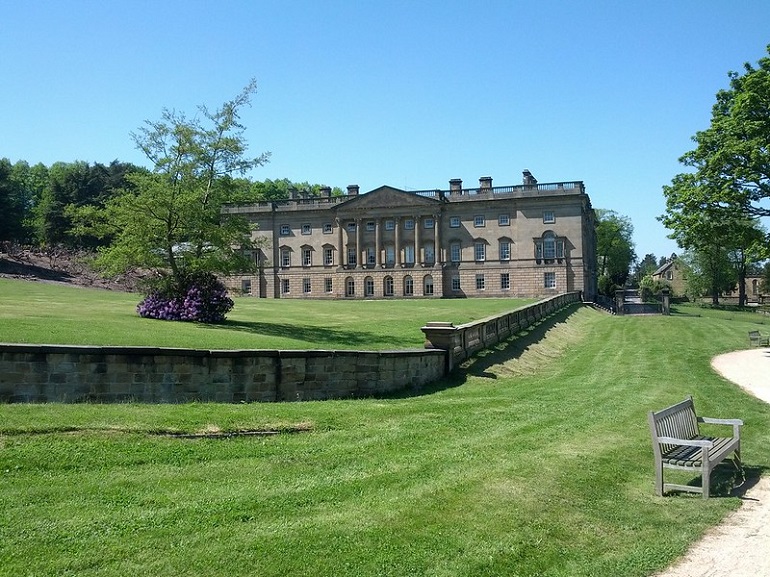
History
Wentworth Castle stands as one of South Yorkshire's most fascinating country houses, born from a bitter family feud that shaped its very existence. In 1708, Thomas Wentworth, Baron Raby, purchased the estate then known as Stainborough after being denied what he believed was his rightful inheritance of Wentworth Woodhouse, which had passed to his cousin Thomas Watson instead. Determined to rival his cousin's grand estate just seven miles away, Thomas transformed the modest existing house into a magnificent seat worthy of his ambitions. His efforts were rewarded in 1711 when Queen Anne revived the Earldom of Strafford in his favour, making him the 1st Earl of Strafford of the second creation. Between 1710 and 1720, he commissioned architect John Bedt to design the spectacular 180-foot Baroque east wing, complete with a long gallery divided by veined marble Corinthian columns to display his impressive art collection acquired during his diplomatic service in Prussia.
The estate's development continued through successive generations, each leaving their architectural mark on both house and grounds. Thomas's most dramatic gesture was the construction of Stainborough Castle, a mock medieval folly with four towers named after his children, built on the estate's highest point between 1727 and 1731. Upon completion of this romantic ruin, he renamed the entire estate Wentworth Castle in 1731, though it was neither at Wentworth nor truly a castle. His son William, the 2nd Earl of Strafford, embraced the fashionable naturalistic landscape movement by engaging Lancelot 'Capability' Brown to redesign the grounds and added the elegant Palladian south wing between 1759 and 1764. The 19th century brought further expansion under the Vernon-Wentworth family, who inherited following the extinction of the earldom in 1799, adding the Victorian west wing and the delicate iron-framed conservatory, whilst entertaining royalty including Prince Albert Victor, Duke of Clarence and Avondale.
The 20th century marked a new chapter when the estate was sold to Barnsley education authorities in 1949 for £26,000, eventually becoming home to the Northern College for Residential and Community Education. After decades of decline, the Wentworth Castle Heritage Trust embarked on ambitious restoration projects from 2001, spending £15.2 million on the first phase of restoration completed in 2007. The magnificent Grade II* listed Victorian conservatory was painstakingly restored between 2012 and 2013 at a cost of £3.7 million, following its appearance on the BBC's Restoration programme. Despite financial difficulties forcing the closure of the gardens in 2017, a new partnership between the National Trust, Northern College, and Barnsley Metropolitan Borough Council successfully reopened the gardens and parkland to the public on 8 June 2019. Today, visitors can explore the only Grade I listed landscape in South Yorkshire, encompassing the restored house, the romantic Stainborough Castle folly, and 40 acres of formal pleasure grounds that tell the remarkable story of one family's determination to create a legacy.
Description
Wentworth Castle: A Magnificent Baroque and Palladian Estate
Wentworth Castle stands as one of England's most remarkable examples of 18th-century architectural grandeur, showcasing a stunning blend of Baroque and Palladian styles that has earned it Grade I listing status. Located at Stainborough near Barnsley in South Yorkshire, this magnificent country house now serves as home to Northern College for Residential and Community Education, whilst its spectacular gardens remain open to the public under National Trust stewardship.
The Architecture
The castle presents two distinctly contrasting yet harmonious façades that demonstrate the evolution of English architectural taste over the 18th century.
The East Range (1709-1714)
The Baroque east front serves as the castle's most dramatic elevation, stretching an impressive 15 bays wide with slightly projecting centre and end sections crowned by an elegant balustrade. The central three bays display gloriously ornate Baroque detailing, featuring soaring Corinthian pilasters and magnificent stone carvings above both the entrance door and first-floor windows. The centrepiece carving depicts the Order of the Garter, surrounded by elaborate naturalistic motifs and winged creatures that exemplify the exuberant Baroque style.
Sir Nikolaus Pevsner praised this east range as displaying "palatial splendour uncommon in England," and indeed, the façade has been described as "a remarkable and almost unique example of Franco-Prussian architecture in Georgian England." The design bears striking similarities to Chatsworth House, with both estates sharing a distinctly Continental Baroque character that was revolutionary for its time in England.
The South Range (1759-1764)
In contrast, the south range exemplifies the refined Palladian style that dominated mid-18th century English architecture. This elegant 13-bay façade features the classic proportions and restrained ornamentation characteristic of Palladianism. The piano nobile windows display distinctive triangular pediments, whilst the central five bays are dominated by an impressive pediment with carved tympanum, supported by six giant Corinthian columns.
The ground floor displays rusticated stonework, and the slightly projecting end pavilions feature classic Venetian windows with Corinthian columns. Despite the contrasting architectural styles, the two ranges blend harmoniously, with matching upper window treatments and continuous balustrade unifying the composition.
Interior Splendour
Though the castle's contents were largely dispersed in 1948, the interior retains remarkable examples of 18th-century decorative artistry. Monthly guided tours reveal selected rooms that showcase the building's former magnificence.
The Entrance Hall
The entrance hall of the east range preserves its original painted ceiling, divided into decorative bays by fluted Ionic columns. These ceiling paintings depict scenes from classical mythology, created by Italian artists brought over specifically to embellish the interiors with Continental sophistication. Thomas Wentworth travelled to Italy in 1709, acquiring artwork for his future house and reporting with satisfaction: "I have great credit by my pictures. They are all designed for Yorkshire, and I hope to have a better collection there than Mr. Watson."
The Italian Staircase
The Italian staircase remains a particular highlight, with its ceiling displaying the Star of the Order of the Garter as a testament to the original owner's prestigious status. Thomas couldn't resist the temptation to display his personal pride in his elevated position, incorporating this symbol of royal recognition into the decorative scheme.
The Grand Gallery
The castle's most impressive feature represents one of the finest examples of such spaces in England - a grand long gallery stretching an extraordinary 180 feet in length, 24 feet wide, and 30 feet high. Though it currently undergoes restoration work, historical records reveal its former magnificence.
The gallery was designed to display Thomas Wentworth's extensive art collection and was completed in 1724. James Gibbs provided the designs for this spectacular space, as evidenced by a surviving contract for wainscoting "as desined by Mr Gibbs" among Wentworth papers. The gallery is screened into three divisions by veined marble Corinthian columns with gilded capitals, with corresponding pilasters against projecting piers. In the intervening spaces, four marble copies of Roman sculptures on block plinths survived until the twentieth century.
The Grand Suite of Parade Rooms
The ground floor of the east range featured a magnificent suite of parade rooms extending from north to south. The room at the north end boasted a ceiling allegory of Plenty, whilst the south end displayed one depicting Fame. These allegorical ceiling paintings represented the height of Baroque decorative artistry, celebrating themes of abundance and renown appropriate to a nobleman's residence.
The Queen Anne Suite
On the first floor, the Queen Anne suite of rooms was designed as an enfilade of ante-room, bedroom and parlour in the Continental style first popularised during that monarch's reign. This formal arrangement of interconnected rooms allowed for ceremonial progression through the spaces, reflecting the sophisticated court etiquette of the period.
Window Details and Craftsmanship
Surviving correspondence from March-April 1714 between Strafford and William Thornton reveals the attention to detail lavished upon even the window arrangements. The options discussed were for windows four panes wide, as done in the best houses of the period using crown glass, or for larger panes three panes across, which required the more expensive plate glass. Strafford opted for the latter, demonstrating his commitment to achieving the finest possible finish throughout the interior.
Decorative Elements
The original house from around 1670 also contributes to the interior's character, with the entrance hall featuring a bolection-moulded fireplace with cornice and wooden Jacobean overmantel, along with matching door architrave. This earlier section provides an intriguing contrast to the later Baroque and Palladian additions.
The Gardens and Parkland
Wentworth Castle Gardens hold the distinction of being South Yorkshire's only Grade I listed landscape, encompassing 500 acres of meticulously designed parkland that showcases three centuries of evolving garden design. The estate boasts an extraordinary collection of 26 listed buildings and monuments, making it one of England's most architecturally rich landscapes.
Formal Gardens
The formal gardens near the castle provide a genteel introduction to the estate's horticultural splendours. These carefully manicured spaces display precise symmetry adorned with colourful seasonal displays, sculptures, and water features that reflect the 18th-century taste for ordered beauty.
The Conservatory
A magnificent Victorian conservatory, dating from 1885 and recently restored to its original glory, houses an impressive collection of plants from around the world. This elegant glasshouse serves as a botanical sanctuary where visitors can encounter exotic species in a controlled environment that protects them from Yorkshire's changeable climate.
Woodland and Parkland
The extensive parkland offers countryside views across rolling terrain where herds of fallow and red deer roam freely, adding a touch of wilderness to the cultivated landscape. Winding paths lead visitors through mature woodland where ancient trees create natural cathedral spaces.
Notable features include Lady Lucy's Walk, an impressive avenue of lime trees that leads upwards into the parkland, and various follies and monuments scattered throughout the grounds. The estate contains some of the earliest Gothic follies in England, including a hilltop castle folly that predates many similar structures elsewhere.
Seasonal Displays
The gardens are particularly renowned for their spectacular displays of camellias, rhododendrons, azaleas, and magnolias, which provide seasonal bursts of colour and fragrance throughout the year. These plantings create a succession of bloom from early spring through to late autumn, ensuring that each season offers its own particular beauty.
Visitor Experience
Today's visitors can explore both the architectural magnificence of the castle exterior and the extensive gardens and parkland. The National Trust, in partnership with Northern College and Barnsley Museums, maintains the estate as a place where historical grandeur meets educational purpose.
The grounds offer facilities for visitors of all abilities, including wheelchair access to many areas, and dogs are welcome on leads throughout the parkland. A tearoom provides refreshments, whilst a children's playground ensures younger visitors can enjoy their visit.
The estate operates as a unique partnership that demonstrates how historic properties can be preserved whilst serving contemporary educational and community purposes, making Wentworth Castle not merely a relic of past grandeur, but a living institution that continues to serve the public good.
Getting There
By car, exit the M1 motorway at Junction 37 towards Barnsley and follow the brown tourist signs to Wentworth Castle, using postcode S75 3EN for satellite navigation which will direct you to the visitor car park via Park Drive. By train, the nearest railway station is Dodworth, located approximately 1.5 miles from the gardens, whilst Barnsley Interchange is around 3 miles away, with both stations offering regular services from major cities including Sheffield, Leeds, Huddersfield, and Nottingham.
By coach, several bus services operate from Barnsley Interchange to the gardens, including routes 23, 23A, 24, 24A, 34, and 410, which stop on Gilroyd Lane near the Strafford Arms pub in Stainborough village, from where it's approximately a 0.4-mile uphill walk along the visitor driveway to the gardens.
Best Time to Visit
The best time to visit Wentworth Castle & Gardens is during the spring and summer months, when the formal gardens are in full bloom and the weather is typically warmer. Visitors in late spring can see the rhododendrons, which are a particular highlight. A trip during the warmer seasons allows for a more pleasant exploration of the extensive parkland, woodland, and the many monuments dotted across the estate. The site is open all year, and an autumn visit offers the beauty of changing leaves, but the full splendour of the grounds is best appreciated in the lushness of spring and summer. Furthermore, the estate has extended opening hours during the summer, giving you more time to enjoy the scenery.