


 Ireland Guide
 Scotland Guide
 Wales Guide
| Contents |
|---|
Introduction
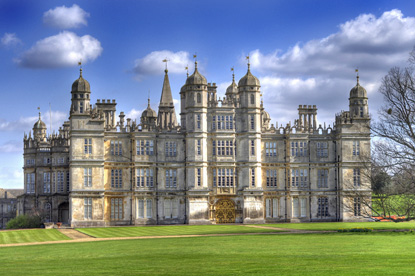
Burghley House, located near Stamford, Lincolnshire, stands as one of the largest and grandest surviving houses of the sixteenth century and a magnificent example of Elizabethan 'prodigy' houses. Built between 1555 and 1587 by William Cecil, Lord High Treasurer to Queen Elizabeth I, this Tudor-era country house showcases the ambition and vision of the most powerful courtier of the first Elizabethan age. Visitors can explore the original soaring Tudor kitchen, tour the 18 State Rooms, descend the Hell Staircase painted by Antonio Verrio, and visit the Great Hall, once used as a banqueting hall in Elizabethan days. The house contains one of the largest private collections of Italian art, unique examples of Chinese and Japanese porcelain, and superb items of 18th Century furniture. Beyond the house itself, guests can enjoy the Gardens of Surprises, the Sculpture Garden designed by 'Capability' Brown, the woodland adventure play area called Hide & Secrets, and stroll through the historic 300-acre deer park.
Interesting Facts about Burghley House
- Burghley House, one of England's largest and grandest Elizabethan houses, was built between 1555 and 1587 by William Cecil, Lord High Treasurer to Queen Elizabeth I.
- The house boasts 35 major rooms on the ground and first floors, over 100 rooms in total, and 76 chimneys.
- Its roof spans nearly an acre, showcasing the immense scale of this Tudor mansion.
- The stone used in construction was a hard, shelly limestone quarried from nearby Kingscliffe, land owned by Cecil himself.
- Burghley's west front, featuring a grand gatehouse, was originally intended to be the main entrance and was completed in 1577.
- The house's State Rooms are adorned with breathtaking artworks, including the Heaven Room and Hell Staircase painted by Italian artist Antonio Verrio.
- Burghley House possesses one of the finest private collections of Italian Old Master paintings and is renowned for its oriental and European ceramics.
- The historic grounds were landscaped by the famous Lancelot 'Capability' Brown, who also designed the extensive stables and Orangery.
- A herd of fallow deer still roams the parkland surrounding Burghley House, continuing a centuries-old tradition.
- The Cecil family, descendants of William Cecil, continue to reside in the house to this day, 465 years after its construction began.

History
Burghley House stands as one of the grandest examples of Elizabethan architecture in England. Conceived by William Cecil, Lord High Treasurer to Queen Elizabeth I, the house was built between 1555 and 1587. Cecil, arguably the most powerful courtier of the first Elizabethan age, designed Burghley as a testament to his ambition and vision. The construction began with the east range, using hard, shelly limestone quarried from Cecil's nearby land at Kingscliffe. By 1564, the east and south ranges were largely complete, though progress was temporarily halted when Cecil acquired and expanded Theobalds, a property north of London.
As Burghley House neared completion, it boasted two distinct architectural characters. From the grounds and gardens, the building presented a late-medieval English style, with grids of windows, boxy proportions, and parapets adorned with chimneys and turrets. In contrast, the internal courtyard showcased the most complete and ambitious neo-Classical composition surviving from Elizabethan England. The west front, featuring a great gatehouse originally intended as the main entrance, was finished in 1577, whilst the north front was completed in 1587. The house's grandeur reflected not only Cecil's wealth and power but also the optimism and stability of Elizabeth I's reign, as powerful men built great houses designed as homes rather than defensible castles.
Over the centuries, Burghley House has undergone several modifications and improvements. In the late 17th century, the 5th Earl inserted arched windows on the south front, possibly to repair damage from the Civil War. The 18th century saw significant changes under Brownlow, the 9th Earl, who employed the renowned Lancelot 'Capability' Brown as both landscape designer and architect. Brown built extensive stables, an Orangery, and redesigned parts of the house and grounds. Further alterations were made in the 19th century, including the enclosure of a corridor surrounding the ground and first-floor levels of the Inner Court. Today, Burghley House remains one of the most spectacular and well-preserved Elizabethan houses in England, offering visitors a glimpse into the grandeur of a bygone era.
Description
Burghley House stands as one of England's most magnificent Elizabethan prodigy houses, an architectural marvel that commands attention with its imposing presence. Built between 1555 and 1587, this grand country house exemplifies the pinnacle of Tudor architecture with its distinctive symmetrical façade, ornate stonework, and soaring chimneys that punctuate the skyline. The exterior is a symphony of limestone, featuring intricate carvings, heraldic emblems, and decorative friezes that speak to the wealth and status of its original owner, William Cecil, Lord Burghley.
The house presents a perfect square layout with corner towers and a central courtyard, creating a harmonious balance that was revolutionary for its time. As you approach the main entrance, your gaze is drawn upward to the elaborate roofline adorned with obelisks, cupolas, and fanciful turrets that create a dramatic silhouette against the Lincolnshire sky. The windows, arranged in perfect symmetry, feature mullioned and transomed designs typical of the period, allowing natural light to flood the interior spaces.
The Magnificent Interior
Stepping inside Burghley House reveals a treasure trove of artistic and historical splendour. The Great Hall, with its soaring hammer-beam ceiling and enormous fireplace, immediately transports visitors to the Elizabethan era when this space would have bustled with activity during grand banquets and entertainments. The walls are adorned with tapestries and ancestral portraits that chronicle the Cecil family's illustrious history.

The Heaven Room represents perhaps the most spectacular interior space, featuring Antonio Verrio's breathtaking ceiling fresco depicting Olympian gods in various scenes of revelry. This masterpiece of trompe l'oeil painting creates an illusion of infinite space, with figures seemingly floating above visitors' heads in a celestial tableau. Adjacent to this is the equally impressive Hell Staircase, where Verrio's darker vision depicts tormented souls and demonic figures in vivid detail.
The State Rooms showcase an unparalleled collection of fine furniture, including pieces by Thomas Chippendale and William Kent. Exquisite Chinese and Japanese porcelain, collected during the 18th and 19th centuries, adorns cabinets and mantlepieces throughout. The Long Gallery, stretching nearly 40 metres, displays Italian Old Master paintings alongside family portraits by renowned artists such as Sir Joshua Reynolds and Thomas Gainsborough.
The Billiard Room, Bow Room, and Blue Silk Bedroom each present their own distinct character, with sumptuous textiles, gilded mouldings, and marquetry furniture creating an atmosphere of refined opulence. The Pagoda Room houses a remarkable collection of Oriental lacquerware and porcelain, reflecting the 18th-century fascination with chinoiserie.
The Sculpture Garden: Art Amidst Nature
The Sculpture Garden at Burghley offers a contemporary counterpoint to the historic house, featuring works by modern British and international artists set against the backdrop of Capability Brown's landscaping. As you meander along winding paths, sculptures emerge from behind ancient trees or stand boldly in clearings, creating moments of surprise and contemplation.
Bronze figures by Elisabeth Frink stand in dialogue with abstract forms by Lynn Chadwick, while site-specific installations respond to the natural environment, changing with the seasons and weather conditions. The sculptures range from representational to abstract, with materials including bronze, steel, stone, and glass, creating a diverse artistic experience that complements the natural beauty of the surroundings.
Wildflower meadows provide a soft, colourful carpet during summer months, attracting butterflies and bees that add movement and life to the artistic landscape. Ancient oak trees, some over 400 years old, create natural frames for viewing both the sculptures and glimpses of the house beyond. The garden's thoughtful design creates a series of outdoor 'rooms', each with its own character and artistic focus.
The Garden of Surprises: Elizabethan Whimsy
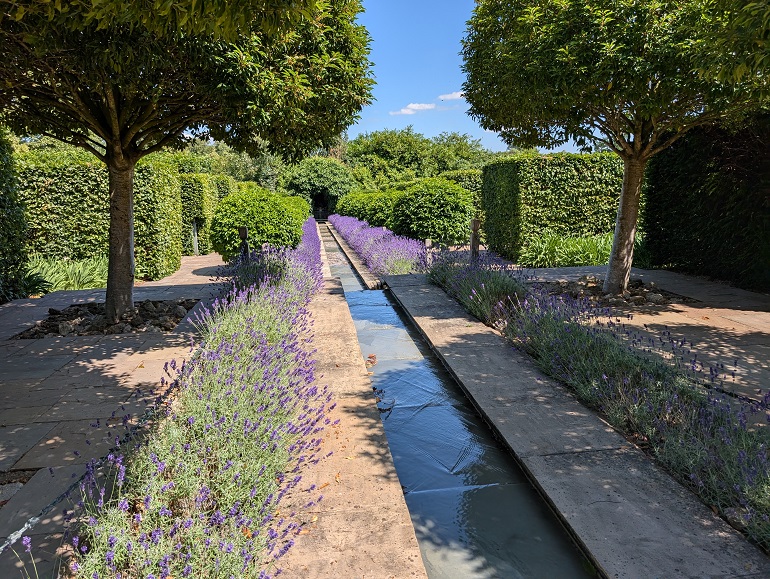
The Garden of Surprises delightfully recreates the sense of wonder and playfulness that characterised Elizabethan garden design. Concealed behind tall yew hedges, this garden reveals itself gradually, with each turn offering a new delight. Water features prominently, with jets that spring unexpectedly from the ground, misty arbours that create rainbow effects in the sunlight, and a central fountain where water cascades over a series of stone basins.
The Moss House provides a cool, verdant retreat on warm days, its interior walls lined with different varieties of moss creating a living tapestry of greens and browns. Nearby, the Mirror Maze challenges visitors to find their way through reflective panels that multiply the surrounding garden in bewildering ways.
Neptune's Grotto presents a mysterious underground chamber adorned with shells, fossils, and semi-precious stones embedded in the walls. Water trickles down the sides, creating a meditative soundscape that enhances the otherworldly atmosphere. The Longitude and Latitude Garden incorporates astronomical elements, with stone markers indicating celestial alignments that would have fascinated the scientifically-minded Elizabethans.
Interactive elements abound, inviting visitors of all ages to engage with the garden through touch, sound, and movement. Speaking tubes allow whispered conversations between distant points, while optical illusions play with perspective and perception. Aromatic plants such as lavender, rosemary, and thyme appeal to the sense of smell, completing the multisensory experience.
The South Gardens: Formal Elegance
The South Gardens present a more formal aspect of Burghley's outdoor spaces, with geometric patterns and carefully planned vistas that complement the architectural symmetry of the house. Immaculately clipped yew hedges form the backbone of these gardens, creating green walls that divide the space into distinct 'rooms' and provide shelter from prevailing winds.
The Rose Garden showcases over 150 varieties of roses, from historic specimens that would have been familiar to the Elizabethans to modern David Austin cultivars selected for their fragrance and disease resistance. During summer months, the air is perfumed with their scent, while their colours range from purest white through soft pinks to deep crimson and purple.
Ornamental fountains provide focal points throughout the South Gardens, their basins adorned with terracotta urns planted with trailing geraniums and lobelia in summer. The gentle sound of water creates a soothing backdrop to the visual splendour. Herbaceous borders burst with colour from late spring through autumn, with carefully planned succession planting ensuring continuous interest.
The Orangery Garden features citrus trees in decorative pots that are brought outdoors during warmer months, creating a Mediterranean atmosphere. Nearby, the Parterre Garden presents intricate patterns formed by low box hedges filled with seasonal bedding plants, creating a tapestry of colour when viewed from the house's upper windows.
Ancient specimen trees provide structure and historical continuity, including a magnificent cedar of Lebanon planted in the 18th century and several venerable oak trees that predate the house itself. These arboreal giants cast dappled shade across lawns that roll gently toward the parkland beyond.
Capability Brown's Parkland: The Quintessential English Landscape
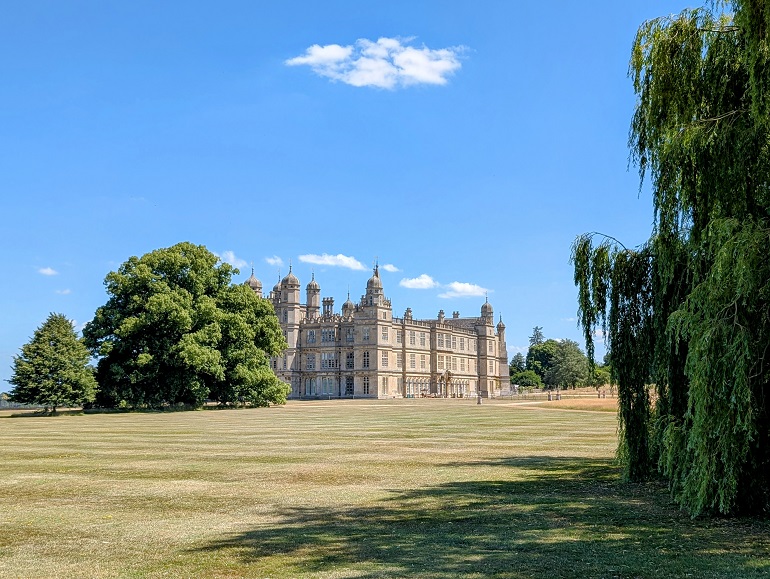
Surrounding Burghley House is one of Capability Brown's most ambitious landscape designs, covering over 2,000 acres of rolling countryside. Brown's genius lay in creating seemingly natural landscapes that were, in fact, carefully engineered to present idealised views and vistas. At Burghley, his vision reaches its fullest expression in sweeping lawns that flow seamlessly into the wider countryside.
The serpentine lake, created by damming and widening the River Welland, reflects the sky and surrounding trees, doubling the visual impact of the landscape. Brown's characteristic clumps of trees—typically oak, beech, and lime—are strategically placed to frame views of the house from various vantage points throughout the park. These tree groupings appear natural but are carefully composed to guide the eye and create a sense of depth and perspective.
The Lion Bridge, a elegant stone structure with balustrades adorned with sculpted lions, spans the lake at its narrowest point, providing both a practical crossing and a picturesque focal point when viewed from the house. From the bridge, visitors can enjoy uninterrupted views across the water to the house, seeing it reflected in the lake on still days.
The parkland supports diverse wildlife, including a herd of fallow deer that has roamed these grounds since medieval times. Red kites soar overhead, their distinctive forked tails silhouetted against the sky, while kingfishers flash electric blue along the waterways. Ancient oak trees, some predating Brown's landscaping by centuries, provide habitat for countless species of insects, birds, and small mammals.
Walking paths meander through the parkland, allowing visitors to experience the landscape as Brown intended—as a series of unfolding views and discoveries. A particularly lovely route follows the lake shore, where weeping willows trail their branches in the water and waterfowl nest among the reeds. In spring, the woodland floor is carpeted with bluebells, creating a magical azure haze beneath the canopy of emerging leaves.
The ha-ha, an ingenious sunken wall that creates a barrier to livestock without interrupting the view, allows the parkland to flow visually into the gardens surrounding the house. This clever device, a hallmark of Brown's designs, maintains the illusion of a boundless landscape while keeping grazing animals at a safe distance from the formal gardens.
The Walled Gardens: Productive Beauty
Tucked away behind high brick walls that trap heat and provide shelter from harsh winds lie Burghley's productive gardens. These spaces combine utility with beauty, supplying the house with fresh produce while delighting the eye with their orderly abundance. The kitchen garden features geometric beds filled with heritage vegetables, herbs, and soft fruits arranged according to traditional principles.
Espaliered fruit trees—apple, pear, plum, and cherry—are trained against the sun-warmed walls, their branches spread in elegant fans that maximise fruit production. In spring, these trees create a spectacular display of blossom, followed by summer abundance as the fruits develop and ripen. Beehives occupy a sunny corner, their industrious inhabitants ensuring good pollination throughout the gardens.
The cutting garden provides flowers for the house throughout the growing season, with dahlias, roses, sweet peas, and zinnias creating blocks of vibrant colour. Paths of crushed limestone wind between the beds, their pale colour contrasting beautifully with the rich earth and verdant growth. Victorian-style glasshouses shelter tender plants and provide growing space for exotic fruits such as peaches, nectarines, and grapes.
The herb garden presents a fascinating collection of medicinal, culinary, and aromatic plants arranged according to their traditional uses. Many varieties grown here would have been familiar to Tudor gardeners, including varieties mentioned in Shakespeare's plays and contemporary herbals. The geometric layout, with a central sundial, reflects Renaissance design principles that would have influenced the earliest gardens at Burghley.
Getting There
To reach Burghley House, follow these directions: By car, take the Stamford B1081 exit on the A1, signposted to Burghley House, and turn left towards Stamford. Continue past the estate wall and the impressive Bottle Lodges gates, then turn right past the Bull & Swan Pub and proceed for one mile along Barnack Road (B1443), where you will find the Visitors' Entrance on the right. Alternatively, use Sat Nav with the postcode PE9 3JU, but be aware some systems may provide incorrect directions. For public transport, the nearest station is Stamford, about a 30-minute walk or short taxi ride away. There is also a local bus service operated by Delaine that stops near the main entrance. Burghley House offers free parking, including disabled parking and electric vehicle charging points.
Best Time to Visit
The best time to visit Burghley House is from mid-March to early November, when the house and gardens are fully open. During this period, visitors can explore the magnificent State Rooms, stroll through the beautifully landscaped gardens, and enjoy the Adventure Play area. The spring season offers vibrant blooms and fresh greenery, while summer provides long days ideal for exploring the expansive grounds and deer park. Autumn brings a picturesque backdrop of changing foliage, making it a perfect time for photography. If you prefer fewer crowds, consider visiting during the week rather than weekends, especially during peak summer months. Additionally, the annual Burghley Horse Trials, typically held in early September, attract large crowds, so plan accordingly if you wish to avoid them.