


 Ireland Guide
 Scotland Guide
 Wales Guide
| Contents |
|---|
Introduction
Halifax, the administrative centre of Calderdale in West Yorkshire, developed as a major woollen-manufacturing town during the Industrial Revolution, a legacy still evident in its Victorian streetscape and the landmark Piece Hall, an 18th-century cloth market now filled with shops and galleries. Situated 15 km west of Bradford and served by direct rail links to Leeds and Manchester, it provides a practical base for exploring the South Pennines. Highlights include Halifax Minster, the interactive Eureka! The National Children’s Museum, and Bankfield Museum housed in a Victorian mansion. Regular indoor and outdoor markets, independent cafés, and a growing craft-beer scene complement green spaces such as Shibden Park, while nearby hill villages offer walking routes with views across the Calder Valley.
Interesting Facts about Halifax
- Piece Hall opened on 1 January 1779 as a vast cloth hall with 315 trading rooms for woollen cloth.
- Halifax was notorious for its gibbet, an early guillotine last used in 1650, and a replica now stands on Gibbet Street.
- During the Industrial Revolution the town became a global centre of the wool trade, earning a reputation as England’s “cloth capital”.
- Wainhouse Tower, constructed between 1871 and 1875, is widely regarded as the tallest folly in the world at about 84 metres.
- Halifax Town Hall, opened in 1863, was designed by Sir Charles Barry, the architect of the Houses of Parliament.
- The Dean Clough complex, over 800 metres long, was once among the largest carpet factories on Earth.
- Mackintosh’s factory, founded in 1890, created enduring chocolate favourites such as Quality Street and Rolo.
- Halifax plc began here in 1853 as a local building society before growing into a nationwide bank.
- Astronomer William Herschel, discoverer of Uranus, served as the first organist of Halifax Minster in 1766.
- The town is twinned with Aachen in Germany, commemorated locally by the A58 stretch named “Aachen Way”.
History
Early Origins and Medieval Growth
Halifax’s name was first recorded around 1091 as “Halyfax,” deriving from Old English halh-gefeaxe, meaning “area of coarse grass in a nook of land.” It was part of the royal manor of Wakefield in Anglo-Saxon times and granted after the Norman Conquest to William de Warenne, Earl of Surrey. By the 12th century, Halifax had become the religious centre of a vast parish stretching from Brighouse to Heptonstall, anchored by the church of St John the Baptist, parts of which date from that era. Despite its absence from the Domesday Book, the town’s cloth trade is recorded by 1275, and by the late 15th century it led the West Riding in woollen production.
Industrial Expansion and Civic Development
The 18th and 19th centuries saw Halifax transform into a prosperous mill town. In 1779 the iconic Piece Hall opened as a purpose-built cloth hall with 315 rooms for merchants to display unfinished goods. Textile magnates such as John Crossley pioneered carpet manufacture at Dean Clough, while the cotton trade also took root. The town’s wealth funded grand public works: Charles Barry’s Town Hall was completed in 1863, and the Victorian Borough Market, designed in French Renaissance style, opened in 1896. Meanwhile, harsh local justice was epitomised by the gibbet on Gibbet Street, last used in 1650, a reminder of the town’s once-feared execution site.
Modern Legacy and Cultural Heritage
In the 20th century, Halifax retained its banking heritage when the Halifax Permanent Benefit Building Society was founded here in 1853, later becoming part of Lloyds Banking Group. The town is twinned with Aachen, reflected in the nearby A58 “Aachen Way.” Today Halifax blends its industrial past with cultural attractions: Halifax Minster offers architectural continuity from the medieval period, Bankfield Museum displays the original gibbet blade, and centuries-old Shibden Hall recalls the region’s gentry. Its legacy endures in the surviving grey stone mills, cobbled streets and a vibrant market tradition that continues to draw visitors.
Main Attractions
The Piece Hall
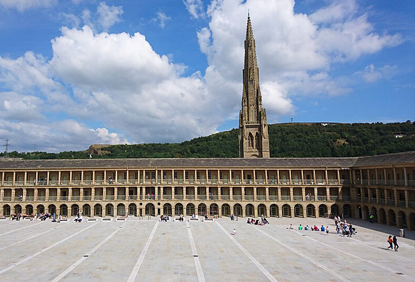
The Piece Hall is a monumental Grade I listed Georgian building that originally opened on New Year's Day in 1779. It was conceived as a place for handloom weavers to sell their "pieces" of woollen cloth, and its vast, open courtyard is enclosed by three tiers of galleries. Following extensive restoration, this unique architectural gem has been reborn as a vibrant cultural and commercial hub. Today, it is home to an array of independent shops, cafes, and bars, while the central courtyard serves as a spectacular venue for regular markets, large-scale music performances, and community festivals, making it a focal point of Halifax's public life.
Shibden Hall and Estate
Dating back to approximately 1420, Shibden Hall is a historic timber-framed house that offers a fascinating insight into the lives of its former residents over six centuries. The hall is most famously associated with the 19th-century diarist, landowner, and traveller Anne Lister, whose life was the subject of the television series *Gentleman Jack*. The house is set within the 32-hectare Shibden Estate, which features beautifully restored ornamental gardens, woodland paths, a boating lake, and a miniature railway that operates seasonally, providing a comprehensive historical and recreational experience for visitors.
Shibden Park
Forming the public grounds of the historic Shibden Estate, Shibden Park is a popular destination for recreation and leisure. This landscaped parkland offers a variety of attractions, including pleasant walking trails through woodlands and past gardens, a boating lake where visitors can hire boats, and a miniature railway that provides rides during the warmer months. With a children's play area and ample space for picnics, the park is a cherished green space for both local families and tourists visiting the adjacent Shibden Hall.
Halifax Minster
With a history stretching back over 900 years, Halifax Minster, dedicated to St John the Baptist, is a Grade I listed parish church of significant historical and architectural importance. Its distinctive features include beautiful stained-glass windows, intricate carved woodwork, and the Jacobean-era box pews. The Minster remains an active place of worship and a community hub, hosting occasional music concerts and events. It is also the final resting place of Anne Lister, whose tomb is located within the church, adding another layer of historical interest.
Halifax Borough Market
Halifax Borough Market is a magnificent Victorian indoor market, officially opened in 1896, that continues to thrive as a centre for local commerce. The market hall's stunning architecture, with its ornate decorations and glass roof, provides a grand setting for a wide range of independent stalls. Shoppers can find everything from fresh local produce, such as fish, meat, and vegetables, to artisanal cheeses, baked goods, and small eateries offering diverse cuisines. It stands as a testament to Halifax's civic pride and remains a bustling, traditional shopping destination.
Victoria Theatre
An elegant Edwardian venue, the Victoria Theatre opened in 1901 and has been a cornerstone of Halifax's cultural scene ever since. Located centrally, the theatre retains much of its original character and provides an intimate setting for a wide variety of live performances. Its programme is diverse, featuring touring West End musicals, plays, stand-up comedy, classical concerts, and popular music acts, ensuring it caters to a broad range of tastes and continues to be a major entertainment venue for the region.
Dean Clough
Dean Clough is a vast complex of 19th-century former carpet mills that has been impressively repurposed into a dynamic mixed-use destination. Spanning half a mile in length, this site of significant industrial heritage now contains a thriving community of businesses, art galleries, restaurants, bars, and even a theatre. The striking industrial architecture provides a unique backdrop for the contemporary cultural and commercial activities within, making Dean Clough a symbol of successful urban regeneration and a key location for arts and business in Calderdale.
Wainhouse Tower
Standing at 84 metres (275 feet), Wainhouse Tower is a striking ornate chimney, famously known as the tallest folly in the world. It was constructed between 1871 and 1875, originally as a chimney for a local dye works, but its elaborate design goes far beyond functional necessity. The tower is open to the public on specific bank holidays, allowing the adventurous to climb its 403-step spiral staircase. Those who reach the top are rewarded with breathtaking panoramic views over Halifax and the surrounding Calderdale landscape from the viewing platform.
Manor Heath Park and Jungle Experience
Manor Heath Park is a well-maintained Victorian park that has earned Green Flag and Yorkshire in Bloom awards for its quality. It provides a classic park experience with open lawns, woodland walks, a children’s play area, and designated picnic spots. A unique feature of the park is the "Jungle Experience," a tropical greenhouse that houses a collection of exotic plants, butterflies, and small animals including terrapins and fish from around the world. This combination makes it an especially popular attraction for families.
Square Chapel Arts Centre
The Square Chapel Arts Centre is a vibrant cultural venue housed in a beautifully restored Grade II* listed Georgian non-conformist chapel, dating from 1772. Following a sensitive redevelopment project, the chapel and its adjoining buildings have been transformed into a modern centre for the arts. It hosts a rich and varied programme that includes independent cinema, live music, theatre productions, and community workshops. Complete with a popular cafe and bar, the centre serves as a welcoming and accessible cultural hub for the town.
Halifax Town Hall
A masterpiece of Victorian architecture, Halifax Town Hall was designed by Sir Charles Barry, the renowned architect who also designed the Houses of Parliament in London. Opened in 1863, the building is celebrated for its ornate exterior, imposing clock tower, and lavishly decorated interiors, which feature fine stonework, sculptures, and stained glass. The Town Hall remains the administrative centre for the borough, and guided tours of its impressive civic spaces are available by prior arrangement, offering a glimpse into its architectural splendour.
Ogden Water Country Park
Located on the outskirts of Halifax, Ogden Water Country Park is a designated Local Nature Reserve centred around a 34-acre reservoir. The park is a haven for wildlife and a popular spot for outdoor enthusiasts. It offers well-maintained woodland walking trails that circumnavigate the water, providing excellent opportunities for gentle strolls, birdwatching, and enjoying the peaceful scenery. With picnic areas and a visitor centre, it is an ideal location for escaping the town and engaging with the natural environment.
Top Museums
Textile Heritage and Art Museums
Within Halifax’s cultural quarter, two venues stand out for their celebration of textile heritage and artistic endeavour.
Bankfield Museum
The Bankfield Museum occupies a grand Victorian villa set within Ackroyd Park, where its permanent galleries display a rich collection of costumes and textiles that chart the evolution of fashion and fabric production both locally and internationally. Visitors can marvel at sumptuous period garments alongside intricate weavings and lace, while temporary exhibitions draw on contemporary design themes to create an intriguing dialogue between the past and present. The building itself, with its ornate façade and domestic rooms, provides a fitting backdrop to exhibits exploring the social dimensions of clothing, from everyday wear to ceremonial attire.
The Piece Hall
Nearby, The Piece Hall offers a very different perspective on the textile trade: this sprawling 18th-century cloth hall was originally conceived as a trading hub for fine worsted cloth and retains its iconic quadrangle of arched arcades. Today it has been imaginatively repurposed, hosting galleries that interpret the story of Halifax as a cloth-making powerhouse alongside a selection of artisanal shops, cafés and performance spaces. The combination of heritage architecture, contemporary art installations and regular live music events makes The Piece Hall a focal point for both local residents and cultural tourists seeking an immersive experience of Yorkshire’s textile legacy.
Industrial and Rural History Museums
The landscapes surrounding Halifax bear witness to an era when water-powered mills and steam-driven factories transformed West Yorkshire into an industrial powerhouse. Two institutions capture this transformative period from complementary perspectives.
Colne Valley Museum
Set amidst the rolling hills of Golcar, the Colne Valley Museum is more akin to a living archive of rural life during the heyday of the woollen industry. Visitors follow a series of authentic mill workers’ cottages and farm buildings brought together to form a village scene, where costumed interpreters demonstrate handloom weaving, butter churning and local crafts. The open-air arrangement allows guests to appreciate the logistical challenges of transporting raw wool and finished cloth in a pre-mechanised age, while storytelling programmes evoke the close-knit communities that once clustered along the valley.
Calderdale Industrial Museum
In contrast, the Calderdale Industrial Museum, housed in an old mill in central Halifax, focuses on the machinery-driven revolution that underpinned mass production. A formidable array of steam engines, models of textile machinery and factory artefacts reveals how mechanisation reshaped labour practices and urban growth. Enthusiastic volunteers conduct guided tours that explain the engineering principles behind beam engines and carding machines, inviting visitors to understand the technical ingenuity that powered Halifax’s mills. Both museums combine to paint a nuanced picture of industrialisation, from the domestic scale of valley families to the vast mechanics of factory floors.
Historic Houses and Country Parks
Beyond the mills and museums, Halifax’s hinterland is studded with stately homes that chart the region’s social history through the private lives of prominent families. Two properties stand out for their architectural significance and immersive grounds.
Oakwell Hall & Country Park
Oakwell Hall & Country Park offers a journey into a 17th-century gentry household, where the manor house retains period furnishings and domestic rooms arranged much as they would have been in the 1690s. The adjacent country park extends over woodlands and meadowland, with waymarked trails that lead past restored gardens, mill ponds and picnic glades. Seasonal events and re-enactments bring the past to life, enabling visitors to appreciate the daily rituals of cooking, weaving and estate management under the open Yorkshire sky.
Shibden Hall
A short drive away, Shibden Hall presents an even older chapter in local history, with origins dating back some six centuries. Its timber-framed structure encompasses rooms furnished to reflect Tudor, Stuart and Georgian styles, while formal gardens and a boating lake afford views across rolling lawns. A miniature railway and woodland paths invite exploration of the estate’s natural landscape, and curatorial displays shed light on the colourful figures who once called the hall home, including pioneering diarist Anne Lister. Together, these sites offer a window into the lives of the region’s landowners, juxtaposing the grandeur of manor-house living with the accessible beauty of surrounding parkland.
Children’s Interactive Museum
Eureka! The National Children’s Museum
For families with younger visitors, Eureka! The National Children’s Museum provides an entirely different mode of engagement, one that emphasises hands-on learning through play. Designed for children up to the age of eleven, its interactive galleries allow young minds to experiment with sound, motion and material science in safe, imaginative environments. From building bridges with oversized blocks to conducting simple experiments in a miniature laboratory, each zone encourages questions and creativity. A dedicated nursery area supports toddlers, while an onsite café and performance space ensure that grown-ups can relax amidst a programme of live demonstrations and story-telling sessions. By prioritising child-centred design and participatory exhibits, Eureka! complements Halifax’s heritage sites, reminding visitors that the region’s past continues to inspire future generations.
Local Cuisine
While visitors can enjoy everything from classic pub meals to authentic Thai tapas, the town's true taste lies in its regional specialities. No foodie trip is complete without trying the inventive British Burrito, a local creation where a large Yorkshire pudding is filled with roast beef and chips, then rolled like a wrap. Other quintessential Yorkshire treats to look out for include the classic Yorkshire pudding itself, best enjoyed with a Sunday roast, the sticky ginger cake known as Parkin, and fruity scones called Fat Rascals. For a savoury option, seek out traditional York Ham, a dry-cured delicacy from the region.
Getting There & Around
By train, Halifax is well-connected to major cities across England with regular services operated by Northern Trains. Direct trains run from London King's Cross via Grand Central Rail, taking approximately 2 hours and 50 minutes, whilst local services connect Halifax to Leeds in around 30 minutes and Bradford in similar time. Trains from Manchester, York, and other Yorkshire towns provide frequent connections throughout the day.
By coach, National Express operates services to Halifax from various destinations including Sheffield, Barnsley, and longer-distance routes from London and the South. Coach travel offers a budget-friendly alternative with the Central Bus Station serving as the main terminus.
By car, Halifax is conveniently located just off the M62 motorway at Junction 24, making it easily accessible from Manchester, Leeds, and Hull. The town is also well-connected via the A58 and A629, providing good road links to surrounding West Yorkshire towns and the broader motorway network.