


 Ireland Guide
 Scotland Guide
 Wales Guide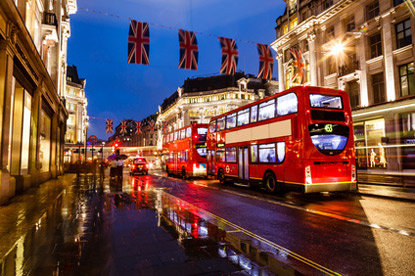
| Contents |
|---|
Public Transports
Getting around London is remarkably straightforward thanks to the city's extensive and integrated public transport network. The capital offers numerous transportation options, from the iconic Underground to scenic river services, making navigation both convenient and enjoyable.
The Underground (The Tube)
The London Underground, affectionately known as "the Tube," forms the backbone of London's transport system. This rapid transit network comprises 12 lines covering most of the city and its suburbs. The Tube is particularly efficient for travelling to, from, and around central London, offering fast and frequent services that avoid street-level traffic.
The Underground operates alongside complementary rail services including the DocklandsDocklands Light Railway (DLR), which serves east and south-east London with innovative driverless trains, and the London Overground, which connects suburban areas across the city. Here is a map of the Underground network.
Night Services
London's Night Tube service operates on Friday and Saturday nights on the Central, Victoria, Jubilee, Northern and Piccadilly lines. Trains run every 10 or 20 minutes throughout the night, cutting late-night journey times by an average of 20 minutes and sometimes by more than an hour. The London Overground Night Service also runs on Friday and Saturday nights, connecting with the Night Tube network at key interchange stations.
London Buses
London's iconic red double-decker buses provide comprehensive coverage throughout the city, reaching areas not served by the Underground. The bus network offers excellent value, with a fixed fare for all journeys regardless of distance. Buses are particularly useful for sightseeing, as they provide opportunities to see London's landmarks whilst travelling.
The bus system operates throughout the night on many routes, ensuring 24-hour connectivity across the capital. All London buses accept contactless payment methods and Oyster cards, but no longer accept cash. As a practical tip, visitors should try to avoid the Underground during weekday rush hours (07:30-09:30 and 16:00-19:00) as it becomes very crowded with commuters, making buses a more comfortable alternative during these times.
Trams and Cable Car
In south London, the Tramlink system operates between Wimbledon, Croydon, Beckenham, and New Addington, providing efficient transport across this region. The tram uses the same payment system as buses—a fixed fare per journey with touch-in validation using Oyster or contactless cards.
For a unique experience, the IFS Cloud Cable Car offers the UK's only urban cable car service, connecting Greenwich to the Royal Victoria Dock across the River Thames. This provides both practical transport to venues like the ExCeL exhibition centre and The O2, plus panoramic views of east London.
River Services
The Thames Clippers (also known as Uber Boat) offer a scenic alternative for getting around London, with regular commuter services stopping at key locations including Westminster, Canary Wharf, and Greenwich. River travel provides an excellent way to avoid traffic whilst enjoying spectacular views of London's landmarks along the Thames. Most river boat services allow folding bicycles on board.
Payment Methods
The most convenient way to pay for public transport is through contactless payment using your bank card or mobile device, or by purchasing an Oyster card. These payment methods work across all forms of public transport and offer the best value fares. The system includes daily fare caps, ensuring you never pay more than necessary for your journeys.
Contactless payment requires no advance preparation—simply touch in at the start of your journey and touch out at the end using the yellow card readers. When your contactless journeys add up to a certain amount in a day or week (Monday to Sunday), you won't be charged any more. An Oyster card requires pre-loading with credit before travel but may offer additional benefits for visitors, including exclusive deals and discounts.
Both payment methods use the same fare structure, with identical daily and weekly capping systems. The key is to always use the same card or device for each journey to ensure proper fare calculation.
Accessibility
London's transport system is increasingly accessible, with Transport for London making substantial efforts to improve accessibility since 2000. All London buses have room for one wheelchair user and can accommodate wheelchairs up to 70cm wide by 120cm long. The entire bus fleet is now low-floor and accessible, making London one of the first major cities globally to achieve this.
For rail services, 93 Underground stations (34%) and 62 Overground stations (54%) have step-free access, with all new Underground stations since 1999 opened as accessible. The Docklands Light Railway, Tramlink, and Elizabeth line are fully accessible with step-free access at every station. All London taxis have been accessible since 2000, able to take wheelchair passengers.
The transport network provides tactile markings on platform edges, contrast-colour facilities for travellers with low vision, audiovisual announcements and information points. TfL offers accessible travel guides including audio Tube maps, large-print maps, and step-free route planning.
Walking and Cycling
Walking remains one of the most rewarding ways to explore London, particularly in central areas where many attractions lie within comfortable walking distance of each other. The city is well-equipped for pedestrians with clear signage and designated crossing points. Before taking the Tube, it's worth checking actual walking distances, as the Underground map isn't geographically accurate—sometimes walking can be quicker than taking the Underground.
Cycling Infrastructure
For cyclists, London offers the Santander Cycles public bike-sharing scheme, with over 750 docking stations and 11,500 bikes available throughout the city. The system is ideal for short journeys, with the first 30 minutes being the most economical option.
London provides extensive cycling facilities including dedicated cycle lanes with raised concrete kerbs, Cycle Superhighways for longer journeys, and Quietways for more peaceful routes through residential areas. Cycle paths run through the royal parks (St. James's Park, Hyde Park, Regent's Park and Green Park), along the Thames Path, and London's canals and waterways.
Cycle parking is widely available with over 20,000 spaces at stations across London, many located near entrances or in dedicated hubs. Secure Cycle Hubs provide covered parking at key locations, whilst on-street parking includes almost 150,000 spaces across the capital. For residents, cycle hangars offer secure residential parking with over 30,000 spaces available through local council applications.
Folding bicycles can be carried on almost all public transport, whilst full-size bicycles are permitted on surface lines and most services outside rush hours (07:30-09:30 and 16:00-19:00).
Walking Tours and Guided Exploration
London offers numerous guided walking tours that combine transportation with sightseeing. Popular options include free walking tours covering major landmarks like Westminster Abbey, Big Ben, Buckingham Palace, and St. James's Palace. Specialised tours explore specific areas such as Soho, the Old City, or thematic walks like Jack the Ripper tours. These tours typically last 2-3 hours and provide expert local knowledge whilst allowing you to experience London at walking pace.
Taxis and Private Hire
London's transport options include the famous black cabs, whose drivers have passed "The Knowledge" test, ensuring comprehensive street knowledge. These licensed taxis can be hailed on the street or found at designated taxi ranks. Alternatively, private hire vehicles including minicabs and ride-hailing services like Uber provide pre-booked transportation options.
Practical Tips for Visitors
- Traffic and timing considerations: The Underground is generally the most convenient option for central London travel, being fast, regular, and unaffected by traffic. However, checking walking distances first can sometimes reveal quicker routes on foot.
- Night-time travel: Beyond the Night Tube and Overground services, extensive night bus networks ensure 24-hour connectivity across London. Most London Overground Night Service stations have connecting night buses for onward travel.
- Journey planning: The Transport for London website and mobile apps provide real-time information, journey planning, and service updates to help navigate the city efficiently. These tools are particularly useful for checking accessibility options and planning step-free routes.
- Visitor cards: The Visitor Oyster card may provide access to exclusive deals and discounts beyond standard transport fares, making it worthwhile for tourists despite contactless payment being equally convenient for transport itself.