


 Ireland Guide
 Scotland Guide
 Wales Guide
South Bank is London’s premier cultural riverside neighbourhood, stretching along the southern bank of the Thames from Westminster Bridge eastward past Waterloo Bridge towards Blackfriars. This mile-long pedestrian promenade represents one of the most dynamic and culturally rich areas in the capital, where world-class arts venues, landmark attractions, independent creative spaces, and sweeping riverside views come together to create an unmissable London experience. The district rewards both purposeful visits and aimless wandering, with something engaging around almost every corner, from intimate galleries tucked into converted wharfs to grand modernist concert halls hosting international orchestras.
The setting and sense of place
The Queen’s Walk forms the arterial spine of South Bank, a broad, uninterrupted pedestrian pathway that hugs the Thames and offers one of London’s finest urban promenades. Unlike the more formal, monument-studded north bank, the southern riverside feels open, accessible and unpretentious, with wide terraces, lookout points, and informal seating areas where locals and visitors alike pause to watch river traffic glide past. The views across the water are nothing short of spectacular: the Gothic spires of the Palace of Westminster and the clock tower of Big Ben dominate the western panorama, whilst further east the dome of St Paul’s Cathedral rises against the skyline, creating postcard-perfect vistas that shift with the light throughout the day.
The promenade itself is animated by a constant flow of pedestrians, joggers, cyclists and families, creating a convivial, continental atmosphere that feels particularly vibrant on sunny weekends and balmy summer evenings. Street performers stake out pitches near the major landmarks, while pop-up book stalls, food carts and artisan vendors add colour and spontaneity to the scene. The riverside benches and terraces fill with office workers taking lunch breaks, tourists consulting maps, and couples sharing riverside picnics, all framed by the ever-changing theatre of the Thames itself, where Thames Clippers zip past historic barges and tourist boats.
A neighbourhood forged by vision and community
South Bank’s transformation from industrial riverfront to cultural powerhouse is one of London’s great regeneration stories. The area’s modern identity crystallised with the 1951 Festival of Britain, a national celebration of recovery and optimism following the Second World War that gave London the Royal Festival Hall, a revolutionary modernist concert venue that remains the heart of the Southbank Centre today. That post-war spirit of cultural democratisation and architectural ambition set the tone for everything that followed, establishing South Bank as a place where high culture would be accessible, adventurous and open to all.
The 1970s and 1980s brought further cultural anchors, including the National Theatre’s distinctive Brutalist complex and the expansion of the arts institutions that would eventually form the Southbank Centre. But perhaps the most remarkable chapter came through grassroots action in the 1980s, when Coin Street Community Builders, a resident-led cooperative, successfully fought off commercial developers and transformed derelict riverside plots into community-owned spaces. This visionary approach gave the neighbourhood Gabriel’s Wharf and the revitalised OXO Tower Wharf, ensuring that independent makers, small businesses and public space remained central to South Bank’s character even as the area gentrified around them.
The Southbank Centre: Europe’s largest arts complex
Dominating the cultural landscape is the Southbank Centre, a sprawling complex that encompasses multiple venues and outdoor spaces along a key stretch of riverside. At its heart stands the Royal Festival Hall, a Grade I-listed masterpiece of post-war modernism with a 2,700-seat auditorium that hosts everything from symphony orchestras and jazz legends to contemporary world music and spoken word events. The hall’s riverside foyers are destinations in their own right, with floor-to-ceiling windows framing Thames views, comfortable seating areas perfect for pre-concert drinks, and a welcoming atmosphere that invites lingering even if you haven’t booked tickets.
The Queen Elizabeth Hall and the smaller, more intimate Purcell Room provide additional performance spaces for chamber music, contemporary dance, experimental theatre and emerging artists, whilst the Hayward Gallery presents blockbuster contemporary art exhibitions in a distinctive Brutalist building with a rooftop sculpture terrace. Together, these venues present thousands of events annually, creating a cultural programme of extraordinary breadth and ambition. The Southbank Centre’s outdoor spaces are equally important to the neighbourhood’s character: the riverside terraces host open-air festivals, food markets and free entertainment during warmer months, whilst the undercroft spaces beneath the centre have become a celebrated skate park and hub for urban youth culture.
The complex also houses the National Poetry Library, browsable collections of art books, and multiple cafés and bars that range from casual grab-and-go spots to more considered dining rooms. The Queen Elizabeth Hall Roof Garden, a green oasis atop one of the venues, offers meadow planting, secluded seating, and surprising views, providing a peaceful counterpoint to the bustle below. The centre’s commitment to free programming means that on any given day you might encounter impromptu concerts in the foyers, artist talks, family workshops, or simply find a quiet corner to read whilst overlooking the river.
National Theatre: architectural icon and creative powerhouse
The National Theatre commands a prominent riverside position just east of Waterloo Bridge, its uncompromising Brutalist architecture a love-it-or-loathe-it London landmark that has come to define British theatre innovation. Designed by Denys Lasdun and opened in 1976, the building’s horizontal terraces, fly towers and raw concrete surfaces create a sculptural, almost fortress-like presence on the riverbank. But step inside and the interior reveals warm timber finishes, intimate foyer spaces, and three distinct auditoria – the vast Olivier Theatre with its open-stage configuration, the traditional proscenium Lyttleton Theatre, and the flexible black-box Dorfman Theatre – each offering different experiences and programming.
The National Theatre’s mission is to present the full spectrum of drama, from Shakespeare and Greek tragedy to bold new writing and experimental performance, often with the country’s finest actors, directors and designers. Productions frequently transfer to the West End and international stages, whilst NT Live broadcasts bring theatre to cinema screens worldwide. The building’s riverside terraces and foyer bars create a buzzing pre-show atmosphere, and the Terrace Bar offers one of South Bank’s loveliest outdoor drinking spots, with views along the river and a relaxed, creative crowd.
Free exhibitions in the ground-floor galleries explore theatre craft and stage history, whilst backstage tours reveal the extraordinary technical complexity behind major productions. The NT’s bookshop is a treasure trove of playscripts, theatre biographies and performance theory, making it a pilgrimage site for theatre students and enthusiasts. On summer evenings, the terraces come alive with food vendors, live music and outdoor performances, transforming the space into an impromptu festival ground that captures South Bank’s communal, accessible spirit.
BFI Southbank and IMAX: cinema culture and spectacle
Tucked beneath Waterloo Bridge, BFI Southbank is Britain’s leading repertory cinema and archive, with four screens showing an extraordinary range of film: restored classics, international cinema, experimental work, director retrospectives, and curated seasons that might explore anything from silent Soviet cinema to contemporary Korean thrillers. The BFI Mediatheque offers free access to thousands of films and television programmes from the national archive, whilst the Reuben Library houses one of the world’s largest collections of film and television documentation.
The BFI’s riverside café-bar, with its sheltered terrace beneath the bridge arches, creates an atmospheric spot for pre-screening drinks and film discussion, drawing a cinephile crowd who appreciate the programmers’ adventurous selections and commitment to film preservation. Regular festivals, Q&As with directors and actors, and special events make the BFI a living, breathing film culture hub rather than just a cinema. Membership schemes offer discounts and priority booking, rewarding regular visitors who treat the venue as their local arthouse despite being in the heart of tourist London.
A short walk away, the BFI IMAX presents a very different film experience: a massive screen housed in a striking glass drum at the centre of a busy roundabout. The largest cinema screen in Britain, it’s designed for big-budget spectacles, 3D blockbusters, and specially formatted documentaries that exploit the IMAX format’s immersive scale. Whilst less cinephile and more theme-park in its offerings, the IMAX provides a thrilling complement to the BFI’s archive programming, proving that South Bank accommodates both meditative art-house experiences and pure cinematic spectacle.
The London Eye: skyline views and riverside icon
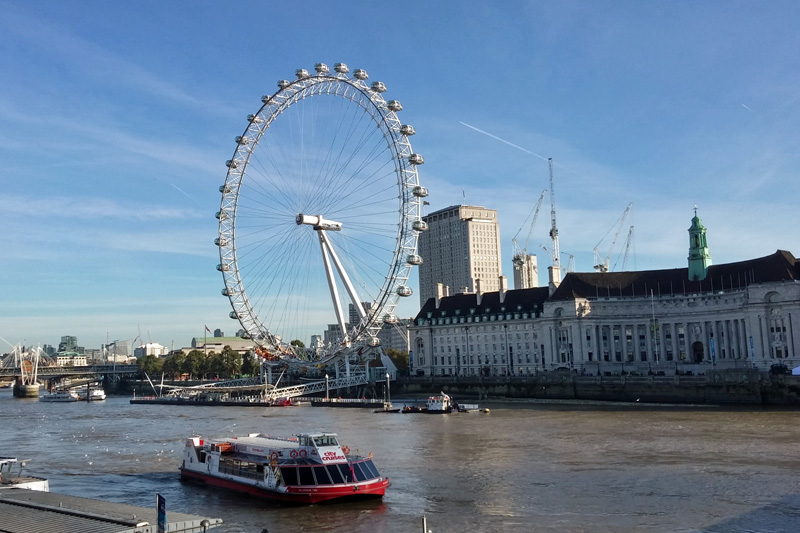
The London Eye has become so embedded in London’s skyline that it’s easy to forget it was installed as a temporary millennium project in 2000. This graceful observation wheel stands 135 metres tall and offers 360-degree views across the capital from its slowly rotating glass capsules. On clear days, visibility extends for dozens of kilometres, taking in landmarks far beyond the centre, though most visitors focus on the immediate panorama: the Palace of Westminster directly across the river, the meandering Thames stretching east through the City, and the patchwork of London neighbourhoods spreading in every direction.
A complete rotation takes about 30 minutes, with the wheel moving slowly enough that passengers can walk around inside the capsules, though most stake out positions at the windows and snap photographs as the views unfold. The experience is undeniably touristy – queues can be substantial despite timed tickets, prices are steep, and the branding can feel heavy-handed – yet the views genuinely reward the investment, particularly at sunset when golden light bathes the city or after dark when London’s illuminated landmarks create a glittering night-time spectacle.
The London Eye anchors the western end of South Bank’s main attraction zone, with Jubilee Gardens providing a green buffer at its base and County Hall – the Eye’s massive Victorian neighbour – housing additional attractions including SEA LIFE London Aquarium and the London Dungeon. The whole area feels purpose-built for visitors, with photo opportunities, souvenir vendors, and street performers creating a carnivalesque atmosphere that contrasts with the more cultured, resident-friendly zones further east along the riverside walk.
SEA LIFE London Aquarium and the London Dungeon
Within County Hall’s grand Victorian shell, SEA LIFE London Aquarium spreads across three floors and multiple themed zones, housing one of Europe’s largest collections of marine life. Highlights include a glass tunnel passing through a massive ocean tank where sharks, rays and sea turtles glide overhead, a Pacific octopus display, penguin colony, and interactive rockpool experiences where children can touch starfish and anemones under supervision. Special exhibitions rotate through, whilst adults-only evening events add cocktails and atmosphere to the usual family-focused experience.
The aquarium succeeds in creating genuinely immersive environments despite its landlocked, basement setting, using clever lighting, sound design and carefully crafted habitats to transport visitors from coral reefs to Antarctic waters. Conservation messages thread through the displays, highlighting threats to ocean ecosystems and the aquarium’s role in breeding programmes and marine research. It’s undeniably commercial and relatively expensive, but delivers a polished, engaging experience that works particularly well for families with young children looking for an indoor attraction regardless of weather.
The London Dungeon occupies adjacent spaces in County Hall, offering a very different kind of immersion: theatrical horror and dark history presented through live actors, special effects, and amusement-park-style rides. Visitors journey through tableaux depicting London’s grisliest moments – plague, fire, Jack the Ripper, Sweeney Todd – with costumed performers delivering gallows humour and jump scares in equal measure. It’s camp, loud, and deliberately sensationalist, aimed squarely at teenagers and adults seeking theatrical thrills rather than historical nuance. The experience culminates in a drop ride that plunges participants through darkness whilst actors deliver final macabre monologues.
Museums: from war to gardens to nursing
The Imperial War Museum stands slightly inland from the main riverside promenade, but remains an essential South Bank destination for anyone interested in 20th and 21st-century conflict. Housed in a former psychiatric hospital with a distinctive domed entrance hall, the museum presents war through multiple lenses: military hardware and technology, personal testimonies and experiences, political context, and consequences for societies and individuals. The permanent galleries covering the First and Second World Wars are exhaustive and deeply moving, using objects, documents, photographs, film and oral histories to create layered narratives that go far beyond simple military chronology.
The Holocaust Exhibition provides a separate, sobering space for contemplating genocide and its aftermath, whilst galleries on contemporary conflict examine ongoing wars and peacekeeping missions with journalism and critical engagement. Special exhibitions tackle specific campaigns, themes or artistic responses to war, whilst the museum’s collection of military aircraft, vehicles and weapons – displayed in the dramatic atrium space – provides visceral reminders of war’s industrial scale. Entry is free, and the museum’s commitment to education, nuance and multiple perspectives makes it essential viewing, easily absorbing several hours of concentrated attention.
The Garden Museum occupies the deconsecrated church of St Mary-at-Lambeth, directly beside Lambeth Palace and a short walk from the main riverside strip. This small but utterly charming museum celebrates British garden history, design and plant collecting through imaginative exhibitions, a recreated 17th-century knot garden in the former churchyard, and an excellent café serving seasonal menus in the atmospheric nave. The church itself is historically significant – John Tradescant, pioneering plant hunter and gardener, is buried here – and visitors can climb the tower for spectacular, often deserted views across the Thames to Westminster.
The Florence Nightingale Museum, located within St Thomas’ Hospital near Westminster Bridge, tells the story of the founder of modern nursing through personal effects, letters, medical instruments, and the actual lamp that gave Nightingale her famous epithet. The museum is compact but thoughtfully curated, exploring Nightingale’s privileged background, her radical determination to enter nursing against family opposition, her transformative work during the Crimean War, and her subsequent campaigns for healthcare reform and hygiene standards that changed medicine forever. Quirky details – including her lifelong love of pet owls – humanise an icon often reduced to legend, whilst the museum’s hospital setting adds poignant context to her revolutionary achievements.
OXO Tower Wharf: design, dining and river views
OXO Tower Wharf rises eight storeys above the riverside between Blackfriars and Waterloo bridges, its distinctive tower and illuminated signage a South Bank landmark since the 1930s. Originally a power station for the Royal Mail, the Art Deco building gained its name and tower when the Oxo beef stock company ingeniously circumvented advertising restrictions by incorporating their brand name into the building’s architecture. After decades of decline, community-led regeneration in the 1990s transformed the wharf into a mixed-use success story combining affordable housing, makers’ studios, design-led retail, galleries and destination dining.
The ground and first floors house independent designer-makers and small galleries showcasing contemporary craft, jewellery, textiles, ceramics and art, creating a browsable creative quarter that feels refreshingly non-corporate. The galleries host rotating exhibitions, whilst the courtyard provides event space and outdoor seating where visitors can rest between browsing. The emphasis is firmly on quality, originality and craftsmanship, with many of the makers working on-site and happy to discuss their processes and commissions.
The eighth floor delivers one of South Bank’s most celebrated dining experiences: the OXO Tower Restaurant, Bar and Brasserie. The restaurant offers fine dining with French-influenced seasonal menus and floor-to-ceiling windows framing extraordinary river views, whilst the adjacent brasserie provides a more relaxed, accessible alternative with similar vistas. The rooftop bar wraps around the tower itself, with both indoor and outdoor terraces perfect for cocktails at sunset when the Thames catches golden light and the city’s landmarks glow in the evening sun. It’s undeniably romantic, sophisticated and priced accordingly, but the views alone justify at least a drink, and booking a window table for a special occasion delivers memories to match the investment.
Gabriel’s Wharf: bohemian enclave and riverside dining
Gabriel’s Wharf occupies a compact riverside plot immediately beside OXO Tower Wharf, presenting a stark contrast in scale and atmosphere. This small cluster of brightly painted wooden units and terraced dining areas feels deliberately village-like and bohemian, a fragment of South Bank’s grassroots past preserved within the larger commercial landscape. Independent boutiques, craft studios, vintage clothing shops and gift stores occupy the ground-floor units, each bringing individual character and quirky stock that rewards browsing.
The wharf’s café-bars and restaurants claim prime riverside terracing, with outdoor tables offering informal dining and drinks with Thames views. The emphasis is on casual, convivial eating – pizzas, burgers, seafood, ice cream – rather than destination dining, creating a relaxed, come-as-you-are atmosphere that contrasts with OXO Tower’s sophistication next door. Gabriel’s Wharf particularly comes alive in summer, when the terraces fill with diners enjoying long, sun-soaked lunches and sundowners whilst watching river traffic and the South Bank promenade’s theatre of daily life.
The Gabriel’s Wharf Arts Festival, held annually, transforms the space with artist demonstrations, live music, craft activities and performances, reinforcing the area’s creative identity and community roots. Even on ordinary days, the wharf maintains a friendly, accessible character that makes it feel like a neighbourhood amenity rather than a tourist trap, despite its riverside location and proximity to major attractions.
Food markets and dining culture
The Southbank Centre Food Market operates on Fridays, Saturdays and Sundays in the space behind Royal Festival Hall, drawing dozens of specialist traders offering global street food, artisan ingredients, craft beverages and sweet treats. The market’s covered location means it operates year-round, and the variety is genuinely impressive: authentic regional cuisines from Ethiopia to Peru, gourmet burgers and hot dogs, vegan specialists, seafood, dumplings, barbecue, crêpes, pastries, cakes, speciality coffee, natural wines, craft beers and ciders all compete for attention in a bustling, aromatic, thoroughly democratic food hall atmosphere.
Communal seating areas fill with market-goers juggling plates and comparing choices, creating a convivial, festival-like buzz that captures South Bank’s accessible, egalitarian character. The market has become a weekend ritual for many Londoners, who come not just for lunch but to browse, graze, and soak up the riverside atmosphere. Prices are reasonable by London standards, and the quality generally high, with traders often running permanent restaurants elsewhere and using the market as a showcase or testing ground for new dishes.
Beyond the market, South Bank offers dining options to suit every budget and mood. Chain restaurants and fast-food outlets cluster near the London Eye and major attractions, providing reliable if uninspiring options for hungry families and time-pressed visitors. More interesting independent restaurants, cafés and bars pepper the riverside walk and side streets, ranging from the elegant Modern British cooking at Skylon in Royal Festival Hall to craft beer specialists, artisan coffee shops, traditional pubs tucked into railway arches, and ethnic eateries serving everything from dim sum to Turkish mezze.
The riverside setting elevates even simple refreshment, with numerous cafés and bars offering outdoor seating or terraces where a coffee or beer becomes an opportunity to pause, people-watch, and appreciate the ever-changing river views. Summer evenings see South Bank’s bars and terraces buzzing with after-work crowds, date-night couples, and pre-theatre gatherings, whilst quieter weekday afternoons offer space to claim a riverside table and linger over lunch.
Parks, gardens and green breathing spaces
Jubilee Gardens provides South Bank’s largest green space, a triangular park between the London Eye and Westminster Bridge that offers welcome lawns, mature trees, pathways and seating areas amidst the riverside bustle. Created for the Queen’s Silver Jubilee in 1977 and redesigned for the Diamond Jubilee in 2012, the gardens host events, festivals and outdoor cinema screenings during summer months, whilst serving as an everyday amenity for picnickers, sunbathers, and office workers seeking lunch breaks in green surroundings. The gardens’ position directly beside the London Eye means they’re often packed with visitors, but the space is large enough to absorb crowds, and quieter corners can usually be found, particularly at the Westminster Bridge end.
Bernie Spain Gardens, located on the riverside between OXO Tower Wharf and Gabriel’s Wharf, offers a more intimate green retreat: a narrow linear park with colourful planting, seating, and direct Thames frontage. Named after a local community activist instrumental in Coin Street’s regeneration success, the gardens provide a perfect spot for contemplative river-watching, reading, or simple appreciation of the plantings, which change character with the seasons. The gardens’ riverside position means you’re never far from the promenade’s activity, but the planting and careful design create a sense of separation and calm that makes this a genuine oasis rather than merely a landscaped thoroughfare.
The Queen Elizabeth Hall Roof Garden, accessed via lift from the Southbank Centre’s riverside level, presents an unexpected high-level meadow garden with wildflower planting, informal seating, and surprising views across the Thames and the centre’s Brutalist architecture. This small rooftop space captures a particular South Bank genius: finding moments of delight, nature and contemplation within a dense urban cultural landscape. The garden hosts occasional events and performances but mostly serves as a peaceful hideaway where visitors can escape crowds, enjoy unconventional perspectives, and experience a slice of managed wilderness above the city.
Street art, skate culture and urban creativity
The Leake Street Tunnel, officially known as the Banksy Tunnel after the street artist who curated a festival here in 2008, runs beneath Waterloo Station and presents London’s only legal graffiti zone. The 300-metre tunnel’s walls, ceiling and every available surface are covered in constantly evolving spray-paint art, tags, murals and experimental pieces that change almost daily as artists return to paint over previous work or add new contributions. The result is a palimpsest of urban creativity, raw and unmediated, that captures street art’s ephemeral, collaborative nature far better than any sanctioned gallery show.
Walking through Leake Street delivers a sensory overload of colour, style and technique, from skilled photorealistic portraits to abstract tags, political statements to pure visual play. The smell of fresh paint often hangs in the air as artists work on new pieces, whilst the tunnel’s lighting creates dramatic contrasts and shadows that intensify the artwork’s impact. It’s gritty, occasionally confronting, and utterly authentic – a reminder that South Bank’s creativity extends far beyond its official cultural institutions into spontaneous, grassroots expression.
The undercroft spaces beneath the Southbank Centre have achieved legendary status in British skate culture, providing a raw concrete environment of ledges, banks and surfaces that have been ridden by generations of skateboarders since the 1970s. When redevelopment threatened the undercroft in the 2010s, a passionate campaign by skaters and supporters successfully preserved the space, recognising its cultural significance and role in youth culture. Today the undercroft remains a working skate spot where progression and community happen daily, whilst also functioning as a cultural landmark that demonstrates how the best urban spaces emerge from use rather than design, shaped over decades by the communities who claim them.
Secondary theatres and performance venues
Beyond the National Theatre, South Bank hosts additional theatrical landmarks that contribute to the area’s performing arts richness. The Old Vic, though technically slightly inland from the riverside promenade, remains an essential part of South Bank’s cultural ecosystem. This historic playhouse, dating from 1818 and associated with legendary performances from Olivier, Gielgud and countless others, presents a mix of classic revivals, new writing and reimagined texts, often with marquee casting that draws West End-level audiences to its more intimate, 1,000-seat auditorium. Under various artistic directorships, the Old Vic has maintained its reputation for theatrical ambition and quality, creating productions that frequently transfer or attract international attention.
The Young Vic, sister theatre to the Old Vic, occupies premises south of Waterloo Station and has built a reputation for experimental, diverse programming that champions new voices and radical reinterpretations of established texts. The theatre’s three performance spaces – main house, Maria studio, and Clare theatre – accommodate everything from large-scale productions to intimate new work, whilst the foyer bar creates a welcoming, accessible atmosphere that reflects the theatre’s commitment to community engagement and affordable ticketing. The Young Vic’s programming often tackles contemporary social and political themes head-on, creating urgent, challenging work that feels vital and responsive to the current moment.
Architecture and the built environment
South Bank presents an architectural journey through post-war British design, from the optimistic modernism of Royal Festival Hall through the confident Brutalism of the National Theatre and Queen Elizabeth Hall complex to contemporary insertions and adaptive reuse projects. The area’s architecture has been controversial – Prince Charles famously described the National Theatre as a “nuclear power station” – yet these buildings have matured into beloved landmarks that define South Bank’s identity and demonstrate how bold architectural vision shapes place character over decades.
The raw concrete surfaces, horizontal planes and sculptural forms of the major cultural buildings create a visual coherence whilst offering endless photographic opportunities. Architectural enthusiasts appreciate the details: the careful proportions of the National Theatre’s terraces, the way Royal Festival Hall’s curved auditorium is expressed in the external form, the interplay of solid and void in the Hayward Gallery. These buildings were designed for their functions – concert-going, theatre-making, art display – but also consciously created public space, with foyers, terraces and circulation areas treated as civic amenity rather than mere backstage infrastructure.
Contemporary additions and renovations have generally respected the Brutalist legacy whilst updating functionality and accessibility. The London Eye and its County Hall neighbours bring Victorian grandeur and millennial spectacle into dialogue with modernist severity, whilst smaller projects like OXO Tower Wharf’s creative industries conversion and Gabriel’s Wharf’s village-scale development demonstrate how sensitive intervention can preserve character whilst adapting historic structures to new uses.
Markets and browsing beyond food
Under Waterloo Bridge, the Southbank Centre Book Market operates daily, with green-painted stalls displaying secondhand and antiquarian books covering every imaginable subject. Browsers can spend happy hours leafing through vintage paperbacks, art monographs, history texts, poetry collections, children’s books and curiosities, often finding unexpected treasures at remarkably gentle prices. The market attracts a dedicated following of bibliophiles, students, and casual readers who appreciate the tactile, serendipitous pleasures of physical book browsing in an increasingly digital age.
Additional markets and pop-up stalls appear along the riverside depending on season and events, selling artisan crafts, vintage fashion, records, prints, jewellery and gifts. The Saturday market at Gabriel’s Wharf and occasional craft fairs at the Southbank Centre supplement the permanent shopping offer, creating opportunities to support independent makers and discover one-off pieces. These markets reinforce South Bank’s creative, accessible character, ensuring that even visitors on modest budgets can participate in the neighbourhood’s commercial life and take home meaningful souvenirs.
Events, festivals and seasonal programming
South Bank’s cultural calendar extends far beyond the ticketed programmes of its major venues, with free outdoor events, festivals and seasonal celebrations animating the riverside throughout the year. Summer brings outdoor film screenings, open-air concerts, dance performances, literary events and family activities that transform the riverside spaces into festival grounds. The Southbank Centre’s festival programme – including recurring highlights such as Meltdown, curated by musical luminaries – draws international artists and huge audiences for multi-day events that spill across venues and outdoor spaces.
Winter sees the riverside dressed with festive lights and installations, whilst the Southbank Centre’s Winter Festival brings seasonal markets, food stalls, fairground rides and free entertainment that create a Continental-style Christmas market atmosphere. The National Theatre and BFI run year-round public programmes of talks, workshops, exhibitions and screenings that complement their core offerings, often free or low-cost, contributing to the sense that South Bank’s cultural life extends beyond ticket-holders to embrace anyone who wanders through.
Bank holiday weekends, national celebrations and special occasions see South Bank become a natural gathering point for Londoners, with the riverside walk offering space for crowds whilst maintaining accessibility and visual connection to iconic landmarks across the Thames. This role as civic space – where Londoners and visitors alike come to mark moments, celebrate, protest, or simply be together – elevates South Bank beyond mere entertainment district into something approaching an outdoor living room for the city.
Neighbourhood rhythms and character
South Bank reveals different characters depending on time and season. Weekday mornings see joggers and commuters claiming the riverside path before tourists arrive, whilst lunch hours bring office workers from surrounding Waterloo and Southwark businesses seeking food markets, cafés and riverside benches for al fresco breaks. Afternoons shift to tourism’s rhythm, with attraction queues, tour groups, and families exploring museums and venues at a more leisurely pace.
Evenings transform the neighbourhood yet again, as theatre-goers, concert audiences and diners converge on the riverside, creating a sophisticated, purposeful energy. The major venues’ foyers glow with warm light, bars fill with pre-show crowds, and the riverside walk becomes a romantic stroll rather than daytime thoroughfare. After performances end, the area empties surprisingly quickly, with late-night activity concentrating around specific bars and restaurants rather than spreading evenly along the promenade.
Weekends bring the heaviest crowds, particularly in warm weather when South Bank becomes one of central London’s most popular destinations. The food market, attractions and riverside all reach capacity, creating a bustling, sometimes overwhelming atmosphere that captures contemporary London’s multicultural, energetic character. Yet even on the busiest days, quieter pockets persist – the Garden Museum, BFI library, rooftop garden, Bernie Spain Gardens – offering refuge for those who know where to look.
Why South Bank matters
What makes South Bank essential is its combination of accessibility, cultural density and genuine urbanity. Unlike theme parks or shopping districts, South Bank functions as real city: people live here, work here, use its spaces daily for purposes beyond consumption or entertainment. Yet it simultaneously serves as showcase London, delivering landmark views, world-class culture and visitor experiences that justify international travel. This double life – neighbourhood and destination – creates a complex, layered district that rewards repeat visits and deepening knowledge whilst remaining comprehensible and welcoming to first-time visitors.
The riverside setting provides coherence and drama, turning a simple walk into a curated experience where each bridge, viewpoint and landmark creates natural punctuation. The architectural boldness and cultural ambition reflect a particular moment in British history – post-war reconstruction, welfare-state idealism, belief in culture’s democratising power – yet the district has evolved beyond nostalgia into something contemporary, still committed to accessibility and quality but adapted to 21st-century realities of commerce, tourism and urban living.
Whether you’re seeking a headline show at the National Theatre, a meditative afternoon at the BFI, a riverside picnic, architectural photography, street art encounters, artisan shopping, sunset cocktails, museum contemplation, or simply one of London’s finest walks, South Bank delivers. It’s a neighbourhood that captures much of what makes London compelling: history and innovation coexisting, high culture and street culture sharing space, tourists and locals rubbing shoulders, commerce and creativity in constant negotiation, all played out against the timeless flow of the Thames.