


 Ireland Guide
 Scotland Guide
 Wales Guide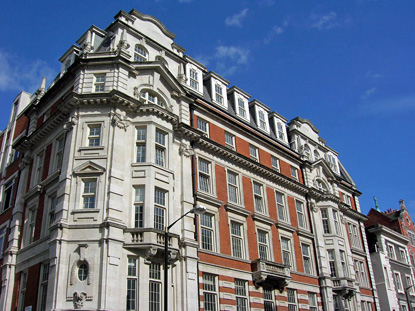
Introduction
Mayfair and Belgravia are some of London's most upmarket neighbourhood. Belgravia is located immediately west of Green Park and Buckingham Palace. Characterised by a Regency architecture reminiscent of Bath, it comprises the greatest share of foreign embassies in the United Kingdom.
Locked between Green Park, Hyde Park, Oxford Street and Regent Street, Mayfair is home to the well-to-do, as well as a few top-notch hotels and, among others, the US embassy.
Mayfair: The Golden Heart of London
Mayfair occupies a prime position in the City of Westminster, bounded by Park Lane to the west, Piccadilly to the south, Regent Street to the east, and Oxford Street to the north. This district epitomises London's upper-class charm with its Georgian townhouses, manicured garden squares, and world-renowned shopping and cultural institutions.

The History and Development of Mayfair
The area takes its name from the annual May Fair, a fortnight-long event that took place here from 1686 until it was banned in the mid-18th century due to rowdiness. Originally part of the manor of Eia, Mayfair remained largely rural until the early 18th century when rapid development transformed it into one of London's most fashionable addresses.
Buildings were constructed in quick succession during the mid-18th century, with much of the land owned by seven great estates, most notably the Grosvenor Estate, which survives intact to this day and is still owned by the family who became the Dukes of Westminster in 1874. The development of Hanover Square in 1714, named after King George I, marked the beginning of Mayfair's transformation, with the original houses inhabited by "persons of distinction" including retired generals.
Mayfair's Magnificent Squares and Gardens
Mayfair is renowned for its elegant garden squares, which provide peaceful urban sanctuaries amidst the bustling city streets. These squares represent one of London's most distinctive architectural features, with many dating back to the 18th century.
Grosvenor Square, planned as the centrepiece of the Mayfair estate, was laid out between 1725 and 1731 with 51 individual plots for development. It is the second-largest square in London after Lincoln's Inn Fields and housed numerous members of the aristocracy until the mid-20th century. The square has never declined in popularity and continues to be a prestigious address into the 21st century, though only two original houses survive: No. 9, once home to John Adams, and No. 38, now the Indonesian Embassy.
Berkeley Square gardens date back to the 1660s when Berkeley House was built for the first Lord Berkeley of Stratton. Set out in an oval shape with four grass quarters formed by two intersecting gravel paths, the square features a pump house with a Chinese-style roof erected around 1800 in its centre. The large London plane trees here are amongst the oldest in London, dating back almost 250 years. A marble statue of a nymph pouring water into a basin, sculpted by Alexander Munro and donated by the third Marquess of Lansdowne, graces one corner.
Mount Street Gardens offer a smaller, more secluded retreat, providing visitors with a tranquil space to escape the nearby shopping thoroughfares. Brown Hart Gardens present a unique feature of Mayfair—this roof garden, built in 1906 above the old Duke Street electricity substation, measures 10,000 square feet and features a domed pavilion, moveable plants, and seating. The gardens were created after local residents complained about losing their Duke Street Gardens to the Westminster Electricity Supply Company, and the space was voted best public space at the New London Awards.
Cultural Attractions and Historic Landmarks
Mayfair boasts an exceptional array of cultural institutions and historic sites that appeal to visitors with varied interests.
The Royal Academy of Arts stands as one of Britain's most prestigious art institutions, hosting blockbuster exhibitions throughout the year and the famous annual Summer Exhibition, which has been held every year since 1769. The building itself represents a significant piece of London's architectural heritage.
Handel & Hendrix in London preserves the homes of two musical innovators from different eras—baroque composer George Frideric Handel and rock legend Jimi Hendrix—offering visitors insight into the lives and work of these groundbreaking musicians. The Handel House Museum celebrates the life and compositions of Handel, showcasing his music and the world he inhabited.
Apsley House, once known as "Number 1, London" due to its prestigious address, houses over 3,000 stunning artworks within its glittering interiors, making it a must-visit for art enthusiasts. The property provides a glimpse into Britain's aristocratic past and the world of the Duke of Wellington.
The Faraday Museum explores 200 years of science history and served as the workspace for 14 Nobel Prize winners, offering interactive exhibits suitable for all ages. Mayfair's galleries include Michael Werner and Castle Fine Art for modern and contemporary masters, Halcyon Gallery for mixed media works, Hamiltons for photography, and Gagosian Gallery, which exhibits works by leading contemporary artists.
Historic Churches and Spiritual Heritage
Mayfair's ecclesiastical architecture adds another layer of historical richness to the neighbourhood. The Grosvenor Chapel, built in the 1730s, usually hosts weekly organ and choir concerts, providing a serene musical experience in an intimate historic setting.
St Mark's Church on North Audley Street, a Grade I listed building, represents a fascinating blend of Georgian and Victorian architecture. Built in 1825–28 to the designs of John Peter Gandy in Greek Revival style, the church features an imposing façade and elegant porch known as one of the finest in London. The interior was substantially remodelled in 1878 by Sir Arthur Blomfield, who introduced a polychromatic Romanesque open roof structure and decorative elements. Though deconsecrated in 1974, the building has been beautifully restored and now serves as Mercato Mayfair, a vibrant food hall.
St George's Church on Hanover Square ranks amongst Mayfair's oldest and most important buildings, serving as a historical landmark that has witnessed centuries of London life. The Jesuit Church of the Immaculate Conception on Farm Street and the Ukrainian Catholic Cathedral add to the area's diverse spiritual heritage.
The Golden Mile: Savile Row Tailoring
Savile Row has been synonymous with the finest bespoke men's tailoring for over 200 years, earning it the title "the golden mile of tailoring." Running parallel to Regent Street in Mayfair, this short street has dressed politicians, royalty, and stars of stage and screen, with customers including King Charles III, Winston Churchill, Lord Nelson, Napoleon III, Muhammad Ali Jinnah, Laurence Olivier, and Duke Ellington.
Originally named Savile Street, it was built between 1731 and 1735 as part of the development of the Burlington Estate, designed under the influence of "Burlingtonian" Palladian architecture. Initially occupied mainly by military officers and their wives, the street later housed distinguished residents including William Pitt the Younger and Irish playwright Richard Brinsley Sheridan.
Tailors began establishing businesses in the area in the late 18th century, first in Cork Street around 1790, then by 1803 in Savile Row itself. The term "bespoke" is understood to have originated in Savile Row when cloth for a suit was said to "be spoken for" by individual customers. Henry Poole & Co., credited as the "Founder of Savile Row," made the first major incursion into the street when they opened an entrance to their tailoring premises at No. 32 Savile Row in 1846, converting workshops attached to their Old Burlington Street shop. Henry Poole is also credited as the creator of the dinner jacket.
H. Huntsman & Sons, founded in 1849, moved to No. 11 Savile Row after the First World War, having served as a military tailor producing dress uniforms for British officers during the conflict. The street modernised in 1969 when Nutters of Savile Row revolutionised the style and approach of traditional tailoring, a transformation that continued into the 1990s with the "New Bespoke Movement" involving designers Richard James, Ozwald Boateng, and Timothy Everest.
Luxury Shopping and Retail Excellence
Bond Street forms the luxury retail core of Mayfair, featuring flagship stores from Tiffany & Co., Dior, and numerous prestigious fashion brands. This world-famous thoroughfare has been synonymous with high-end shopping for centuries and continues to attract discerning shoppers from around the globe. Mount Street provides a more refined shopping experience, blending designer boutiques with elegant cafés in a quieter, more intimate atmosphere.
Notable Public Art and Blue Plaques
Mayfair's streets are adorned with blue plaques commemorating the famous figures who lived and worked here, including Jimi Hendrix on Brook Street, Charles X on South Audley Street, and Harry Gordon Selfridge at Fitzmaurice Place. The Allies Sculpture on Bond Street, featuring Sir Winston Churchill and President Franklin D. Roosevelt seated together in conversation, provides an iconic photo opportunity and commemorates the special relationship between Britain and America during the Second World War.
Access and Transport
Though there is no tube station specifically named "Mayfair," the area enjoys excellent public transport connections via Bond Street, Green Park, and Hyde Park Corner stations, served by the Jubilee, Central, Piccadilly, and Victoria underground lines. Hyde Park borders Mayfair to the west, offering expansive green space for strolling, cycling, or paddling on the Serpentine Lake.
Belgravia: Regency Splendour and Refined Living
Belgravia, situated south-west of Buckingham Palace and extending towards Victoria, represents one of Europe's most exclusive residential areas. The neighbourhood is renowned for its immaculate Regency-style architecture, grand garden squares, and atmosphere of discreet luxury.
The Creation of Belgravia
Belgravia was named after Belgrave Square, a large garden square designed in the 1820s. The area was developed by the Grosvenor family, one of the wealthiest and most powerful families in England, who owned vast tracts of land in London and sought to create a prestigious new neighbourhood that would attract wealthy residents.
The development was overseen by the renowned architect and master builder Thomas Cubitt, who designed many of the area's stately homes and garden squares. Cubitt transformed the architectural inheritance of the London square on a larger scale than previously seen in central London, building upon the formal grid layout that dated back to Inigo Jones's work for the Earls of Bedford at Covent Garden in the 1630s.
Architectural Heritage and Style
Belgravia's architecture is characterised by its distinctive white stucco facades, which are a hallmark of the Regency era. The neighbourhood represents a handsome blend of Regency style and late Georgian terraces, crescents, and squares that comprise the Grosvenor Estate. The elegant Georgian and Regency-style townhouses feature grand porticos and symmetrical proportions that create a harmonious streetscape throughout the neighbourhood.
Chesterfield Street in nearby Mayfair shares this architectural excellence, being one of the few streets with 18th-century properties on both sides and representing the least altered road in the area. This attention to preserving historic character extends throughout Belgravia, where strict planning controls maintain the area's architectural integrity.
Belgravia's Grand Garden Squares
Belgravia's garden squares represent the pinnacle of London's tradition of communal green spaces, each with its own distinct character and historical significance.
Belgrave Square Garden serves as the centrepiece of Belgravia, covering 4.5 acres. Designed by George Basevi and created by Thomas Cubitt in 1826, it was completed in 1840 to act as a landscape setting for the square's grand new houses. Influenced by a design by John Claudius Loudon, the square's layout remains faithful to its original network of paths and retains some of the original planting in the form of mature plane trees. A central path curves through pergolas adorned with wisteria and roses, creating a romantic atmosphere. The square is now flanked by numerous embassies, reflecting its continued prestige.
Chester Square Garden lies in the centre of Belgravia and was laid out between 1828 and 1840 by the 1st Duke of Westminster and his surveyor and architect Thomas Cundy II. Cundy also designed St Michael's Church on the west side, which provides an elegant backdrop to the 1.5-acre garden. The garden is surrounded by herbaceous borders and conceals a tranquil central rose garden, with rope-edged tiles and some original trees surviving from the Victorian era. Past residents include poet Matthew Arnold at No. 2, Frankenstein author Mary Shelley at No. 24, and former Prime Minister Margaret Thatcher.
Eaton Square Garden, named after the Duke of Westminster's principal Cheshire home, Eaton Hall, comprises six gardens that Thomas Cubitt began laying out in 1826. Today, these gardens provide a peaceful retreat featuring formal lawns, mixed borders, formal raised beds, and shady pathways. Sundials and water features by sculptor David Harber add contemporary artistic elements to the historic setting. Famous residents have included former Prime Minister Neville Chamberlain and actress Vivien Leigh.
Shopping Streets and Boutique Districts
Belgravia's shopping areas offer a more intimate and curated experience than the grand thoroughfares of Mayfair, with independent boutiques and specialist shops defining the neighbourhood's retail character.
Elizabeth Street provides a delightful mix of independent shops, including the renowned Moyses Stevens florist, Bayley & Sage grocery, and Jo Loves for luxury candles. The street is famous for its pretty cafés and flower-adorned facades that create a picturesque setting perfect for leisurely exploration. Cafés such as Peggy Porschen and Chestnut Bakery offer Instagram-worthy settings for afternoon tea and sweet treats.
Motcomb Street is a pedestrian-friendly thoroughfare home to high-end boutiques, artisanal shops, and speciality food stores including The Fine Cheese Co. and Rococo chocolate shop. The abundance of cheesemongers and chocolatiers makes it a haven for food enthusiasts. Halkin Mews, accessible from Motcomb Street, ranks amongst the prettiest mews in the neighbourhood, showcasing the charming cobblestone lanes that were once home to horses and carriages.
Eccleston Street offers another pedestrian-friendly shopping experience with its mix of independent retailers. The hidden Eccleston Yards, accessible down a small alley from Ebury Street, opens into a colourful courtyard full of shops and creative spaces, blending wellness with lifestyle offerings.
Pimlico Road Design District, near Sloane Square, serves as a hub for interior designers and shoppers seeking luxury furnishings and antiques, with prestigious stores such as Robert Kime and Linley. This area, also known as Orange Square, is surrounded by flower shops and high-end furniture stores, with twin red telephone boxes providing a quintessentially British photo opportunity.
Walking Through Belgravia's Mews and Terraces
Belgravia's network of mews—originally built to house horses and carriages—now represent some of London's most charming residential streets. These cobblestone lanes, with their pastel-painted cottages and flower boxes, create an enchanting contrast to the grand terraces and squares.
Kinnerton Street showcases pretty houses and numerous side streets worth exploring at a leisurely pace. Groom Place ranks amongst the most picturesque cobblestone streets in London, featuring an excellent mix of houses and a traditional pub tucked into one corner. Eaton Terrace Mews and Grosvenor Cottages provide similarly delightful examples of this distinctively London architectural form.
Wilton Row, discovered via a warren of lanes off Wilton Place and Old Barrack Yard, stands as one of Belgravia's hidden gems, offering a peaceful retreat from the main thoroughfares. These mews represent the essence of Belgravia's charm—exclusive yet intimate, grand yet personal.
Blue Plaques and Historical Connections
Belgravia's streets are marked with blue plaques commemorating notable residents. A plaque on Ebury Street honours Ian Fleming, creator of James Bond, whilst another celebrates composer Wolfgang Amadeus Mozart. These markers provide tangible connections to the area's rich cultural and literary heritage.
Cultural Events and Seasonal Highlights
Belgravia hosts the annual "Belgravia in Bloom" flower festival, which enlivens the area with spectacular floral displays and celebrates the neighbourhood's commitment to horticultural excellence. The Osborne Studio Gallery and other cultural venues provide opportunities to appreciate art and attend elegant events throughout the year.
Access and Connections
Belgravia is conveniently accessible via Victoria and Knightsbridge underground stations, making it easy to combine visits with neighbouring areas such as Chelsea, Knightsbridge, or Hyde Park. The neighbourhood's proximity to Buckingham Palace and St James's Park also makes it an ideal starting point for exploring royal London.
Walking Tour Recommendations
A comprehensive walking tour of Belgravia typically covers 2.9 miles and takes approximately 90 minutes to two hours at a leisurely pace, not including stops. The most rewarding route begins at Victoria Station or Hyde Park Corner and winds through the neighbourhood's streets, mews, squares, and crescents, allowing visitors to appreciate the architectural details, discover hidden corners, and experience the area's exclusive atmosphere.
The circular route showcases the full diversity of Belgravia's character, from grand embassy-lined squares to intimate mews, from elegant shopping streets to tranquil garden squares, creating a comprehensive portrait of this exceptional neighbourhood.
Practical Considerations for Visiting
Both Mayfair and Belgravia reward slow, observant exploration. These are neighbourhoods best appreciated on foot, where architectural details, hidden mews, secluded gardens, and the interplay of grand and intimate spaces reveal themselves to patient visitors. The areas are easily combined in a single day's exploration or can each provide a full day's worth of discovery for those who wish to delve deeper into their respective characters.
Whether admiring centuries-old plane trees in Berkeley Square, discovering the craft traditions of Savile Row, exploring Thomas Cubitt's architectural masterpieces in Belgravia's garden squares, or simply wandering through flower-adorned streets and historic mews, Mayfair and Belgravia offer an unparalleled experience of London's elegance, history, and enduring sophistication.