


 Ireland Guide
 Scotland Guide
 Wales Guide
Introduction
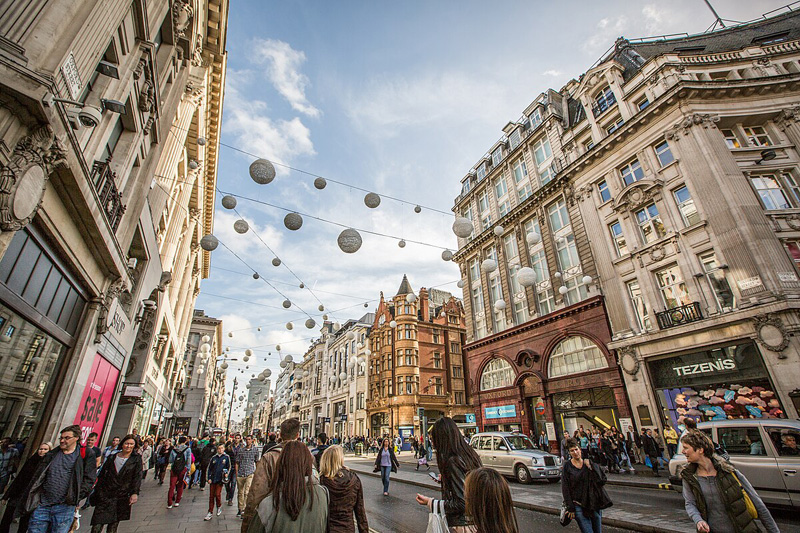
Oxford Street is London’s busiest shopping artery, stretching from Marble Arch to Tottenham Court Road and linking the West End with more than 300 shops, from Selfridges and major flagships to fast-fashion staples and pop-ups. It blends heritage with high street energy, while side streets spill into Marylebone, Soho and Fitzrovia for calmer cafés, bars and independent boutiques. Go on weekday mornings for lighter footfall; evenings dazzle during the Christmas lights. Bond Street, Oxford Circus and Tottenham Court Road stations (Central, Elizabeth, Bakerloo, Jubilee, Northern) make access effortless, and frequent buses run end to end. Expect crowds, queues and occasional roadworks; keep valuables close and use crossings. For a breather, slip to St Christopher’s Place, Hanover Square or Cavendish Square, or wander to Regent Street and Carnaby for contrast. Oxford Street rewards planned browsing and strategic coffee stops.
History and Heritage
Oxford Street traces its origins to Roman times when it formed part of the Via Trinobantina, the main road west from Roman London. During the Middle Ages, the street was known as Tyburn Road, serving as the principal route from London to Oxford, which eventually gave the thoroughfare its current name. For centuries, Tyburn Road was infamous as the route condemned prisoners took to public executions at Tyburn, which continued from 1388 until 1793 near what is now Marble Arch.
The street's transformation into a shopping destination began in the 18th and 19th centuries when independent traders established wares along its length. The arrival of improved transport links during the Edwardian period extended Oxford Street's appeal to shoppers across Greater London, securing its status as the capital's premier retail destination. The opening of Oxford Circus junction in 1819 as part of John Nash's Regent Street development—originally known as Regent Circus North—further enhanced the area's prominence.
Oxford Street continued to evolve throughout the 20th century, with the quadrant buildings around Oxford Circus redesigned by Henry Tanner between 1913 and 1928, now Grade II listed. The street's significance to London's transport infrastructure was demonstrated during Operation Umbrella in the 1960s, when engineers worked an intensive Bank Holiday weekend to raise Oxford Circus by a metre whilst adding the Victoria Line beneath one of London's busiest junctions.
Shopping Districts and Store Layout
Oxford Street's retail landscape varies distinctly along its length, with different sections offering unique shopping experiences.
Marble Arch to Bond Street
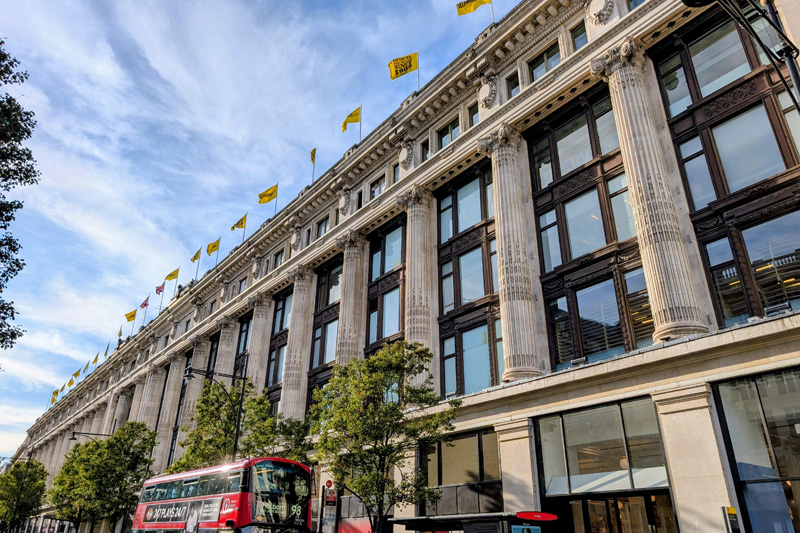
This western section features major department stores including Marks & Spencer, Primark, River Island, and New Look. The grand Selfridges flagship store dominates this area at 400 Oxford Street, occupying an entire block with over 10 acres of shopping space. Founded by American businessman Henry Gordon Selfridge in 1909, Selfridges has been described as "an extraordinary temple of the retail business" thanks to its neoclassical columns and jaw-dropping main entrance.
Bond Street to Oxford Circus
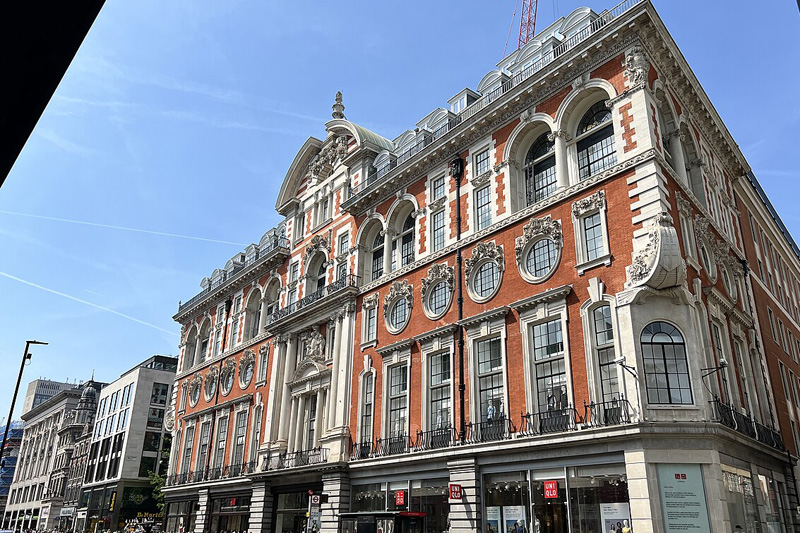
This central stretch concentrates flagship stores from renowned international brands including Nike Town, Adidas, John Lewis & Partners, and additional Marks & Spencer locations. The Bond Street Underground station, served by the Central, Jubilee, and Elizabeth lines, provides convenient access to this prime shopping zone.
Oxford Circus to Tottenham Court Road
Moving eastward from Oxford Circus, shoppers encounter high-street favourites like Zara, Uniqlo, Urban Outfitters, Primark, H&M, and JD Sports. Smaller department stores and shops selling consumer electronics become more prevalent towards Tottenham Court Road. This eastern section attracts over 200,000 shoppers weekly to its accessible fashion and lifestyle retailers.
Major Department Stores and Retailers
Selfridges
Selfridges stands as London's second largest department store after Harrods and remains Oxford Street's crown jewel. The store spans six floors featuring over 11,000 pairs of jeans alone, alongside comprehensive fashion, beauty, homeware, and technology departments. Selfridges offers 15 dining options throughout the building, including a celebrated gourmet food hall and seasonal rooftop pop-ups. Beyond retail, Selfridges champions public art through The Art Block in the Accessories Hall, a permanent exhibition space showcasing modern and contemporary artwork that changes every six months. The store's bespoke window displays attract 130,000 daily passersby and change throughout the year with creative campaigns. For entertainment, The Cinema at Selfridges operates as a luxury three-screen cinema showing blockbusters and independent films.
John Lewis & Partners
John Lewis anchors the mid-section of Oxford Street, offering extensive ranges across fashion, homeware, technology, and beauty. The store features Benugo Café locations on the first and second floors, serving signature sandwiches, seasonal salads, and freshly-baked cakes for shoppers needing refreshment. The recently renovated Beauty Hall showcases comprehensive cosmetics and skincare selections.
Marks & Spencer and Next
Multiple Marks & Spencer stores along Oxford Street provide vast ranges of clothing, food, homeware, and beauty products, serving as reliable destinations for quality British retail. Next offers comparable variety with contemporary fashion and home goods across multiple floors.
High-Street Fashion
Oxford Street concentrates the flagship locations of international fashion chains including Zara, H&M, Uniqlo, and Primark's massive four-floor flagship store offering affordable trends. Sportswear enthusiasts find Nike and Adidas flagship stores showcasing the latest athletic collections and exclusive releases.
Specialist Retailers
Beyond fashion and department stores, Oxford Street hosts distinctive retailers including the Microsoft Experience Store with its free-to-play Xbox Gaming Lounge, The Disney Store featuring favourite characters and merchandise, and the fragrant LUSH flagship—one of the country's largest—offering vegan-friendly beauty products. Urban Outfitters provides vintage-inspired fashion and home décor, whilst specialist shops like Flying Tiger, Beyond Retro, and Muji add diversity to the shopping mix.
Seasonal Highlights and Events
Christmas Illuminations
Oxford Street transforms during the festive season when elaborate Christmas decorations illuminate the entire length of the street at night, creating one of London's most dazzling seasonal spectacles. The annual Christmas lights switch-on has become a celebrated tradition attracting enormous crowds who gather to witness the illuminations come alive.
This Is Oxford Street Events
Throughout the year, Oxford Street hosts special events featuring exclusive offers, in-store experiences, live music performances, and interactive pop-ups from major retailers. These occasions transform the shopping street into an entertainment destination with activities suitable for all ages.
Family-Friendly Attractions
Twist Museum
The Twist Museum on Oxford Street serves as London's first museum of illusions, featuring 60 thrilling interactive exhibits exploring how illusions work. Developed in collaboration with artists, neuroscientists, and philosophers, the museum challenges perceptions of colour, perspective, shape, and sound, providing engaging entertainment for children and adults alike.
Microsoft Gaming Lounge
The Microsoft Experience Store offers a free-to-play Xbox Gaming Lounge where children can try the latest games. Saturday afternoons host Minecraft build challenges for ages 8 and above, whilst the History of Xbox exhibit displays the evolution of gaming from the first prototype to the latest Series X console.
Tasty by Greggs at Primark
Inside Primark's East store, Tasty by Greggs features imaginative décor including sausage roll swings, doughnut seats, and an iconic London bus with dining booths. Interactive elements like the Greggs phone box and vintage-style bike create photo opportunities, whilst the 110-seater café serves the chain's signature sausage rolls, bakes, pizzas, and sweet treats.
Nearby Attractions and Landmarks
Marble Arch
Standing at Oxford Street's western terminus, Marble Arch ranks as one of London's most recognisable landmarks. Designed by John Nash in 1827, this grandiose gateway originally intended for Buckingham Palace marks the historic site of the Tyburn gallows where public executions occurred from 1388 until 1793.
Hyde Park and Green Spaces
Hyde Park lies less than a two-minute walk from Marble Arch, offering expansive green spaces perfect for relaxation after shopping. Within the park, visitors can explore the Princess Diana Memorial Fountain, Speakers' Corner—a traditional site for public debate—and the Serpentine Lido for swimming during summer months.
Regent Street and Carnaby Street
Oxford Circus provides the junction between Oxford Street and the elegant Regent Street, designed by John Nash in the early 19th century. A short walk south leads to Carnaby Street, famous for its role in 1960s fashion culture and now home to independent boutiques and Kingly Court—a three-storey alfresco dining destination hosting twenty-one international restaurants, bars, and cafés.
The Photographer's Gallery
Minutes from Oxford Circus station, The Photographer's Gallery presents compelling exhibitions from international photographers, catering to everyone from experts to the photo-curious. The gallery maintains a dynamic roster showcasing impactful photography across various styles and subjects.
West End Theatres
Oxford Circus provides convenient access to London's West End theatre district, with numerous venues presenting award-winning shows within walking distance or a short Tube journey. The proximity makes combining shopping with an evening performance effortless.
Outernet
This cutting-edge entertainment and technology venue near Tottenham Court Road offers immersive digital experiences and live events, representing the latest in experiential entertainment.
Hidden Gems and Side Streets
St Christopher's Place
Tucking away from Oxford Street's bustle, St Christopher's Place offers a charming pedestrianised courtyard featuring boutique shops including Malini and Mulberry, alongside cafés perfect for a quieter shopping experience. This enclave provides a more refined atmosphere whilst remaining steps from the main thoroughfare.
Kingly Court
Located on Carnaby Street, Kingly Court functions as a hub of culinary delights across three floors of alfresco dining. The destination hosts an eclectic mix of international cuisines from casual eateries to concept restaurants.
Side Lane Exploration
Exploring the smaller lanes perpendicular to Oxford Street often reveals architectural delights, independent retailers, and characterful establishments that contrast with the mainstream offerings on the main street. These side streets reward curious visitors with unique discoveries.
Transport Connections
London Underground
Oxford Street benefits from exceptional Underground connectivity with four major stations along its length, all serving the Central line. From west to east, these are Marble Arch (Central line), Bond Street (Central, Jubilee, and Elizabeth lines), Oxford Circus (Bakerloo, Central, and Victoria lines), and Tottenham Court Road (Central, Northern, and Elizabeth lines). Together, these four stations handle an average of 100 million passengers annually, with Oxford Circus ranking as the busiest.
The Elizabeth line dramatically improved connectivity with "double-ended" stations at Bond Street and Tottenham Court Road. Bond Street station provides exits through the existing Tube station and additionally in Hanover Square near Oxford Circus, whilst Tottenham Court Road offers exits through the traditional station and westward in Dean Street.
Bus Services
Major bus routes serve Oxford Street throughout its length, with services including routes 3, 6, 8, 10, 12, 13, 15, 23, 25, 53, 73, 88, 94, 98, 113, 137, 139, and 159 providing comprehensive connections across London. The frequency of bus services makes above-ground travel convenient for those preferring to avoid the Underground.
National Rail
Paddington Station, London's major western rail terminus, lies a 33-minute walk from Oxford Street and provides convenient access via the Central line from Paddington to Marble Arch or Oxford Circus.
Parking
For those driving, Q-Park Oxford Street offers parking in Cavendish Square Gardens behind John Lewis, with discounted rates available through pre-booking online. Selfridges maintains its own car park accessible via Seymour, Upper Brook, and Barrett Streets.
Cycling
Cycle docking stations positioned around Oxford Street support sustainable transport, though the street itself experiences heavy pedestrian and vehicular traffic. Exploring on foot remains the preferred method for experiencing Oxford Street's retail offerings.
Practical Visitor Information
Opening Hours
Oxford Street shops generally maintain longer opening hours than elsewhere in London. Standard trading hours are Monday to Saturday from 10:00 am to 9:00 pm, and Sundays from 12:00 pm to 6:00 pm. Individual retailers may vary these hours, so checking specific store websites before visiting proves advisable for particular destinations.
Selfridges operates Monday to Friday from 10:00 am to 10:00 pm, Saturdays from 10:00 am to 9:00 pm, and Sundays from 11:30 am to 6:00 pm. Browsing without purchasing is permitted only between 11:30 am and 12:00 pm.
Best Times to Visit
To avoid the busiest periods, arrive just after shops open at 9:00 am or 10:00 am on weekday mornings. Avoid visiting during lunch hours between 11:00 am and 1:00 pm, or the evening rush between 6:00 pm and 7:00 pm when crowds peak. Saturdays constitute the busiest day of the week, whilst Sundays offer the quietest shopping experience. The Christmas season attracts enormous crowds, particularly during weekends in November and December when the illuminations draw additional visitors.
Security and Safety
Oxford Street experiences pickpocketing, particularly during busy periods. Visitors should remain vigilant with belongings, keeping bags secured and avoiding displaying valuables. Some stores implement security measures including bag searches before entry and restrictions on large luggage or rucksacks. Selfridges, for example, may search items before entry and offers bag storage at the Customer Services Lounge on Level 4, though suitcases, backpacks, and holdalls cannot be stored.
Facilities
Many smaller shops lack toilet facilities, but major department stores including Marks & Spencer, Selfridges, and John Lewis provide public conveniences. Numerous ATMs and banks operate along Oxford Street, with machines available in newsagents and corner shops (typically charging transaction fees), as well as fee-free locations near Oxford Circus, Tottenham Court Road, and directly on Oxford Street.
International Visitors
Tax-free shopping applies at many stores for international visitors not residing in the UK. Retain receipts and complete necessary paperwork to claim VAT refunds when departing the country. Staff at major retailers can provide guidance on tax-free shopping procedures.
Luggage and Shopping
Travelling light proves advisable as many stores restrict entry for visitors carrying large suitcases or rucksacks. Consider using hotel luggage storage or left luggage facilities at major rail stations before embarking on an Oxford Street shopping expedition.
Dining Options
Oxford Street and its immediate surroundings provide extensive dining options ranging from quick takeaway outlets to sit-down establishments. Major department stores house multiple eateries within their buildings—Selfridges alone offers 15 places to eat including its renowned food hall. Fast food chains, cafés, and international restaurants line the street and adjacent areas.
Accommodation
Hotels around Oxford Street typically command premium rates due to the central West End location. The concentration of four-star chains centres around Marble Arch at the street's western end. Budget travellers might consider accommodation further from central London with good public transport connections to Oxford Street's multiple Underground stations. Mayfair to the south hosts some of London's most expensive hotels, whilst more affordable boutique chains scatter throughout the wider Oxford Street area.
Weather Considerations
London weather proves unpredictable throughout the year. Carrying waterproof outerwear and comfortable walking shoes suited to potentially wet conditions ensures a pleasant shopping experience regardless of weather. During winter months, shops provide welcome warmth between outdoor exploration.
Accessibility
The major Underground stations serving Oxford Street offer step-free access, though not all entrances and exits provide this facility. Bond Street and Tottenham Court Road Elizabeth line stations feature modern accessibility provisions. Major retailers provide accessible facilities including lifts, accessible toilets, and assistance for visitors with disabilities.
Sustainable Shopping
Oxford Street increasingly embraces sustainable retail practices. Beyond Retro offers vintage fashion with environmental benefits, whilst many mainstream retailers now stock organic, recycled, and ethically-sourced product lines. Bringing reusable shopping bags reduces plastic waste during the shopping expedition.
Cultural Significance
Oxford Street holds a unique position in British culture as a democratic shopping destination where luxury department stores neighbour affordable high-street chains, creating an inclusive retail environment accessible to all budgets. The street's evolution from a medieval thoroughfare to Europe's busiest shopping street reflects broader changes in British retail, transport, and urban development over centuries.
The street has historically served as a focal point for public gatherings, demonstrations, and protests, particularly around Oxford Circus, which has hosted several high-profile actions by movements including Extinction Rebellion. This dual role as both commercial centre and public space underscores Oxford Street's importance to London's civic life beyond mere retail.
Future Developments
Oxford Street continues evolving to meet contemporary retail challenges and opportunities. Major investments include IKEA's £370 million project transforming the former Topshop flagship store into a city-centre location, scheduled to open in late summer 2024. Ongoing discussions about pedestrianisation aim to enhance the shopping experience and environmental sustainability, though proposals face complex logistical and political hurdles given the street's role in London's transport network.
The street's retailers adapt to changing consumer behaviours by incorporating experiential elements—from Selfridges' cinema and art exhibitions to interactive pop-ups and gaming lounges—transforming Oxford Street from purely transactional shopping to entertainment destination. This evolution ensures Oxford Street remains relevant and compelling for future generations of visitors.
Tips for an Optimal Visit
Plan a route based on specific shopping priorities, as covering the entire 1.5-mile street thoroughly requires considerable time and energy. Starting at one end (either Marble Arch or Tottenham Court Road) and working systematically towards the other prevents backtracking and ensures comprehensive coverage.
Allow adequate time for department store visits, particularly Selfridges, where six floors of shopping, dining, and entertainment could easily occupy several hours. Consider breaking the shopping expedition with visits to nearby attractions like Hyde Park or cultural venues to avoid fatigue.
Explore side streets and nearby shopping districts including St Christopher's Place, Carnaby Street, and Regent Street for a more varied retail experience beyond Oxford Street's mainstream offerings. These adjacent areas provide complementary shopping opportunities whilst offering respite from Oxford Street's intensity.
Utilise the excellent Underground connections to visit Oxford Street across multiple trips rather than attempting to experience everything in a single exhausting day. The Central line's service to all four stations enables easy returns to areas requiring further exploration.
Take advantage of special events and seasonal celebrations, particularly the Christmas lights, which enhance the Oxford Street experience with festive atmosphere and limited-time activities. Check the official Oxford Street website for upcoming events and exclusive offers that add value to visits.
Oxford Street remains an essential London experience, combining unparalleled shopping diversity with historical significance, excellent transport links, and proximity to numerous attractions throughout the West End. Whether seeking flagship fashion, department store browsing, family entertainment, or simply soaking in the atmosphere of Europe's busiest shopping street, Oxford Street delivers a quintessentially London experience accessible to all visitors.