


 Ireland Guide
 Scotland Guide
 Wales Guide
| Contents |
|---|
Introduction
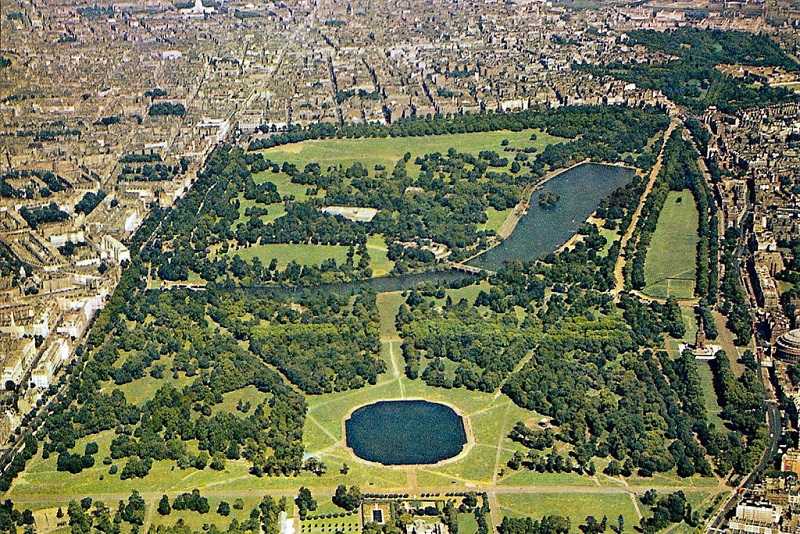
Hyde Park is London’s great green heart, a generous sweep of lawns, lakeside paths and historic avenues where city pace softens into unhurried wanderings. Start by circling the Serpentine, hire a pedal boat or simply watch the swans glide by, then pause at the Diana Memorial Fountain or the Rose Garden for a quiet moment. Sundays bring spirited speeches at Speakers’ Corner, while Rotten Row hints at the park’s equestrian past. With cafés beside the water, deckchairs in summer, broad cycle routes and ample space for picnics or a brisk jog, Hyde Park offers an easy, restorative break that flows seamlessly into neighbouring Kensington Gardens.
Activities and Attractions
Historical Heritage and Royal Legacy
The park's origins trace back to medieval times when the land formed part of the Manor of Hyde, a Saxon settlement whose name derives from "hide," denoting a unit of land sufficient to support a single family. For centuries, these grounds belonged to Westminster Abbey, with the monks utilising the woodland for timber and as shelter for game animals.
In 1536, King Henry VIII transformed the landscape by acquiring the manor from Westminster Abbey, establishing it as an enclosed deer park and private royal hunting ground. The king's vision created a 620-acre wilderness where courtiers could pursue deer through ancient oak groves and across rolling meadows. Under James I, limited access was granted to gentlefolk, with the appointment of a ranger to oversee the grounds and maintain order amongst the wildlife and visitors alike.
Charles I proved instrumental in shaping the park's public character. In 1625, he constructed the Ring—a carriage-racing circuit located north of the present Serpentine boathouses—which became a fashionable venue for the aristocracy to display their finest horses and carriages. More significantly, in 1637, Charles I opened the park to the general public, instantly establishing it as London's premier gathering place. May Day celebrations became particularly popular, with thousands flocking to the park for festivities, parades, and merrymaking.
The English Civil War brought fortifications to Hyde Park's eastern boundary, including strongpoints at what are now Marble Arch, Mount Street, and Hyde Park Corner. During the Commonwealth period, Parliament ordered the park's sale in 1652, realising £17,000 plus an additional £765 for the resident deer—a considerable sum demonstrating the land's immense value.
Following the Restoration in 1660, Charles II reclaimed the park and enclosed it with a brick wall, restocking the deer herds and reinstating its status as a royal preserve. During the Great Plague of London in 1665, Hyde Park served as a temporary military camp and refuge for citizens fleeing infected areas of the city.
The early 18th century witnessed major landscape improvements under Queen Caroline, consort to King George II. Her vision transformed the park's waterways, creating the serpentine curve of the lake that gives the Serpentine its name. The queen's improvements established much of the park's current character, blending formal landscaping with naturalistic elements that continue to define the space today.
The Serpentine Lake and Aquatic Features
The gracefully curving Serpentine Lake forms the park's centrepiece, dividing Hyde Park from Kensington Gardens and creating one of London's most photographed vistas. This 40-acre body of water originated from the Westbourne River, which Queen Caroline had dammed and reshaped in the 1730s to create the serpentine curve that gives the lake its distinctive character.
The Serpentine offers year-round recreational opportunities, from pleasure boating during warmer months to winter swimming for the hardiest enthusiasts. The Hyde Park Lido, situated on the lake's south bank, opened in 1930 following lobbying by the Sunlight League naturist group. Designed by George Lansbury, the Commissioner of Works, and funded partly by a £5,000 donation from Major Colin Cooper, the Lido provides changing facilities and a designated swimming area. The Serpentine Swimming Club maintains the tradition of year-round swimming, including the famous Christmas Day race that attracts swimmers from across the globe.
The Serpentine Boathouses offer pedal boats, rowing boats, and occasionally sailing dinghies, allowing visitors to experience the park from a unique aquatic perspective. The boating facilities operate from spring through autumn, weather permitting, and provide an idyllic setting for romantic outings or family adventures.
Long Water, the northern extension of the Serpentine that flows into Kensington Gardens, creates additional waterside walks and wildlife habitats. These connected waterways support thriving populations of waterfowl, including resident swans, Canada geese, coots, and moorhens, alongside seasonal visitors such as great crested grebes and various duck species.
Landmarks, Monuments and Memorial Features
Hyde Park houses an impressive collection of monuments, memorials, and artistic installations that reflect Britain's complex history and cultural values. The Diana, Princess of Wales Memorial Fountain, opened in 2004, represents one of the park's most visited attractions. Carved from 545 pieces of Cornish granite and designed by American architect Kathryn Gustafson, the fountain creates a continuous oval water feature that encourages interaction, with shallow areas where children and adults can paddle and cool their feet during summer months.
The Holocaust Memorial, dedicated in 1983, provides a solemn space for reflection near Hyde Park Corner. The memorial comprises two bronze sculptures by British artist Richard Seifert, depicting the suffering endured during the Holocaust whilst honouring the memory of six million Jewish victims and other persecuted groups.
The 7 July Memorial commemorates the 52 people killed in the 2005 London bombings. Unveiled in 2009, the memorial consists of 52 steel pillars arranged in a grove, each bearing the name of a victim. The surrounding landscape of native British plants provides a peaceful environment for contemplation and remembrance.
The Animals in War Memorial, positioned at the park's eastern edge near Hyde Park Corner, honours the countless animals that served alongside British forces throughout history. Unveiled in 2004, the memorial features bronze sculptures of horses, dogs, and mules, with inscriptions recognising their sacrifice and service.
Additional artistic features include the Joy of Life fountain near Hyde Park Corner, the Boy and Dolphin fountain, and various sculptural works scattered throughout the grounds. The Pan statue and The Huntress fountain contribute to the park's artistic heritage, whilst the Albert Memorial, though technically in Kensington Gardens, forms part of the broader cultural landscape visible from Hyde Park's western boundary.
Speakers’ Corner: The Bastion of Free Speech
Speakers' Corner, located at the park's northeastern corner near Marble Arch, represents Britain's most famous symbol of free speech and democratic expression. Established formally in 1872 under the Parks Regulation Act, this designated area emerged from decades of political struggle and civil unrest.
The tradition began in the 1850s when the Reform League and other political groups clashed with authorities over the right to hold public meetings in the park. The famous "Hyde Park Railings Affair" of 1866 saw thousands of demonstrators tear down sections of the park's iron railings during a protest for parliamentary reform, forcing the government to acknowledge the public's right to peaceful assembly.
Since its formal establishment, Speakers' Corner has hosted an extraordinary array of orators, from Karl Marx and George Orwell to contemporary political activists, religious preachers, conspiracy theorists, and ordinary citizens exercising their democratic rights. The corner operates on Sunday mornings and occasionally other days, with speakers required only to avoid obscenity, blasphemy, and incitement to violence.
The tradition continues today, with regular speakers addressing topics ranging from politics and religion to social issues and personal philosophy. Visitors can witness passionate debates, heckle speakers (within reason), or even mount their own soapbox to address the assembled crowd.
Rotten Row: London's Premier Equestrian Highway
Rotten Row, stretching for nearly a mile along the park's southern boundary, holds the distinction of being Britain's first artificially lit thoroughfare and London's most prestigious riding route. Created in 1690 by William III as a safe passage from Kensington Palace to St James's Palace, the broad sandy track was illuminated by 300 oil lamps—a revolutionary safety measure for its time.
The name "Rotten Row" derives from the French "Route du Roi" (King's Road), though local pronunciation gradually corrupted the original French. During the 18th and 19th centuries, Rotten Row became the epicentre of fashionable London society, where the wealthy and powerful would parade their finest horses, carriages, and attire during the daily social ritual known as "the Season."
Today, Rotten Row remains an active bridle path, welcoming riders of all abilities from dawn to dusk throughout the year. The Hyde Park Riding School, located near the Serpentine, offers lessons for beginners and facilities for experienced equestrians. The broad pathway also accommodates pedestrians, joggers, and cyclists outside of peak riding hours, providing one of London's most scenic exercise routes.
Major Events and Cultural Celebrations
Hyde Park's role as a venue for significant public events spans centuries, cementing its position as London's premier outdoor gathering space. The most famous historical event occurred in 1851 when the park hosted the Great Exhibition, housed within Joseph Paxton's revolutionary Crystal Palace. This iron and glass structure, covering 990,000 square feet, showcased innovations from around the British Empire and attracted over six million visitors during its six-month run.
Following the exhibition's closure, public sentiment demanded the Crystal Palace's removal from the park. Paxton purchased the building and relocated it to Sydenham Hill in South London, where it served as a public attraction until its destruction by fire in 1936.
The park hosted numerous royal celebrations, including elaborate fairs for the coronations of George IV in 1821 and other monarchical milestones. The 1814 Great Fair celebrated the Allied sovereigns' visit to England with stalls, shows, and a re-enactment of the Battle of Trafalgar on the Serpentine, complete with miniature French and British fleets.
Military ceremonies have long featured in the park's calendar, most notably the first Victoria Cross investiture on 26 June 1857, when Queen Victoria personally decorated 62 recipients in the presence of Prince Albert and other members of the Royal Family.
The late 20th century established Hyde Park as London's premier concert venue for major rock and pop acts. Legendary performances include Pink Floyd's 1970 concert, the Rolling Stones' free concert in 1969, and Queen's memorable performance in 1976. The Live 8 concert in 2005 attracted 200,000 spectators and featured performances by Paul McCartney, U2, Madonna, and numerous other international artists.
Since 2007, Hyde Park Winter Wonderland has transformed the park each December into London's largest Christmas celebration, featuring traditional German Christmas markets, an ice rink, fairground rides, and a giant observation wheel. This annual event attracts over two million visitors and generates significant revenue for park maintenance and improvements.
Natural Environment and Wildlife
Beyond its cultural significance, Hyde Park functions as a vital green lung for central London, supporting diverse ecosystems and wildlife populations that thrive despite the urban environment. The park's 350 acres encompass varied habitats, from formal lawns and flower beds to semi-natural grasslands and mature woodland areas.
The tree collection includes both native British species and exotic specimens planted over centuries of horticultural development. Ancient oaks, some predating the park's royal acquisition, provide habitat for numerous bird species, while plane trees, limes, and chestnuts create seasonal displays of autumn colour. The park's arboricultural team maintains approximately 4,000 trees, ensuring their health and safety whilst preserving the landscape's historic character.
Bird life flourishes throughout the park, with resident species including robins, blackbirds, wrens, and various tit species. The Serpentine attracts waterfowl including mute swans, Canada geese, mallards, and coots, whilst the wooded areas support woodpeckers, owls, and occasional migratory species. Efforts to maintain biodiversity include the creation of wildflower meadows and the preservation of deadwood habitats that support insects and small mammals.
Gardens and Horticultural Features
The Rose Garden, situated near the Serpentine Bridge, showcases over 12,000 roses representing 85 different varieties. This formal garden reaches peak bloom during June and July, creating spectacular displays of colour and fragrance that attract thousands of visitors annually. The garden's design incorporates both traditional and modern rose varieties, from classic David Austin roses to contemporary hybrid teas and floribundas.
Seasonal bedding displays throughout the park provide year-round colour, with spring bulb plantings creating carpets of daffodils, crocuses, and tulips, followed by summer annuals and autumn chrysanthemums. The park's horticultural team coordinates these displays to ensure continuous flowering from early spring through late autumn.
Less formal areas include wildflower meadows that support native plant communities and provide habitat for insects, birds, and small mammals. These areas demonstrate sustainable landscaping practices whilst reducing maintenance requirements and creating educational opportunities for visitors interested in British flora.

Recreation and Leisure Activities
Hyde Park caters to an enormous range of recreational activities, accommodating everyone from serious athletes to families seeking leisurely entertainment. The park's diverse facilities and open spaces support both organised sports and informal recreation throughout the year.
Tennis courts near the Serpentine provide opportunities for racquet sports, with courts bookable in advance during peak seasons. Football pitches accommodate both casual kickabouts and organised matches, whilst the numerous open grass areas welcome cricket games, frisbee throwing, and general recreation.
Cycling enthusiasts enjoy dedicated cycle paths that connect to London's broader cycling network, whilst joggers appreciate the various running routes that range from gentle lakeside circuits to longer loops encompassing the entire park perimeter. The park's relatively flat terrain and well-maintained paths make it accessible to runners of all abilities.
Fitness enthusiasts utilise the outdoor gym equipment located near the Serpentine, whilst various commercial operators offer boot camp classes, yoga sessions, and personal training services throughout the year. The park's open nature and central location make it an ideal venue for group fitness activities and individual exercise routines.
Dining and Refreshment Facilities
Hyde Park's dining options cater to diverse tastes and budgets, from casual refreshments to sit-down meals with scenic lakeside views. The Serpentine Bar & Kitchen, housed in a 1960s building near the lake's eastern end, offers full restaurant service with modern British cuisine and an outdoor terrace overlooking the water.
The Lido Cafe Bar, adjacent to the Hyde Park Lido, provides lighter fare including sandwiches, salads, and beverages, with outdoor seating that takes advantage of the waterside location. During swimming season, the cafe serves as a popular gathering point for swimmers and spectators alike.
Numerous kiosks and mobile vendors throughout the park offer traditional British refreshments including tea, coffee, ice creams, and snacks. These convenient outlets ensure that visitors can maintain their energy during longer explorations of the park's attractions and activities.
Speakers' Corner Cafe, near Marble Arch, provides refreshments for early visitors attending the Sunday morning speeches, whilst various seasonal vendors supplement the permanent facilities during major events and peak visitation periods.
Cultural Significance and Contemporary Role
Hyde Park's influence extends far beyond its physical boundaries, serving as a symbol of democratic values, cultural diversity, and urban planning excellence. The park's role in British political history—from Chartist demonstrations to suffragette protests to modern anti-war rallies—has established it as a barometer of public opinion and social change.
The park's continued relevance in contemporary London life reflects its adaptability to changing social needs whilst maintaining its essential character. Modern usage patterns blend traditional activities with contemporary trends, from historical horse riding to modern fitness routines, from formal gardens to casual recreation.
Educational programmes operated by The Royal Parks charity introduce school groups to the park's natural and cultural heritage, whilst guided tours offer visitors deeper insights into the landscape's layered history. These initiatives ensure that future generations understand and appreciate the park's significance beyond its recreational value.
Hyde Park's integration into London's broader green infrastructure demonstrates the importance of central urban parks in maintaining environmental quality, supporting biodiversity, and providing essential recreational space for dense urban populations. The park's management balances heritage conservation with contemporary needs, ensuring its continued relevance whilst preserving the features that have made it beloved by millions of visitors over nearly four centuries.
Getting There
Hyde Park is easy to reach across central London: take the Central line to Marble Arch, Lancaster Gate or Queensway for the north and west edges, or the Piccadilly line to Hyde Park Corner or Knightsbridge for the south and east entrances. From mainline rail, Paddington is the closest station (about a short walk to the park’s northwest gates), with the Elizabeth line also serving nearby Bond Street for easy interchange. Several bus routes stop around the perimeter, including services via Marble Arch, Hyde Park Corner and Knightsbridge; use TfL’s Journey Planner for the most direct option on the day. For step-free access, use stations such as Green Park, Bond Street, Victoria and Paddington, then continue on foot into the park. Gates open from 05:00 until midnight daily; check Royal Parks for any temporary closures before you set off.
Best Time to Visit
The best time to visit Hyde Park is late spring through early autumn, when longer days and milder temperatures make strolling, picnicking and boating on the Serpentine especially pleasant, with May and June offering blooming gardens and lighter crowds, July and August bringing peak warmth and lively events, and early September providing a calmer feel with summery weather lingering; for a quieter experience at any time of year, arrive early morning or near dusk, and note the park’s generous opening hours from 5am to midnight, which help you sidestep midday bustle and enjoy golden-hour light for photos and relaxed walks.