


 Ireland Guide
 Scotland Guide
 Wales Guide
| Contents |
|---|
Introduction
Leafy Holland Park is a serene pocket of West London where elegant townhouses meet tranquil lawns, woodland walks, and koi-dappled waterfalls in the Kyoto Garden. This compact yet surprisingly varied green space rewards unhurried wandering: peacocks strut across sunlit borders, sculpture peeks from shady glades, and quiet benches invite a reflective pause between café stops. Families will find play areas and sports courts, while culture lovers can pair a stroll with seasonal performances at Opera Holland Park and boutiques on nearby Kensington High Street and Notting Hill. Whether you’re after a restorative morning run, a picnic under chestnut trees, or a photogenic escape from the bustle, Holland Park offers calm with a distinctly refined West London feel.

Activities and Attractions
Holland Park
Holland Park is a tranquil 54-acre oasis in West London's fashionable Kensington district, offering one of the capital's most enchanting escapes from urban life. As the largest green space in the Royal Borough of Kensington and Chelsea, the park presents a wonderfully diverse landscape that seamlessly blends semi-wild woodland, meticulously maintained formal gardens, and extensive recreational facilities. Unlike London's more manicured royal parks, Holland Park possesses a remarkably varied character across its three distinct sections, each offering unique atmospheres and experiences for visitors.
Woodland and Wildlife
The northern half of the park consists of semi-wild woodland, providing an enchanting escape into nature where ancient oak trees tower overhead and winding paths disappear into dense foliage. This area offers a genuine sense of wilderness whilst remaining within the city limits, creating an almost magical atmosphere that feels remarkably secluded despite being surrounded by London's bustling streets. The woodland is home to an impressive array of wildlife, including grey squirrels that dart between the trees, various songbirds, and the occasional fox.
The park's most celebrated residents are undoubtedly the peacocks and peahens that roam freely throughout the grounds. These magnificent birds, which originated from India, were originally introduced to the park during the estate's days as a stately home, serving as symbols of wealth and prestige. Though they are technically wild birds, visitors can usually find them strutting proudly around the Kyoto Garden or perched majestically in the trees, particularly around dusk when they settle into their nesting spots. The peacocks have become such beloved features of the park that recent conservation efforts have focused on protecting and growing their population, ensuring these spectacular birds continue to delight visitors for generations to come.
The Dutch Garden
The Dutch Garden is a refined showcase of formal garden design, defined by geometric precision and the ornamental splendour of traditional Dutch horticulture. Meticulous symmetry guides the eye across neatly arranged flower beds, with box hedging creating crisp, structured borders. Seasonal bedding provides vibrant colour throughout the year, ensuring the display evolves elegantly with each season.
The garden’s centrepiece is its elegant layout, where rectangular and square beds are composed with a strong sense of balance and order. Gravel pathways intersect the planting, inviting visitors to stroll among crafted schemes and appreciate the artistry behind the formal composition. The result blends natural beauty with human craftsmanship, cultivating a quietly sophisticated atmosphere.
As a peaceful retreat within the wider park, the Dutch Garden offers a tranquil setting for contemplation and photography alike. Its classical aesthetic and well-kept borders make it a favourite for those seeking serenity amid structure. From here, visitors can easily continue exploring Holland Park’s contrasting landscapes, including its naturalistic areas and Japanese garden.

The Japanese Garden (Kyoto Garden)
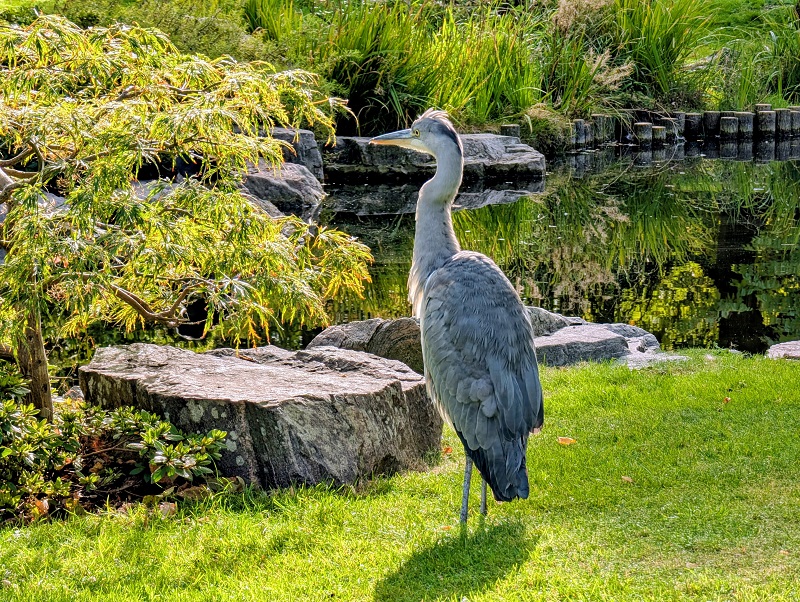
The Kyoto Garden is a serene oasis within Holland Park, bringing an authentic expression of Japanese landscape design to west London. Created in 1991 as a gift from the Kyoto Chamber of Commerce to mark the Japan Festival and celebrate UK–Japan friendship, it is meticulously composed to foster calm and reflection. A koi-filled pond forms the focal point, with winding paths offering gentle transitions between views.
A tiered waterfall cascades into the central pond, its sound softening the city’s bustle and setting a meditative tone. Traditional elements—stone lanterns, carefully placed rocks, and a graceful bridge—are integrated with sculpted planting to achieve harmony between water, stone, and foliage. Japanese maples provide striking seasonal interest, their delicate forms and colours enriching the garden’s changing moods.
Peacocks sometimes wander through the space, adding to the sense of discovery as visitors move between viewpoints. Though compact enough to walk in minutes, the garden reveals layered perspectives from thoughtfully positioned benches and paths. Open year-round, it invites quiet pauses in every season, from spring blossoms to autumn colour and crisp winter light.

The Ruins of Holland House
At the heart of Holland Park stand the evocative ruins of Holland House, a magnificent Jacobean mansion that has shaped the park's landscape for over 400 years. Originally built between 1605 and 1608 as Cope Castle for Sir Walter Cope, a diplomat who served as Chancellor of the Exchequer under King James I, the grand country house represented one of the finest examples of Jacobean architecture in England. The building passed by marriage in 1612 to Henry Rich, who became the 1st Earl of Holland in 1624, giving the house the name it would retain for centuries.
Throughout the 18th and 19th centuries, Holland House achieved fame as a renowned gathering place for Whig politicians and became the de facto headquarters of the Whig party. The Fox family, who occupied the house and gained the Baron Holland title, transformed it into one of London's most celebrated literary and political salons. The glittering social circle that gathered within its walls included luminaries such as Lord Byron, Caroline Lamb, Lord Melbourne, and Charles Dickens, making Holland House a vibrant centre of intellectual and political life during the Victorian era. As late as 1939, King George VI and Queen Elizabeth, the Queen Mother, attended a debutante ball at the house, marking its final grand social occasion.
Tragedy struck during the Second World War when German firebombing during the Blitz in 1940 largely destroyed this architectural treasure. Incendiary bombs gutted the building, leaving only the east wing intact and reducing much of the structure to haunting ruins. Today, the fragmentary remains of the ground floor and south facade create a dramatic and atmospheric backdrop, with weathered stone walls and empty window frames standing as poignant reminders of the building's former grandeur. The ruins were designated a Grade I listed building in 1949, recognising their exceptional historical and architectural significance. The surviving east wing now operates as a youth hostel, whilst a section of the front terrace provides a unique and evocative setting for the park's summertime cultural offerings.
Opera Holland Park and Cultural Events
The ruins of Holland House create an extraordinary venue for Opera Holland Park, the acclaimed summer opera festival that has become one of London's most beloved cultural events. Every summer, a purpose-built theatre is erected against the backdrop of the mansion's romantic ruins, creating an unforgettable setting for world-class opera performances. The company presents a varied programme of operatic works, ranging from well-known classics to rarely performed pieces, with recent seasons including productions of Wagner's The Flying Dutchman and Donizetti's Lucia di Lammermoor.
Opera Holland Park has established itself as London's biggest summer opera festival, running for approximately three months each year and attracting audiences from across the Royal Borough and far beyond. The combination of excellent musical performances, the open-air theatre atmosphere, and the dramatic historical setting creates a truly magical experience, particularly as twilight falls and the ruins are illuminated against the evening sky. Beyond the main opera season, the venue hosts classical concerts and theatrical performances, making it a vibrant centre for the performing arts throughout the summer months.
Sports and Recreation
The southernmost section of Holland Park caters extensively to sports enthusiasts and active visitors, featuring an impressive array of recreational facilities that rival dedicated sports complexes. The area includes cricket and football pitches, netball courts, tennis courts, and dedicated practice nets for both golf and cricket, allowing visitors to hone their skills in a beautiful parkland setting. An outdoor gymnasium provides modern fitness equipment for those seeking a workout surrounded by nature, whilst a giant outdoor chess set offers a more cerebral challenge for strategic minds.
These facilities can be booked for regular use, making the park a popular destination for local sports clubs and fitness enthusiasts. The well-maintained pitches and courts ensure high-quality playing surfaces, whilst the natural surroundings create a far more pleasant environment than typical urban sports facilities.
Family Attractions
Families particularly appreciate Holland Park's excellent provision for children, with two distinct playground areas catering to different age groups. The adventure playground, designed for children aged five to 14, stands out as one of London's most exciting play spaces, featuring a 25-metre zip wire that provides thrilling rides across the playground, a challenging climbing wall, a popular tyre swing, and an impressive 10-person see-saw that encourages cooperative play. These facilities offer children genuine adventure and physical challenges in a safe, supervised environment.
Younger children enjoy a separate fenced play area specifically designed for under-fives, ensuring that toddlers and pre-school children can play safely without the hazards posed by older children's more boisterous activities. This thoughtful separation allows families with children of different ages to enjoy the park simultaneously whilst ensuring everyone has age-appropriate facilities.
Holland Park Café and Dining
The Holland Park Café provides a welcoming spot for refreshments, offering both indoor seating and an attractive terrace where visitors can relax whilst enjoying views across the park. The café serves a comprehensive selection of hot and cold drinks, including quality coffee and tea, alongside cakes, pastries, light meals, and snacks. The terrace seating proves particularly popular during fine weather, allowing visitors to extend their park experience whilst refuelling with refreshments.
For those seeking a more refined dining experience, the Belvedere Restaurant, housed within the park's historic orangery, offers upscale southern Italian cuisine in elegant surroundings. The restaurant's setting amidst the rose gardens and formal parkland creates a romantic atmosphere, making it a popular destination for special occasions and memorable meals.
Ecology Centre and Environmental Education
The Holland Park Ecology Centre, opened in 2013, serves as the base for the Royal Borough's Ecology Service and provides an important focus for environmental education and conservation activities. The centre offers an extensive programme of activities designed to help visitors understand and appreciate the park's rich biodiversity, including guided nature walks led by knowledgeable ecologists, informative talks on various environmental topics, engaging school holiday activities for children, and outdoor education programmes that connect young people with nature.
These programmes play a vital role in fostering environmental awareness and helping both children and adults develop a deeper understanding of urban ecology. The centre's activities highlight the remarkable diversity of flora and fauna thriving within the park's 54 acres, from the ancient woodland trees to the variety of birds, insects, and mammals that call Holland Park home. Recent educational programmes have included sessions on proud peacocks, wild woods storytelling, and various nature-based craft activities that combine learning with creative expression.
Visitor Information and Accessibility
Holland Park opens daily from 7.30am until 30 minutes before dusk, with closing times displayed at all entrances to ensure visitors have clear information. Some gates may close up to 20 minutes ahead of the advertised closing time, so visitors should plan accordingly. The park is free to visit, making it accessible to everyone, though some activities and events, particularly Opera Holland Park performances and certain sports facilities, may require purchased tickets or booking fees.
The park provides good accessibility for disabled visitors, with level access available at several entrances including North Abbotsbury Road, Ilchester Place, Duchess of Bedford Walk, and High Street Kensington. However, visitors should note that the entrance on Holland Park Road and the Abbotsbury Road South entrance are on steep inclines and may not be suitable for wheelchair users or those with mobility challenges. Disabled parking is available at the car park located just off Abbotsbury Road, though this entrance also features a steep incline and is primarily suitable for disabled visitors arriving by vehicle.
Disabled toilet facilities are available at both the Stable Yard, which includes a Changing Places facility, and the adventure playground, ensuring that visitors with accessibility needs are well catered for throughout the park. The park management maintains these facilities to high standards, recognising the importance of providing inclusive access to this cherished green space.
Park Regulations
To preserve the park's beauty and ensure all visitors can enjoy the space, certain rules apply. Barbecues are not permitted anywhere in the park, protecting both the grass and the safety of visitors. Events and professional photography require advance permission from the park management. Dogs must be kept on leads in the woodland areas and formal gardens to protect wildlife and other visitors, and dogs are not permitted in the Japanese Garden to preserve its tranquil atmosphere and protect the koi carp. Cycling is prohibited throughout the park, maintaining a peaceful environment for pedestrians. Personal trainers are requested not to use park furniture for exercise purposes, ensuring facilities remain available for general use.
These regulations help maintain Holland Park's character as a peaceful, beautiful space where nature, history, and recreation combine to create one of London's most treasured green sanctuaries.
Getting There
Reaching Holland Park is straightforward: the nearest Underground stop is Holland Park on the Central line, placing you right by Holland Park Avenue and an easy stroll into the park and surrounding neighbourhoods. You can also arrive via nearby stations such as Notting Hill Gate and Kensington (Olympia) for Circle, District, and Overground connections, with a pleasant 10–15 minute walk from each. Frequent buses along Holland Park Avenue and Kensington High Street, including routes 9, 27, 28, 49, 94, 148, and C1, drop you close to the entrances and are handy if you’re coming from the West End or Kensington. If you’re starting centrally, direct Central line services run every few minutes from stations like Lancaster Gate and Tottenham Court Road to Holland Park, making the Tube the quickest option for most visitors. For those nearby, it’s an enjoyable walk from Notting Hill or High Street Kensington, with clear wayfinding and plenty of cafés en route.
Best Time to Visit
The best time to visit Holland Park is spring through early autumn, when the gardens are at their most colourful and the weather is mild enough for leisurely walks and picnics, with May a standout for blossom and vibrant tulips in the formal beds and the Kyoto Garden looking especially lush. Summer adds open-air performances from Opera Holland Park and longer daylight for tranquil late-afternoon strolls, though it can be busier on sunny weekends. For fewer crowds, aim for weekday mornings in late spring or early autumn, when temperatures are comfortable and the peacocks, borders and woodland feel serene. The park opens daily from early morning until around dusk, so arriving soon after opening gives the calmest experience and the softest light for photos.