


 Ireland Guide
 Scotland Guide
 Wales Guide
| Contents |
|---|
Introduction
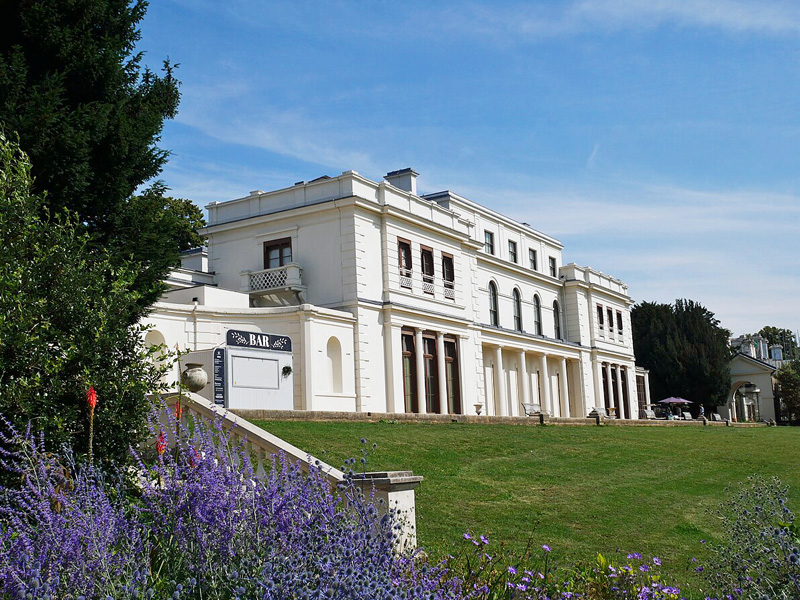
Set between Ealing, Chiswick and Brentford, Gunnersbury House & Park blends stately-home elegance with expansive green space: a restored Grade II* mansion housing the Gunnersbury Park Museum, formal gardens and lakes, romantic follies, a handsome Orangery, and sweeping lawns ideal for picnics. Once a Rothschild estate, today it balances heritage with community life, offering exhibitions, seasonal events, a welcoming café, and a modern sports hub amid 186 acres of landscaped parkland. With easy links via Acton Town and Gunnersbury stations, it’s an effortless escape from central London, perfect for families, history lovers, and anyone seeking a serene West London wander.
Interesting Facts about Gunnersbury House & Park
- Once a grand Rothschild estate, Gunnersbury House & Park became a public park in 1925 when local authorities purchased 75 hectares from the family to preserve it for community use.
- The site has two historic mansions, the Large Mansion (Grade II*) and the Small Mansion (Grade II), reflecting early 19th-century development on what had been a single estate since the 1700s.
- Princess Amelia, favourite daughter of George II, owned Gunnersbury in the 18th century, making it famous for lively gatherings and adding a romantic bathhouse to the grounds.
- The park’s name is linked to Gunylda, niece of King Cnut, echoing a Saxon origin long before its Georgian mansions and landscaped gardens took shape.
- The Large Mansion was remodelled by architect Sydney Smirke after Nathan Mayer Rothschild bought the estate in the 1830s, gaining elegant stuccoed façades and grand reception rooms.
- Gunnersbury Park Museum opened in 1929 and now holds tens of thousands of items telling the story of Ealing and Hounslow, from fashion to film and local sport.
- Landscape designers associated with the estate include William Kent and J. C. Loudon, whose layered interventions helped shape its lakes, pleasure grounds, and picturesque features.
- A major restoration in the late 2010s revitalised the historic park and museum, bringing historic interiors, gardens, and sports facilities back into vibrant public use.
- The park’s Victorian kitchens, orangery, and ornamental features evoke the heyday of aristocratic entertaining, when even King Edward VII was among the distinguished guests.
- Today the estate blends heritage and leisure, with galleries on local culture, links to nearby Ealing Studios, and wide lawns, woodlands, and lakes for year-round recreation.
History
Gunnersbury House & Park has a rich and fascinating history stretching back over a millennium, with its name deriving from Gunylda, the niece of King Canute who lived there until her banishment from England in 1044. The estate was first recorded in 1347 as part of the vast Manor of Fulham, owned by the Bishop of London, and described around 1378 as a small estate of both arable and pasture land in rather run-down condition. For the next 200 years it was held by the Frowykes, a family of London merchants and lawyers, who likely established a manor house near the junction of today's Popes Lane and North Circular Road, with archaeological evidence suggesting it was enlarged and upgraded in the late 15th century as fashionable brick and tile replaced timber and thatch.
The estate's transformation into a grand residence began when Sir John Maynard, a successful lawyer from Tavistock, acquired the property during Cromwell's Protectorate in the mid-17th century and built a magnificent Palladian mansion designed by John Webb, pupil and son-in-law of Inigo Jones, around 1663. The house, modelled on the Villa Badoer and featuring 44 hearths, was the largest in the area and even visible from across the river in Richmond. After passing through several hands, including wealthy merchant and MP Henry Furnese in 1730, who commissioned William Kent to landscape the grounds in the fashionable 18th-century style, the estate was purchased by Princess Amelia, daughter of George II, in 1762 as a summer country retreat. Princess Amelia made Gunnersbury famous with her lavish parties and political intrigues, adding a shell grotto, chapel, and mews for 14 horses and 7 carriages.
The Rothschild era began in 1835 when Hannah Rothschild purchased the Large Mansion and its estate from Alexander Copland's executors for £17,000 on behalf of her husband Nathan Mayer Rothschild, making it the first grand residence acquired by the Rothschild family in England. Though Nathan died shortly after in 1836, his son Lionel transformed the property, enlarging the park in 1861, adding a pleasure lake and boathouse, and installing modern conveniences including gas lighting and water closets. Under Leopold de Rothschild, who inherited the estate in 1884 and reunited it with the neighbouring Small Mansion in 1889, Gunnersbury reached its zenith with the creation of spectacular themed gardens including one of Britain's earliest Japanese gardens in 1901, complete with bamboo avenues, a bamboo bridge, and an elegant tea house that caused a sensation. In 1925, the 200-acre estate was sold to Ealing Borough Council and Acton Borough Council for £125,000 and opened as a public park by Neville Chamberlain on 21 May 1926, with the Large Mansion becoming the Gunnersbury Park Museum in 1929. Following a £50 million four-year restoration supported by the Heritage Lottery Fund, the museum reopened in June 2018, preserving this remarkable testament to centuries of English social and architectural history.
Description
The Historic Mansions
At the heart of the park stand two distinctive Georgian mansions, each with its own architectural character and historical significance. The Large Mansion, a neoclassical structure displaying strong Palladian influences, serves as the magnificent centrepiece of the entire estate and houses the comprehensive Gunnersbury Park Museum. Following an ambitious £50 million restoration project completed in 2018, the building has been meticulously restored to showcase both its architectural elegance and its contemporary function as a museum and community space. The restoration revealed and preserved many original features whilst sensitively incorporating modern facilities necessary for a 21st-century museum.
The mansion's interior presents a remarkable collection of elegant rooms designed in the early 19th century by the distinguished architect Sydney Smirke, predominantly executed in the French 18th-century style. The entrance hall features an impressive open-well staircase adorned with delicate foliate wrought-iron balustrade, a garlanded guilloche frieze beneath a moulded enriched cornice, and an ornate foliate ceiling boss that immediately establishes the grandeur of the interior. The panelled doors throughout are set in raised architraves with bracketed cornices, complemented by original shutters that demonstrate the quality of craftsmanship.
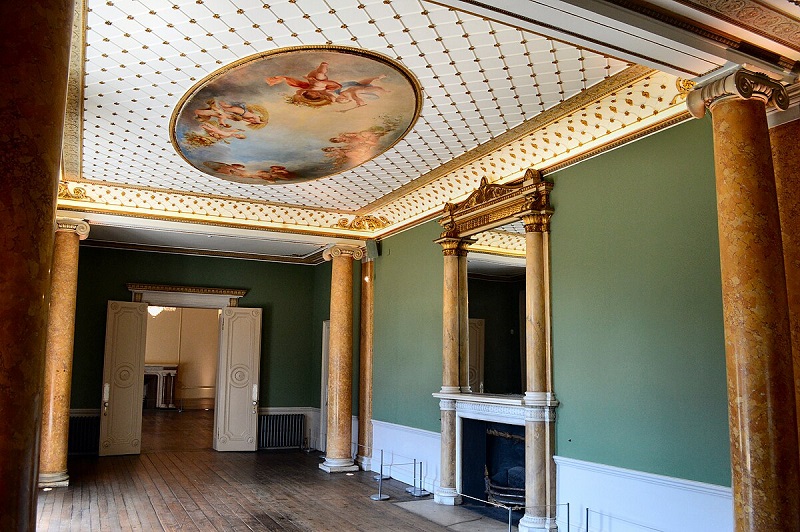
The former music room, one of the mansion's most spectacular spaces, displays exceptional plasterwork with naturalistic fruit and foliage adorning the ribs that divide the ceiling panels. Eagle brackets support a semi-circular arched tympanum bearing the Rothschild arms above the doorway, whilst bracketed foliate cornices frame two additional doorways flanking a festooned marble fireplace featuring putti and angled console brackets. The former drawing room showcases impressive Ionic scagliola columns that separate narrow end bays, with a fireplace framed by similar scagliola columns beneath a tall overmantel mirror, all surmounted by a gilt bay-leaf pulvinated frieze leading to a stele-type swan-necked pediment decorated with antefixae. The coved cornice frames a star-spangled ceiling featuring an oval painting of The Four Seasons by Edmond Thomas Parris.
The Rothschild Rooms on the ground floor have been beautifully restored and remain available for venue hire, maintaining their role as spaces for elegant entertaining. The Drawing Room retains its original architectural features, including classical ornamental columns adorned with golden lyres incorporating the monogram of Nathan Mayer Rothschild—a distinctive touch reflecting the family's identity. Three stunning French doors open onto the terrace and south lawns, recreating the seamless indoor-outdoor entertaining experience that the Rothschilds enjoyed when hosting their distinguished guests. The room's proportions and decorative details create an atmosphere of refined elegance suitable for dining up to 80 guests, standing receptions for 100, or theatre-style seating arrangements for 90.
The Small Mansion, built in the early 19th century, stands virtually alongside its larger counterpart on an elevated terrace commanding views over the horseshoe-shaped Horseshoe Pond. This additional mansion, though more modest in scale, contributes significantly to the estate's architectural ensemble and historical character. Together, these two buildings form a striking architectural pairing that dominates the parkland vista, each contributing distinct elements to the estate's overall grandeur.
The Comprehensive Museum Collection
Gunnersbury Park Museum, established in 1929 as a local history museum, houses an extraordinary collection of approximately 50,000 museum and archive items that provide fascinating and detailed insights into the heritage, culture, and daily life of the Ealing and Hounslow boroughs. The museum presents around 450 carefully selected objects across nine permanent exhibition galleries spread over three floors, each gallery dedicated to different aspects of local history, culture, and social development.
The Skylight Gallery, positioned to welcome visitors, serves as an introductory space explaining the evolution of the Gunnersbury Estate from its origins in the 13th century through to the present day. This gallery provides an overview of the museum's diverse collections and the types of objects visitors will encounter throughout their visit. Among the beloved highlights displayed here are the charming 1880s doll's house, complete with period furnishings and miniature domestic details that captivate both children and adults; the Stanhope printing press from 1804, representing early printing technology; and the iconic neon Lucozade sign that overlooked the M4 motorway for many decades, serving as a landmark familiar to countless motorists.
The People and Place Gallery presents a comprehensive local history narrative chronicling how Ealing and Hounslow developed over millennia, from the earliest Palaeolithic inhabitants through to contemporary times. Archaeological displays reveal evidence of ancient settlement patterns and daily life, whilst biographical exhibits celebrate individuals whose achievements brought distinction to the area. The gallery honours remarkably diverse figures including Eric and Jessica Huntley, pioneering black booksellers and publishers; Freddie Mercury, the legendary Queen frontman; Pocahontas, the Native American woman who spent time in the area and died in Gravesend; and William Perkin, the teenage chemist who accidentally discovered the first synthetic aniline dye whilst working in his laboratory. These stories represent the 17 principal villages that constitute the modern boroughs of Ealing and Hounslow, demonstrating the area's rich multicultural heritage.
The Butler's Pantry offers visitors an intimate and atmospheric glimpse into the complex world of domestic service in a grand country estate. Here, visitors meet Mr Shepherd, the Gunnersbury Park House butler, through interpretive displays that explain the intricate hierarchy and daily responsibilities required to maintain a household of this scale. The gallery explores the extensive staff employed by the Rothschild family, detailing their various roles from scullery maids to head gardeners, and displays objects related to the practical running of a large estate, including household accounts, service bells, livery, and various domestic implements.
The Toys and Games Gallery delights visitors of all ages with charming items from the museum's extensive childhood collection. Among the treasures on display are a model sailing boat that was once sailed upon Gunnersbury's Round Pond by children of earlier generations; the famous pedlar doll complete with 50 meticulously crafted miniature wares; Graduation Barbie reflecting changing educational aspirations; and C-3PO representing the enduring appeal of the Star Wars franchise. These objects trace changing patterns of play, technological innovation in toy manufacturing, and evolving childhood experiences across different social classes and time periods.
The Home Gallery explores the social history of local residents through multiple lenses, examining how people lived, learned, worshipped, and cared for their health. One section investigates healthcare provision before the National Health Service was founded in 1948, revealing the challenges faced by working-class families and the crucial role of charitable institutions. Educational displays examine the schools that children and adults attended, showing how educational opportunities expanded over time. Given that over half a million people now live in the two boroughs, the gallery also explores the remarkable variety of religions practised in the area, reflecting successive waves of immigration and the borough's contemporary multicultural character.
The Fashion Gallery showcases treasures from Gunnersbury's extensive and historically significant costume collection. On display are the museum's oldest complete textiles, including an exquisite 1760s court dress with elaborate embroidery and construction details that reveal the exceptional craftsmanship of 18th-century mantua-makers, and a delicate 1675 baby's cap demonstrating the importance placed on infant dress even in earlier centuries. The gallery also features more modern party outfits spanning the 19th and 20th centuries, illustrating changing fashions, social conventions, and the evolution of textile manufacturing and garment construction.
The Industry Gallery reveals how West Londoners have earned their livelihoods over the past two centuries, with particular focus on the area's significant industrial heritage. The Great West Road, constructed in the 1920s and 1930s, attracted numerous manufacturing companies who built striking Art Deco factories that became landmarks. The gallery displays products from household names including Hoover vacuum cleaners, Lucozade energy drinks, Firestone tyres, and Brompton folding bicycles—all manufactured locally and distributed nationally and internationally. Additional displays explore the South Acton laundries that employed hundreds of local women, and other industries that shaped the economic and social character of west London.
The museum also hosts regularly changing temporary exhibitions in a dedicated Special Exhibition gallery throughout the year, ensuring repeat visitors encounter fresh content. Previous exhibitions have explored diverse themes ranging from ceramics and quilts to South Asian identity, local artistic talents, and photographic surveys of the changing urban landscape. The museum's collections extend far beyond objects on display, encompassing substantial archaeological artefacts spanning from prehistoric times through the early modern period, comprehensive industrial heritage relating to the famous factories and laundries, and extensive photographic archives documenting local landmarks, street scenes, and residents across generations.
The Historic Gardens and Varied Parkland
Gunnersbury Park's gardens represent a remarkable and rare example of late 19th-century landscape design, developed extensively under Leopold de Rothschild's patronage into one of England's leading woodland gardens. The Rothschild family invested enormous resources in introducing numerous new plant species from Asia, creating a botanical collection of national importance that reflected the Victorian passion for exotic horticulture and botanical exploration. The park presents a diverse and carefully composed tapestry of landscapes, progressing from formal architectural gardens near the mansions to naturalistic woodlands in the outer reaches, offering constant visual interest and discovery opportunities throughout the changing seasons.
The Italian Garden, positioned behind the elegant 18th-century Temple structure, features geometric forms and ordered planting schemes inspired by 14th-century Italian Renaissance gardens. Recently replanted with roses following historical research into the garden's various incarnations, this formal garden provides a structured, symmetrical counterpoint to the park's more naturalistic areas. The garden has been known by various names throughout its history: it was called the circular garden in 1835 when it was surrounded by roses trained on decorative wirework; the Temple Garden in 1906 when water features were first documented around the central sundial; and an "old time garden" in 1910. This evolution reflects changing horticultural fashions and the garden's continuous adaptation whilst maintaining its essential character.
The Temple itself, a Grade II* listed building of exceptional architectural and historical significance, overlooks the Round Pond from which it is separated by low iron railings and a narrow sloping lawn planted with specimen trees. This distinguished red brick building features a white wooden pedimented south front with four impressive Doric columns on a stylobate of five steps, creating a classical composition of harmonious proportions. The columns have distinctive square bases, and the entablature displays authentic guttae, triglyphs, and carefully carved metopes. The pediment contains a cartouche and carved garlands in the tympanum, whilst the wall behind the portico features a dado and two semi-circular arched niches housing plaster-cast statues on pedestals. Built before 1760, probably on Princess Amelia's instructions during the five years of negotiations preceding her purchase of the house, and possibly designed by the celebrated architect Sir William Chambers, the building was known in the late 18th century as the Dairy. The interior ceiling displays elegant octagonal caissons, and the building sits above cellars that once provided cool storage for dairy products. The Temple is now available for private hire as a distinctive venue for ceremonies and intimate celebrations.
The Round Pond, now partly enclosed in iron railings, first appears on Nichol's map of 1777 and is thought to date from Princess Amelia's ownership, probably created simultaneously with the Temple as a complementary landscape feature. Since the 1920s, the pond has served as a boating lake where children have sailed model boats, and it continues to function as a stock pond for fish, supporting aquatic wildlife. Many of the majestic cedar trees that were originally planted around the Temple to frame views and provide shade were tragically lost in the devastating storms of October 1987, though replanting programmes have introduced new specimens to gradually restore the original landscape composition.
The Japanese Garden, created in 1901, caused a sensation throughout horticultural circles when first planted and represented one of the earliest and most ambitious examples of Japanese-inspired landscaping in England. Leopold de Rothschild commissioned this innovative garden at the height of the Japonisme movement that swept through European culture following Japan's opening to the West. The garden originally featured an extraordinary bamboo avenue utilising 30 different species and varieties collected from across Asia, demonstrating the Rothschild family's access to rare plant material through their international networks. A delicate bamboo bridge crossed a stream, and an elegant tea house inspired by gardens at Lake Como in Italy provided a contemplative pavilion—this was the most formal and architecturally developed component of the entire Rothschild landscape scheme.
Whilst only fragments of this remarkable garden survive today due to decades of neglect and the inherent difficulty of maintaining such specialised plantings, recent conservation efforts signal renewed commitment to the Japanese Garden's significance. In 2022, a grove of 80 cherry trees was planted as part of the Sakura cherry tree project, creating spectacular spring blossom displays. The park authorities hold ambitions to research and gradually recreate more elements of the original design, consulting historical photographs, plans, and plant lists to guide authentic restoration.
The parkland incorporates numerous additional garden features reflecting the Rothschilds' sophisticated horticultural interests. A rock garden demonstrates the Victorian fascination with alpine plants and dramatic stone formations. Mediterranean borders burst with vibrant colour from drought-tolerant perennials and aromatic herbs that thrive in sunny, well-drained positions. An eye-catching cornflower meadow blooms spectacularly during summer months, creating drifts of intense blue flowers that attract butterflies and other pollinators. The varied planting schemes, ranging from heath gardens showcasing ericaceous plants to bamboo collections demonstrating the extraordinary diversity within a single plant genus, reflect the Rothschild family's passion for botanical collecting and their determination to showcase rare and exotic specimens acquired from plant hunters exploring remote regions.
The Orangery, designed by the renowned architect Sydney Smirke in 1836, stands as a stunning example of early Victorian glass and iron architecture. This elegant structure originally housed the family's extensive collection of tender plants during winter months, including exotic fruits such as oranges, lemons, and other citrus varieties that required protection from frost, alongside camellias, palms, and other ornamental species. Following comprehensive restoration, the building has been gloriously returned to its original splendour, with the delicate glazing bars and iron framework carefully conserved. The sparkling water of the Horseshoe Pond that sits directly in front of the Orangery offers beautiful reflections of the building, interrupted only by a charming ornamental fountain that adds movement and sound to the scene. Whilst the allure of exotic flora filling the interior may belong to the past, the beauty of the Orangery itself endures, now available for hire as a romantic ceremony venue, an intimate dinner location, or an evening reception space accommodating up to 80 guests.
Picturesque Water Features
The park contains several historically significant and visually striking water features that enhance both its aesthetic appeal and recreational opportunities whilst providing valuable wildlife habitat. The Horseshoe Pond, named for its distinctive curved shape, occupies a prominent position near the original mansion site, creating an elegant landscape feature that reflects the surrounding trees, architectural elements, and changing sky. The pond's graceful curve and the relationship between water and surrounding plantings demonstrate sophisticated understanding of picturesque landscape principles. During warmer months, visitors can enjoy boating on the lake, a traditional leisure activity that has been popular at Gunnersbury since the Rothschild era and continues to attract families seeking gentle waterborne recreation.
The Potomac Lake, located in the south-western section of the park, has a fascinating history as it was created through the imaginative transformation of an old clay-pit known locally as "Cole's Hole". In 1874, Lionel de Rothschild engaged the distinguished landscape firm of James Pulham & Son to convert this industrial scar into a romantic boating lake. The adjacent disused tile-kiln was ingeniously transformed into a picturesque boathouse disguised as a Gothic folly tower, adding romantic architectural interest and historical narrative to the waterside setting.
The Gothic Boathouse represents a remarkable example of Victorian architectural imagination and represents the Pulham firm's expertise in creating artificial rockwork and landscape features. The mid-19th-century structure displays Gothic Revival detailing with battlemented parapets and pointed arch openings. An inlet was cleverly cut underneath the former kiln, allowing boaters to descend to a landing stage via steps leading down from the ground floor entrance—the view from lake level reveals the ingenious integration of old industrial structure and new romantic function. During drought periods, background brickwork becomes visible where the Pulhamite coating (a proprietary artificial stone material) has become detached over the years, revealing the construction techniques. A small balustraded bridge spans the inlet, and though the balustrading has suffered damage over time, Pulham's manufacturer's stamp can still be discerned embossed into the terracotta of remaining balustrades. This Grade II listed building currently faces conservation challenges and is classified as at immediate risk of further rapid deterioration, with stakeholders exploring funding sources for comprehensive restoration.
These water features collectively support diverse aquatic and marginal plant communities, provide breeding habitat for waterfowl, and create tranquil spots for contemplation, wildlife observation, and photography throughout the year.
Comprehensive Sports and Recreation Facilities
The newly constructed Gunnersbury Park Sports Hub provides extensive state-of-the-art sporting facilities designed to serve visitors of all ages, abilities, and sporting interests. The development represents significant investment in community health and recreation, offering affordable access to quality facilities that might otherwise be unavailable to many local residents.
The hub features a large, modern 100+ station gym with dedicated zones designed for different training goals and fitness levels. Cardiovascular equipment includes treadmills, cross-trainers, rowing machines, and exercise bikes with integrated entertainment systems. Resistance training areas provide free weights, cable machines, plate-loaded equipment, and pin-loaded stations targeting all major muscle groups. The gym also incorporates functional training spaces with equipment for bodyweight exercises, kettlebell training, and dynamic movements. Two group exercise studios host a comprehensive timetable of instructor-led classes ranging from yoga and Pilates to high-intensity interval training and dance-based workouts, with automated virtual class options providing additional flexibility when live instruction is unavailable. A dedicated group cycle studio features high-energy lighting, premium stationary bikes, and immersive audio systems that recreate the experience of outdoor cycling through varied terrain and intensity levels.
The substantial Sports Hall comprises five courts available for individual or block hire, offering competition-standard facilities for multiple sports. The hall accommodates handball, futsal, and volleyball at professional standards, whilst also supporting basketball and badminton at various skill levels. The facility's spacious, open design with high ceilings ensures comfortable play conditions, making it ideal for both casual family games and competitive league matches. Court markings for different sports are clearly indicated, and adjustable net systems allow rapid conversion between activities.
Outdoor provision extends across extensive areas of the park, including eight floodlit tennis courts that enable play throughout the day and evening regardless of season. The all-weather synthetic surfaces drain effectively and provide consistent bounce characteristics. Two full-size 3G football pitches feature the latest generation artificial turf that closely replicates natural grass playing characteristics whilst providing year-round availability regardless of weather conditions. These pitches host both casual kickabouts and organised league football. Ten traditional grass pitches accommodate football, rugby, and cricket depending on the season, with careful maintenance ensuring high-quality playing surfaces. Junior pitches scaled appropriately for younger children provide safe environments where players can develop fundamental skills and game understanding without being overwhelmed by full-size playing areas. During school holidays, the hub runs multi-sport activity camps packed with games, coaching, and social activities designed to keep children active and engaged.
The park also maintains two bowling greens where traditional lawn bowls clubs meet regularly for competitive and social play. Pitch and putt golf provides an accessible introduction to golf requiring less time and lower costs than full-size courses, perfect for families and beginners. Fishing opportunities attract anglers seeking peaceful recreation alongside the park's lakes, where careful management ensures sustainable fish populations. Well-maintained children's playgrounds cater to different age groups with age-appropriate equipment, surfacing, and layouts that encourage active play, imaginative games, and social interaction.
Visitor Facilities and Amenities
Gunnersbury Park provides comprehensive visitor facilities thoughtfully designed to ensure comfort, accessibility, and convenience for all visitors. An on-site café serves refreshments ranging from morning coffee and pastries through light lunches to afternoon tea, providing a convenient spot to rest and refuel between exploring the extensive grounds. The park's ample open lawns, positioned to offer both sunny and shaded locations depending on weather and personal preference, create perfect settings for picnics, allowing families and groups to enjoy outdoor dining surrounded by pleasant parkland scenery.
The sports hub offers free Wi-Fi throughout its facilities, enabling visitors to stay connected, stream workout content, or catch up on messages. Modern changing rooms provide secure locker facilities, showers, and preparation areas for sports participants. Accessible toilets ensure visitors with mobility impairments can use facilities with dignity and independence. Baby changing facilities support families with young children, and comprehensive wheelchair-friendly access throughout the site ensures people with mobility limitations can navigate freely and participate fully in available activities.
The elegant Park View Suite provides flexible space suitable for conferences, business meetings, training sessions, and private events, equipped with modern audio-visual technology and configurable seating arrangements. The historic Rothschild Rooms, with their architectural distinction and period features, offer prestigious venues for corporate dinners, wedding receptions, and formal celebrations. The Temple and Orangery, set within the parkland and framed by mature trees and garden features, create romantic settings for ceremonies and intimate gatherings. This versatility makes Gunnersbury an attractive venue for both corporate clients and private individuals seeking distinctive locations that combine historical atmosphere with modern facilities.
Wildlife and Ecological Significance
The extensive parkland, with its mature trees including famous cedar specimens planted by the Rothschilds to create picturesque compositions, provides crucial habitat for urban wildlife in an increasingly built-up area of west London. The varied landscape mosaic—comprising woodlands with multi-layered vegetation structure, open grasslands managed to encourage wildflowers, and water features supporting aquatic communities—sustains diverse ecosystems valuable for both biodiversity conservation and environmental education. Birdwatchers regularly record numerous species ranging from common garden birds to less frequently encountered woodland specialists and waterbirds. The park's ecological value extends beyond birds to include mammals, insects, and plant communities that collectively represent important reservoirs of biodiversity within the urban matrix.
In a notable ecological initiative launched in July 2024, two Kunekune pigs were introduced to graze in designated areas of the park. This represents the first time in Gunnersbury's documented history that pigs have been employed for conservation grazing, an increasingly popular management technique. The pigs maintain shrub growth by browsing on young shoots and saplings, keep grass short through grazing, disturb soil through rooting behaviour which creates germination opportunities for plants, and attract public interest in conservation management approaches. This innovative management strategy demonstrates contemporary approaches to parkland maintenance that work with natural processes rather than relying solely on mechanical interventions.
Museum and Park Access
The museum welcomes visitors Tuesday to Sunday from 10am until 4:30pm, with free admission allowing unrestricted access to all permanent collection galleries and exhibition spaces. This generous access policy ensures cost is no barrier to cultural engagement and enables repeat visits to explore the collections in depth. The park itself opens daily from 7am until dusk, providing ample opportunity for early morning walks when bird activity is at its peak, leisurely afternoon visits exploring the various garden areas, or evening strolls as the light softens and the park takes on a different atmosphere. This extended access enables the site to serve as a valuable daily resource for local residents engaged in regular exercise, dog walking, or simply seeking green space, whilst simultaneously attracting visitors from across London and further afield who come specifically to explore the gardens, architecture, and museum collections.
Getting There
Gunnersbury Park & Museum sits between Acton and Ealing, with several handy routes: take the Piccadilly or District line to Acton Town and walk about 10 minutes along Gunnersbury Lane and across the North Circular to the Popes Lane entrance, or use the Piccadilly line to South Ealing and stroll along South Ealing Road before turning onto Popes Lane, with the E3 bus also linking South Ealing to the park gates for an easier approach. Overground and South Western Railway trains to Kew Bridge offer another pleasant approach: head left out of the station, cross the A4 via the pedestrian crossing, and enter at the southern Lionel Road gate in roughly 10 minutes on foot. Frequent buses stop right by the park, including the E3 to the Popes Lane entrance, the 65 along South Ealing Road (connect to E3 or walk Popes Lane), and the H91 from Hammersmith/Chiswick to Lionel Road North near the southern gate. Cyclists and walkers can enter via multiple gates on Lionel Road, Popes Lane and the North Circular, with bike racks by the museum and Sports Hub; for drivers, signed entrances on Popes Lane lead to car parks near the Sports Hub or museum, with Blue Badge bays available.
Best Time to Visit
The best time to visit Gunnersbury House & Park is late spring to early autumn, when the formal gardens are in bloom, the lawns are ideal for picnics, and the lakeside views are at their prettiest, with longer daylight hours to explore the grounds and the Georgian features at a leisurely pace. Aim for a weekday morning in May or June for quieter paths and milder temperatures, or a sunny September afternoon after the summer rush; the museum typically opens Tuesday to Sunday, so plan a combined indoor–outdoor visit within those days. In high summer, check for major events or festivals that can draw crowds and affect access, and arrive early if you want calm. Winter can be atmospheric for serene walks and bare-tree vistas, but shorter days and cooler weather mean focusing on the museum and a brisk circuit of the park.