


 Ireland Guide
 Scotland Guide
 Wales Guide
Introduction
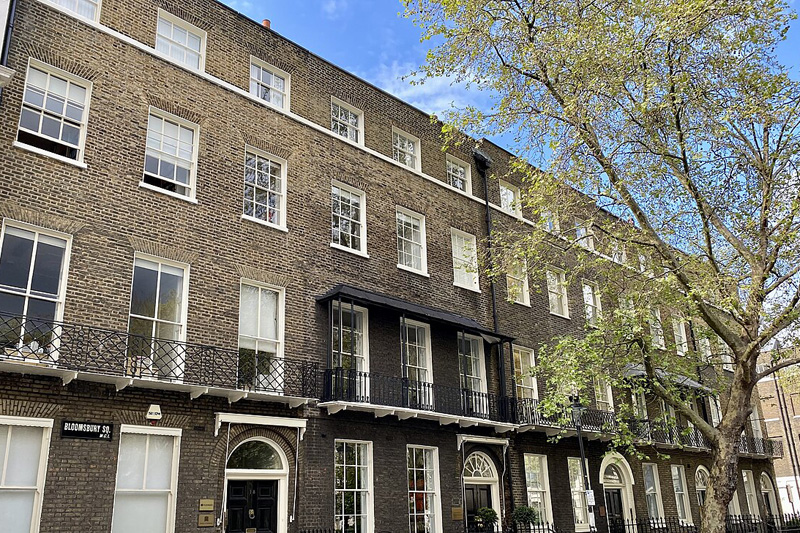
Scholarly yet surprisingly serene, Bloomsbury blends literary lore with leafy Georgian squares in the heart of London. Anchored by the British Museum and ringed by Russell and Bedford Squares, this cultured neighbourhood rewards slow wandering past bookshops, blue plaques and handsome terraces. Explore the legacies of the Bloomsbury Group, dip into the Charles Dickens Museum and the Foundling Museum, and admire Senate House’s Art Deco lines near UCL and SOAS. Pause for coffee on Lamb’s Conduit Street, browse Waterstones Gower Street, or refuel at the Brunswick Centre before an evening in the nearby West End. With excellent Tube links at Russell Square, Holborn and Tottenham Court Road, Bloomsbury makes an ideal base—close to the action yet calm—perfect for museum-hopping, academic curiosities and park-bench people-watching between lectures, galleries and gardens.
Getting to Bloomsbury
Bloomsbury boasts excellent transport connections, making it highly accessible from anywhere in London. The area is served by several Underground stations, including Russell Square (Piccadilly Line), Euston and King's Cross St Pancras (Northern and Victoria Lines), Tottenham Court Road (Central and Northern Lines), and Holborn (Central and Piccadilly Lines). Numerous bus routes traverse the district, including the 205, 390, 91, and 98. For those staying in central London, Bloomsbury is wonderfully walkable, allowing visitors to appreciate the architectural splendour of its terraced townhouses and leafy squares at a leisurely pace.
World-Class Museums and Collections
The British Museum
The British Museum on Great Russell Street stands as the crown jewel of Bloomsbury's cultural offerings. This magnificent institution houses over eight million objects spanning the entirety of human history and culture, from ancient civilizations to the modern era. The museum's highlights include the Rosetta Stone, Egyptian mummies, the Parthenon sculptures, and treasures from Mesopotamia, Asia, Africa, and the Americas. The Great Court, designed by Norman Foster and completed in 2000, is an architectural marvel featuring a spectacular glass and steel roof that creates a light-filled public space. Entry to the permanent collection is free, making it accessible to all visitors.
The Petrie Museum of Egyptian and Sudanese Archaeology
Tucked away within University College London, the Petrie Museum is one of Bloomsbury's hidden gems. Home to over 80,000 objects, it ranks amongst the world's largest collections of Egyptian and Sudanese material. Named after pioneering archaeologist William Matthew Flinders Petrie, the museum showcases items ranging from prehistoric times through the Pharaonic, Ptolemaic, Roman, and Coptic periods to the Islamic era. Unlike the British Museum's focus on monumental pieces, the Petrie specialises in everyday objects—combs, hair curlers, mirrors, razors, tunics, and sandals—that provide intimate glimpses into ordinary Egyptian life across millennia. The collection includes numerous "firsts," such as one of the earliest pieces of Egyptian linen (circa 5000 BC) and the only surviving veterinary papyrus from ancient Egypt. Entry is free, though the museum's compact size and atmospheric presentation within a former stable building create a treasure-hunt experience quite unlike larger institutions.
The Grant Museum of Zoology
The Grant Museum of Zoology, housed in the Rockefeller Building at University College London, is the only remaining university zoological museum in the capital. Founded in 1828 by Robert Edmond Grant as a teaching collection, it opened to the public in 1996. The museum's 68,000 specimens encompass the entire animal kingdom, including numerous rare and extinct species. Star attractions include the skeleton of the quagga—an extinct South African zebra of which only seven skeletons exist worldwide—dodo bones, and thylacine specimens. The museum underwent a £300,000 refurbishment and reopened in February 2024 with new showcases exploring humanity's impact on biodiversity. The collection retains the atmosphere of a Victorian collector's cabinet of curiosities, with skeletons, preserved specimens in jars, and Blaschka glass models of delicate marine invertebrates creating a macabre yet fascinating experience. Entry is free, with opening hours Tuesday to Friday 1pm-5pm and Saturday 11am-5pm.
The Wellcome Collection
Located on Euston Road, the Wellcome Collection offers a thought-provoking exploration of health, medicine, and the human condition through an innovative blend of science, art, and history. The museum features rare books, manuscripts, medical artefacts, and contemporary art installations that challenge visitors' perspectives on the body and wellbeing. Permanent galleries explore topics from the history of medicine to human anatomy, whilst temporary exhibitions tackle contemporary health issues through artistic lenses. Like most of Bloomsbury's museums, entry is free.
Sir John Soane's Museum
Just beyond Bloomsbury's southern edge, adjacent to Lincoln's Inn Fields in Holborn, sits Sir John Soane's Museum—one of London's most extraordinary house museums. The former home of the neo-classical architect Sir John Soane (1753-1837), the museum has been preserved exactly as it was at the time of his death, as stipulated by a private Act of Parliament passed in 1833. The three interconnected townhouses (numbers 12, 13, and 14 Lincoln's Inn Fields) contain Soane's vast collection of paintings, sculptures, architectural models, drawings, and antiquities. Highlights include the alabaster sarcophagus of Egyptian Pharaoh Seti I, displayed in the atmospheric Sepulchral Chamber, and works by Canaletto, Turner, and Hogarth. The museum's unique architecture features ingenious use of mirrors, hidden rooms, and dramatic lighting that creates an almost theatrical experience. The recently restored Drawing Office, the oldest surviving example of its kind, is now open to public tours for the first time in its 200-year history. The museum is open Wednesday to Sunday, 10am-5pm, with free entry, though only 90 visitors are permitted at any time to preserve the intimate atmosphere.
Charles Dickens Museum
At 48 Doughty Street stands the Charles Dickens Museum, the author's former residence and the only surviving London home of the great Victorian novelist. Here Dickens lived from 1837 to 1839 and wrote Oliver Twist, Nicholas Nickleby, and The Pickwick Papers. The museum displays original manuscripts, personal belongings, furniture, and portraits that illuminate Dickens's life and creative process. Period rooms have been meticulously restored to evoke the Victorian era, offering visitors an intimate connection with one of English literature's most celebrated figures.
Pollock's Toy Museum
Pollock's Toy Museum, housed in two interconnected historic houses, offers a charming and nostalgic journey through childhood. The collection focuses particularly on Victorian-era toys, including toy theatres, dolls, puppets, and board games. The museum's cramped, creaking rooms and narrow staircases add to its quirky, old-fashioned atmosphere. A small shop sells traditional toys and prints, making it a delightful spot for those seeking unique souvenirs.
The Garden Squares
Bloomsbury is renowned for its garden squares, a distinctive feature of London's urban landscape unmatched anywhere else in the world. These elegant green spaces, surrounded by Georgian and Victorian terraced houses, were originally developed to make properties more attractive and to provide fresh air in the midst of the city. The concept of rus in urbe—bringing the countryside into the town—guided their design.
Russell Square
Russell Square, the largest of Bloomsbury's garden squares, was laid out by celebrated landscape architect Humphry Repton in 1810. Its sweeping lawns, mature plane trees, and serpentine paths create a verdant oasis perfect for picnics, reading, or simply watching London life unfold. The square is surrounded by impressive Georgian townhouses and hotels, including the grand Kimpton Fitzroy London. A café operates within the square's gardens during warmer months.
Bedford Square
Bedford Square, completed in 1783, represents the finest example of Georgian architecture in Bloomsbury. Designed by architect Thomas Leverton in 1775, it was the first square where all houses were united behind a continuous "palace front," making the terrace resemble a grand country house. The uniform brick facades, elegant proportions, and symmetrical design exemplify late Georgian architectural ideals. The central garden remains private, accessible only to surrounding residents, adding to the square's exclusive atmosphere.
Gordon Square
Gordon Square holds particular significance in Bloomsbury's literary and intellectual history as the home of the Bloomsbury Group. Developed by builder Thomas Cubitt in the 1820s as a matching pair with nearby Tavistock Square, Gordon Square became the epicentre of early 20th-century artistic and philosophical radicalism. At number 46, Virginia Woolf, her sister Vanessa Bell, and their brothers hosted Thursday evening gatherings that evolved into the legendary Bloomsbury Group—a loose collective of writers, artists, philosophers, and economists including E.M. Forster, Lytton Strachey, John Maynard Keynes, and Roger Fry. The square today is dominated by University College London buildings and retains its academic atmosphere. Blue plaques mark the residences of former inhabitants, including John Maynard Keynes.
Tavistock Square
Tavistock Square, Gordon Square's twin, features formal planting and monuments commemorating peace and human rights. A memorial garden honours Mahatma Gandhi, whilst another commemorates those who lost their lives in the 7 July 2005 London bombings. The square's central location makes it a popular lunchtime retreat for local workers and students.
Bloomsbury Square
Bloomsbury Square holds the distinction of being the first site in London officially called a "square." Originally known as Southampton Square when first developed in the 1660s by the Earl of Southampton, it predated the grand Georgian developments that would follow. Though less architecturally cohesive than later squares due to subsequent rebuilding, it remains historically significant as the prototype for London's distinctive square development pattern.
The Bloomsbury Group Legacy
The Bloomsbury Group profoundly shaped early 20th-century British culture, and the district retains powerful associations with these groundbreaking intellectuals and artists. Virginia and Vanessa Stephen (later Woolf and Bell) moved to Gordon Square in 1904 following their father's death, and their home became the meeting place for a remarkable circle. Thursday evening gatherings attracted writers and critics including Lytton Strachey, Leonard Woolf, Clive Bell, and economist John Maynard Keynes. The Friday Club, founded by Vanessa Bell in 1905, brought together the artistic wing of the group, including Duncan Grant, Roger Fry, and other painters influenced by Post-Impressionism.
The Bloomsbury Group challenged Victorian social conventions, championed feminism and pacifism, and revolutionised approaches to art, literature, and economics. Virginia and Leonard Woolf founded the Hogarth Press in 1917, publishing T.S. Eliot, English translations of Freud, and works by other Bloomsbury members. Vanessa Bell designed many of the Press's distinctive book jackets. Though group members denied being a formal organisation, they shared an abiding belief in the importance of the arts and created works that continue to influence modern thought. Blue plaques throughout Bloomsbury mark residences of these and other notable figures, creating an informal literary walking trail for those interested in the area's intellectual heritage.
University College London
University College London (UCL) dominates much of Bloomsbury's landscape and shapes its character. Founded in 1826, UCL was England's first university to admit students regardless of religion and the first to admit women on equal terms with men. The main campus centres on Gower Street, with numerous departments scattered throughout Bloomsbury.
The grade I listed UCL Main Building, designed by William Wilkins, features neo-classical architecture and houses the famous Flinders Petrie Lecture Theatre. Directly opposite stands the early 20th-century Cruciform Building, the last major work by architect Alfred Waterhouse. Other notable UCL buildings include the Brutalist Institute of Education by Denys Lasdun, the award-winning School of Slavonic and East European Studies, and the contemporary Sainsbury Wellcome Centre.
UCL's presence infuses Bloomsbury with academic vitality, and the university's museums—including the Petrie Museum and Grant Museum—are open to the public. The area is also home to other institutions including Birkbeck College, the School of Oriental and African Studies (SOAS), the London School of Hygiene and Tropical Medicine, and the University of London's Senate House.
Senate House
Senate House, the Art Deco administrative headquarters of the University of London, dominates Bloomsbury's skyline with its imposing limestone tower. Designed by Charles Holden and completed in 1937, the building is said to have inspired George Orwell's Ministry of Truth in his dystopian novel 1984. The building houses the Senate House Library, one of the largest academic libraries in the United Kingdom. Though primarily an administrative building, Senate House's dramatic exterior makes it one of Bloomsbury's most recognisable landmarks.
Shopping and Entertainment
The Brunswick Centre
The Brunswick Centre stands as one of Britain's most significant examples of Brutalist architecture and represents a fascinating counterpoint to Bloomsbury's Georgian elegance. Designed by Patrick Hodgkinson and completed in 1972, this grade II listed residential and shopping complex replaced run-down Georgian terraces. The building's distinctive stepped profile, originally intended to be painted cream as a homage to Georgian architecture, now displays exposed concrete in its bold geometric form.
The Brunswick Centre houses an eclectic mix of shops, including the largest Waitrose in central London, Boots, Holland & Barrett, and Sainsbury's Local. The Curzon Cinema offers art-house and independent films in a modern setting. Skoob Books, located in the basement, provides a treasure trove of second-hand and academic titles in charmingly uncatalogued chaos. The Brunswick Art Gallery showcases contemporary art exhibitions and is free to enter. The Centre sits directly opposite Russell Square tube station and Brunswick Square Gardens, making it a convenient hub for locals and visitors alike.
Lamb's Conduit Street
Lamb's Conduit Street offers independent boutiques, vintage shops, and artisan retailers in a charming pedestrian-friendly environment. The street's Georgian buildings house specialist stores that cater to discerning shoppers seeking unique items rather than high-street chains. Traditional pubs and cafés line the street, creating a village-like atmosphere unusual in central London.
Woburn Walk
Woburn Walk, a beautifully preserved Georgian pedestrian street, evokes the atmosphere of Regency London. The colonnade of small shops and bow-fronted windows makes it feel like a film set, offering visitors a glimpse of early 19th-century commercial architecture. Small independent businesses occupy the units, maintaining the street's intimate, period character.
Cultural Venues and Entertainment
Bloomsbury Theatre
The Bloomsbury Theatre, located at 15 Gordon Street, serves as one of London's premier venues for innovative performance. Opening in 1968 and renovated in 2019, the theatre features a 545-seat main auditorium with orchestra pit, sprung dance floor, and state-of-the-art technical facilities. A smaller Studio space accommodates up to 70 people for intimate performances. The venue presents a professional programme of music, drama, comedy, and dance throughout the year whilst also serving UCL's drama and performing arts activities. The Bloomsbury Theatre maintains one of the last London-based paint frames available for theatrical scenery construction.
Dominion Theatre
Just beyond Bloomsbury's northern edge on Tottenham Court Road, the Dominion Theatre presents major West End musical productions in a grand art deco building. Though technically outside the strict boundaries of Bloomsbury, it serves the area's theatre-going community.
The Place
The Place on Duke's Road specialises in contemporary dance, offering performances, classes, and workshops. As one of London's leading dance venues, it presents cutting-edge choreography from both established and emerging artists.
Architecture and Hidden Details
Blue Plaques
Bloomsbury's streets are adorned with blue plaques commemorating notable former residents. These English Heritage markers identify houses where figures including Charles Darwin, T.S. Eliot, Virginia Woolf, John Maynard Keynes, and countless other writers, scientists, and artists once lived and worked. Following the blue plaques creates a fascinating self-guided walking tour through Bloomsbury's intellectual history.
Conservation Areas
Much of Bloomsbury falls within designated conservation areas, protecting its architectural heritage. The Bloomsbury Conservation Area, established in 1968, ensures that the district's Georgian and Victorian character remains intact despite ongoing development pressures. Strict planning controls preserve building facades, maintain architectural coherence, and protect the garden squares that define the area's identity.
Georgian and Victorian Architecture
Bloomsbury showcases superb examples of late-Georgian architecture, characterised by symmetrical design, sash windows, doors with fanlights, and elegant proportions. The uniform terraced houses surrounding the garden squares employed simple geometric shapes and restrained classical detailing that epitomised the refined taste of the era. Victorian additions include grander institutional buildings such as the British Museum and University College London, which introduced more elaborate ornamentation and eclectic historical references.
Practical Information for Visitors
Accommodation
Bloomsbury offers accommodation ranging from elegant hotels to budget-friendly options. The Kimpton Fitzroy London (formerly Hotel Russell), with its Edwardian interiors designed by the architect of the Titanic, provides luxurious accommodation steps from Russell Square. Numerous smaller hotels, guesthouses, and serviced apartments cater to various budgets, whilst the area's proximity to King's Cross and St Pancras makes it convenient for both leisure and business travellers.
Getting Around
Bloomsbury is best explored on foot to fully appreciate its architectural details, garden squares, and literary associations. The compact district can be crossed in approximately 20 minutes, and most major attractions lie within easy walking distance of one another. For longer journeys, the excellent Underground connections and frequent bus services provide quick access to other parts of London.
Planning a Visit
Most museums in Bloomsbury offer free entry, making the area exceptionally good value for cultural exploration. The British Museum alone could occupy an entire day, whilst the smaller specialist museums like the Petrie and Grant offer concentrated experiences in one to two hours. Garden squares provide perfect spots for rest and picnics between museum visits. The area's central location means it combines easily with visits to neighbouring districts such as Covent Garden, King's Cross, and the West End.
Seasonal Considerations
Bloomsbury's indoor attractions make it an excellent destination year-round. The garden squares reach their peak beauty in spring and summer when mature trees are in full leaf and flowerbeds bloom, though autumn foliage also creates atmospheric scenes. Winter visitors benefit from smaller crowds at museums and the cosy atmosphere of the district's historic pubs and cafés.
Why Visit Bloomsbury
Bloomsbury represents London at its most intellectually stimulating and aesthetically refined. The combination of world-class museums, literary heritage, beautiful architecture, and tranquil garden squares creates a uniquely enriching experience. Unlike more touristy parts of central London, Bloomsbury retains a residential character and authentic neighbourhood feel whilst offering cultural attractions that rival anywhere in the world.
For visitors interested in history, literature, art, or architecture, Bloomsbury provides inexhaustible riches. The area rewards slow, contemplative exploration—browsing the British Museum's collections, discovering hidden museums tucked into university buildings, following blue plaques commemorating literary giants, and relaxing in leafy squares that have changed little since the 18th century. Bloomsbury embodies the best of London: simultaneously grand and intimate, historic and living, intellectual and accessible.