


 Ireland Guide
 Scotland Guide
 Wales Guide
| Contents |
|---|
Introduction
Stretching along the Thames opposite Chelsea, Battersea Park blends grand Victorian landscaping with modern city energy, offering riverside promenades, leafy avenues, and pocket gardens where you can breathe out without leaving Zone 2. Drift between the tranquil Sub-Tropical Garden, the boating lake, and the striking Peace Pagoda, pause for coffee at a lakeside kiosk, and soak up skyline views of Battersea Power Station and the Chelsea embankment. With art installations, sports pitches, a riverside cycle route, generous playgrounds, and Battersea Park Children’s Zoo, it suits everything from a gentle stroll to an active day out, while flat paths and abundant benches make it an easy, accessible escape year-round.
Activities and Attractions
Battersea Park, occupying over 200 acres on the south bank of the River Thames, is among London's largest and most cherished green spaces. Its landscape blends historic gardens, recreational facilities, woodlands, and lakes, offering myriad ways to enjoy a day outdoors. The park's grounds were transformed from marshland and fields notorious for duelling and raucous gatherings into an inviting public park after the mid-19th century. Today, Battersea Park offers much more than simple greenery: it features gardens, lakes, artworks, sports facilities, cultural attractions, and vibrant seasonal events.
Historical Background
Originally known as Battersea Fields, the area was infamous in the early 1800s for duels and the lively Red House Tavern, a haunt of gamblers and drinkers. Its conversion into a public park began in 1846 when Parliament commissioned James Pennethorne, also responsible for Regent's Park, to design a new green space for south London. The marshy terrain was levelled using tonnes of material from the Surrey Docks, elevating the land and helping shape the park's well-defined lakes and drives. The park opened in 1858, officially inaugurated by Queen Victoria, and quickly became popular for its carriage drives, boating lake and ornamental gardens.
Battersea Park has witnessed significant events across its long history, including hosting air raid shelters and allotments during the Second World War and serving as the site for the iconic Festival of Britain Pleasure Gardens in 1951. Here, attractions such as the Big Dipper rollercoaster brought modern entertainment to Londoners. The park's cultural life continues to flourish, now featuring contemporary sculpture, exhibition spaces, and regular community events.
Gardens and Natural Features
The park is a sanctuary of diverse flora and fauna. Its Victorian-style gardens, such as the Battersea Flower Garden, showcase colourful seasonal blooms, while the Rose Garden presents a kaleidoscope of scents and hues in summer. There is also a tranquil Japanese Garden and dedicated herb gardens, alongside designated wildflower areas that attract butterflies and birds. Mature trees of exotic and native species—including foxglove, Chinese thuja, Kentucky coffee, and black walnut—provide shade and beauty throughout the year.
Water is a central feature; the ornamental boating lake teems with aquatic life and offers a peaceful venue for rowing, pedal boating and birdwatching. Riverside paths run alongside the Thames, presenting striking views both towards Chelsea and of the landmark Battersea Power Station, whose imposing profile forms a unique backdrop.
Wildlife and Ecology
Battersea Park supports a rich ecosystem. Its lakes and woodland attract various birds—including mute and black swans, herons, cormorants, grebes, and numerous seasonal visitors. The ecological areas give refuge to small mammals and countless insects, making the park a hotspot for urban wildlife observation. Nature trails and information boards encourage exploration and learning for visitors interested in London's biodiversity.
Leisure and Attractions
The park caters to a wide range of interests:
The adventure playgrounds and the popular Battersea Park Children's Zoo provide entertainment for families, where animals such as otters, capuchins, and chinchillas can be seen alongside rare birds and interactive play areas.
The Pump House Gallery hosts regular art exhibitions, creative workshops, and community events amid panoramic scenery.
Sports enthusiasts enjoy facilities including football pitches, tennis courts, bowling greens, and a skatepark. There are also miniature golf at Putt in the Park and cycling lanes for leisurely exploration.
A miniature railway whisks visitors around the park, delighting children and offering splendid views of the landscape.
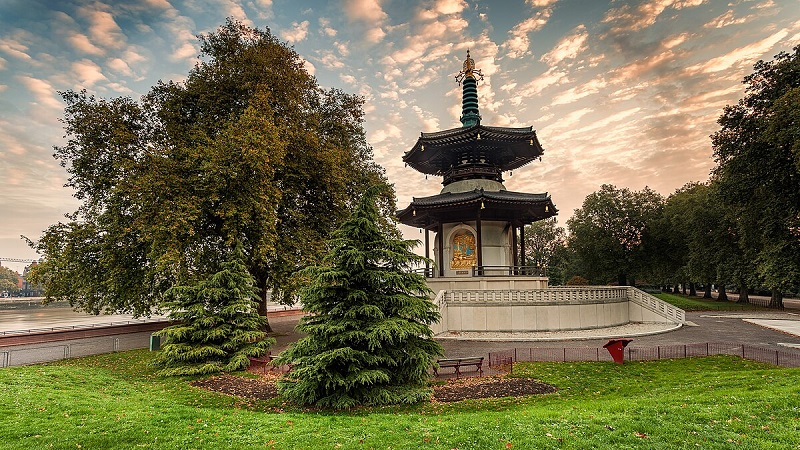
The iconic Peace Pagoda, a Buddhist monument beside the lake, is a place of quiet reflection. Its golden statues embody tranquillity and world harmony.
Sculptures dotted throughout the grounds, such as works by Henry Moore and Barbara Hepworth, enrich the park's artistic heritage.
The historic bandstand hosts occasional music performances, adding a nostalgic touch to summer afternoons.
Events and Community
Battersea Park is the vibrant heart of local festivities. Regular events include antiques and textile fairs, fireworks displays, and food festivals that celebrate London's culinary diversity. Seasonal activities, charity runs, and open-air theatre bring together people from across the city. The park's calendar is busy year-round, making it a lively centre for recreation, entertainment, and community spirit.
Atmosphere and Experience
Whether strolling beneath verdant canopies, picnicking on manicured lawns, boating on the tranquil lake, or admiring riverside sunsets, Battersea Park promises something for everyone. Its blend of historic charm, landscaped beauty, cultural highlights, and lively social scene has earned it a special place in the hearts of Londoners and visitors alike.
Getting There
Battersea Park is easy to reach by public transport: the nearest rail stations are Battersea Park and Queenstown Road, each about a 10-minute walk from the park’s Rosary Gate and main entrances. Frequent bus routes stop at or near Chelsea Gate and the park perimeter, including the 44, 137, 211, 344, 452, N44 and N137, with clear stop points such as “Battersea Park / Chelsea Gate” and “Battersea Park Library”. For the Tube, ride the Northern line to Battersea Power Station and walk along the Thames or through Battersea Power Station’s riverside precinct to the park in around 15–20 minutes, or connect to a short bus hop if preferred. You can also arrive by River Bus to Cadogan Pier or Battersea Power Station Pier and continue on foot along the embankment paths to the park gates. If coming from central landmarks like Charing Cross or Trafalgar Square, simple combinations include Northern line to Battersea Power Station then a brief walk, or direct night buses (e.g., N44/N137) towards Chelsea Gate.
Best Time to Visit
Spring is often the best time to visit Battersea Park, when the cherry blossoms create picture-perfect avenues and milder temperatures make long strolls especially pleasant; arrive early in the morning for softer light and fewer crowds. Summer brings lively events, boating on the lake, alfresco dining at the Pear Tree Café, and long evenings ideal for picnics by the Thames. Autumn offers crisp air and golden foliage along the riverside promenade and in the Old English Garden, while November typically features a major fireworks display. Winter is quieter but rewarding, with the dedicated Winter Garden at its seasonal peak and clear views of Albert Bridge’s illuminations, making the park atmospheric year-round.