


 Ireland Guide
 Scotland Guide
 Wales Guide
| Contents |
|---|

Introduction
Chillingham Castle is a 13th-century Grade I listed fortress situated in the village of Chillingham, Northumberland, approximately 20 minutes from the coast. Originally established as a 12th-century stronghold, the castle became fully fortified in 1344 and has remained largely unaltered structurally since its medieval origins, with the notable addition of Tudor galleries constructed for James VI of Scotland's visit in 1604. The castle features grand staterooms, a Great Hall, medieval torture chambers, dungeons, and a chapel, all set within 18th-century parkland designed by Capability Brown. Notable for its royal connections, including a visit from Edward I in 1298, Chillingham is also renowned as one of England's most haunted castles and is home to the rare Chillingham White Cattle, believed to be the last surviving herd of truly wild cattle in the world. Open to the public from Easter to the end of October, the castle offers guided tours, accommodation within the grounds, and evening ghost walks, making it a significant heritage attraction in Northumberland.
Interesting Facts about Chillingham Castle
- Chillingham Castle was originally built as a monastery in the late 12th century before being transformed into a fortified stronghold.
- King Edward I stayed at the castle in 1298 whilst on his way to battle William Wallace at the Battle of Falkirk, and a special glazed window was installed for the royal visit.
- The castle received its licence to crenellate in 1344 from King Edward III, officially transforming it into a fully fortified castle with battlements.
- Chillingham has been owned by one continuous bloodline relating back to the Grey family since 1246, making it nearly 800 years of unbroken family ownership.
- The castle is home to approximately 130 head of rare Chillingham cattle, a unique breed of white cattle that roam freely in the castle's enclosed parkland.
- Charles I stayed at the castle for three frantic nights shortly before he was imprisoned, making it one of his final refuges.
- The castle walls are an impressive 10 feet thick in some locations, demonstrating the serious defensive capabilities required for border warfare.
- Chillingham is widely regarded as Britain's most haunted castle, with over 100 ghosts reportedly dwelling within its walls.
- The famous "Radiant Boy" ghost was said to haunt the Pink Room until the bones of a child wrapped in blue cloth were discovered behind a wall and given a proper Christian burial.
- The castle features a fully equipped torture chamber and dungeons where prisoners carved their names into the stone walls during their imprisonment.
- Anne of Denmark, Queen of Scotland, and her children stayed at the castle on 6 June 1603 during their journey to London.
- The castle survived the Pilgrimage of Grace rebellion in 1536 when it was attacked with cannon fire by the Percy family of Alnwick Castle.
- A record eighteen Knights of the Garter have been associated with the castle throughout its history, balanced by eight executions for high treason.
- The Great Hall was specifically built between the south towers for the royal visit of James VI of Scotland (later James I of England).
- During World War II, the castle served as army barracks, and soldiers stripped out decorative wood to burn for warmth during winter.
- The castle displays a 300,000-year-old skull of a wild bull from the same family as the cattle that still roam the castle grounds today.
- Sir Humphry Wakefield, the current owner, purchased and restored the castle in 1982 after it had been abandoned since 1932.
- The castle's armoury contains a collection of medieval "arquebuses" (portable cannons) used for castle defence from the early 1500s.
History
Early Origins and Medieval Development
Chillingham Castle stands as one of England's most remarkable medieval fortresses, with origins dating back to the late 12th century when it began as a monastery. The site was strategically positioned in northern Northumberland, near the volatile Anglo-Scottish border, making it a critical location during centuries of conflict between the two nations. In 1246, King Henry III granted the castle to the Grey family, beginning an extraordinary 800-year association with the same bloodline that continues to this day. The original monastery was transformed into a fortified manor house following a devastating Scottish raid in 1296, which destroyed the earlier structure.
The castle's strategic importance was cemented when King Edward I, known as the "Hammer of the Scots," stayed there in 1298 whilst on his way to battle William Wallace at Falkirk. A special glazed window was installed for the king's visit, considered a remarkable luxury for the time. The fortress underwent its most significant transformation in 1344 when King Edward III granted Sir Thomas Grey a licence to crenellate, officially converting the stronghold into a fully fortified castle. This permitted the construction of battlements and the development of the distinctive quadrangular design with massive corner towers that characterises the castle today.
The Grey Dynasty and Noble Heritage
The Grey family's stewardship of Chillingham Castle represents one of the longest continuous family ownerships in English history. The Greys, descendants of the de Greys who arrived with William the Conqueror, established themselves as powerful border lords responsible for defending England's northern frontier. By 1417, the family had been elevated to Earls of Tankerville after their military success in capturing the Norman castle of Tancarville in 1409. The family's influence extended far beyond their Northumberland stronghold, producing no fewer than 18 Knights of the Most Noble Order of the Garter throughout their history.
The Grey family's most famous descendant was Charles Grey, 2nd Earl Grey, who served as Prime Minister from 1830 to 1834 and lent his name to the famous Earl Grey tea. Born at Chillingham in 1749, he became one of Britain's most significant political figures, remembered for his role in the Great Reform Act. The family's history was not without tragedy, as eight members were executed for high treason over the centuries, victims of the complex political loyalties that characterised medieval and Tudor England. The castle remained in Grey family hands until 1695, when it passed to Charles Bennet, 2nd Baron Ossulston, who married Lady Mary Grey and was subsequently created Earl of Tankerville.
Modern Restoration and Contemporary Significance
After centuries of noble occupation, Chillingham Castle faced potential ruin when it was abandoned in 1932 following the death of the 7th Earl of Tankerville. The castle remained empty for nearly half a century, with its fabric deteriorating and its future uncertain until 1981. Sir Humphry Wakefield, 2nd Baronet, and his wife, The Hon. Lady Wakefield, who is a descendant of the original Grey family, purchased the castle and embarked on an ambitious restoration project. Sir Humphry, an expert in antiques and architecture who had previously worked for Christie's and restored another family castle in Ireland, dedicated himself to preserving the castle's authentic medieval character using traditional materials and techniques.
The restoration has been widely acclaimed, with the castle receiving numerous awards and recognition, including first place in the 'Independent on Sunday' top fifty castles in Europe. Today, Chillingham Castle serves multiple purposes: it remains a family home whilst operating as a major tourist attraction, offering ghost tours, educational programmes, and overnight accommodation. The castle houses Sir Humphry's extensive collection of antiquities, including medieval weapons, armour, and artefacts that bring the building's history to life. The adjacent parkland is home to the famous Chillingham Wild Cattle, a rare breed of white cattle that have roamed the estate for over 700 years, adding to the castle's unique appeal as a living piece of English heritage.
Description
The Castle's Imposing Exterior and Magnificent Approach
Chillingham Castle emerges from the Northumberland landscape as one of England's most formidable and well-preserved medieval strongholds, its Grade I listed status reflecting its exceptional architectural and historical significance. The castle's origins trace back to the 12th century when it began life as a monastery, before evolving into the fortress that commands such respect today. As visitors approach through the carefully maintained grounds, the castle's imposing silhouette creates a dramatic impression against the backdrop of the Cheviot Hills, its massive stone walls and corner towers speaking to centuries of strategic importance along the volatile Anglo-Scottish border.
The fortress displays the classic quadrangular architecture that became its defining characteristic following major fortifications in 1344, when Sir Thomas de Heaton received his licence to crenellate from King Edward III. This architectural style, with its massive towers positioned at each of the four corners, represents a design rarely encountered elsewhere in Northumberland, making Chillingham particularly significant from an architectural perspective. The castle's walls, reaching an extraordinary fifteen feet in thickness in places, were constructed not merely for show but as genuine defensive barriers capable of withstanding the repeated Scottish raids that characterised medieval border warfare.
The approach to the castle reveals layers of historical development, from its monastic origins through its transformation into a military stronghold and eventual conversion into a grand residence. The strategic positioning becomes immediately apparent to visitors, who can appreciate how the elevated site provided commanding views across the surrounding countryside whilst offering natural defensive advantages. The castle's location served as a crucial staging post for English armies heading north into Scotland, whilst simultaneously acting as a bulwark against Scottish forces moving south.
The Medieval Courtyard: Heart of the Fortress
The medieval courtyard forms the atmospheric centrepiece of the castle complex, surrounded by the different towers that define each side of the quadrangular structure. Walking across these ancient stones, visitors immediately sense the weight of history beneath their feet, with the courtyard serving as the primary access point to the various wings and chambers that comprise this remarkable fortress. The courtyard's design reflects both practical and ceremonial functions, having witnessed everything from military preparations to royal receptions throughout its long history.
The courtyard's stone paving and surrounding architecture create an enclosed world that feels removed from the modern era, with the massive towers rising on all sides to create a sense of both security and grandeur. This central space would have bustled with activity during the castle's most active periods, serving as the hub around which daily life revolved. The courtyard provides visitors with their first real appreciation of the castle's scale and the impressive engineering required to create such a substantial structure in medieval times.
From the courtyard, the various entrances to different parts of the castle become apparent, each leading to chambers and halls that served specific functions within the fortress's complex social and military hierarchy. The arrangement allows visitors to appreciate how the castle functioned as both a defensive structure and a sophisticated residence, with the courtyard serving as the crucial link between these different aspects of castle life.
Interior Chambers: A Journey Through Centuries
The Great Hall: Elizabethan Grandeur
The Great Hall stands as the castle's most magnificent interior space, representing the pinnacle of Elizabethan domestic architecture within a medieval setting. This impressive chamber was constructed between the south towers and built over the ancient 'Undercroft' specifically to accommodate the royal visit of James VI of Scotland in 1603. The hall's stone-flagged floor provides an authentic medieval foundation, whilst the walls display an extraordinary collection of tapestries, armour, weapons, and the antlers of deer and wild cattle that create an atmosphere remarkably similar to that experienced by visitors centuries ago.
The hall's fenestration tells the story of medieval defensive priorities, with large windows overlooking the secure medieval courtyard whilst the opposite wall deliberately lacks substantial openings, reflecting its position on the castle's more vulnerable exterior walls. Visitors can observe the remains of the original giant chimney embedded in the south wall, alongside two small, high protective windows that provided light whilst maintaining security. The room's design demonstrates the careful balance between comfort and defence that characterised castle architecture during this transitional period.
The Great Hall has witnessed centuries of royal entertainment, with many monarchs having been received within its walls since James I's visit. The chamber's walls are adorned with weapons and trophies from around the world, creating a display that speaks to both the fierce nature of medieval warfare and the international connections of the castle's inhabitants. The hall's atmosphere successfully captures the essence of courtly life, providing visitors with an authentic sense of how such spaces functioned during their heyday.
The Armoury: A Testament to Medieval Warfare
The Armoury houses one of the most comprehensive displays of weaponry to be found in any English castle, featuring an extensive collection of guns, arms, armour, and exotic items including poison blow-pipes that speak to the international scope of medieval and early modern warfare. The collection's centrepiece consists of medieval "Arquebuses" - portable cannons that were employed for castle defence from the early 1500s onwards, representing some of the earliest firearms technology adapted for fortress warfare.
Beyond its military significance, the Armoury also contains sporting equipment and unusual fallow deer heads from the estate, alongside a remarkable collection of rare insects that demonstrates the eclectic interests of the castle's inhabitants over the centuries. This combination of military hardware and natural history specimens creates a unique museum experience that reflects the diverse interests and activities of a great medieval household.
The room's layout allows visitors to appreciate the evolution of military technology, from medieval swords and crossbows through to early firearms and more exotic weapons from distant lands. The collection provides insight into both the defensive requirements of border warfare and the broader military interests of the families who called Chillingham home throughout the centuries.
The Still Room: Domestic Life and Family History
The Still Room presents a fascinating glimpse into the domestic arrangements of castle life, containing an eclectic mixture of artefacts and curiosities that span centuries of family occupation. The room's most imposing features include massive cooking implements, notably a huge pot once used for feeding the castle garrison and another specifically designed for pouring boiling oil over unwelcome visitors - a grim reminder of the castle's defensive functions.
Family photographs create a more personal atmosphere within the room, including images documenting Everest expeditions that speak to the adventurous spirit of the castle's modern inhabitants. The room also features explorer Norman Vaughan's great sled hanging from the ceiling, creating an unexpected connection between this ancient Northumberland fortress and polar exploration. These personal touches help visitors understand that Chillingham remains a living family home rather than merely a historical monument.
The Still Room also contains the remains of an ancient entrance arch visible above the large window, providing architectural evidence of the castle's evolution over the centuries. This combination of domestic artefacts, family memorabilia, and architectural features creates a unique space that bridges the gap between the castle's medieval origins and its continued use as a family residence.
The Winding Stairs: A Museum in Motion
The castle's winding narrow stairs serve as a fascinating museum experience in themselves, with various objects and artefacts lining every available corner and creating an ever-changing display as visitors ascend. The stairs provide access to the upper chambers whilst simultaneously offering glimpses into different aspects of the castle's history and the interests of its inhabitants.
Among the most remarkable displays is a 300,000-year-old skull of a wild bull from the same family as the cattle that still graze in Chillingham Park, alongside a carved stone head of a Saxon wild bull that once served religious purposes. These ancient artefacts create a tangible connection between the castle's present and its prehistoric past, demonstrating the continuity of human occupation in this landscape across millennia.
The stairs also provide glimpses into various chambers, including the distinctive Pink Room with its particular architectural features and legendary associations. The narrow, winding nature of these stairs reflects medieval defensive design, making them easily defendable whilst providing access to the castle's upper levels. The accumulated displays along the stairway create an informal museum experience that reveals new discoveries with each visit.
The King James I Room: Royal Elegance
The King James I Room represents the pinnacle of Elizabethan interior design within the castle, named in honour of the king's royal visit to Chillingham in 1603. This chamber forms part of a suite of three rooms constructed specifically for the future king's accommodation, demonstrating the lengths to which the castle's inhabitants went to provide suitable royal lodgings.
The room's most striking feature is its Elizabethan ceiling with gilded ribbing and very finely moulded pendants, representing some of the finest decorative work to be found anywhere in the castle. The chamber is furnished with extraordinary copies of antique originals and lined with patterned silk originally made for Chatsworth House, creating an atmosphere of refined luxury that would have been appropriate for royal occupation.
The paintings and tapestries within the room relate to the current Wakefield family rather than representing works of major artistic importance, but their presence creates a sense of continuity and personal connection that enhances the room's atmosphere. The chamber successfully demonstrates how medieval fortress architecture could be adapted to provide comfortable and elegant accommodation suitable for the highest levels of society.
The Plaque Room Library: Literary and Family Heritage
The Plaque Room Library serves as a repository of family history and literary culture, containing numerous paintings of the Chillingham Wild Cattle alongside photographs of the many distinguished visitors who have stayed at the castle over the years. The room was once even more elaborate than the King James I Room, having originally contained a fine four-poster bed where the king would receive his close friends and family members.
The library's book collection relates primarily to the Wakefield family and their various exploits, including their significant roles in the founding of Australia and New Zealand as parts of the British Empire. This literary collection provides insight into the family's wide-ranging interests and their contributions to British imperial expansion, demonstrating how the castle served as a base for far-reaching activities.
Notable portraits within the room include The Marquess of Bath, Lady Wakefield's great-grandfather, and Lord Wakefield, Lord Mayor of London from 1915 to 1916, illustrating the family's continued prominence in British society. The room also features a cow that was a long-time friend to the castle and cousin to the Chillingham Wild Cattle, creating an amusing connection between the domestic and the wild aspects of the estate.
The Dungeons and Torture Chamber: Medieval Justice
The castle's lower levels contain the dungeons and torture chamber, which provide a sobering glimpse into the harsher aspects of medieval justice and border warfare. The dungeon walls bear crudely carved letters created by former prisoners, offering poignant testimony to the human cost of the castle's military functions. These primitive inscriptions serve as a direct connection to individuals who experienced the castle's darker purposes centuries ago.
The torture chamber displays various implements and devices used for interrogation and punishment, including executioner's blocks and an iron maiden that demonstrate the brutal realities of medieval justice. A trap door in the floor reveals additional chambers below, where archaeological investigation has uncovered children's bones that speak to the tragic aspects of the castle's history.
These chambers provide visitors with an unvarnished view of medieval life, contrasting sharply with the elegant reception rooms above whilst reminding visitors that Chillingham functioned as a working fortress during some of the most turbulent periods in Anglo-Scottish relations. The preservation of these spaces offers valuable insight into the complete spectrum of castle life, from royal entertainment to the administration of justice.
The Magnificent Gardens and Designed Landscape
The Formal Gardens: Wyatville's Masterpiece
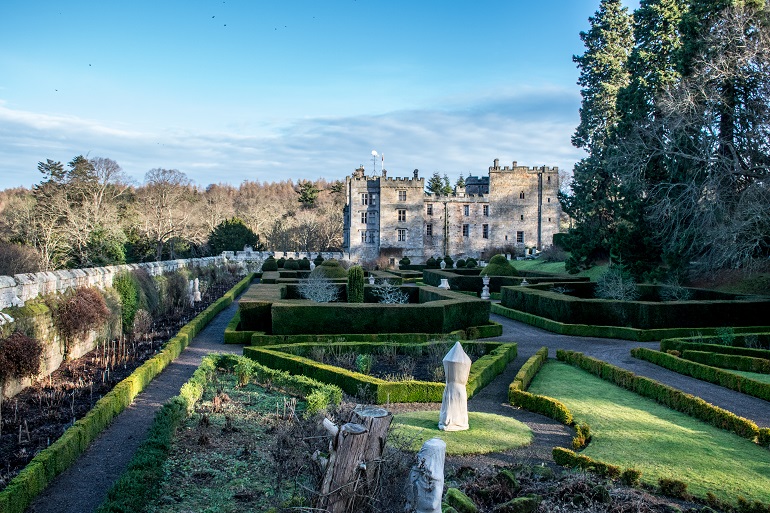
The castle's formal gardens represent a rare survival from 1828, designed by the renowned royal architect Sir Jeffrey Wyatville immediately following his acclaimed restoration work at Windsor Castle. These gardens provide a striking contrast to the surrounding informal parkland, demonstrating Wyatville's sophisticated understanding of landscape design and his ability to create formal spaces that complement rather than compete with their medieval setting.
The gardens feature beautifully maintained layouts enhanced by urns and statues, which, whilst modern composite copies, successfully maintain the original atmosphere intended by Wyatville's design. The formal structure of these gardens reflects the early 19th-century taste for ordered landscapes that could provide a civilised counterpoint to the wild beauty of the Northumberland countryside.
Wyatville's design demonstrates his mastery of the relationship between architecture and landscape, creating formal spaces that enhance rather than diminish the castle's medieval character. The gardens serve as an excellent example of how Romantic-era designers approached the challenge of creating appropriate settings for ancient buildings, respecting their historical character whilst providing contemporary amenities.
The Italian Garden: Classical Elegance
The walled Italian Garden adjacent to the castle showcases Wyatville's ability to create intimate spaces within the broader landscape design. This enclosed garden demonstrates the influence of classical Italian garden design on early 19th-century English landscape architecture, featuring elements that would have been familiar to visitors who had undertaken the Grand Tour.
The Italian Garden's walled structure creates a sense of enclosure and intimacy that contrasts with both the castle's imposing architecture and the expansive views across the surrounding countryside. This design approach reflects the Romantic movement's interest in creating varied experiences within a single landscape, allowing visitors to enjoy both grand vistas and intimate garden spaces.
The garden's classical elements provide a sophisticated counterpoint to the castle's robust military architecture, demonstrating how different historical periods and design philosophies can be successfully combined within a single landscape. The Italian Garden represents an important example of how 19th-century designers interpreted classical precedents for English conditions and settings.
The Herbaceous Border: Horticultural Magnificence
The gardens boast the longest herbaceous border in Northern England, offering spectacular seasonal displays that demonstrate the grand scale of Wyatville's garden design. This impressive feature represents one of the most significant horticultural achievements within the castle grounds, providing visitors with outstanding displays throughout the growing season.
The herbaceous border's exceptional length allows for sophisticated planting schemes that can accommodate a wide variety of plants whilst maintaining visual coherence across the entire display. The border's design reflects the Victorian enthusiasm for horticultural display, demonstrating how formal garden design could be used to showcase botanical diversity and gardening expertise.
The seasonal variation provided by the herbaceous border ensures that the castle gardens offer different experiences throughout the year, with spring bulbs giving way to summer perennials and autumn colours. This temporal dimension adds depth to the garden experience, encouraging repeated visits to appreciate the changing displays.
The Woodland Walks: Natural Beauty and Wildlife
Extensive woodland walks thread through the castle grounds, offering visitors opportunities to explore the natural landscape whilst observing the diverse wildlife that inhabits the estate. These paths wind through areas rich in indigenous flora and fauna, where patient observers might encounter deer, red squirrels, badgers, foxes, and rabbits, all thriving in an environment undisturbed by modern agricultural chemicals.
The woodland walks provide a naturalistic counterpoint to the formal gardens, allowing visitors to experience the landscape much as it would have appeared to the castle's medieval inhabitants. The paths offer varying levels of difficulty and different scenic experiences, from gentle strolls suitable for all ages to more challenging routes that reward visitors with spectacular views.
The woods contain important and well-recorded trees that are of particular interest to botanical experts, whilst the diverse bird and plant life creates an ecosystem that demonstrates the benefits of traditional land management practices. The woodland walks successfully combine recreational opportunities with conservation objectives, providing habitat for wildlife whilst allowing public access to these beautiful natural areas.
The Lakes: Aquatic Features and Natural Systems
The estate features several lakes fed by seven springs and five burns or streams, creating a complex aquatic system that supports diverse wildlife whilst providing scenic focal points within the landscape. The waterside areas are surrounded by indigenous vegetation including willow, alder, and birch trees, alongside natural grasses that are historic to the region, creating authentic wetland habitats.
The lakes are renowned locally for their brown trout, which thrive in the clean water provided by the natural spring system. This aquatic ecosystem demonstrates the benefits of traditional estate management, where natural water systems are maintained without the pollution that affects many modern waterways.
The lakes provide important habitat for waterfowl and other wildlife, whilst their scenic beauty enhances the overall landscape experience for visitors. The integration of these water features into the broader landscape design demonstrates how natural systems can be enhanced and managed to provide both ecological and aesthetic benefits.
The Surrounding Parkland and Panoramic Views
Commanding Views and Landscape Context
From the castle grounds, visitors enjoy commanding views across the surrounding countryside, taking in local farmsteads and the scenic grandeur of the Cheviot Hills. These elevated vantage points provide excellent opportunities for photography whilst allowing visitors to appreciate the strategic importance of the castle's position within the broader Northumberland landscape.
The panoramic views reveal the relationship between the castle and its surrounding agricultural landscape, demonstrating how the fortress served as the centre of a complex rural economy. The sight lines across the countryside also illustrate the defensive advantages provided by the castle's elevated position, allowing medieval defenders to observe approaching threats from considerable distances.
The views towards the Cheviot Hills provide a dramatic backdrop that changes with the seasons and weather conditions, ensuring that the castle grounds offer different visual experiences throughout the year. These long-distance views connect the castle to the broader landscape of the Anglo-Scottish borderlands, helping visitors understand the geographical context that shaped the fortress's history.
The Ancient Wall: Medieval Engineering
The far garden wall, fifteen feet thick, represents one of the most impressive examples of medieval construction techniques to be found anywhere in the castle grounds. This massive structure once served as a jousting grandstand, providing elevated viewing positions for medieval tournaments and other entertainments, whilst originally extending around the entire castle grounds to create a comprehensive defensive perimeter.
The wall's extraordinary thickness demonstrates the engineering capabilities of medieval builders, who created structures designed to withstand both military assault and the passage of centuries. The wall's survival provides modern visitors with a tangible connection to medieval construction techniques and the resources required to create such substantial fortifications.
Today, the wall provides dramatic views over the surrounding countryside whilst serving as a remarkable example of medieval military architecture. The structure's dual function as both defensive barrier and entertainment venue illustrates the complex social functions that castle architecture was required to serve during the medieval period.
Seasonal Displays and Natural Beauty
The parkland offers spectacular seasonal variation, with drifts of snowdrops, daffodils, and bluebells appearing in sequence throughout the spring months, complemented by an astonishing display of rhododendrons that provide colour and interest during the early summer. These natural displays ensure that the castle grounds provide visual interest throughout the year, with each season offering its own particular attractions.
The seasonal progression of flowering plants creates a natural calendar that would have been familiar to the castle's historical inhabitants, connecting modern visitors to the rhythms of rural life that shaped centuries of castle history. The diversity of plant life demonstrates the benefits of traditional land management practices that support native flora whilst providing spectacular displays for visitors.
The rhododendron displays represent a later addition to the landscape, reflecting Victorian enthusiasm for exotic plants whilst demonstrating how different historical periods have contributed to the current landscape character. The combination of native and introduced species creates a rich tapestry of colour and texture that enhances the overall visitor experience.
The Chillingham Cattle: Living Heritage
While exploring the grounds, visitors may catch glimpses of the famous herd of Chillingham cattle grazing in the distance within their dedicated 330-acre enclosure. These distinctive white cattle represent one of the rarest breeds in the world, with approximately 130 head roaming freely in the park, maintaining genetic lines that stretch back centuries.
The cattle herd represents a unique example of living heritage, demonstrating how traditional land management practices have preserved not only the landscape but also the animals that have grazed these lands for generations. The herd's survival provides a direct connection to the medieval period, when such cattle would have been common throughout the region.
The cattle's presence adds an authentic dimension to the castle experience, reminding visitors that this has always been a working landscape where agriculture and defence were closely intertwined. The herd's continued existence demonstrates the commitment of the castle's owners to preserving all aspects of their heritage, from architecture to agriculture. Chillingham Castle and its grounds provide an exceptional example of a thriving private residence that successfully combines architectural preservation with horticultural excellence and wildlife conservation. The estate offers visitors a comprehensive experience that encompasses built heritage, designed landscapes, and natural ecosystems, all maintained to the highest standards whilst remaining a living, working environment. The castle's continued occupation by the same family line ensures that it remains not merely a museum but a genuine home where centuries of history continue to unfold within an authentic historical setting.
Getting There
Chillingham Castle is situated in the picturesque Northumberland countryside, approximately 6 miles southeast of Wooler. For those travelling by car, the castle is easily accessible from the A1 motorway - simply turn off onto the B6348 and follow the brown tourist signs which will guide you directly to the main visitor entrance. If you're relying on public transport, the nearest railway stations are Alnmouth (18 miles away) and Berwick upon Tweed, from where you'll need to take a taxi to complete your journey. Alternatively, bus route 473 operates in the area, with the nearest stop being West Lodge, Chillingham, which is just a 9-minute walk from the castle. From major cities like Newcastle or London, the most convenient route is typically by train to Alnmouth station, followed by a taxi for the final stretch. The castle is well-signposted throughout the local area, making it straightforward to find once you're in the vicinity of Chillingham village.
Best Time to Visit
The best time to visit Chillingham Castle is during its main season from Easter through to early November, when the castle, gardens, and grounds are fully accessible to the public with daily opening hours from 11am to 5pm. Spring and early summer offer particularly rewarding visits, as the formal gardens come alive with seasonal blooms and the surrounding Northumberland countryside displays its finest colours, though visitors should be prepared for the region's characteristically changeable weather - even in summer months, the thick stone walls and medieval architecture can feel quite chilly, so layering warm clothing is advisable. The shoulder seasons of late spring and early autumn can be especially atmospheric, with fewer crowds allowing for a more intimate exploration of the castle's haunted chambers, torture room, and historic state rooms, whilst the misty autumn weather adds an appropriately gothic ambience to this reputedly most haunted castle in England. Those seeking the full ghostly experience should note that evening ghost tours are available during the main season, though these are suspended during winter months when the castle closes to day visitors, making the April to October period essential for anyone wanting to experience both the historical grandeur and supernatural reputation of this remarkable 13th-century fortress.