Italy Guide  |
|---|
|
| | Top Italian Cities |
|---|
|
| | Italian Regions |
|---|
|
| | Europe Guide |
|---|
|
| | Travel Tools |
|---|
|
|
|
|
 Grand Canal at night, Venice. Grand Canal at night, Venice.
Introduction

The Veneto region was formed around the core of the old Republic of Venice, which existed as an independent state from 697 to 1797. Veneto is the fifth most populous Italian region, with 4.8 million inhabitants. It has a land area of 18,399 km² (7,104 sq mi), slightly smaller than Slovenia or Israel.
It goes without saying that Venice is a must-see in Italy. But the region has much more to offer than the Serenissima. The other great city is Verona, an ancient Roman city that Shakespeare chose as the home of Romeo and Juliet, and one of the most colourful cities in Northern Italy. West of Verona, Lake Garda, the largest lake in Italy, marks the boundary with Lombardy. Scenic towns like Malcesine, Torri del Benaco and Bardolino line up the shores of the lake.
During the Renaissance, the Venetian elite built sumptuous palazzi and Palladian villas in Vicenza, now all listed as World Heritage. Among them is the Villa La Rotonda, which served as the inspiration for the design of the White House in Washington D.C. Padua has one of the oldest universities in Europe, while Soave and Cittadella have some of the most impressive city walls in Italy. There are also plenty of islands to explore around Venice, the most famous of which is Burano, with its brightly painted houses.
The spectacular peaks of the Dolomites rise in the far north of Veneto, between Cortina d'Ampezzo and Belluno.
Famous people from the Veneto include (chronologically): the Roman historian Livy, the merchant traveller Marco Polo, the Renaissance painter Andrea Mantegna, the architect Andrea Palladio, the Renaissance painters Titian and Tintoretto, the navigator and explorer John Cabot, the inventor of the piano Bartolomeo Cristofori, the composer Antonio Vivaldi, the adventurer and author Giacomo Casanova, the sculptor Antonio Canova, he geneticist Mario Capecchi (Nobel prize), the physicist Federico Faggin (designer of the first commercial microprocessor), and the footballer Roberto Baggio. The various members of the Benetton family, founders and owners of the eponymous fashion company, are all from Treviso.
Cuisine
Venetian cuisine is one of the most distinctive regional cuisine within Italy. Its varied geography, ranging from coastal lagoons, inland plains, and high mountains, is refelcted in each province's cuisine. The binding factor of all Venetian provincial cuisines are their widespread use of polenta (grounded cornmeal boiled into a porridge, and usually baked or fried) and risotto (rice dish cooked in broth, usually with vegetables, meat or fish). Ravioli and Tiramisu are generally considered to have originated in Venice.
Venetian culinary specilaties include bacalà ala Visentina (dried and salted cod served on white, soft polenta), bigoli in salsa (bigoli pasta served with an anchovy and onion sauce), brasato all'amarone (braised beef cooked with Amarone wine, usually served with polenta), fegato ala venesiana (calf's liver fried with onions), gran bollito veneto (a dish consisting of boiled beef, hen, beef tongue and cotechino,), pastin (mixed pork and beef meat with spices, served with polenta - specialty of Belluno), pastisada de caval (horse meat is prepared with laurel, nutmeg, cloves, salt, pepper, vegetables, flour and beef broth, and served with polenta - Veronese specialty), polenta e schie (small shrimps on soft polenta), risotto al nero di seppia (black risotto, made with cuttlefish cooked with their ink sacs intact), rixoto de gò (risotto made with the small goby fish), rixi e bixi (risotto-like dish cooked with green peas and pancetta bacon), sarde in saor (sardines and onions fried in olive oil with raisins and pine nuts and seasoned with vinegar), and spezzatino di musso (donkey stew).
The Veneto is one of the principal wine regions of Italy. It possesses 27 Denominazione di Origine Controllata (DOC) and 14 Denominazione di Origine Controllata e Garantita (DOCG). The most famous among them are Valpolicella, Amarone and Bardolino for red wines, Soave for dry white wines, and Prosecco (Conegliano & Valdobbiadene) for sparkling wine. The regions of Conegliano and Bassano del Grappa are also renowned for their grappa (grape-based pomace brandy).
The region's cheeses are Asiago, Monte Veronese, Piave, and Morlacco. Grana Padano is also produced like in the rest of the Po Valley. Renowned cured sausages are cylindrical sopressa vicentina and the delicate prosciutto Veneto Berico-Euganeo.
San Benedetto, Italy's most sold brand of bottled water, comes from the Veneto.
Attractions
Attractions are listed geographically, from west to east (left to right) and north to south (top to bottom).
|
West
| Malcesine |
|---|
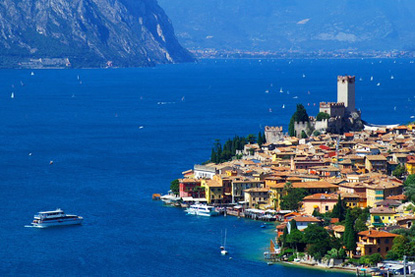
 Nestled between Lake Garda's azure waters and the towering Monte Baldo, Malcesine is a charming medieval hamlet dotted with a small harbour bustling with colourful fishing boats. In 2023, Malcesine was recognised as one of Italy's most beautiful small towns. Nature enthusiasts can take a cable car up Monte Baldo for breathtaking views, whilst culture lovers can explore the Natural History Museum housed within the castle walls, featuring interactive exhibits about local flora and fauna. The town is particularly known for its PDO olive oil production and hosts a vibrant Saturday morning market where visitors can sample local wines, cheeses, and other regional delicacies. |
| Torri del Benaco |
|---|

Torri del Benaco, a charming medieval town on Lake Garda's eastern shore, is crowned by the impressive 13th-century Scaliger Castle, which houses an ethnographic museum and a remarkable 18th-century lemon greenhouse, marking what was once the world's northernmost commercial citrus cultivation. The town's name derives from its three historic towers and 'Benacus', the Roman name for Lake Garda. The picturesque harbour, adorned with colourful boats and framed by a promenade dotted with art sculptures, offers stunning views of Italy's largest lake. Local cuisine reflects the town's unique position where three Italian regions meet, featuring fresh lake fish, locally-produced olive oil, and wines from nearby vineyards. Nature enthusiasts can explore the fascinating Grotta Tanella cave with its stalactites and stalagmites, whilst thrill-seekers can venture across a 100-metre-long Tibetan bridge offering breathtaking lake vistas. |
| Peschiera del Garda ※ |
|---|

 Peschiera del Garda, a UNESCO World Heritage Site on the southern shore of Lake Garda, blends history, nature, and leisure. Its star-shaped Venetian fortress, surrounded by canals and bastions, offers breathtaking views and a glimpse into its role as a military stronghold from Roman times to the Italian Wars of Independence. The charming town centre is perfect for strolling among boutiques, cafes, and historic landmarks like the 16th-century Ponte dei Voltoni bridge. Nearby attractions include Gardaland, Italy's largest amusement park, and serene cycling trails leading to picturesque villages like Borghetto sul Mincio. Food lovers can savour local specialities such as bigoli con le sarde (sardine pasta) and fresh lake fish, paired with Lugana wines from nearby vineyards. |
| Verona ※ |
|---|

 Verona is a captivating city where ancient Roman architecture meets medieval charm. The city's crown jewel is the remarkably preserved 1st-century Arena di Verona, which once hosted gladiatorial games and now serves as a world-renowned opera venue seating up to 15,000 spectators. Beyond its fame as the setting of Shakespeare's Romeo and Juliet, complete with the iconic Juliet's House and balcony, Verona boasts the stunning Castelvecchio fortress, the Gothic Scaliger Tombs, and the ancient Ponte Pietra bridge spanning the Adige River. The city centre features the vibrant Piazza delle Erbe, which has functioned as a public forum since Roman times, whilst the meticulously manicured Renaissance Giardino Giusti offers serene escapes and panoramic city views. Verona's rich cultural tapestry includes the Basilica of San Zeno, renowned for its bronze doors and Mantegna's altarpiece, making it one of northern Italy's most alluring cities. |
| Soave |
|---|

Soave is a charming medieval town renowned for its exceptional white wines and rich history. The town's centrepiece is the mighty 10th-century Scaliger Castle, perched atop Mount Tenda, featuring three courtyards and impressive defensive walls that still encircle the historic centre. The name 'Soave' is steeped in legend, allegedly bestowed by Dante Alighieri himself, who was impressed by the town's pleasing wine and hospitality whilst visiting his friend Cangrande della Scala. The town's architectural treasures include the Cathedral of San Lorenzo, which beautifully blends Renaissance, Baroque, and Neoclassical elements, whilst the surrounding landscape showcases endless vineyards producing the celebrated Soave DOC wine from Garganega grapes. Local culinary delights include Soave ham, Sopressa di Brenton (a cured sausage), risotto all'Amarone, and baccalà alla Vicentina. |
| Valeggio sul Mincio |
|---|
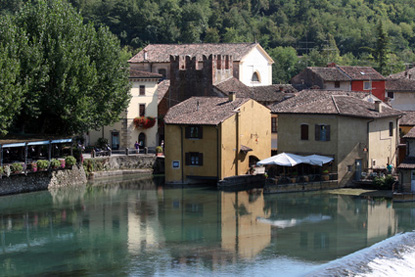
Located between Verona and Lake Garda, Valeggio sul Mincio is a charming town whose name allegedly means "valley of the Gods" (Vale Dium). The town is crowned by a majestic 13th-century Scaligero Castle and is home to the magnificent Parco Sigurtà, which won the European Garden Award in 2015. Its most enchanting district is Borghetto, a fairy-tale medieval hamlet with ancient water mills and the impressive Visconteo bridge-fortress, making it one of Italy's most beautiful villages. The town is renowned for its handmade tortellini, a local delicacy steeped in a romantic legend about two lovers who left a knotted yellow silk sheet by the Mincio river. Beyond its culinary fame, visitors can explore the neoclassical Villa Sigurtà, which once served as headquarters for both Emperor Franz Joseph and Napoleon Bonaparte. The area offers splendid cycling routes, wine tasting opportunities in local cellars, and is particularly known for its tortellini festival held every third Tuesday of June. |
Other attractions
Bardolino
Castelfranco Veneto
Garda
Lazise
Central
| Asolo |
|---|

Asolo, affectionately known as "The Town with a Hundred Horizons", is a picturesque hamlet perched atop the verdant hills of Marca Trevigiana. This enchanting village has captivated numerous luminaries throughout history, including Queen Caterina Cornaro, who established her court here in 1489, along with poets Robert Browning and Henry James, and the legendary actress Eleonora Duse. The town's medieval centre, encased within ancient walls, boasts remarkable attractions including the 12th-century Rocca fortress, the Cathedral of Santa Maria Assunta with its splendid Lorenzo Lotto artworks, and the Castle of Caterina Cornaro, now home to the Eleonora Duse theatre. Visitors can wander through cobbled streets adorned with faded frescoes and elegant arcaded walkways, stopping to savour local delicacies in traditional trattorias, where the renowned Asolo Prosecco DOCG perfectly complements the Venetian-inspired cuisine. The town hosts a celebrated antiques market on the second Sunday of each month, drawing collectors and enthusiasts from across Italy. |
| Bassano del Grappa |
|---|

 Bassano del Grappa sits at the foot of Monte Grappa along the Brenta River, where its iconic wooden Ponte degli Alpini (Old Bridge) stands as a masterpiece of Renaissance architecture designed by Andrea Palladio in 1569. The town is renowned for being home to Italy's oldest grappa distillery, Nardini, established in 1779, where visitors can sample the local speciality 'Mezzo e Mezzo', a unique cocktail blending red vermouth with rhubarb liqueur. Beyond its spirits, the town boasts a rich artistic heritage with medieval squares, impressive frescoes in the 12th-century Chiesa di San Francesco, and a thriving ceramics tradition showcased in the Museum of Ceramics in Nove. The town's culinary scene features local delicacies such as white asparagus, which is celebrated with special events in April, whilst the Thursday market transforms the historic centre into a vibrant display of local culture. The bridge, which has survived multiple wars and reconstructions, serves as both a historical monument and a cultural hub where artists and musicians regularly gather to share their talents. |
| Cittadella |
|---|

Cittadella boasts Europe's only fully walkable elliptical medieval wall circuit, offering a unique 15-metre-high panoramic stroll spanning nearly two kilometres. Founded in 1220, this remarkably preserved walled city features impressive historical landmarks, including the Torre di Malta with its panoramic views, the Romanesque-Gothic Cathedral of Santa Maria Maggiore adorned with stunning frescoes, and the stately Palazzo Pretorio. The town's vibrant cultural scene comes alive during its regular markets, with the main market occurring every Monday and Thursday morning, whilst an antiques market takes place every third Sunday. The town earned the prestigious title of First Venetian City of Culture in 2020, marking 800 years since its foundation. |
| Vicenza ※ |
|---|

Vicenza is renowned as the 'Pearl of the Renaissance' and the 'City of Palladio', housing 23 buildings designed by the legendary architect Andrea Palladio. The city boasts the world's oldest covered theatre, the Teatro Olimpico, which still hosts classical performances and jazz festivals. Beyond its architectural splendour, Vicenza is Italy's third-largest industrial centre and produces one-fifth of the country's gold and jewellery. The city also has a fascinating connection to modern technology, being the birthplace of Federico Faggin, the co-inventor of the microprocessor. Visitors can explore the majestic Basilica Palladiana, the elegant Palazzo Chiericati housing the city's art museum, and savour local specialities like Baccalà alla Vicentina whilst strolling through the charming Piazza dei Signori. The city's rich cultural landscape extends beyond its centre to the surrounding Berici Hills, which are adorned with vineyards, olive groves, and numerous Palladian villas. |
| Padua (Padova) ※ |
|---|

Padua, one of northern Italy's oldest cities, boasts over 3,000 years of history and is a treasure trove of art, science, and culture. The city is home to the world's oldest academic botanical garden (established in 1545) and one of Europe's oldest universities (founded in 1222), where Galileo Galilei once taught. Its architectural marvels include the stunning Scrovegni Chapel with Giotto's revolutionary frescoes, the magnificent Basilica of Saint Anthony, and the Prato della Valle, one of Europe's largest squares adorned with 78 statues. The city's culinary scene thrives at the 800-year-old market in Piazza delle Erbe, where visitors can sample local delicacies like bigoli pasta with duck ragù and risotto al radicchio, before enjoying the famous mint coffee at the historic Caffè Pedrocchi, a 19th-century intellectual hub. The charming network of waterways has earned Padua the nickname "Venice on the Mainland," whilst the Palazzo della Ragione, a medieval town hall with impressive frescoes, separates the city's two main market squares. |
| Villa Pisani |
|---|

Villa Pisani, a magnificent Baroque palace in Stra, just outside Padua, along the Brenta Riviera, boasts 144 rooms symbolising the number of Venetian Doges up to Alvise Pisani, who commissioned the villa upon becoming the 114th Doge. The villa's spectacular ballroom features a stunning Tiepolo fresco and a musician's balcony encircling the room, whilst its 30-acre grounds house an infamous maze where Napoleon himself allegedly got lost. This architectural masterpiece has hosted numerous historical figures, including a notable meeting between Mussolini and Hitler in the study, and features Napoleon's stepson's additions of fireplaces, a chapel, and a games room. The villa's grounds, which earned the title of "most beautiful park in Italy" in 2008, showcase elegant features including a reflecting pool, an orangery, and an ice house. Villa Pisani currently operates as a National Museum, offering visitors a chance to explore its lavish interiors and extensive gardens. |
Other attractions
 Abano Terme
Montagnana
Rovigo
East
| Dolomites at Cortina d'Ampezzo |
|---|

 Cortina d'Ampezzo, known as the "Queen of the Dolomites", offers a remarkable blend of natural splendour and cultural richness. The surrounding peaks, formed from ancient coral and shells 250 million years ago when the area was a tropical sea, display a unique phenomenon called Enrosadira, where the rocks glow pink to fiery red at sunset. The town boasts a fascinating mix of Italian and Tyrolean heritage, evident in its local Ladin language and distinctive cuisine, particularly the beloved casunziei (beetroot-filled ravioli) and canederli dumplings. Beyond its sporting legacy as host of the 1956 Winter Olympics and upcoming 2026 Games, Cortina harbours remarkable cultural treasures, including the Rinaldo Zardini Palaeontological Museum with Italy's most significant private fossil collection, and poignant World War I remnants, including restored tunnels and trenches at Mount Lagazuoi. The town centre's Corso Italia dazzles with 250 boutiques showcasing Italian high fashion, whilst the surrounding area features over 1,200 kilometres of ski slopes and numerous hiking trails. |
| Belluno |
|---|

Perched dramatically on bluffs above the Piave river and backed by the snow-capped Dolomites, Belluno is a charming city of 36,000 inhabitants. This ancient settlement, known to Romans as Bellunum, voluntarily joined Venice in 1404 and serves as the gateway to the Dolomites. The city's historic centre showcases stunning Renaissance architecture, including the Cathedral of San Martino with its distinctive pink façade and the impressive Palazzo dei Rettori, which now houses the Civic Museum containing 600 notable artworks. Visitors can savour unique local delicacies such as Schiz (a semi-soft cow's cheese typically fried in butter) and Malga Bellunese cheese, whilst the surrounding area offers exceptional opportunities for outdoor activities in the Dolomiti Bellunesi National Park. The city's symbol is the remarkable Gusela del Vescovà, a 131-foot-high monolithic steeple that stands as a testament to the region's dramatic natural beauty. |
| Treviso |
|---|

Treviso, a charming walled city in Italy's Veneto region, is often called the 'Little Venice of the Mainland' due to its picturesque canals and medieval architecture. The city proudly claims to be the birthplace of tiramisu, and its surrounding hills produce the renowned Prosecco wine. Its historic centre features elegant buildings with faded frescoes, the impressive Palazzo dei Trecento, and the neoclassical cathedral housing a Titian masterpiece. The 16th-century walls and bastions offer splendid walking routes, whilst the Piazza dei Signori serves as the city's vibrant heart. Treviso's culinary scene is particularly notable for its radicchio rosso, a distinctive red chicory that flourishes in the fertile local soil. The city maintains its authentic Italian charm, being remarkably less touristy than its famous neighbour Venice, which is merely 30 kilometres away. Cycling enthusiasts might be intrigued to know that Treviso is home to Pinarello, the prestigious bicycle manufacturer whose bikes have conquered both the Giro d'Italia and Tour de France. |
| Burano |
|---|

Burano, a charming archipelago of four islands connected by bridges, sits 7 km northeast of Venice in the Venetian Lagoon. This picturesque fishing village is renowned for its vibrantly coloured houses, which fishermen traditionally painted in distinct hues to find their way home through the lagoon's dense fog. The island's rich cultural heritage includes a celebrated lace-making tradition dating back to the 16th century, originally brought from Cyprus. Today, whilst tourism has become the primary industry, Burano maintains its fishing legacy through its exceptional seafood cuisine, particularly the renowned risotto de gò and traditional bussolai pastries. Notable landmarks include a leaning bell tower beside the 16th-century San Martino Church, the Lace Museum housed in the former Podestà of Torcello palace, and the Casa di Bepi, famed as the island's most colourfully decorated house with its distinctive geometric patterns. With roughly 2,800 residents, the island maintains strict regulations requiring governmental approval before residents can paint their homes. |
| Venice (Venezia) ※ |
|---|
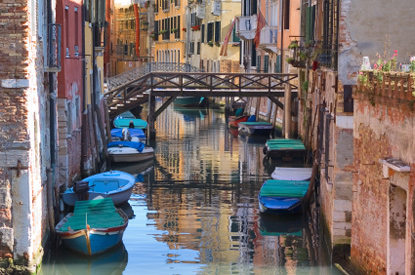
 Venice, a remarkable city built across 118 islands connected by 417 bridges, stands as one of Italy's most enchanting destinations. The city's unique transport system relies entirely on its 177 canals, with the S-shaped Grand Canal serving as the main waterway, whilst traditional gondolas, operated by 400 licensed gondolieri, offer a glimpse into centuries-old Venetian life. This former maritime republic, known as 'Serenissima', boasts numerous historical firsts, including the world's first public casino established in 1638 and the birthplace of the world's first female graduate in 1646. The city's architectural splendour encompasses over 450 aristocratic palaces built in various styles, from Byzantine to Baroque, whilst the historic Rialto Market, nearly a millennium old, continues to be a vibrant hub of commerce. Notably, Venice faces an intriguing challenge as it gradually sinks at a rate of 1-2 millimetres annually, adding a sense of urgency to experience this extraordinary city. The houses in Venice follow a unique numbering system based on districts rather than streets, making navigation an adventure in itself, though locals use nearby landmarks and monuments as reference points. |
| Chioggia |
|---|
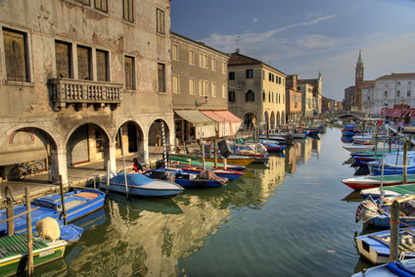
Chioggia, affectionately known as "Little Venice," is a charming fishing village nestled in the southern Venetian Lagoon that offers a more authentic Italian experience than its famous neighbour. The town boasts the world's oldest working medieval clock, housed in the iconic Torre di Sant'Andrea, which has been keeping time for nearly a millennium. Its picturesque canals, narrow calli (streets), and colourful facades are complemented by a rich culinary heritage, where the local cuisine celebrates both the bounty of the Adriatic Sea and the region's prized vegetables, including the distinctive rosa di Chioggia radicchio and sweet Chioggia onions. The bustling Corso del Popolo serves as the town's vibrant main thoroughfare, hosting a sprawling Thursday market that has been a tradition since 1852. Art enthusiasts will appreciate the Chiesa di San Domenico, home to Tintoretto's "Crucifixion," whilst the daily fish market offers a glimpse into the authentic local culture with its lively atmosphere and fresh catches from the Adriatic. |
Other attractions
Bibione
Caorle
Lido di Iesolo
Lido di Venezia
Mestre
Murano
Portogruaro
Sant Erasmo
Torcello
|


 : Local interest
 : Moderately interesting
 : Outstanding place
 : Must-see in the country
 : Top cities in Europe