


| Contents |
|---|

Introduction
Ostuni, often referred to as "The White City", is a stunning medieval town perched across three hills in Puglia, approximately 8 km from the Adriatic coast. The historic centre, surrounded by ancient Aragonese walls, is characterised by its dazzling whitewashed buildings—a tradition that began in the 17th century when limestone was used to combat plague—and a labyrinthine network of narrow streets, staircases and arches. With origins dating back to the Paleolithic period, Ostuni has been influenced by numerous civilisations, including the Messapians, Romans, Byzantines and Normans, all contributing to its rich cultural heritage. The town's main attractions include the 15th-century Cathedral of Santa Maria Assunta with its impressive Gothic-Romanesque architecture, the two historic gates (Porta Nova and Porta San Demetrio), and panoramic views of the surrounding olive groves and the sea. While Ostuni maintains a population of about 32,000 during winter, it becomes a bustling tourism hub in summer, particularly popular with British and German visitors.
Interesting Facts about Ostuni
- Ostuni is known as "La Città Bianca" (The White City) due to its characteristic whitewashed houses that create a dazzling effect in the Mediterranean sun.
- The tradition of whitewashing buildings in Ostuni began in the 17th century as a measure to combat the spread of plague, with locals noticing less illness around white houses due to the antibacterial properties of limestone dust mixed with water.
- Ostuni's name derives from the Greek "Astu-neon," meaning "new city," which was first used after the construction of a new town over a previous one during the 1st and 2nd centuries CE.
- The area around Ostuni has been inhabited since the Palaeolithic period, with evidence including the discovery of a 25,000-year-old skeleton of a pregnant woman, now named "Delia," which is displayed in the Church of San Vito Martire.
- Ostuni's labyrinthine street layout, with its maze of alleyways, staircases and arches, was deliberately designed without a plan to confuse potential invaders, including Greeks, Romans, Goths, Byzantines and Normans.
- The city is perched on three hills, offering breathtaking panoramic views of the surrounding olive groves and the Adriatic Sea, which is just 8 kilometres away.
- Ostuni's buildings are often described as being stacked upon one another, with archways supporting houses to compensate for the lack of strong foundations.
- The local government encourages residents to repaint their white houses every two years by paying for half the cost, maintaining the city's iconic appearance.
- Ostuni is famous for its clay figurines called "fischietti," which are actually functioning whistles and represent a unique local craft.
- The Cathedral of Santa Maria Assunta, built in the 15th century, features a stunning Gothic-Romanesque architecture with a distinctive rose window and stands out with its beige colour against the white buildings.
History
Ostuni's history stretches back to the Palaeolithic period, with evidence of Neanderthal inhabitants dating to 50,000-40,000 years ago. A remarkable archaeological discovery in the area includes the remains of "Delia", a 20-year-old pregnant woman buried in a grotto approximately 25,000 years ago, whose skeleton is now displayed in the Church of San Vito Martire. The town was originally established by the Messapii tribe during the 1st century BCE, who coexisted with the Japigi people, sharing common traditions and rituals. Ostuni was later destroyed by Hannibal during the Punic Wars, then rebuilt by the Greeks, from whom the town likely derives its name—either from "Astu néon" or "Astynéon", both meaning "new town". The Romans ruled the area until 448 CE, after which the settlement was occupied by the Ostrogoths and then the Longobards around the end of the 7th century.
The medieval chapter of Ostuni's history began when the Normans conquered the town in 996 CE, constructing a settlement around the summit of the hill at 229 metres above sea level. Their architectural contributions included a castle (built in 1148 but later demolished in the 18th century) and protective city walls featuring four gates. From 1300 to 1463, Ostuni was part of the Principality of Taranto before changing hands numerous times. It was during the Middle Ages, particularly the 17th century, that Ostuni's distinctive appearance emerged—residents began whitewashing buildings with lime, a practice that served dual practical purposes. The white limestone coating not only reflected the intense southern sun to keep interiors cool but also acted as a disinfectant, helping to reduce the spread of plague that ravaged Europe.
During the Renaissance period, Ostuni flourished under the rule of Isabella, Duchess of Bari, who patronised humanists and artists. Following her death in 1524, the town passed as a dowry to her daughter Bona Sforza, who married Sigismund I of Poland. Under Bona's governance, Ostuni continued to prosper; in 1539, she commissioned the construction of coastal defence towers to protect against Turkish attacks. The city later endured a period of tyranny after being sold to Duke Giovanni Zevallos in 1679, until the Bourbons came to power following Napoleon's defeat at Waterloo. Ostuni finally became part of unified Italy in 1860 during Garibaldi's campaign. After unification, the town lost much of its strategic importance, with residents gradually abandoning the old town for more modern housing—ironically preserving its medieval character for future generations. Today, after decades of relative obscurity, Ostuni has experienced a tourism renaissance in the past twenty years, becoming particularly popular with British and German expatriates.
Main Attractions
Ostuni Historic Centre
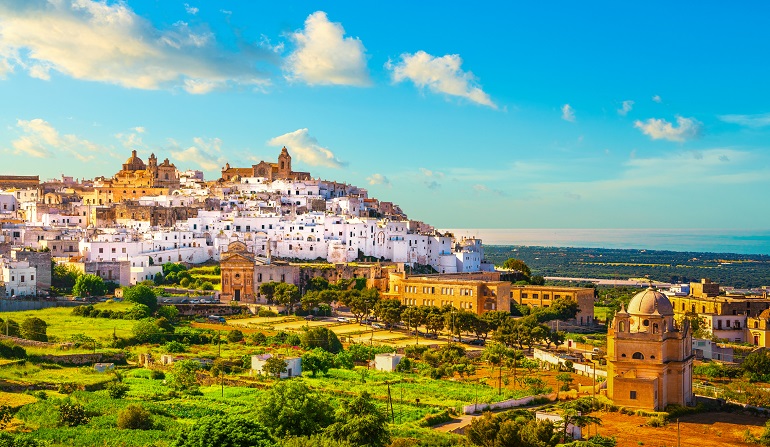
The historic centre of Ostuni, affectionately known as "The White City" (La Città Bianca), stands as a testament to centuries of history and cultural evolution. This remarkable maze of whitewashed buildings cascades down the hillside, creating a striking contrast against the blue sky and the green of the surrounding olive groves. The tradition of whitewashing the buildings dates back to the 17th century when it was implemented as a measure to combat the plague by using lime's disinfectant properties. Today, this practice continues, giving Ostuni its distinctive appearance that has made it one of Puglia's most recognisable destinations.
The ancient Aragonese walls that encircle the old town were constructed during the 15th and 16th centuries to defend against potential invasions. These fortifications remain largely intact and feature two primary entrances: Porta Nova and Porta San Demetrio. Porta Nova, the "new gate," was built in the 16th century and serves as the main entrance to the historic centre from the more modern part of town. Porta San Demetrio, dating from the medieval period, offers a glimpse into the city's defensive past with its imposing stone archway. The historic centre's layout, with its winding alleys, sudden staircases, and unexpected archways, was deliberately designed to confuse potential invaders, creating a natural labyrinth that today enchants visitors with its architectural charm and historical significance.

Piazza della Libertà
Piazza della Libertà serves as the beating heart of Ostuni's social and cultural life. This expansive square marks the transition between the modern town and the historic centre, functioning as a gathering place for locals and visitors alike. The piazza's elegant limestone paving reflects the region's traditional building materials and complements the surrounding historical architecture. During summer evenings, the square transforms into an open-air salon where people stroll, socialise, and enjoy the pleasant Mediterranean climate.
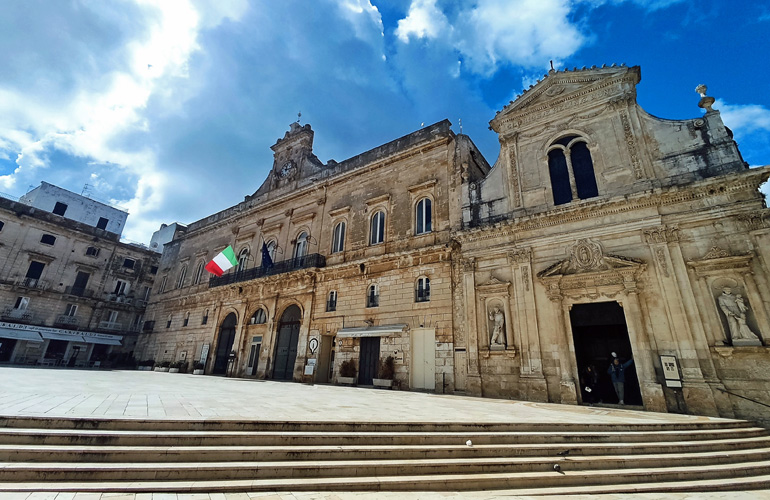
At the centre of the piazza stands the Column of Sant'Oronzo, an impressive baroque obelisk erected in the 18th century to honour Ostuni's patron saint. Sant'Oronzo is believed to have protected the city from plague and other calamities, and his statue atop the column depicts him in bishop's robes with his hand raised in blessing over the city. The column itself features intricate carvings and religious symbolism typical of the baroque period. Surrounding the square are numerous historical buildings, including the Town Hall (Palazzo Comunale) with its distinctive clock tower, as well as cafés and restaurants where visitors can sit and absorb the authentic atmosphere of daily life in this Puglian town.
Cathedral of Santa Maria Assunta
Perched at the highest point of Ostuni's historic centre, the Cathedral of Santa Maria Assunta commands attention with its late Gothic-Romanesque architecture. Constructed between 1435 and 1495, the cathedral replaced an earlier Byzantine church and stands as the most significant religious monument in the city. Its façade features a magnificent rose window with 24 intricately carved rays, symbolising the hours of the day and displaying remarkable craftsmanship that has withstood the test of time.
The cathedral's interior presents a surprising contrast to its exterior, having been renovated in the 18th century in a Baroque style. Three naves divide the space, with the central nave featuring a wooden ceiling adorned with gold detailing and paintings depicting scenes from the life of Christ and the Virgin Mary. The cathedral houses several notable artistic treasures, including a 16th-century organ, ornate chapels, and various religious artefacts. The altar area showcases fine marble work typical of the region, while the bishop's throne displays intricate woodcarving techniques. From the cathedral's forecourt, visitors can enjoy one of the most spectacular panoramic views in Puglia, with olive groves stretching toward the Adriatic coastline, creating a visual connection between the spiritual heights of the cathedral and the natural beauty of the surrounding landscape.

Arco Scoppa
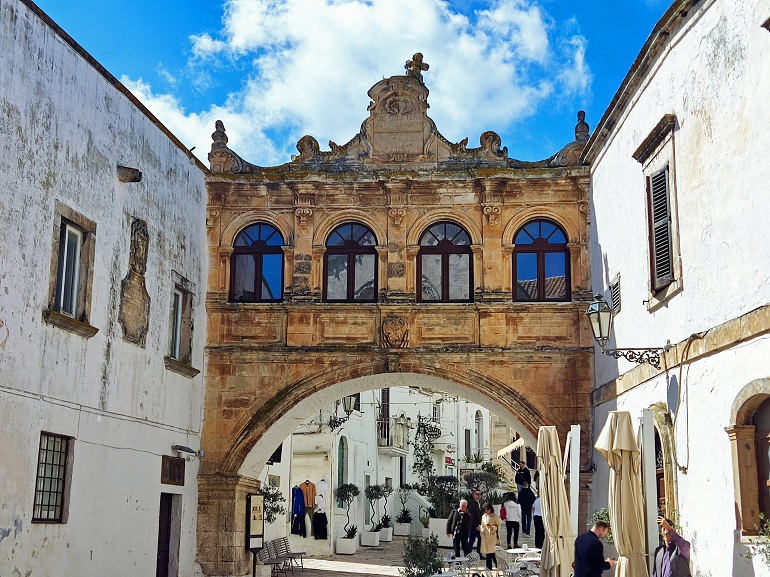
Arco Scoppa represents one of Ostuni's most distinctive architectural features, an elegant stone arch connecting the Bishop's Palace (Palazzo Vescovile) with the Seminary building. Constructed in 1750 under the patronage of Cardinal Giuseppe Scoppa, from whom it takes its name, the arch replaced an earlier wooden structure. Its design draws inspiration from Venice's famous Bridge of Sighs, bringing a touch of northern Italian architectural influence to this southern city.
The arch's graceful proportions and strategic position create a frame through which visitors can glimpse stunning views of the surrounding landscape. Built from local limestone, the structure has weathered to a warm honey colour that complements the whitewashed buildings of the historic centre. Decorative elements on the arch include the Scoppa family coat of arms and subtle baroque flourishes that reflect the artistic sensibilities of the period. Walking beneath this historic passageway connects visitors physically and metaphorically to the ecclesiastical power that once dominated Ostuni's social and political life, offering a tangible link to the city's complex past while providing one of its most photographed vistas.
Ostuni Botanical Garden
The Ostuni Botanical Garden offers a refreshing natural counterpoint to the city's architectural splendours. This thoughtfully designed green space showcases the rich biodiversity of the Mediterranean region alongside carefully cultivated exotic species. Established as part of a broader conservation effort, the garden serves both educational and ecological purposes, helping to preserve plant species that are increasingly threatened by climate change and urban development.
Winding paths lead visitors through different themed sections, including a Mediterranean maquis area featuring native shrubs like myrtle, rosemary, and juniper; an aromatic garden filled with herbs traditionally used in local cuisine and folk medicine; and a collection of rare and endangered plant species indigenous to Puglia. Ancient olive trees, some estimated to be several hundred years old, stand as living monuments to the region's agricultural heritage. The garden also includes examples of the traditional dry-stone walls (muretti a secco) that characterise the Puglian countryside, demonstrating how local building techniques harmonise with the natural environment. Seasonal blooms ensure the garden offers changing colours and scents throughout the year, from spring wildflowers to summer lavender and autumn fruits.
Panoramic Views from the Old Town
The elevated position of Ostuni's historic centre provides numerous vantage points offering breathtaking panoramic views that have captivated visitors for centuries. From the terraces near the cathedral, the landscape unfolds in a spectacular display of natural and agricultural beauty. The silver-green expanse of ancient olive groves, some containing trees over a thousand years old, stretches toward the Adriatic Sea, which appears as a shimmering blue line on the horizon approximately 8 kilometres away.
These viewpoints reveal the harmonious relationship between the natural environment and human cultivation that has shaped this region for millennia. On clear days, visitors can see the coastal towns dotting the shoreline and sometimes even glimpse boats sailing on the Adriatic. The quality of light changes dramatically throughout the day, from the soft golden illumination of early morning to the dramatic red-orange hues of sunset, when the white buildings of Ostuni itself take on a warm glow. Several establishments, including the popular Borgo Antico Bistrot, have capitalised on these views by creating terraces where visitors can enjoy local cuisine and wines while absorbing the panoramic vistas, combining sensory pleasures in a truly memorable experience.
Sanctuary of the Madonna della Grata
The Sanctuary of the Madonna della Grata sits in peaceful seclusion in Contrada Rosara, just outside Ostuni's bustling centre. This charming rural church, constructed between 1896 and 1910, represents a relatively recent addition to Ostuni's religious landscape but has quickly become an important site of local devotion. The sanctuary was built atop a natural cistern that had long been used for irrigation, connecting the spiritual purpose of the building with the life-giving properties of water in this sometimes arid region.
The sanctuary's simple yet elegant architecture features a single nave with a barrel-vaulted ceiling and a modest bell tower. Inside, visitors find a serene atmosphere conducive to reflection and prayer. The focal point is the venerated image of the Madonna della Grata, believed by locals to possess miraculous properties. Surrounding the sanctuary are carefully tended gardens with Mediterranean plants and flowers, creating a tranquil oasis that contrasts with the more touristic areas of Ostuni. During religious festivals, particularly in August, the sanctuary becomes a pilgrimage site, with processions and celebrations that maintain centuries-old traditions while reinforcing community bonds among Ostuni's residents.
Ostuni's Famous Doorway
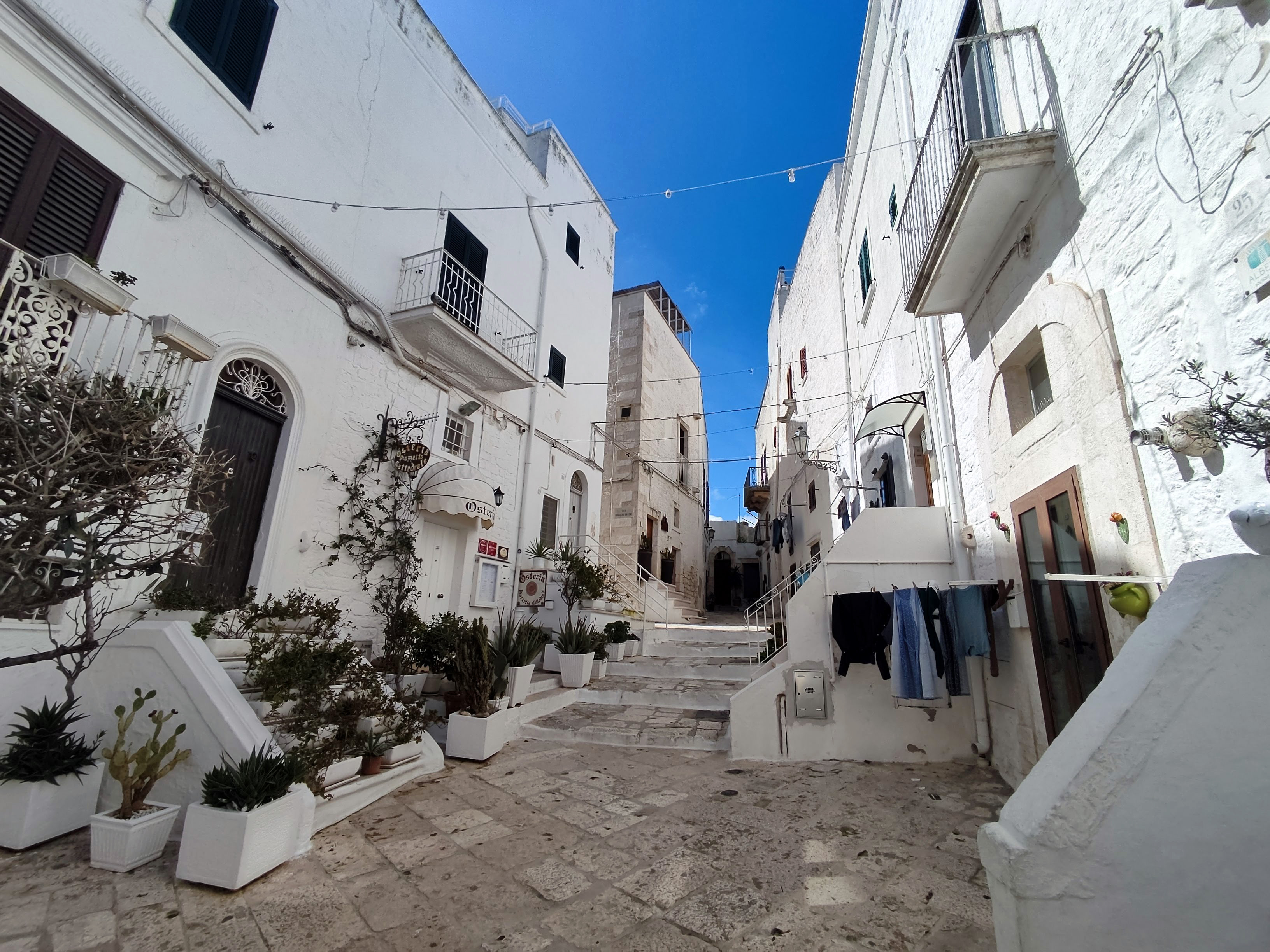
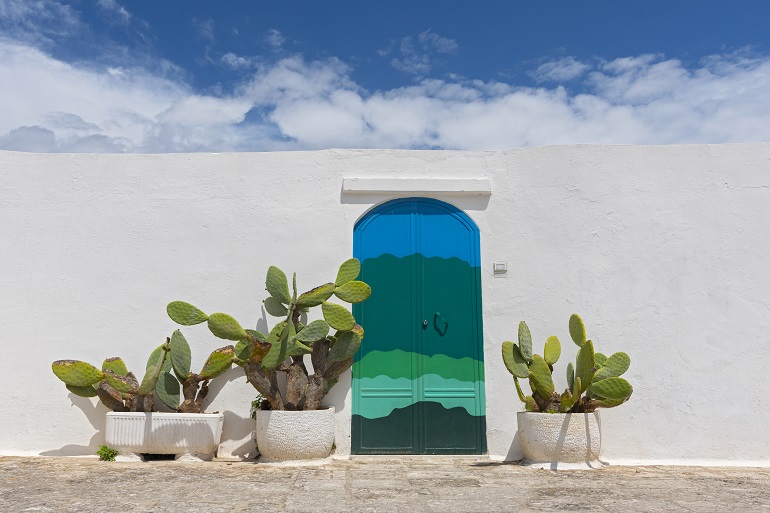
Near Piazzetta della Cattedrale stands what has become one of Ostuni's most photographed features: a distinctive doorway painted in vibrant blue and green hues with terracotta pots of cacti flanking its entrance. This seemingly ordinary element of the cityscape has gained extraordinary fame in the age of social media, becoming an iconic symbol of Ostuni's picturesque charm. The doorway's popularity stems from its perfect encapsulation of Mediterranean aesthetic sensibilities—the contrast of bright colours against whitewashed walls, the hardy desert plants thriving in the Puglian sun, and the framed view beyond suggesting discovery and possibility.
The doorway belongs to a private residence but has become a public landmark through countless photographs shared worldwide. Its specific colours have historical significance, as blue was traditionally used to ward off insects and evil spirits, while green represented prosperity and connection to the land. From this doorway, visitors can glimpse the olive-covered countryside stretching toward the sea, creating a perfect composition that captures Ostuni's essence in a single frame. The doorway's fame speaks to how ordinary elements of daily life in Ostuni have been elevated to art through the appreciation of visitors, demonstrating how the authentic character of a place often resides in its smallest details rather than its grandest monuments.
The Labyrinthine Streets of Ostuni
The intricate network of streets that forms Ostuni's historic centre represents urban planning as both art and defence. These narrow, winding pathways, many too slim for modern vehicles, create a pedestrian realm where exploration happens at a human pace. The layout follows no regular grid but instead responds organically to the hillside's contours and the defensive needs of past centuries. This seemingly chaotic arrangement served a crucial purpose—to confuse and impede invaders who might breach the city walls, giving residents time to retreat to safer areas or mount a defence.
Today, these streets offer a journey of constant discovery, with each turn revealing new architectural details, hidden courtyards, or unexpected views. The whitewashed walls that give Ostuni its nickname create a canvas for personal expression, with residents adorning their homes with flowering plants in brightly painted pots, decorative ceramics, and doors in various hues from weathered wood to vibrant blues and greens. Small shrines to the Madonna or local saints appear in niches carved into walls, while stone staircases climb steeply between buildings, sometimes leading to private terraces, sometimes to public viewpoints. Archways frame vistas both within the city and toward the countryside, creating natural compositions that have inspired artists and photographers for generations. Walking these streets connects visitors directly to centuries of daily life, where the boundaries between public and private space blur in the Mediterranean tradition of community living.
Top Museums
Diocesan Museum of Ostuni
Located on the ground floor of the ancient Episcopal Palace (also known as Palazzo dell'Episcopio) adjacent to the Cathedral, the Diocesan Museum opened in August 2017. This relatively new addition to Ostuni's cultural landscape houses an impressive collection of artworks and artefacts previously stored in the Treasury of the Co-Cathedral Chapter, the Capitular Archaeological Collection, and from local Benedictine and Carmelite churches and monasteries established in 1519 and 1730 respectively.
The museum's collection includes archaeological items recovered from a cathedral garden outside the city walls, excavated in 1844. These finds feature distinctive Messapian pottery (600-300 BCE) with high handles and roundels, alongside tools and toys from the same period. The central section displays episcopal robes and church silverware, with clear explanations of their significance.
A particularly interesting exhibit called "The memory of Ostuni" showcases books and manuscripts relating to the Benedictine convent established in 1519. These documents provide fascinating insights into monastic life, including details about the wealthy families who placed their daughters in the convent's care from around age six. The accompanying display of "ex voto" gifts—precious objects and jewellery donated to the church as expressions of thanks or devotion—is especially captivating.
The museum also features a charming walled garden where bishops once relaxed, now open for visitors to enjoy a peaceful moment in the heart of Ostuni.
Museum of Preclassical Civilizations of the Southern Murgia
Housed in the former Carmelite monastery of Santa Maria Maddalena dei Pazzi and the adjoining Church of San Vito Martire, this archaeological museum opened on 14 May 1989. The museum's distinctive multi-coloured dome is even more prominent in Ostuni's skyline than the cathedral itself.
The collection showcases artefacts spanning from the Paleolithic era to the Middle Ages, offering a comprehensive view of the preclassical civilizations that once inhabited the Southern Murgia region. The exhibits include tools, pottery, ornaments, flints, stone tools and other relics that illustrate the evolution of human society in the area.
The museum's most remarkable exhibit is undoubtedly the cast of the "Woman of Ostuni" (also known as "Delia" or "the mother of the world"), a 20-year-old pregnant woman who died approximately 28,000 years ago. This is one of the oldest maternity finds in the world, revealing the importance of fertility worship in prehistoric times. She was found in a crouched position with one hand placed under her head and the other on her belly, as if protecting her unborn child. Her body was adorned for burial with a red ochre hat made of shells, a bracelet of cyprea shells, and various utensils indicating her membership in a hunters group.
Other significant exhibits include finds related to the Messapian civilization that flourished between the 7th and 3rd centuries BCE, featuring grave goods, decorated ceramics, and coins. The museum also houses an exhibition on Messapic and Greek inscriptions from the sanctuary of Agnano, providing insights into the linguistic and cultural influences that shaped the region's history.
Ostuni Civic Museum
The Civic Museum of Ostuni, located in the former convent of Santa Maria Maddalena dei Pazzi next to the Church of San Vito Martire, houses finds from the southern Murgia that document the life and culture of preclassical populations from the Paleolithic to the Middle Ages.
In addition to the prehistoric and Messapian artefacts, the museum features a section dedicated to the medieval and modern periods, displaying objects from the Medieval Tower of Ostuni and the convent garden. This collection helps visitors understand the continuous human presence in the region and how societies evolved over thousands of years.
Local Cuisine
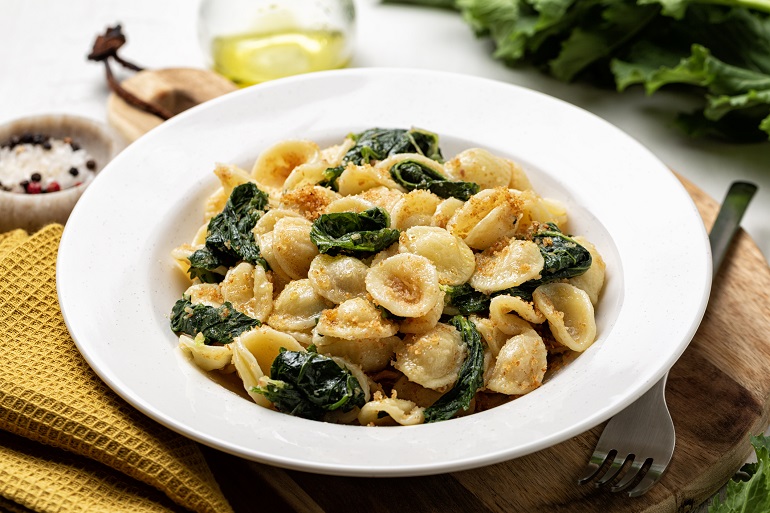
Ostuni's cuisine is a delicious reflection of Puglia's rich culinary heritage, drawing bounty from both land and sea. The local fare features fresh seafood from the Adriatic, including cozze alla Tarantina (mussels in tomato sauce), alongside countryside produce transformed into hearty dishes. No visit is complete without sampling the region's iconic orecchiette pasta, often served with cime di rapa (turnip tops) or fresh tomato sauce. Other specialties include fave e cicoria (mashed broad beans with chicory), panzerotti (small fried calzones), and bombette (savoury pork rolls stuffed with cheese and herbs). The cuisine proudly showcases local ingredients such as aubergines, courgettes, and legumes, all generously dressed with Puglia's famed olive oil. Cheese lovers should seek out creamy burrata and aged caciocavallo, whilst those with a sweet tooth might enjoy regional desserts accompanied by local wines. From rustic trattorias to elegant restaurants housed in centuries-old buildings, Ostuni offers authentic flavours in settings that range from charming cave-like rooms to panoramic terraces overlooking the White City.
Getting There & Around
Getting to and around Ostuni is quite straightforward, with two nearby airports serving as primary entry points: Brindisi Airport (40 minutes drive) and Bari Airport (1 hour 10 minutes drive). For those travelling without a car, trains connect both cities to Ostuni, with the journey from Bari taking approximately 50 minutes. The Ostuni train station is situated about 3 kilometres from the historic centre, with regular public buses running between them hourly (more frequently in summer) costing less than €2, or taxis available for around €17-22. Within Ostuni itself, the compact size of the town means walking is the most practical option for getting around. Do note that cars are not permitted in the old town, so if driving, park at the outskirts—the "Parcheggio Ostuni Al Giardino" car park is recommended and only a 5-minute stroll to Piazza della Libertà. During summer months, local buses also connect the historic centre to the beaches at Marina di Ostuni for a refreshing seaside escape.