


| Contents |
|---|

Introduction
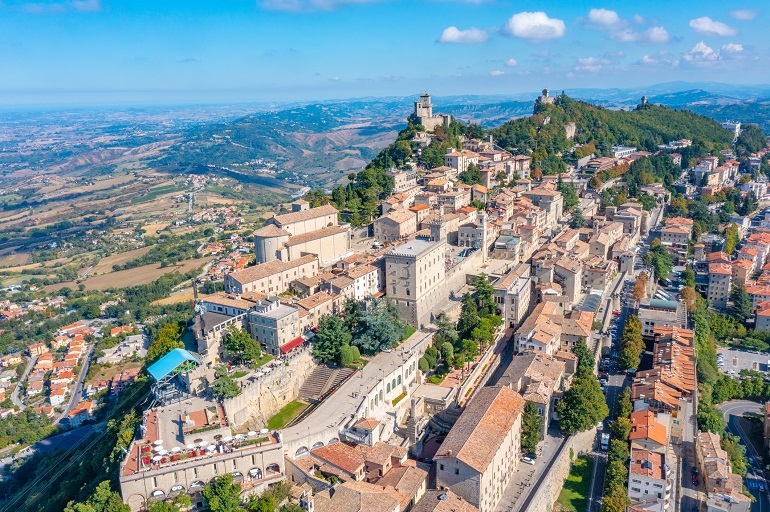
Perched dramatically atop Mount Titano, San Marino stands as Europe's oldest republic and third-smallest state, offering visitors an enchanting blend of medieval architecture and modern sophistication. This microstate, entirely surrounded by Italy, boasts three iconic towers that pierce the skyline, serving as proud symbols of the republic's enduring independence since 301 CE. Beyond its fascinating history, San Marino captivates tourists with its duty-free shopping, pristine cobblestone streets, and breathtaking panoramic views across the Adriatic coast and the Apennine Mountains. The historic centre, a UNESCO World Heritage site, enchants visitors with its neo-Gothic government palace, ancient fortifications, and charming piazzas, whilst maintaining its authentic character as a living, breathing city-state.
Interesting Facts about San Marino
- San Marino, founded in 301 CE by Saint Marinus, is the world's oldest surviving republic.
- With an area of just 61 km², it is the fifth-smallest country globally and entirely surrounded by Italy.
- The capital, also named San Marino, sits atop Mount Titano and is accessible via a cable car.
- Its iconic Three Towers—Guaita, Cesta, and Montale—feature on the national flag and coat of arms.
- San Marino has no national debt and was among the first to abolish the death penalty in 1865.
- The country issues collectible postage stamps, a tradition dating back to its first stamps in 1877.
- Despite its size, San Marino has its own Olympic team but has never won a medal.
- It is one of the few countries without a McDonald’s restaurant.
- San Marino’s historic centre and Mount Titano are UNESCO World Heritage Sites.
- Citizens enjoy free access to cultural sites but are banned from gambling in the national casino.

History
San Marino, the world's oldest republic, traces its remarkable origins to 301 CE when Saint Marinus, a Christian stonemason fleeing persecution, established a monastic community atop Mount Titano. The small nation's independence was first officially documented in 885, and by the 12th century, it had evolved into a self-governing commune with its own statutes and consuls.
Throughout its fascinating history, San Marino has masterfully preserved its sovereignty despite numerous challenges. The republic successfully defended itself against the powerful Malatesta family of Rimini, weathered a brief occupation by Cesare Borgia in 1503, and even maintained its independence during Napoleon's invasion of Italy, when he actually offered to expand its territory. The nation's commitment to liberty was further demonstrated when it provided asylum to revolutionaries during Italy's unification movement, including the legendary Giuseppe Garibaldi.
Today, this tiny nation stands as a testament to resilience and diplomatic prowess. San Marino remained neutral during both World Wars, though it experienced a British bombing raid and brief occupation by both German and Allied forces in 1944. The country has preserved its unique heritage while embracing modernity, becoming a UNESCO World Heritage site in 2008. Its constitution, written in 1600, holds the distinction of being the oldest written constitution still in effect and the only republican constitution written in Latin that remains in force today.
Main Attractions
The Three Towers
Guaita Tower (First Tower)
The Guaita Tower stands as the oldest and most famous of San Marino's three towers, its construction dating back to the 11th century. This architectural marvel has served multiple purposes throughout its history, including a brief stint as a prison. The tower underwent numerous reconstructions before reaching its current form in the 15th century during the tumultuous war with the House of Malatesta. Today, visitors can climb to its summit via steep stairs, where they are rewarded with breathtaking panoramic views of the surrounding landscape.
Cesta Tower (Second Tower)
Perched on Mount Titano's highest peak, the Cesta Tower represents a remarkable feat of 13th-century engineering, built upon the foundations of an ancient Roman fort. This impressive structure now houses a fascinating museum dedicated to Saint Marinus, established in 1956, which showcases an extensive collection of over 1,550 weapons spanning from medieval times to the modern era. The tower's elevated position offers unparalleled views stretching to the Apennines and, on clear days, across the Adriatic Sea to Croatia.

Montale Tower (Third Tower)
The Montale Tower, constructed in the 14th century, sits on the smallest of Monte Titano's peaks. This mysterious structure was built as a defensive fortification against the growing influence of the Malatesta family. Its unique architectural feature includes a single entrance positioned seven metres above ground level, typical of medieval prison design. While not open to the public, the tower's silhouette completes the iconic trio that adorns San Marino's flag and coat of arms.
Historic Centre Highlights
Piazza della Libertà
The Piazza della Libertà serves as San Marino's most prestigious square and the beating heart of the republic. This expansive plaza houses the magnificent Palazzo Pubblico, constructed in neo-Gothic style, which continues to function as the seat of government. The square's centrepiece is the striking Statue of Liberty, a masterful marble sculpture gifted by Countess Otilia H. Wagener. The statue depicts liberty as a powerful warrior, brandishing a flag and wearing a crown adorned with San Marino's iconic three towers.

Basilica di San Marino
The Basilica of Saint Marinus, constructed between 1826 and 1838 under the supervision of architect Antonio Serra from Bologna, stands as a testament to neoclassical architectural brilliance. The church's impressive façade features eight majestic Corinthian columns, while the interior is divided into three naves by similar columns. The basilica houses several remarkable works of art, including plaster statues of the Twelve Apostles and the Redeemer, created by the school of sculptor Adamo Tadolini. Beneath the main altar lies a small urn containing the Sacred Bones of Saint Marinus, the republic's revered founder.
Notable Features
Passo delle Streghe (Witches' Passage)
The mysterious Passo delle Streghe carries a fascinating medieval legacy. According to legend, this atmospheric pathway was once a gathering place for young women who were believed to be witches. They would congregate under the moonlight, performing rituals with aromatic herbs and flowers. Today, this enchanting cobbled path connecting the first two towers offers some of San Marino's most spectacular vistas. When the wind whistles through the pass, some say they can still hear the echoes of these ancient gatherings.
Cable Car
The Cable Car of San Marino provides an exhilarating journey spanning approximately 1,000 metres, offering a unique perspective of the republic's dramatic landscape. As passengers ascend Mount Titano, they are treated to sweeping views of the surrounding countryside and the distant Adriatic Sea. The journey provides an excellent opportunity to appreciate San Marino's strategic position and the architectural marvel of its historic structures. Upon reaching the summit, visitors find themselves perfectly positioned to explore the historic centre and its many attractions.
Medieval Streets
San Marino's historic centre is a masterpiece of medieval urban planning, with streets running parallel at different levels along Mount Titano's steep slopes. The Contrada Omerelli stands out as a particularly well-preserved medieval street, lined with monumental buildings that offer a glimpse into how the entire town appeared before the 18th century. These atmospheric thoroughfares, combined with various staircases, porticoes, and gardens, create a unique urban landscape that celebrates the republic's rich history.
Top Museums
State Museum (Museo di Stato)
Nestled in the heart of San Marino's historic centre, the State Museum is a treasure trove of cultural heritage. Housed in the elegant Palazzo Pergami Belluzzi in Piazzetta del Titano, this museum boasts an impressive collection of approximately 5,000 artefacts. These pieces span a wide range of interests, including artistic, archaeological, and numismatic items, many of which are intrinsically linked to the rich history of the Republic.
The museum's collection is thoughtfully arranged across four floors, each offering a unique perspective on San Marino's past:
- Ground floor: Dedicated to the Archaeology of the Territory, showcasing ancient artefacts unearthed in the region.
- First floor: Houses the Republican Art section, displaying works that reflect San Marino's artistic heritage.
- Second floor: Features Art donations, highlighting the generosity of patrons and collectors.
- First basement floor: Home to Archaeological Donations and Numismatics, including a fascinating collection of Sammarinese Medals.
One of the museum's most prized possessions is the antiquarian book collection donated by Italian Count Luigi Cibrario, which forms a significant part of the government Library. This donation sparked a tradition of generosity, with many subsequent donors contributing volumes to enrich the collection further.
Museum of Ancient Arms
Perched within the iconic Second Tower (Cesta) of San Marino, the Museum of Ancient Arms offers visitors a captivating journey through the evolution of weaponry. This unique museum houses an extensive collection of arms and armour, spanning from ancient times to the 19th century.
The exhibition is thoughtfully organised across four rooms, each dedicated to different periods and types of weaponry. Visitors can marvel at an array of melee weapons, including swords, maces, and polearms, as well as a diverse collection of firearms. The museum also features impressive displays of armour, offering insights into the protective gear worn by warriors throughout history.
One of the highlights of the collection is the selection of experimental breech-loading weapons, showcasing the ingenuity and innovation in firearms development. The museum's location within the medieval tower adds an extra layer of authenticity to the experience, allowing visitors to immerse themselves in the atmosphere of bygone eras.
Stamp and Coin Museum
The Stamp and Coin Museum of San Marino is a philatelist's and numismatist's dream come true. With over 700 square metres of exhibition space, this museum offers a fascinating journey through the postal and monetary history of Mount Titano.
The museum's collection is particularly renowned for its fine examples of late 19th-century philatelic and numismatic work. Visitors can explore an extensive array of stamps, each telling a story of San Marino's history, culture, and international relations. The coin collection is equally impressive, showcasing the evolution of San Marino's currency and its place in the broader context of European monetary history.
Interactive displays and informative exhibits guide visitors through the intricate world of stamp and coin collecting, making the subject accessible to both enthusiasts and novices alike. The museum often hosts special exhibitions, highlighting rare and unique pieces from its vast collection.
San Marino National Gallery
The San Marino National Gallery, inaugurated in 1956, stands as a testament to the republic's commitment to modern and contemporary art. The gallery houses an impressive collection of artistic works dating from the 1970s to the present day, offering visitors a comprehensive overview of recent artistic movements and styles.
One of the gallery's most intriguing features is its section dedicated to experimental artistic languages. This area showcases innovative and boundary-pushing works that challenge traditional notions of art, reflecting San Marino's embrace of contemporary artistic expression.
The gallery also provides historical trails that guide visitors through San Marino's artistic heritage, offering context and background to the works on display. A unique aspect of the National Gallery is its Performing Archive, which houses historical documents and portfolios of important San Marino artists, providing a valuable resource for researchers and art enthusiasts alike.
Museum of Curiosities
For those seeking a more unconventional museum experience, the Museum of Curiosities in San Marino offers a delightful and intriguing journey into the world of the unusual and extraordinary. Spanning 600 square metres across three floors, this unique museum is a celebration of human ingenuity, oddity, and wonder.
Visitors to the Museum of Curiosities can expect to encounter a wide array of mind-boggling inventions, learn about unusual characters who have achieved world records, and marvel at rare and peculiar objects. The museum's interactive approach encourages visitors to engage with the exhibits, posing questions and sparking the imagination.
From medieval mousetraps of original design to a figure of the world's tallest man, the museum's collection is as diverse as it is fascinating. Each themed room offers a new surprise, ensuring that visitors of all ages remain captivated throughout their visit.
Wax Museum
The Wax Museum of San Marino offers a unique way to experience history through lifelike wax figures. Featuring 40 historical scenes brought to life by 100 wax characters, the museum provides a vivid representation of key moments from both San Marino's history and international events.
Each scene is meticulously crafted, with characters dressed in period-accurate clothing and placed in carefully recreated historical settings. This attention to detail allows visitors to feel as though they've stepped back in time, offering a more immersive and engaging way to learn about history.
The museum includes a special section dedicated to San Marino's medieval history, providing insights into the republic's early days and the events that shaped its unique identity. From famous historical figures to everyday scenes of past life, the Wax Museum offers a comprehensive and entertaining journey through time.
Torture Museum
While perhaps not for the faint of heart, the Torture Museum in San Marino provides a sobering look at the darker aspects of human history. This museum houses a collection of ancient instruments of torture, offering visitors a glimpse into the brutal methods of punishment and interrogation used in past centuries.
The museum's exhibits include a wide range of devices, from thumbscrews and iron maidens to more obscure instruments. Each item is accompanied by detailed information about its use and historical context, providing an educational perspective on these grim artefacts.
While the subject matter is undoubtedly heavy, the museum aims to educate visitors about this aspect of history rather than sensationalise it. It serves as a powerful reminder of the importance of human rights and the progress society has made in terms of justice and punishment.
Local Cuisine
San Marino's cuisine shares deep ties with its Italian neighbours, particularly the regions of Romagna and Marche, whilst maintaining its own distinctive local specialities. The nation's culinary heritage features hearty pasta dishes like passatelli, made from breadcrumbs and Parmesan cheese served in chicken broth, and the delightful nidi di rondine—pasta rolls filled with prosciutto and cheese in a rich béchamel sauce. Traditional dishes include the flavourful baccalà alla San Marino (salted codfish), the rustic bean and mussel stew called faggioli con le cozze, and the celebrated coniglio in porchetta—rabbit seasoned with fennel and slow-roasted to perfection. No visit would be complete without sampling the local piadina, a versatile flatbread that serves as both a staple food and popular street snack, or indulging in the region's sweet specialities such as the chocolate-covered verretta and the iconic torta tre monti, inspired by San Marino's three towers.
Shopping
San Marino offers diverse shopping experiences across its historical centre and modern retail areas. The old town features hundreds of shops selling local crafts, rare stamps, coins, traditional pottery, and fashion boutiques. Shopping is often cheaper than in Italy due to lower taxes on goods and services. The weekly market in Borgo Maggiore, dating back to 1243, operates every Thursday morning, whilst an antiques market runs every third Sunday from March to December. Outside the historic centre, visitors can explore shopping arcades, malls, and the San Marino Outlet Experience, which houses premium luxury brands. For local delicacies, the Consorzio Terra di San Marino shop offers regional specialities including extra-virgin olive oil, honey, cheese, and traditional cakes like Tre Monti and Titano.
Nature in and around San Marino
San Marino offers diverse natural attractions across its small territory. The iconic Monte Titano, a UNESCO World Heritage site, dominates the landscape with hiking trails and panoramic views of the surrounding countryside and Adriatic Sea. The Mount Titano Nature Reserve spans 6,000 hectares and features marked walking paths through verdant woodlands, home to diverse flora and fauna. Visitors can explore the extensive cave network within San Marino Nature Park, discover abandoned watermills along forest trails, and visit several protected areas including the Boschetti Nature Reserve, Marano River Park, and Monte Cerreto Park. The territory also includes the Ca' Vagnetto teaching arboretum and the Lajala Pine Forest, providing additional opportunities for nature enthusiasts to explore the microstate's natural heritage.
Getting There & Around
To reach San Marino, first take a train to Rimini, Italy, as San Marino has no railway station or airport. From Rimini Station, cross the road to find the Bonelli Bus stop near Hotel Napoleon, where buses depart for San Marino roughly every 75 minutes between 8:00 and 20:00. A return bus ticket costs 12 euros and can be purchased at the tabaccheria opposite the station, online, or directly on the bus. The journey takes approximately 45 minutes and terminates at Piazzale Calcigni in San Marino's old town. Once in San Marino, the historic centre is easily walkable, though quite steep with cobblestone streets. For easier navigation between the city and Borgo Maggiore, take the cable car (funivia) which costs 5 euros for a return journey. If driving, be mindful that parking is limited in the city centre, and the roads throughout San Marino are notably winding and narrow.
Best Time to Visit
The best time to visit San Marino is from May to July, when the weather is warm and sunny, perfect for exploring the picturesque medieval streets and enjoying panoramic views from Mount Titano. During this period, temperatures range from a pleasant 15°C to 27°C, with July being the hottest and driest month. Visitors can expect long days of sunshine, ideal for outdoor activities and sightseeing. This time of year also coincides with numerous festivals, including the San Marino World Motorcycle Championship in June and the Medieval Days Festival in July, adding a vibrant cultural dimension to your trip. However, if you prefer fewer crowds and more affordable accommodation, consider visiting in late spring (April to May) or early autumn (September to October), when the weather is still agreeable and the tourist numbers are lower.