


| Contents |
|---|
Introduction
Nestled in the heart of Puglia, at the heel of Italy's boot, Lecce stands as a dazzling jewel of Baroque architecture and rich history. Often dubbed the "Florence of the South", this enchanting city boasts a wealth of ornate churches, grand palazzi, and intricate facades crafted from the soft, golden-hued local limestone. Lecce's historic centre is a veritable open-air museum, where elaborate carvings and cherubic figures adorn buildings at every turn, creating a mesmerising tapestry of 17th-century artistry. Beyond its architectural splendour, Lecce offers visitors a vibrant atmosphere, delectable cuisine, and proximity to stunning beaches, making it an irresistible destination for those seeking to experience the charm of southern Italy.
Interesting Facts about Lecce
- Lecce's nickname "The Florence of the South" comes from its stunning Baroque architecture, with many buildings crafted from the local, malleable Lecce stone.
- The city's origins trace back to ancient legends, including a foundation myth linked to the Trojan War hero Idomeneo of Crete.
- Lecce boasts a well-preserved Roman amphitheatre dating to the 2nd century CE, discovered buried beneath the city centre and once seating over 25,000 spectators.
- During the Norman period, Lecce became a prominent cultural hub, with landmarks like the Castle of Charles V and Basilica di Santa Croce constructed in its distinctive Baroque style.
- The mysterious River Idume flows underground through parts of Lecce, historically used by Palazzo Adorno's residents as a natural swimming pool.
- Local folklore tells of a tragic love story immortalised in stone on a palace façade between Via Federico D'Aragona and Piazzetta Epulione.
- Lecce's historic centre is encircled by ancient walls featuring notable gates like Porta Napoli and Porta Rudiae, blending medieval and Renaissance elements.
- The city's unique pietra leccese limestone, prized for its workability, has made it a centre for ceramic production and sculptural artistry since Roman times.
- Lecce played a strategic role in WWII, hosting Allied bomber bases and attempting to support Italian garrisons in the Aegean Sea.
- The annual Festa di Sant'Oronzo in August celebrates the city's patron saint with vibrant processions, traditional music, and elaborate light displays illuminating Baroque monuments.

History
Lecce, a captivating city in Italy's Puglia region, boasts a history stretching back to ancient times. The area was initially settled by the Messapii, an ancient Italic people, in the 8th century BCE, though legends suggest an even earlier foundation around 1200 BCE following the fall of Troy. Under Roman rule, when the city was known as Lupiae, it experienced significant development, particularly during Emperor Hadrian's reign, with the construction of a theatre, amphitheatre, and a route connecting the city to the port of San Cataldo.
The city's fortunes transformed dramatically with the arrival of the Normans in the 11th century, when Roberto il Guiscardo established the County of Lecce, turning it into a centre of knightly culture. The medieval period left an indelible mark on the cityscape, exemplified by the church of Saints Niccolò and Cataldo, which remains one of southern Italy's most significant medieval sites. Under Charles V's rule, the city received new fortifications and walls to protect against Ottoman threats, marking the beginning of Lecce's renowned Baroque period.
The 16th and 17th centuries witnessed Lecce's golden age, during which the city developed its distinctive architectural character. The local limestone, known as pietra leccese, became the primary building material for the city's magnificent Baroque structures. Following Italian unification in 1861, Lecce underwent significant public works and expansion beyond its ancient walls. Despite suffering heavy bombing during World War II, the city underwent extensive restoration efforts to preserve its unique cultural heritage. Today, Lecce stands as a testament to its rich historical legacy, earning it the nickname "the Florence of the South" for its stunning Baroque architecture and cultural significance.
Main Attractions
Historic Centre
The historic centre of Lecce is a mesmerising labyrinth of narrow, winding streets that tell stories spanning centuries. As you wander through these ancient pathways, you'll be surrounded by honey-coloured limestone buildings that seem to glow in the southern Italian sunlight. The local Baroque style, known as 'Barocco Leccese', is evident in every corner, with elaborate carvings of cherubs, grotesque figures, and floral motifs adorning building facades. The area is particularly magical during the early morning or late afternoon when the sun casts long shadows across the intricate stonework, creating an ever-changing display of light and shadow. The historic centre is also home to numerous artisan workshops where you can watch craftsmen working with the local limestone, papier-mâché, and traditional ceramics.
Piazza Sant'Oronzo
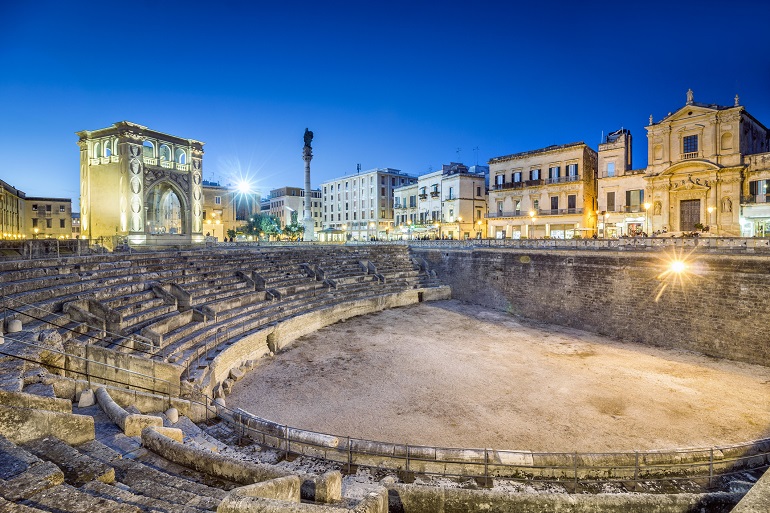
Piazza Sant'Oronzo stands as the beating heart of Lecce, a vibrant square where history and modern life intertwine. The square's centrepiece, the imposing Column of Sant'Oronzo, rises 29 metres into the sky, topped with a bronze statue of the city's patron saint. The column itself has an fascinating history - it originally stood in Brindisi as one of two Roman columns marking the end of the Appian Way. The square's most remarkable feature is the partially excavated Roman amphitheatre, which occupies about half of the piazza. The recently installed Orologio Delle Meraviglie, a striking 20-metre bronze timepiece, adds a contemporary touch to this historical space. The square is surrounded by a mix of architectural styles, from medieval to Liberty (Italian Art Nouveau), creating a unique visual timeline of the city's development. Local cafes and restaurants line the edges, making it the perfect spot for people-watching while enjoying a traditional Lecce coffee.
Roman Amphitheatre
The Roman Amphitheatre, dating from the 2nd century BCE, represents one of the most significant archaeological discoveries in Lecce. Only about two-thirds of the structure has been excavated, with the remainder still hidden beneath the square's buildings. The visible portion gives a clear indication of its original grandeur - elliptical in shape, it could once accommodate 14,000 spectators on its tiered seating. The underground chambers, where gladiators and wild animals were once kept, are particularly well-preserved and showcase the sophisticated engineering of ancient Rome. Today, the amphitheatre serves as a spectacular venue for summer concerts and cultural events, its ancient stones providing an unforgettable backdrop for modern performances. The site includes informative panels explaining the amphitheatre's history and original use, helping visitors understand its significance in Roman society.
Piazza del Duomo
Piazza del Duomo represents one of Italy's finest examples of a closed square, with its single entrance creating a theatrical reveal as visitors enter the space. The square is surrounded by some of Lecce's most impressive Baroque buildings, including the Cathedral, the Bishop's Palace, and the Seminary. The Cathedral's facade is particularly striking at night when carefully placed lighting highlights the intricate stone carvings. The 70-metre-high bell tower provides a dramatic vertical accent to the square and offers panoramic views of the city for those willing to climb its steps. The square's unique enclosed design creates perfect acoustics, making it a popular venue for summer concerts and cultural events. The surrounding buildings showcase the skill of local stone carvers, with their facades featuring an incredible array of angels, saints, and decorative elements that seem to dance in the changing light.
Roman Theatre
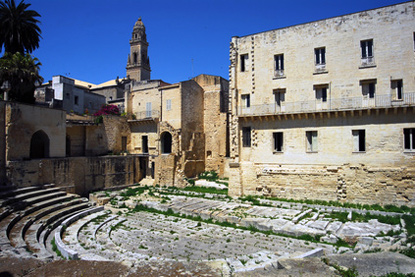
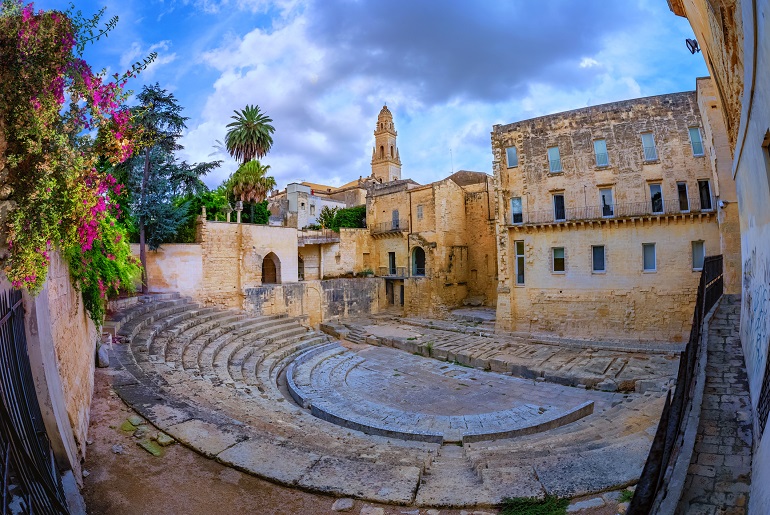
The Roman Theatre, while smaller than its amphitheatre cousin, is equally impressive in its preservation and historical significance. Built in the 2nd century CE, it could seat approximately 4,000 spectators and was primarily used for theatrical performances rather than gladiatorial contests. The theatre's discovery in 1929 was accidental, occurring during construction work in the city centre. The well-preserved seating areas (cavea) show the sophisticated acoustic design of Roman architects, while the orchestra pit and stage area give visitors a clear picture of how ancient performances were staged. The theatre's location, nestled among modern buildings, creates a striking contrast between ancient and contemporary architecture. During summer evenings, the theatre comes alive with classical performances and cultural events, allowing visitors to experience the venue as the Romans did two millennia ago.
Basilica di Santa Croce
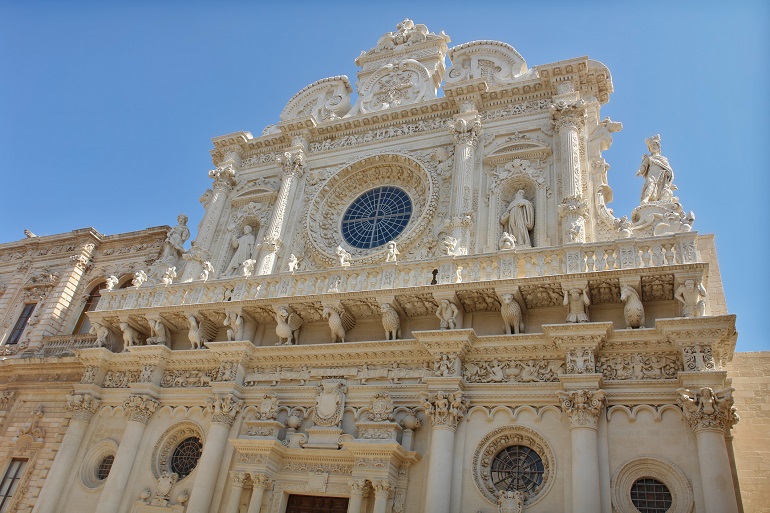
The Basilica di Santa Croce stands as the ultimate expression of Lecce's Baroque style, its facade representing a stone tapestry of incredible complexity. Construction spanned from 1549 to 1695, with each generation of craftsmen adding their interpretation of Baroque exuberance. The lower section features a riot of creatures both real and mythological: dodos (now extinct), dragons, cherubs, and classical figures all compete for attention. The rose window is particularly noteworthy, surrounded by intricately carved flowers and fruits. The interior matches the exterior's grandeur with its coffered ceiling, 17 altars, and numerous chapels. The play of light through the windows creates an ever-changing atmosphere throughout the day, highlighting different aspects of the church's elaborate decoration. The columns inside are particularly noteworthy, each one unique in its carved decoration.
Church of Saints Niccolò and Cataldo
This remarkable church represents a unique fusion of Norman, Gothic, and Baroque elements, making it one of Lecce's most architecturally interesting buildings. Founded in 1180 by Tancred of Lecce, the church showcases the evolution of architectural styles through the centuries. The facade combines Norman severity with later Baroque additions, creating a fascinating architectural dialogue. Inside, the church houses some of the city's finest frescoes, with the star-vaulted ceiling being particularly impressive. The surrounding monumental cemetery adds to the site's atmospheric appeal, with its collection of ornate family chapels and memorials telling the stories of Lecce's prominent families through the ages. The peaceful cloister, with its well-preserved medieval architecture, provides a quiet space for contemplation away from the city's bustle.
City Gates
Lecce's three historic gates stand as proud reminders of the city's medieval past. Porta Napoli, the most impressive, was built in 1548 in honour of Charles V and resembles a triumphal arch with its commanding presence and elaborate decorations. Porta Rudiae, the oldest of the gates, dates back to the 14th century and features interesting historical inscriptions and coats of arms. Porta San Biagio, while less ornate, is notable for how it has been incorporated into the city's urban fabric, with buildings growing around and above it over the centuries. Each gate tells its own story of the city's development and defence, with architectural details reflecting different periods of Lecce's history. Together, they form an important part of understanding how the city evolved from a medieval fortress town to the open, vibrant city it is today.
Castle of Charles V
The Castle of Charles V (Castello Carlo V) stands as a formidable reminder of Lecce's strategic importance during the Renaissance period. Built in 1539-49 under Charles V's orders, the castle combines medieval military architecture with Renaissance refinements. Its massive walls, complete with four corner bastions, enclose a spacious courtyard and two floors of rooms that once housed the Spanish garrison. The castle's construction involved some of the period's finest military architects, including Gian Giacomo dell'Acaya, who designed its innovative defensive features. Today, the restored castle hosts cultural events, exhibitions, and conferences in its impressive halls. The castle's museums house important historical artifacts and documents relating to Lecce's past. The upper floors offer stunning views over the city, while the underground areas contain fascinating examples of military engineering, including secret passages and storage rooms. The castle's mix of architectural styles, from austere military features to decorative Renaissance elements, makes it a must-visit destination for anyone interested in military or architectural history.

Top Museums
Museo Storico-Archeologico dell'Università del Salento
The Museo Storico-Archeologico dell'Università del Salento (MUSA) stands as a testament to Lecce's commitment to preserving its historical legacy. Inaugurated in 2007, this museum showcases over 300 artefacts unearthed during excavations conducted by the University of Salento in the Salento region. The exhibition spans five rooms, guiding visitors through a chronological and thematic journey that encompasses various historical periods and geographical areas. Multimedia presentations and reproductions of archaeological contexts enhance the visitor experience, offering a comprehensive understanding of the region's rich past.
Museo Provinciale Sigismondo Castromediano
Another cornerstone of Lecce's museum landscape is the Museo Provinciale Sigismondo Castromediano. As the oldest museum in Puglia, founded in 1868, it houses an impressive collection that traces the history of numerous civilisations that have occupied the region. Visitors can marvel at an array of pottery, stone carvings, and ancient art from the Salento area. The museum's prehistoric section features a fascinating reconstruction of the Grotta dei Cervi di Porto Badisco, complete with intriguing rock paintings. Additionally, the museum boasts a small but notable picture gallery, showcasing paintings that document Byzantine and Venetian influences on local artists from the medieval period through the 18th century.
Museo Storico Città di Lecce
The MUST: Museo Storico Città di Lecce offers a captivating journey through the city's cultural heritage. Housed in a 15th-century monastery in the heart of the old city, MUST serves as a hub for both historical artefacts and contemporary art. The museum's permanent collection features modern paintings, wood and tin sculptures, and commercial art displayed in spacious rooms with traditional arched ceilings. MUST also hosts temporary exhibitions that spotlight specific artists or styles, providing a dynamic and ever-changing cultural experience for visitors.
Paper Mache Museum
A unique gem in Lecce's museum offerings is the Museo Della Cartapesta (Paper Mache Museum), located within the Charles V Castle. This museum celebrates Lecce's historic connection to the art of paper mache, an craft that flourished in the city during the 18th century. The museum houses approximately 80 works by renowned Salentine paper mache masters and artists, covering a period from the 18th century to the present day. Many of these exquisite pieces are religious in nature, created for Lecce's churches, and showcase the remarkable skill and artistry of this unique craft.
Museo Faggiano
The Museo Faggiano offers visitors a truly extraordinary experience. This private historical-archaeological museum came into existence by chance when the Faggiano family, while renovating their property, uncovered a treasure trove of historical evidence and artefacts dating back two millennia. The building now offers guided tours that take visitors through various historical periods, from the Messapians onwards, revealing tombs, cisterns, granaries, and hidden passageways.
Jewish Museum
For those interested in Jewish history, the Jewish Museum of Lecce, located in the heart of the medieval Giudecca, provides valuable insights into the traditions and history of Lecce's Jewish community during the late Middle Ages. The museum aims to reconstruct a missing piece of Lecce's medieval cultural mosaic, paying specific attention to the local Jewish community. In 2022, the museum expanded its offerings with the opening of the MAiDE art gallery, dedicated to contemporary art and featuring works by international artists of both Jewish and non-Jewish backgrounds.
Local Cuisine
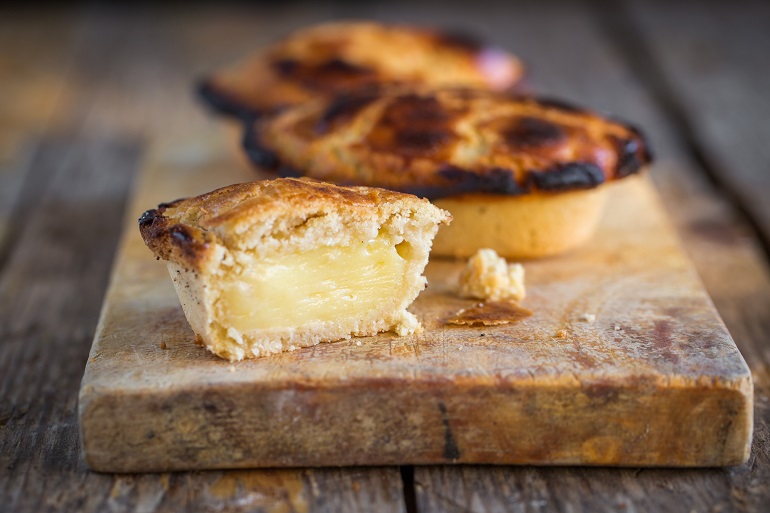
Lecce's cuisine is a delightful reflection of Puglia's culinary heritage, with a focus on simple, locally-sourced ingredients known as cucina povera. The city's signature dish is the pasticciotto, a crumbly pastry filled with custard that's perfect for breakfast or dessert. Fresh handmade pasta features prominently, particularly orecchiette served with turnip greens, and the unique ciceri e tria, which combines boiled and fried pasta with chickpeas. The region's exceptional olive oil, which accounts for one-third of Italy's total production, enriches many dishes. Being close to the coast, Lecce offers superb seafood options, including pignata (octopus cooked in terracotta pots) and tiaeddha (a rice dish with mussels and potatoes). Local specialities also include rustico leccese, a savoury pastry filled with béchamel and mozzarella, and puccia, a traditional bread stuffed with vegetables. The area's wines, particularly the Salice Salentino, perfectly complement these dishes, whilst the refreshing caffé leccese, an iced coffee with almond syrup, offers a distinctive local beverage.
Shopping
Lecce, the cool kid capital of Salento, offers a delightful array of shopping experiences. The historic centre boasts an eclectic mix of vintage boutiques, artisanal workshops, and luxury retailers. Shoppers can discover everything from true vintage clothing from the 1950s-90s at shops like Biba Vintage & Remake to handcrafted papier-mâché artwork, a local speciality. The city's twice-weekly market on Viale dello stadio presents an enormous selection of clothing, household items, and local produce, whilst the monthly Antique & Vintage Market, held on the last Sunday of each month, showcases an impressive collection of vintage furniture, records, and decorative pieces. Traditional craftsmen throughout the old town create exquisite ceramics, ironwork, and bespoke fashion pieces, making Lecce a treasure trove for those seeking unique, handmade items.

Nature in and around Lecce
The main natural attraction near Lecce is Porto Selvaggio, a pristine natural park stretching along the Ionian coast with dramatic cliffs, dense pine forests and crystal-clear waters perfect for swimming and snorkeling. The area features fascinating cave systems, including the archaeologically significant Grotta del Cavallo, whilst the unique wetlands of Palude del Capitano showcase rare orchids and migratory birds amidst its distinctive karst formations and crystal pools known as 'spunnulate'. Along the coastline, visitors can discover gorgeous beaches like Torre dell'Orso with its iconic twin rocks 'Le Due Sorelle', the Caribbean-like shores of Punta Prosciutto with powdery white sand, and the picturesque natural swimming pool at Grotta della Poesia, widely regarded as one of Italy's most beautiful natural pools. The region's rugged coastline is dotted with historic watchtowers that offer breathtaking panoramic views of the Salento coast.
Getting Around
Lecce is easily accessible despite not having its own airport. The closest airport is Brindisi, just 35 km north of the city centre, with discount flights available from London, Rome, Milan and other European cities. From Brindisi Airport, regular shuttle buses connect to Lecce's city centre. Trenitalia operates frequent train services, including high-speed connections from major Italian cities, with journey times of about 5.5 hours from Rome and 1.5 hours from Bari. Within Lecce, the historic centre is best explored on foot as it's a limited traffic zone. The local SGM bus company operates 20 bus lines and 4 trolleybus lines throughout the city, with single tickets costing €1.00 (€1.50 if purchased onboard), whilst day tickets are €2.50. During summer months, the Salento in Bus service provides convenient connections to nearby coastal resorts and towns. For those driving, several parking facilities are available around the city, including Piazza Carmelo Bene and Oberdan Parking, with rates starting from €0.60 per hour.
Best Time to Visit
The best time to visit Lecce, Italy, is during the spring and autumn months, particularly from April to June and September to October. These periods offer pleasant temperatures, ranging from 18°C to 27°C, with ample sunshine and fewer crowds compared to the peak summer season. May and June are especially delightful, boasting warm weather ideal for sightseeing and outdoor activities. September and October provide a perfect balance of comfortable temperatures and reduced tourist numbers, allowing visitors to explore the city's Baroque architecture and charming streets at a leisurely pace. It's worth noting that July and August are best avoided due to scorching temperatures, often exceeding 30°C, and the influx of tourists that can make the small city feel overcrowded.