


Introduction
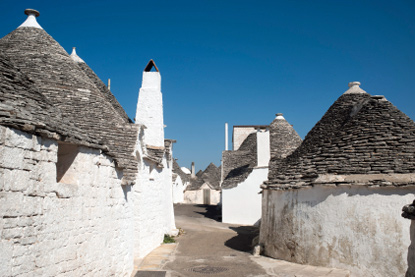
Nestled in the heart of Puglia, southern Italy, Alberobello is a charming town that captivates visitors with its unique architectural wonders. This UNESCO World Heritage Site is renowned for its distinctive trulli—whitewashed stone huts with conical roofs that dot the landscape like something out of a fairy tale. With a population of just over 10,000 inhabitants, Alberobello offers a glimpse into Italy's rich cultural heritage and rural past. The town's history dates back to the 14th century, and its trulli, built using an ancient dry-stone technique, have become an enduring symbol of the region. As you wander through the narrow, winding streets of the historic centre, particularly in the Rione Monti and Aia Piccola districts, you'll be transported to a bygone era, surrounded by over 1,500 of these remarkable structures that have withstood the test of time.
Interesting Facts about Alberobello
- Alberobello is famous for its trulli, whitewashed stone huts with conical roofs that are UNESCO-listed architectural marvels.
- The town’s name translates to "beautiful tree" from Italian, though its origins are tied to medieval Latin terms for "wood of war".
- Trulli roofs often feature decorative pinnacles whose shapes historically indicated the status or trade of the builder.
- Local builders still use the ancient chiancarelle technique of layering flat limestone slabs to create watertight roofs.
- Alberobello hosts a nightly summer light show where projections animate trullo walls with historical and folkloric scenes.
- The town’s only two-story trullo, Trullo Sovrano, contains a chapel and museum showcasing 19th-century peasant life.
- Residents traditionally painted mystical symbols on their trulli using limewash, believing they warded off evil spirits.
- Alberobello’s annual Festa dei Santi Medici in September features processions where locals carry statues through trulli-lined streets.
- Many trulli now serve as boutique hotels, allowing visitors to sleep in these unique structures with original stone interiors.
- The town’s geological foundation of karst limestone directly influenced the development of dry-stone building techniques.
History
Alberobello's fascinating history began in the late 14th century when the area was primarily dense woodland, known as 'Sylva arboris belli' meaning 'forest of the tree of war'. The town's distinctive character emerged in the early 16th century when Count Andrea Matteo III Acquaviva d'Aragona permitted forty peasant families from Noci to settle and cultivate the land. The most intriguing chapter of Alberobello's history revolves around its iconic trulli houses, which were built without mortar as a clever strategy to avoid taxation from the Kingdom of Naples. This unique architectural approach was mandated by Count Giangirolamo II, known as 'Guercio di Puglia', who significantly contributed to the town's development in the 1600s. The settlement continued to grow until 1797, when King Ferdinand IV of Bourbon finally liberated Alberobello from feudal servitude and elevated it to the status of a royal city. Today, Alberobello's trulli are recognised as a UNESCO World Heritage Site, having earned this prestigious designation in 1996.
Main Attractions
Main Districts
Rione Monti
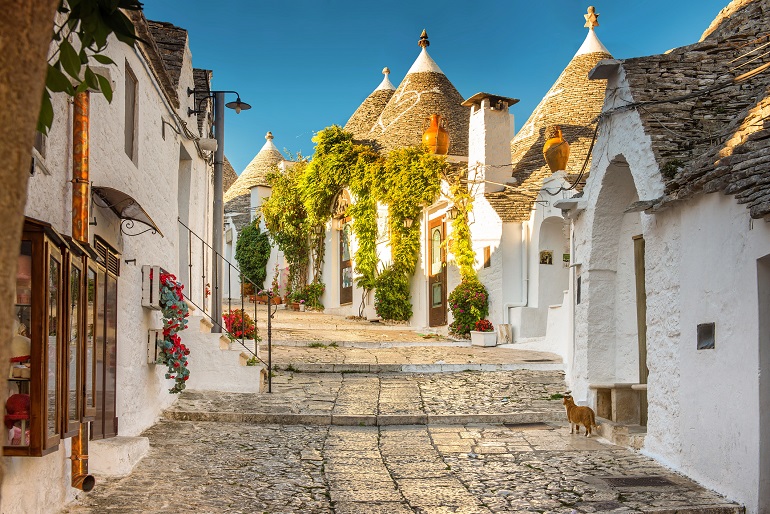
The crown jewel of Alberobello, Rione Monti is a mesmerising collection of over 1,000 trulli cascading down the town's southern hill. This enchanting district, with its narrow cobblestone streets and whitewashed walls, creates a fairytale-like atmosphere that captivates visitors from around the world. The area is particularly stunning at sunrise and sunset when the golden light bathes the limestone structures in warm hues. While it can get crowded during peak tourist seasons, the early morning hours offer a peaceful opportunity to explore the intricate symbols painted on the trulli roofs and admire the distinctive architectural features that make each structure unique.
Rione Aia Piccola
In contrast to its busier neighbour, Rione Aia Piccola offers an authentic glimpse into local life with approximately 400 trulli. This residential quarter, located on the eastern side of town, maintains its original character with fewer tourist establishments. The peaceful atmosphere allows visitors to observe daily life as residents tend to their gardens, chat with neighbours, and go about their routines. The trulli here often feature beautiful potted plants and traditional decorations, making it a photographer's paradise without the commercial distractions found elsewhere.

Notable Landmarks
Trullo Sovrano
Standing proudly as Alberobello's architectural masterpiece, the Trullo Sovrano is a testament to the sophistication possible within trulli construction. Built in the 18th century by the wealthy Perta family, this two-story marvel spans 14 rooms, making it the largest trullo in town. The museum inside offers an immersive experience into historical daily life, featuring period furniture, traditional tools, and agricultural implements. Visitors can explore the well-preserved kitchen with its original fireplace, the family's private chapel, and various living quarters that showcase the ingenious use of space within these unique structures.
Church of Saint Anthony of Padua
Dominating the skyline of Rione Monti, the Church of Saint Anthony of Padua represents a remarkable fusion of traditional trulli architecture with religious architecture. Built between 1926 and 1927, this unique church features a Greek cross plan topped by a central dome and four smaller cones. The interior is equally impressive, with beautiful frescoes by Adolfo Rollo depicting scenes from the life of Saint Anthony. The church's position at the highest point of the district makes it an excellent landmark for orientation and offers spectacular views over the trulli-covered hillside.
Basilica of Saints Cosmas and Damian
This magnificent neo-Renaissance basilica serves as the spiritual heart of Alberobello. Its imposing façade, crowned by twin bell towers, creates a striking contrast to the humble trulli scattered throughout the town. The interior features elaborate marble work, impressive frescoes, and houses important relics of Saints Cosmas and Damian. The church plaza often hosts local festivals and religious processions, making it a central gathering point for both community events and cultural celebrations.
Trullo Siamese
The Trullo Siamese tells a fascinating story of love and architecture. This unique structure consists of two connected trulli with separate entrances but joined conical roofs. According to local legend, it was built by two brothers who fell in love with the same woman, leading to a creative architectural solution to their living arrangements. Today, it stands as one of the most photographed structures in Alberobello, representing the intricate relationships between architecture and human stories.
Museums and Cultural Centres
Museum of Territory
Located in a restored trullo complex, the Museum of Territory offers fascinating insights into the geological and historical development of the region. Interactive exhibits explain the formation of local limestone and the evolution of trulli construction techniques. Visitors can learn about the tools and methods used to shape the distinctive stone roofs and understand the social and economic factors that led to Alberobello's unique architectural heritage.
Trullo Museum of Wine
Housed in a series of connected trulli, this specialised museum celebrates Puglia's rich viticultural heritage. Visitors can explore traditional wine-making equipment, learn about local grape varieties, and understand the importance of wine in the region's cultural identity. The museum often offers tastings of local wines, providing a complete sensory experience of Pugliese wine culture.
Natural and Cultural Experiences
Bosco Selva
This verdant 40-hectare park provides a refreshing contrast to the stone structures of the town centre. Ancient oak trees create a cooling canopy over well-maintained walking trails, while Mediterranean flora adds splashes of colour throughout the seasons. The park features dedicated picnic areas, a modern playground, and fitness equipment, making it popular with both locals and visitors seeking respite from summer heat. Nature enthusiasts can spot various bird species and small wildlife in this carefully preserved ecosystem.
Casa D'Amore
This historic building represents a pivotal moment in Alberobello's architectural evolution. Built in 1797, it was the first structure constructed using mortar after the town gained freedom from feudal control. The building's elegant façade and traditional balconies showcase the transition from trulli architecture to more conventional building styles. Today, it houses exhibitions on local history and provides valuable context for understanding Alberobello's development.
Artisanal Workshops and Shopping
Traditional Craft Workshops
Throughout the historic centre, visitors can find artisans maintaining centuries-old crafting traditions. Watch masters carve intricate designs into local olive wood, create miniature trulli models, or weave traditional textiles. Many workshops offer demonstrations and hands-on experiences, allowing visitors to try their hand at traditional crafts and purchase authentic souvenirs directly from the artisans.
Gastronomic Boutiques
Alberobello's food shops showcase the best of Puglian cuisine. Local specialities include extra virgin olive oil, artisanal pasta, almonds, and traditional sweets like cartellate. Many shops offer tasting sessions and cooking demonstrations, providing insight into the region's rich culinary heritage. The town's numerous wine shops stock excellent local varieties, including Primitivo and Negroamaro.
Viewpoints and Photography Spots
Belvedere Santa Lucia
This elevated terrace offers the most iconic views of Alberobello's trulli-covered landscape. Particularly stunning at sunset, the viewpoint provides perfect photo opportunities and a chance to appreciate the scale of this unique UNESCO World Heritage site. Information panels help visitors identify key landmarks and understand the town's layout.
Rooftop Terraces
Several establishments throughout the historic centre offer access to their rooftop terraces, providing different perspectives on the trulli landscape. These vantage points allow visitors to examine the intricate construction of the conical roofs up close and capture unique photographs of the townscape. Many terraces also serve as cafes or wine bars, perfect for enjoying a sunset aperitivo while taking in the views.
Monumental Cemetery
The Monumental Cemetery in Alberobello, designed by architect Antonio Curri and constructed in 1887, showcases a distinctive Egyptian-inspired architectural style. Its unfinished original plan aimed to encompass the northeastern hill of the town but was curtailed due to budgetary constraints. The surviving structure features a striking vestibule with 12 columns adorned with lotus-flower capitals, evoking ancient Egyptian motifs, while the exterior walls and chapel towers resemble a fortified citadel. Cypress trees within the grounds add to its solemn, picturesque atmosphere. Situated near the Basilica of the Saints Medici, the cemetery forms part of Alberobello’s UNESCO-recognised monumental heritage, reflecting Curri’s broader contributions to the town’s early 20th-century urban development.

Getting There & Around
Alberobello is easily accessible through various transportation options, with Bari serving as the main gateway. From Bari, you can reach Alberobello by train in about 2 hours via Ferrovie del Sud Est services, requiring a change at Putignano. Bus services operated by FlixBus, MarinoBus, and Ferrovie Appulo Lucane (FAL) offer a quicker journey of approximately 1.5 hours from Bari to Alberobello's Via Cavour stop. For those driving, take the A14 motorway to the Gioia del Colle exit, which is about 30 km from Alberobello, or use the SS100 to Casamassima followed by the SS172. Once in town, parking is available at €2 per hour from 09:00 to 22:00 at blue-lined spaces, or €6 for all-day parking in larger car parks. The local bus network, operated by FSE, connects Alberobello with nearby towns such as Locorotondo (30 minutes), Martina Franca (45 minutes), and Ostuni (1.5 hours), with single journey tickets ranging from €1 to €4.