


| Contents |
|---|

Introduction
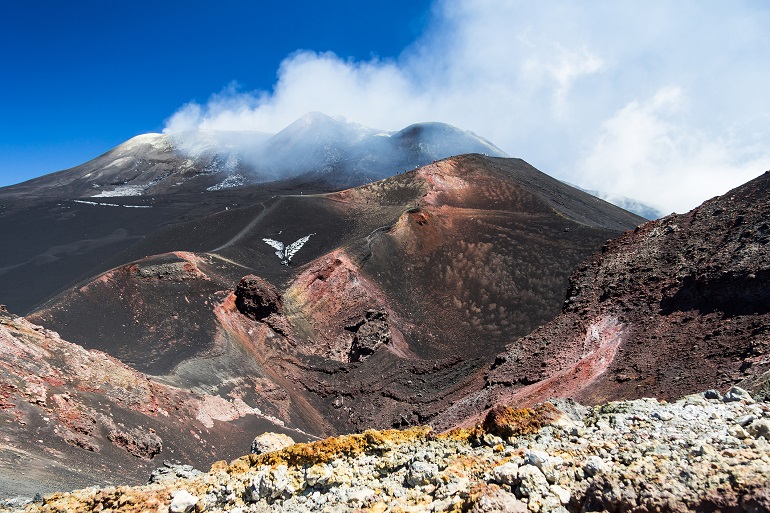
Mount Etna, situated on the eastern coast of Sicily, stands as Europe's highest active volcano at 3,403 metres above sea level. This UNESCO World Heritage site covers an impressive area of 1,190 square kilometres with a base circumference of 140 kilometres, making it the largest of Italy's three active volcanoes. The mountain has been in an almost constant state of activity for at least 500,000 years, with documented eruptions spanning 2,700 years of human history. The volcano's fertile slopes support extensive agriculture, including vineyards and orchards, while its varied landscape features summit craters, cinder cones, lava flows, and the dramatic Valle del Bove depression. Visitors can explore the volcano through various activities, from easy nature walks at lower altitudes to challenging summit hikes, with the best visiting times being May and late September to October when temperatures are pleasant and crowds are fewer.
Geography and Landscape
Geological Formation
The volcano's current structure emerged through activity at multiple eruptive centres over the past 2.6 million years. The mountain experiences constant changes - its height decreases when crater rims collapse and increases with new lava deposits.
Major Features
- Valle del Bove: A massive depression formed by a catastrophic collapse 8,000 years ago
- Piano Caldera: Formed approximately 2,000 years ago
- Active Summit Craters: Including Northeast Crater, Voragine, Bocca Nuova, and Southeast Crater
Movement
The volcano is moving towards the Mediterranean Sea at 14mm per year.

Flora and Fauna
Flora
The flora of Mount Etna is characterised by its resilience and adaptation to volcanic soil and climatic variations. The vegetation can be divided into several zones based on altitude:
Lower Zone (50-500 metres)
- Primarily cultivated areas, particularly citrus orchards
- Remnants of natural vegetation include tree spurge (Euphorbia dendroides)
Middle Zone (600-1000 metres)
- Cultivation of vineyards, olive trees, almonds, pistachios, and hazelnuts
- Holm oak (Quercus ilex) forests, though limited due to human activity
- Presence of hackberry of Tournefort (Celtis tournefortii) on the western slope
Mediterranean Tiered Zone (1000-1500 metres)
- Deciduous oak forests, predominantly white oaks (Quercus pubescens)
- Chestnut (Castanea sativa) forests
- Laricio pine (Pinus nigra) forests at higher altitudes
High Mediterranean Tiered Zone (1500-2000 metres)
- Dominated by laricio pines
- Etna birch (Betula aetnensis), considered endemic to the volcano
- Mount Etna broom (Genista aetnensis), a significant coloniser of lava flows
Upper Mediterranean Zone (above 2000 metres)
- Characterised by low vegetation, including the 'Spinosanto' (Astragalus siculus)
- At 2450-3000 metres, pioneer plants such as 'Acitulidda' (Rumex scutatus fo Aetnensis) survive
Endemic and Aromatic Plants
- Rosemary, lavender, and wild thyme populate grassy meadows
- Various endemic species have adapted to the volcanic environment

Fauna
Mount Etna's fauna is diverse, with species adapting to the challenging volcanic landscape:
Mammals
- Over 40 species, including foxes, martens, mice, weasels, squirrels, hedgehogs, and porcupines
- Presence of wild cats in broad woods
Birds
- More than 200 species recorded
- Raptors: buzzards, kestrels, peregrine falcons, and occasional golden eagles
- Other notable species: rock pigeons, cuckoos, jays, rock partridges, and various tits
- Endemic species like the Sicilian Long-tailed Tit (Aegithalos caudatus siculus)
Reptiles and Amphibians
- Over 40 reptile species, including harmless snakes and some venomous vipers
- Amphibians such as frogs, toads, and some turtles in lakes and streams
- Notable species: Sicilian grass snake (Hierophis viridiflavus) and Italian stream frog (Rana italica)
Arthropods
- Numerous insect and arachnid species
- Butterflies: Small Tortoiseshell (Aglais urticae), Apollo butterfly (Parnassius apollo)
- Cave cricket (Dolichopoda geniculata) adapted to underground environments
Mount Etna's flora and fauna represent a unique ecosystem that has evolved to thrive in this volcanic landscape. The biodiversity of the area offers visitors a chance to observe a wide range of plant and animal species adapted to this dynamic environment.
Activities and Attractions
Hiking and Trekking
Hiking is one of the most popular activities on Mount Etna. Visitors can explore various trails, from easy walks to challenging treks. The Etna Park offers interactive maps for different nature trails, categorised by difficulty level. For those seeking a more intense experience, guided tours to the summit craters are available, reaching altitudes of up to 3,300 metres.
Cable Car and 4x4 Excursions
A cable car ride from Rifugio Sapienza takes visitors to an altitude of 2,500 metres, offering breathtaking views of lava flows and summit craters. For a more rugged experience, 4x4 Jeep tours allow visitors to explore new and old lava flows and admire the impressive volcanic landscape.
Winter Sports
Surprisingly, Mount Etna offers winter sports opportunities. Two main ski resorts, Nicolosi and Piano Provenzana, provide alpine and downhill slopes for ski enthusiasts.
Mountain Biking and Horse Riding
The volcano's slopes offer excellent terrain for mountain biking, with trails suitable for various skill levels. Horse riding tours are also available, providing a unique perspective of the mountain.
Unique Geological Features
Visitors can explore fascinating geological formations, including:
- Silvestri craters: Two inactive craters formed by the 1892 eruption
- Valle del Bove: A wide basin offering views of hot craters and lava tunnels
- Grotta del Gelo: Home to Europe's southernmost glacier
Wine Tasting and Agriculture
The fertile volcanic soil supports thriving agriculture, particularly viticulture. Many wineries on Etna's slopes offer wine tastings and tours, showcasing local varietals like Nerello Cappuccio and Nerello Mascalese.
Adventure Activities
For thrill-seekers, Mount Etna offers:
- Canyoning at the nearby Alcantara Gorge
- Quad biking tours
- Helicopter tours for a bird's-eye view of the volcano

Accommodation
Luxury Hotels
- Palazzo Sangiorgio (Catania)
- Grand Hotel San Pietro (Taormina)
- Atlantis Bay (Taormina)
Boutique Properties
- Donna Carmela (Riposto)
- Hotel Villa Neri Resort and Spa (Linguaglossa)
Mountain Refuges
- Rifugio Sapienza
- Il ginepro dell'Etna
- Chalet Clan dei Ragazzi
Gastronomy
Local Specialties
The fertile volcanic soil produces exceptional ingredients and unique local specialties:
Agricultural Products
- Bronte pistachios (PDO protected)
- Maletto strawberries
- Adrano blood oranges
- Local honey varieties
- Wild mushrooms
Traditional Dishes
- Pasta alla Norma
- Pistacchio pesto
- Arancini with pistachio
- Local salumi and cheeses
Wine Production
The Etna DOC wine region features:
- Indigenous grape varieties:
- Nerello Mascalese
- Nerello Cappuccio
- Carricante
- Over 130 wine producers
- Vineyard altitudes ranging from 400m to 1,000m
Best Time to Visit
Seasonal Highlights
Spring (March-May)
- Temperature: 15-22°C
- Wildflower blooming season
- Perfect hiking conditions
- Easter festivals in local villages
Summer (June-August)
- Temperature: 25-32°C
- Peak tourist season
- Local food festivals
- Extended daylight hours
Autumn (September-November)
- Temperature: 18-25°C
- Wine harvest season
- Mushroom foraging
- Clear visibility for photography
Winter (December-February)
- Temperature: 5-15°C
- Skiing season
- Snow-capped views
- Less crowded
Getting There and Around
Air Access
- Catania-Fontanarossa International Airport (CTA)
- 30 minutes from the southern slope
- Regular flights from major European cities
Public Transportation
- AST Bus Service
- Daily departures from Catania
- Morning departure: 8:15 AM
- Return journey: 4:30 PM
- Cost: €10-12 round trip
- Local Mountain Bus Services
- Connecting mountain villages
- Seasonal ski shuttle services
Private Transportation
- Car rental available at Catania Airport
- Private transfers from major cities
- Organised tours with transport included
Conservation and Responsible Tourism
Environmental Protection
- UNESCO World Heritage status since 2013
- Parco dell'Etna protected area
- Scientific monitoring stations
- Controlled access to sensitive areas
Visitor Guidelines
- Stay on marked trails
- No collecting of minerals or plants
- Proper waste disposal
- Respect local wildlife
- Follow guide instructions

Visitor Centres and Educational Facilities
Main Facilities
Rifugio Sapienza
- Information desk
- Equipment rental
- Restaurant and café
- Souvenir shops
- Cable car station
- Guide booking office
Casa Etnea
- Interactive exhibits
- Educational programs
- Geological displays
- Audio-visual presentations
Digital Resources
- Official Etna Park app
- Interactive trail maps
- Real-time volcanic activity updates
- Virtual tour experiences
Note: Always check current volcanic activity and weather conditions before visiting, and follow local authority guidelines for safety.