


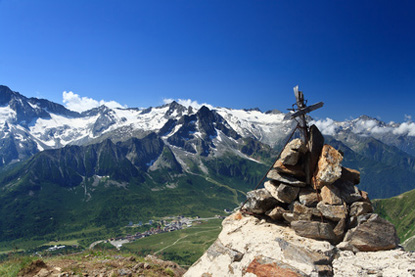
Tonale pass and Presena mount, Valcamonica
Introduction
Val Camonica, one of the largest valleys in the central Alps, is a treasure trove of history, art, and natural beauty. Stretching for about 90 kilometres in eastern Lombardy, Italy, this remarkable area offers visitors a unique blend of prehistoric wonders, stunning landscapes, and rich cultural heritage.
The area is also noted for its beautiful medieval villages, castles, two Roman archeological sites and two spas.
Rock Art: A Window to the Past

The valley's claim to fame is its extraordinary collection of prehistoric rock art, which earned it the distinction of being Italy's first UNESCO World Heritage Site in 1979. With over 300,000 petroglyphs scattered across 2,500 rocks, Val Camonica boasts one of the world's largest concentrations of prehistoric rock carvings.
These fascinating engravings span an impressive 8,000 years, from the Mesolithic period to the Middle Ages, offering a unique glimpse into the lives of our ancestors. The carvings depict a wide range of subjects, including:
- Animals and hunting scenes
- Agricultural activities
- Navigation and transportation
- Warfare and weapons
- Magical and religious symbols
Visitors can explore this prehistoric art gallery at several dedicated parks, including:
- The National Park of Rock Engravings in Capo di Ponte
- The National Archaeological Park of Massi di Cemmo
- The Seradina-Bedolina Municipal Archaeological Park
- The Rock Engravings Nature Reserve of Ceto, Cimbergo, and Paspardo
Natural Wonders and Outdoor Activities
Beyond its archaeological treasures, Val Camonica is a paradise for nature lovers and outdoor enthusiasts. The valley is home to diverse ecosystems and rare flora and fauna, making it an ideal destination for hiking, wildlife spotting, and botanical exploration.
Key natural attractions include:
- Adamello Nature Park
- Stelvio National Park
- Lake Moro
Outdoor activities abound, from skiing in the winter to cycling along the River Oglio in warmer months.
Historical and Cultural Heritage
Val Camonica's rich history extends far beyond its prehistoric rock art. The valley boasts a wealth of historical and cultural attractions, including:
- Medieval castles, such as the imposing Castle of Breno
- Roman ruins, including a theatre and amphitheatre at Cividate Camuno
- The Temple of Minerva at Breno
- Numerous museums, including the National Museum of Prehistory of the Camonica Valley in Capo di Ponte
Culinary Delights
The valley's gastronomy reflects its mountain heritage, offering simple yet flavourful dishes. Some local specialities include:
- Casoncelli: stuffed pasta with a filling of sausage, herbs, potatoes, and leeks
- Violino di capra: a cured meat made from goat leg
- Silter: a typical cheese of Val Camonica
- Migole: a polenta-like dish made from chestnut and buckwheat flour
Interesting Facts
- The name "Val Camonica" derives from the Cammunni, the valley's inhabitants during the Iron Age.
- The valley's rock art was discovered relatively recently, with the first scientific report published in 1909.
- Val Camonica is home to the Camillo Golgi Museum, dedicated to the Nobel Prize-winning scientist who made significant contributions to neuroscience.
- The valley played a role in World War I, with remnants of the "White War in Adamello" still visible today.
- Val Camonica's thermal springs have been known since ancient times, with popular spa towns like Boario Terme and Angolo Terme.
Travel Community
Ask your travel questions on the Italy Travel Forum