


| Contents |
|---|

Introduction
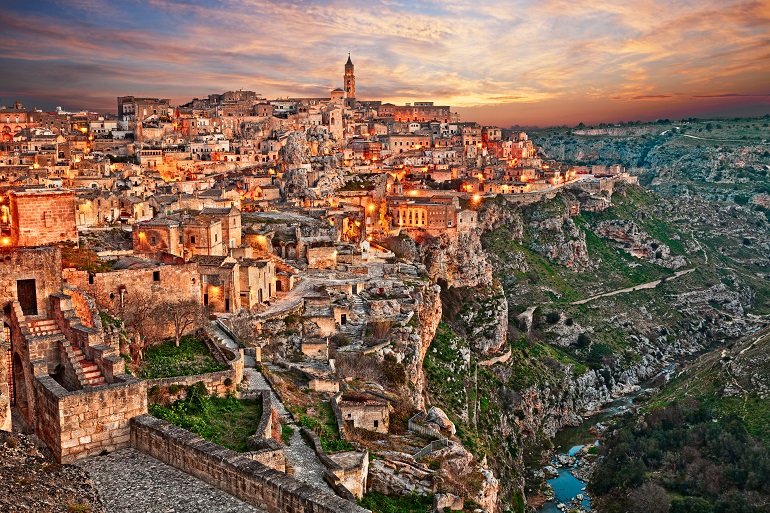
Matera, situated in the Basilicata region of southern Italy, is one of the world's oldest continuously inhabited cities with over 9,000 years of history. The city is renowned for its unique Sassi districts - ancient cave dwellings carved into limestone cliffs, which comprise two main areas: Sasso Barisano and Sasso Caveoso. These remarkable cave dwellings, which were inhabited until the 1950s, underwent a significant transformation in the 1980s and earned UNESCO World Heritage status in 1993. The city reached a milestone in 2019 when it was designated as the European Capital of Culture, bringing international recognition to its distinctive architecture, rich cultural heritage, and historical significance.
Interesting Facts about Matera
- Matera's Sassi districts, ancient cave dwellings carved into limestone cliffs, are among the oldest continuously inhabited human settlements in the world, with origins tracing back to the Palaeolithic era.
- The Sassi di Matera gained UNESCO World Heritage status in 1993 for preserving over 9,000 years of human habitation through its unique rock-cut architecture.
- This city served as a filming location for James Bond's No Time to Die, capitalising on its dramatic lunar-like landscape of honey-coloured stone grottoes.
- Matera's residents were forcibly relocated to modern housing in the 1950s after Carlo Levi's exposé revealed the Sassi's extreme poverty and unsanitary living conditions.
- The 13th-century Matera Cathedral features a striking Romanesque rose window and stands atop the Civita acropolis between the two Sassi districts.
- Ancient underground cisterns like Palombaro Lungo demonstrate sophisticated water management systems, storing rainwater in caverns large enough to be dubbed "cathedrals of water".
- The Crypt of Original Sin houses 9th-century frescoes considered the "Sistine Chapel of rupestrian art", hidden in a cave church near Matera's ravine.
- Matera became the first southern Italian city to be named European Capital of Culture in 2019, celebrating its transformation from national shame to cultural treasure.
- Traditional cave dwellings (case grotte) often housed both families and livestock, with some converted into boutique hotels preserving original rock features.
- The Belvedere di Murgia Timone viewpoint offers panoramic vistas of the Sassi skyline, particularly striking at sunset when the limestone glows golden.
History
Matera stands as one of the world's oldest continuously inhabited settlements, with a remarkable history stretching back to the Palaeolithic period around 15,000 BCE. The ancient settlers carved dwellings into the soft volcanic stone known as tufa, creating an intricate network of underground caverns, cisterns, and tombs that would become the foundation of this extraordinary city. These early inhabitants and their descendants remained through successive waves of civilisation, from Greeks and Romans to Byzantines, creating an unbroken chain of human presence that continues to this day.
The city's medieval period saw significant development, particularly around the 8th century CE, when the oldest part of the city, known as the Civita, took shape. The surrounding valleys, now known as the Sassi, gradually evolved from loosely spaced buildings into a unique urban landscape. During this period, the carved-out sections served multiple purposes, functioning as cellars, olive presses, granaries, and storage spaces, whilst the built areas above ground were used as living quarters. The city flourished under various rulers, including the Normans, though it later experienced periods of hardship marked by famine and earthquakes.
The 20th century brought significant changes to Matera. By the 1950s, the Sassi had become severely overcrowded, with families often sharing space with their working animals in cave dwellings that lacked basic amenities. The Italian government intervened, forcibly relocating most of the Sassi's residents to new public housing in the modern city. However, the 1980s marked a turning point when renovation efforts began to transform these ancient dwellings. In 1993, the Sassi received UNESCO World Heritage status, and in 2014, Matera was designated as the European Capital of Culture for 2019. Today, the once-abandoned cave dwellings have been revitalised into thriving businesses, pubs, and hotels, making Matera one of southern Italy's fastest-growing destinations.
Main Attractions
Historic Centre (Sassi)
The Sassi di Matera are the heart of the city and consist of two main districts: Sasso Barisano and Sasso Caveoso. These ancient neighbourhoods are a labyrinth of stone-carved houses, narrow alleyways, and hidden courtyards. Walking through the Sassi feels like stepping into another era, with its unique blend of natural rock formations and human craftsmanship. Many of the cave dwellings have been converted into boutique hotels, restaurants, and artisan workshops, offering visitors a chance to experience life in these historic quarters. The Sassi also provide a stunning view of the ravine below, making it a must-visit area for photographers and history enthusiasts alike.

Church of Santa Maria di Idris
Perched dramatically on a rocky spur overlooking the Gravina Gorge, the Church of Santa Maria di Idris is one of Matera’s most iconic landmarks. This small rock-hewn church is accessible through winding pathways that add to its allure. Inside, visitors can admire beautiful frescoes dating back to the 12th century, which depict religious scenes with vivid colours and intricate details. The church’s location offers sweeping views of both the ancient city and the surrounding landscape, making it a perfect spot for reflection and photography.

Church of San Pietro Caveoso
Situated near the edge of the Sasso Caveoso district, the Church of San Pietro Caveoso is a striking example of Baroque architecture amidst Matera’s rugged landscape. Built in the 13th century and later remodelled in Baroque style, this church features an elegant façade that contrasts with its rocky surroundings. Inside, visitors can explore its richly decorated interior, which includes frescoes, altars, and religious artefacts. The church also serves as a serene vantage point overlooking the Gravina Gorge, offering an unforgettable experience for those seeking both spiritual and natural beauty.

Matera Cathedral
The Matera Cathedral, or Duomo di Matera, stands proudly on Civitas Hill between the two Sassi districts. Built in the 13th century in Romanesque style, this grand cathedral is an architectural masterpiece with its ornate rose window and intricate carvings. Inside, visitors can marvel at its frescoed ceilings, gilded decorations, and an impressive Baroque altar. The cathedral also houses crypts that reveal layers of Matera’s history. Its elevated position provides panoramic views over the Sassi districts, making it a highlight for visitors exploring Matera’s religious heritage.
Palombaro Lungo
Beneath Piazza Vittorio Veneto lies Palombaro Lungo, an extraordinary underground cistern that once served as Matera’s main water reservoir. Constructed in the 16th century, this vast subterranean structure features cathedral-like arches and columns carved directly into the rock. Guided tours take visitors through its cavernous chambers while explaining how this ingenious system provided water to the city for centuries. The cistern’s sheer size and engineering brilliance make it one of Matera’s most fascinating hidden gems.
Castello Tramontano
Castello Tramontano is an unfinished fortress that sits atop a hill overlooking Matera’s city centre. Built in the early 16th century by Count Giovan Carlo Tramontano, construction was abruptly halted after his assassination by locals angered by his oppressive rule. Today, the castle remains an intriguing historical site with its imposing towers and defensive walls offering insight into Matera’s turbulent past. Visitors can enjoy peaceful walks around its grounds while taking in panoramic views of the surrounding area.
Belvedere di Murgia Timone
The Belvedere di Murgia Timone is one of Matera’s most famous viewpoints located within Murgia Materana Park. From here, visitors can enjoy unparalleled panoramic views of Matera’s ancient cave dwellings set against a backdrop of rugged cliffs and open skies. Accessible via hiking trails or guided tours, this spot is particularly magical at sunrise or sunset when the city glows with golden light. It’s also a great place to learn about prehistoric settlements in the area through nearby archaeological sites.
Belvedere Tre Archi
The Belvedere Tre Archi offers another unique perspective on Matera’s historic architecture. Framed by three stone arches that give this viewpoint its name, it provides stunning views over Sasso Barisano and beyond. This quiet spot is perfect for taking photos or simply soaking in the beauty of Matera’s timeless landscape away from busier tourist areas.
Piazza Vittorio Veneto
Piazza Vittorio Veneto serves as Matera’s main square and a bustling hub for locals and tourists alike. Surrounded by cafes, shops, and historic buildings, it’s an excellent starting point for exploring the city on foot. The square also houses several key attractions such as Palombaro Lungo and offers access to underground tunnels that reveal more about Matera’s hidden history. Whether enjoying a coffee at one of its outdoor terraces or simply people-watching, Piazza Vittorio Veneto captures the lively spirit of modern-day Matera.
Piazza San Francesco
Piazza San Francesco is another charming public space located near the Church of San Francesco d’Assisi. This picturesque square features elegant architecture surrounded by cafes where visitors can relax while admiring their surroundings. The church itself boasts an impressive Baroque façade that adds to the square's appeal as both a cultural landmark and a tranquil gathering place.
Top Museums
National Archaeological Museum
The National Archaeological Museum "Domenico Ridola", established in 1911, is crucial for understanding Matera's origins and surroundings. It houses a wealth of artefacts representing important archaeological evidence found in and around the city. The museum is divided into several sections, each focusing on different historical periods, from prehistoric times to the Roman era. One of its most impressive exhibits is "La Balena Giuliana", the largest fossil whale ever discovered, unearthed in 2006 in the nearby countryside. This 10-million-year-old fossil is a testament to the region's fascinating geological history.
Museum of Contemporary Sculpture
MUSMA, the Museum of Contemporary Sculpture, is a truly unique institution, being the only cave museum in the world and Italy's most important museum dedicated entirely to sculpture. Located in the 17th-century Palazzo Pomarici, it showcases the evolution of Italian and international sculpture from the late 19th century to the present day. The museum's collection comprises about 500 works, including sculptures, ceramics, jewellery, and graphic art. The exhibition spaces are spread across various levels, including underground caves and open-air courtyards, creating a captivating interplay between ancient architecture and modern art. Notable artists featured in the collection include Pietro Consagra, Antonietta Raphaël, Arturo Martini, and Mimmo Paladino, among others.
National Museum of Medieval and Modern Art of Basilicata
The National Museum of Medieval and Modern Art of Basilicata, housed in the 18th-century Lanfranchi Palace, is one of the most significant museums in the region. It features an impressive collection of sacred art paintings and ancient mosaics. The museum is organised into several sections, including Medieval Art, Renaissance and Baroque Art, and Modern Art. Highlights include the famous Camillo D'Errico collection, comprising over 300 paintings from the 17th to 19th centuries, and 44 paintings by Carlo Levi, including the panoramic mural "Lucania 61", which depicts scenes of rural life in Basilicata.
Museo Immersivo della Bruna
Situated in the heart of Sasso Barisano, the MIB (Museo Immersivo della Bruna) offers a multimedia journey into Matera's patronal feast. Through captivating films, legends, images, and sounds, visitors can experience the magic of the Bruna Feast, gaining insight into the city's traditions and its people. The museum uses cutting-edge technology to create an immersive experience, including 3D projections of the feast's procession, interactive displays explaining the history and significance of the celebration, and audio recordings of traditional music and testimonies from local participants.
Tower Art Museum
The TAM (Tower Art Museum) is a contemporary art museum located in an imposing medieval tower in the centre of Matera. Its exhibition spaces, spread across Via Ridola and the 12th-century Capone Tower, host temporary exhibitions by national and international artists. The museum's unique setting allows for innovative displays that interact with the historical architecture, creating a dialogue between past and present. The TAM also organises workshops, lectures, and events to engage the local community and visitors in contemporary art practices.
Casa Noha
Casa Noha, while not a traditional museum, offers an innovative "entrance gate" to the city's history. Located near the Duomo in the upper part of Sasso Caveoso, this 16th-century family home-turned-exhibit uses multimedia presentations to educate visitors about Matera's unique history and the transformation of its famous sassi (cave dwellings). The immersive experience includes a 25-minute video projection across multiple screens, interactive displays detailing the city's architectural evolution, and personal accounts from residents who lived in the sassi.
Museo-Laboratorio della Civiltà Contadina
The Museo-Laboratorio della Civiltà Contadina, created by Donato Cascione, offers a glimpse into the rural life and traditions of Matera. With an area of 500 square metres, it provides a fascinating look at the region's agricultural heritage. The museum features traditional farming tools and equipment, recreations of typical peasant dwellings, displays on local crafts and artisanal production methods, and educational workshops on traditional farming techniques.
Matera Oil Museum
Situated in the Sassi district, the MOOM (Matera Oil Museum) is housed in an ancient rock oil mill dating back to the 15th-16th century. This unique museum showcases the historic functionality of the cave and its integration into Matera's urban landscape, offering insights into the city's olive oil production history. Visitors can explore the original stone presses and equipment used for oil extraction, displays on the importance of olive oil in local cuisine and economy, and the architectural features of the cave and its adaptation for oil production.
Casa Grotta di Vico Solitario
The Casa Grotta di Vico Solitario offers a faithful reconstruction of a typical cave dwelling inhabited until the 1950s. It provides visitors with a vivid representation of how families lived in the sassi, complete with period furniture, tools, and household items. The museum includes a bedroom area where the entire family would sleep, a small stable for animals, a kitchen area with traditional utensils and furnishings, and a loom, demonstrating the importance of weaving in domestic life.
Local Cuisine
The cuisine of Matera reflects its humble agricultural roots, centred around simple yet flavourful ingredients. The most notable element of Materan gastronomy is its renowned bread, crafted from durum wheat and distinguished by its massive size and distinctive three cuts symbolising the Holy Trinity. Traditional dishes include the cialledda, a resourceful creation using stale bread mixed with seasonal vegetables, and the hearty pignata, a slow-cooked lamb stew prepared in earthenware pots. The region's vegetable-forward approach shines through in dishes like fave e cicorie, a comforting combination of mashed broad beans and wild chicory, whilst the Crapiata, a wholesome soup of mixed legumes and cereals, represents the community's historical sharing traditions. Local specialities also include the crispy peperoni cruschi (dried sweet peppers), handmade orecchiette pasta, and the distinctive strazzate cookies made with almonds and chocolate. Meat, though used sparingly, features prominently in celebratory dishes, particularly lamb and the local Lucanica sausage.
Shopping
Matera's most famous shopping streets, Via Lucana and Via Nazionale, house popular shops and boutiques, whilst Via del Corso bustles with activity and features clothes, accessories and souvenir shops. Between Piazza del Sedile and Via delle Beccherie, shoppers will find fashion boutiques for both men and women. The city particularly shines in its celebration of independent producers and makers, offering a unique selection of jewellery, ceramics and traditional crafts. The narrow streets and hidden alleyways are filled with boutique shops selling handmade ceramics, leather goods, and textiles, as well as local food products like olive oil and wine. Beyond the retail experience, shopping in Matera is about connecting with local artisans and embedding the social aspect back into the shopping experience, making it a truly memorable part of any visit to this historic city.
Nature around Matera
Murgia Materana Park
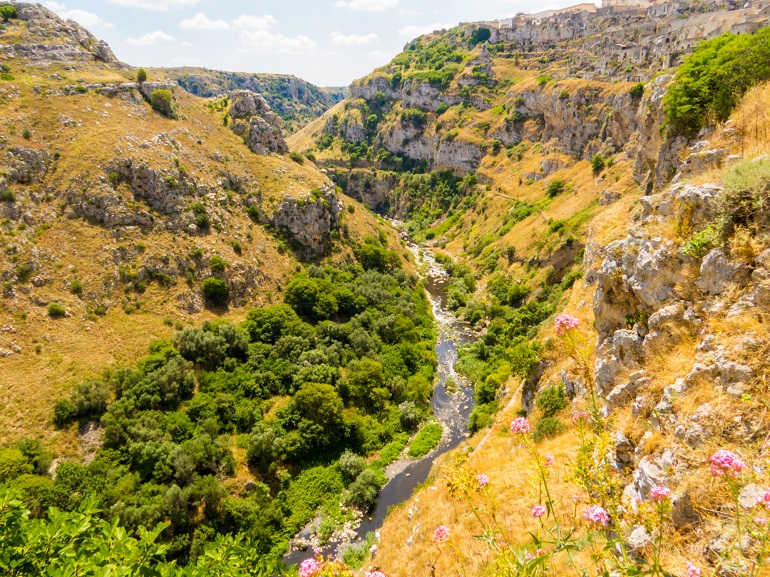
Matera's natural landscape is dominated by the stunning Murgia Materana Park, a vast protected area where limestone cliffs and a dramatic ravine create a breathtaking backdrop to the ancient city. This rugged terrain offers excellent hiking opportunities, with trails winding through the park and leading to spectacular viewpoints like Belvedere di Murgia Timone. Visitors can cross a nine-metre-high Tibetan suspension bridge while enjoying panoramic views of Matera's famous cave dwellings.
The park is a paradise for nature enthusiasts and history buffs alike. It teems with wildlife, including various bird species and mammals, while also showcasing glimpses of ancient human settlements dating back thousands of years. Numerous caves and rock churches dot the landscape, creating an almost lunar-like environment that feels otherworldly.
Early morning or sunset visits are particularly rewarding, with the changing light casting a magical glow over the city perched above the ravine. The wild beauty of Murgia Materana Park perfectly complements Matera's historical elements, making it an unmissable destination that blends natural wonders with prehistoric human history.
Getting There & Around
Matera, whilst slightly challenging to reach, is accessible through several transport options. The nearest airport is Bari Palese International Airport, located 64km away, with regular bus connections to Matera taking approximately 1 hour and 15 minutes. From Rome, you can take a high-speed train to Salerno with a connecting bus service to Matera, or opt for direct bus services operated by companies like FlixBus and MarinoBus, with journey times of 5-6 hours. Once in Matera, walking is the most practical way to explore the historic centre (Sassi), though be prepared for steep, winding cobblestone streets. For those preferring public transport, the city offers an efficient bus system operated by Miccolis with 15 urban lines, including a special Sassi Line that runs every 30 minutes from 07:30 to 19:50 (extended until 22:50 on Fridays and Saturdays), with single tickets costing €0.80 or €1.50 if purchased onboard.
Best Time to Visit
The ideal time to visit Matera is during spring (May to June) or autumn (September to October) when you can enjoy mild temperatures and fewer tourist crowds. These periods offer the perfect conditions for exploring the ancient Sassi districts and outdoor attractions, with temperatures ranging from 17°C to 24°C in spring and 16°C to 28°C in autumn. It's best to avoid the peak summer months of July and August when temperatures can soar to 33°C and the city experiences its highest influx of tourists. Winter months from December to February are less favourable with temperatures dropping to 6°C and increased chances of rainfall, which can make the stone stairs of the Sassi quite slippery and challenging to navigate.