Italy Guide  |
|---|
|
| | Top Italian Cities |
|---|
|
| | Italian Regions |
|---|
|
| | Europe Guide |
|---|
|
| | Travel Tools |
|---|
|
|
|
|
 Forum Romanum in Rome. Forum Romanum in Rome.
Introduction

Lazio derives its name from Latium, the region of central western Italy where Latin was originally spoken in ancient times and in which the city of Rome was founded.
With 5.7 million inhabitants, Lazio is the third most populated region of Italy after Lombardy and Campania. It has a high population density (323 inhab./km²) by European standards, higher than any country except the Netherlands and Belgium. The region has the fastest growing GDP in Italy, the second highest GDP, and the fourth highest in GDP per capita at PPP.
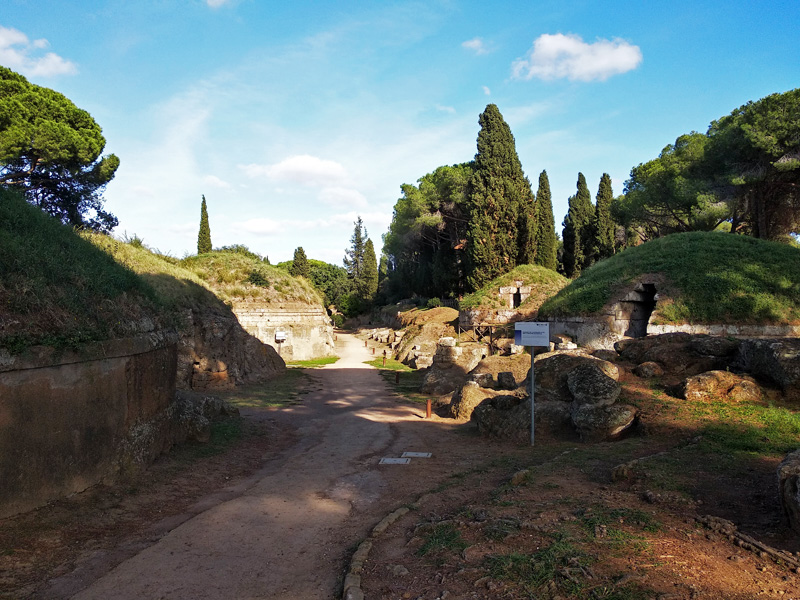
Lazio is heavily centred around Rome, where half of the population lives. The second largest city, Latina, only has 120,000 inhabitants. The historical centre of Rome, the Villa d'Este and Hadrian's Villa in Tivoli, and the Etruscan Necropolises of Cerveteri and Tarquinia are all listed as UNESCO World Heritage Sites.
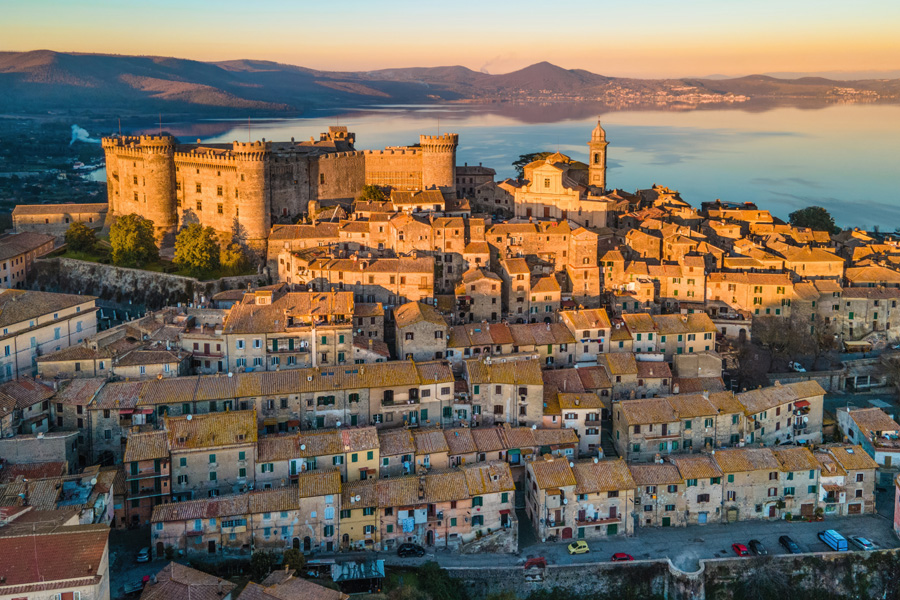
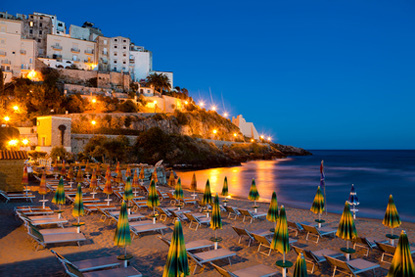
The region has many pretty towns and villages. The most outstanding of them may be the hilltop village of Bagnoregio. The colourful port of Gaeta, close to Campania, is overlooked by a medieval castle built for the Kings of Sicily. Not far from there is the scenic seaside resort of Sperlonga, where Emperor Tiberius had a famous villa.
Famous people from the Latium include (chronologically and not including ancient Romans, nor Popes): the condittiero Cesare Borgia, the architect Gian Lorenzo Bernini, the physicist Enrico Fermi (Nobel Prize), the physicist Emilio G. Segrè (Nobel Prize), the film director Roberto Rossellini, the economist Franco Modigliani (Nobel Prize), the film director Federico Fellini, the composer Ennio Morricone, the actor Marcello Mastroianni, the actress Isabella Rossellini, and the singer Eros Ramazzotti.
Cuisine
The Lazio region has been a great melting pot since the Romans conquered the rest of the Mediterranean. As such, Latin cuisine has picked up influences from diverse horizons, both from inside and outside Italy. Many of its native dishes have since been re-exported to the rest of the world, such as carbonara sauce (eggs, bacon, Parmesan/pecorino cheese and black pepper), arrabbiata sauce (tomatoes, garlic, and red chili peppers cooked in olive oil), all'Amatriciana sauce (cured pork cheek, pecorino cheese, and tomato), stracciatella soup (broth with eggs, Parmesan, salt, pepper, nutmeg, and sometimes semolina) or stracciatella ice cream (vanilla with chocolate streaks).
People in Lazio favour wide types of pasta, like fettuccine, bucatini, rigatoni, or conchiglie. Contrasting with the round Neapolitan pizza with which everyone is accustomed, the Roman pizza al taglio is baked in large rectangular trays, is relatively thick crusted, and sold in square slices by weight in take-away shops. Anchovies are the traditional Roman topping of choice, in addition to tomato and mozzarella.
Latin cuisine makes liberal use of olive oil, garlic, and herbs, notably laurel, rosemary, sage, and mint (spearmint and lesser calamint - or nepitella - being two of the most quintessential Roman herbs). The Latin vegetable par excellence is the artichoke. In past centuries, the only meat left to the poor to eat were the least desirable parts, and all sorts of offals have found their way in a number of Roman recipes.
Typical dishes from Lazio include carciofi alla giudia ("Jewish style artichokes"; fried in olive oil and seasoned with salt and pepper), carciofi alla romana (artichokes stuffed with mint, garlic, breadcrumbs and braised), coratella d'abbacchio con i carciofi (lamb offals cooked with onions, white wine, olive oil, and artichokes), coda alla vaccinara (stew made of veal tail and entrails cooked with celery, carrots, herbs, tomatoes, prosciutto, wine and a bouquet garni), porchetta (boneless pork roast), rigatoni con la Pajata (with a tomato-based sauce cooked with chunks of intestines from an unweaned calf, with the chyme is left inside), saltimbocca alla Romana (rolled slices of veal stuffed with prosciutto and sage and cooked in wine and butter), and trippa alla Romana (tripe cooked with white wine and tomatoes).
The Latium is an important viticultural regions, with an annual output of 3 million hectolitres, although the vast majority are low-quality table wines. 85% of Lazio wines are white, chiefly made from the Malvasia and Trebbiano grapes. The region has 28 DOC wines, of which the most noteworthy are Castelli Romani, Frascati, Marino, Orvieto (also produced in Umbria), and the sublimely named Est! Est!! Est!!! di Montefiascone*. The 3 DOCG quality labels are Cesanese del Piglio, Canellino di Frascati, and Frascati Superiore, all produced in the Alban Hills southeast of Rome.
* Est! Est!! Est!!! di Montefiascone was named after an old story. In 1111, Henry V of Germany was on his way to Rome to be crowned by the Pope. Accompanying the emperor was Johannes Defuk, a bishop reputed to be a wine expert. He sent forth his cupbearer Martino to taste the local wines at each inn. Whenever he found a place serving quality wine, Martino was to mark the inn's door in chalk with Est (short for the Latin vinum est bonum, 'the wine is good'). So enthused was he with the wine at Montefiascone that he wrote the word three times and with exclamation marks: Est! Est!! Est!!! The bishop shared his servant's opinion, and after leaving Rome decided to cancel the rest of his journey to return to Montefiascone, where he died two years later from excessive drinking.
Attractions
Attractions are listed geographically, from west to east (left to right) and north to south (top to bottom).
|
Northern Latium
| Viterbo |
|---|

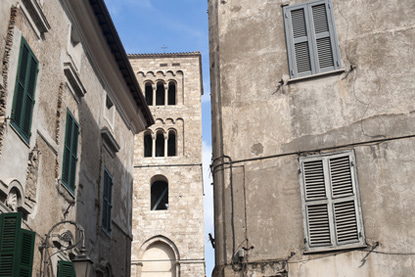
 Founded in 773 by the Lombard King Desiderius, Viterbo quickly became part of the Papal States. In the 13th century, Viterbo was the favourite residence of the popes, whose palace is the city's main attraction. Viterbo retains a strong medieval character, with narrow paved streets, stone houses and arched gateways, not unlike the old city of Jerusalem. |
| Tuscania |
|---|

 Founded in the 7th century BCE, Tuscania played a leading role in the Etruscan world. It is famous today for its Etruscan Museum and its Etruscan necropolis. |
| Tarquinia ※ |
|---|

 Tarquinia was one of the most significant cities of the ancient Etruscan civilisation, flourishing between the 9th and 1st centuries BCE. It is sometimes referred to as the "City of the Kings" because it was once the capital of the Etruscan Confederation. Its ancient city walls still stand in parts of the modern town. The most famous feature of Tarquinia is its Etruscan necropolis, which counts thousands of tombs. The Tarquinia Museum houses many important artifacts from the region, including ancient Etruscan pottery, jewelry, and sculptures, as well as some of the frescoes from the tombs. The city also boasts a rich medieval and Renaissance history. |
Central Latium
| Rome (Roma) ※ |
|---|

 Known as the "Eternal City", Rome is one of the most historically and culturally significant cities in the world. Capital of the Roman Republic during five centuries, and of the Roman Empire for another five, Rome was the political and cultural center of the ancient world. Rome flourished during the Renaissance, with artists like Michelangelo, Raphael, and Caravaggio leaving their mark. The city is home to some of the world's most iconic buildings, such as the Colosseum, the Pantheon, St. Peters Basilica, and the Sistine Chapel. |
| Ostia Antica |
|---|

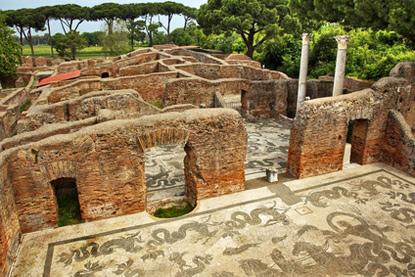
Strategically located at the mouth of the Tiber River, Ostia Antica served as the port of ancient Rome. It was once a bustling commercial hub and one of the most important cities of the Roman Empire. Grain, olive oil, wine, and other essential goods from all over the Mediterranean transited through Ostia to feed Rome. Unlike many other ancient Roman sites, Ostia Antica remains remarkably well-preserved, offering a unique opportunity to walk through the streets of an ancient Roman city. Visitors can explore homes, shops, baths, temples, theaters, and even a large, well-preserved theater that could seat around 3,000 people. The city is famous for its colorful mosaics and well-preserved frescoes and its open-air archaeological park. |
| Castel Gandolfo & Lake Albano |
|---|

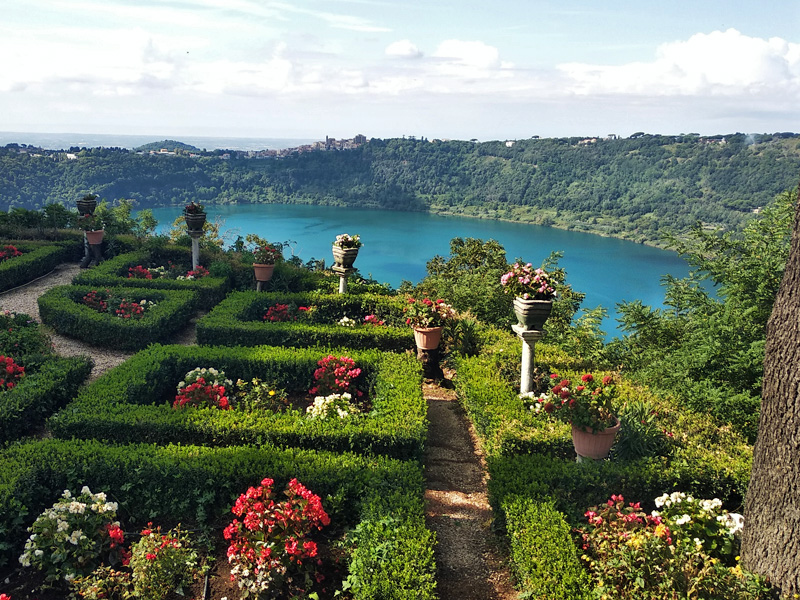
Castel Gandolfo was built on the site of the ancient city of Alba Longa, considered the mythical birthplace of Romulus and Remus. The town derives its name from the noble Gandolfi family, who owned a castle there in the 12th century. The town overlooks Lake Albano, a volcanic crater lake known for its stunning beauty. Castel Gandolfo became the summer residence of the Popes in 1626 and still belongs to the Vatican today. The palace includes extensive gardens, known as the Barberini Gardens, built over the ruins of Emperor Domitians ancient villa. Remnants of Roman baths, a theater, and terraces can still be seen today. |
| Lake Nemi |
|---|

A volcanic crater lake immediately south of Lake Albano, Lake Nemi played an important role in Roman mythology. The lake was sacred to Diana, the Roman goddess of the hunt, the moon, and nature, and a temple dedicated to her, Diana Nemorensis, once stood near the lake. Emperors Tiberius and Caligula sailed Lake Nemi not merely to cool off in summer, but to assert themselves as Nemorenses, rulers aligning with the Stars, wedded to Earth's perpetual life-force. Emperor Caligula (37-41 CE) built two enormous ceremonial ships on the lake, possibly to serve as floating palaces or religious temples. Amazingly advanced for their time, the ships featuring plumbing and heated baths. They were sunk and remained underwater for centuries They were salvaged in the 1920s under Mussolini's orders and displayed in a purpose-built museum next to the lake. Sadly, the ships were destroyed in a fire during World War II, though some artifacts survived and are still on display. |
| Tivoli ※ |
|---|

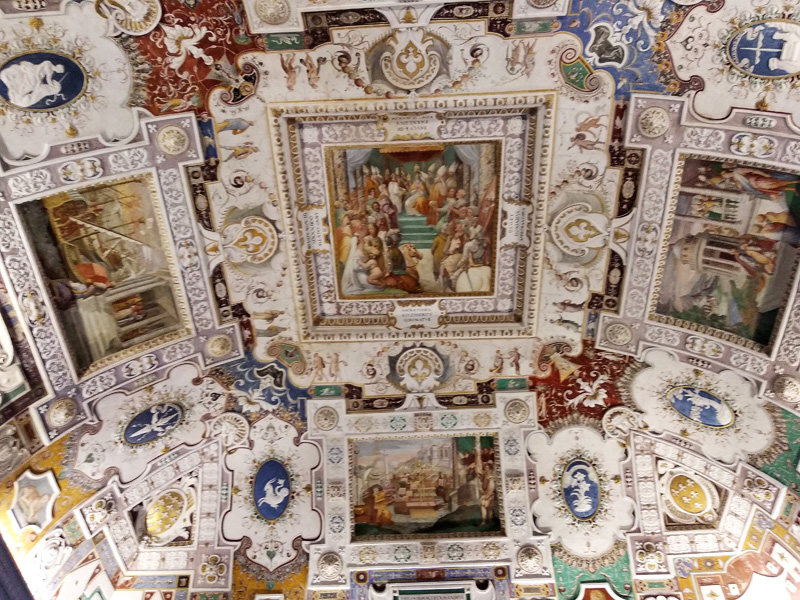
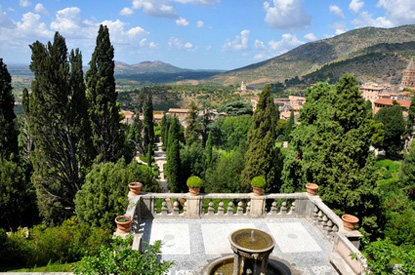
Villa d'Este in Tivoli is a prime example of Italian Renaissance architecture. It contains lavish frescoes, murals, and ceilings painted by prominent Mannerist artists, such as Livio Agresti and Girolamo Muziano. The gardens are the villa's most celebrated feature and represent one of the finest examples of Renaissance landscape design. The design draws inspiration from Roman gardens and incorporates features like statues, grottos, and fountains. The gardens had a significant influence on European garden design, inspiring the creation of similar gardens in France, Germany, and England. |
| Hadrian's Villa (Villa Adriana) ※
|
|---|

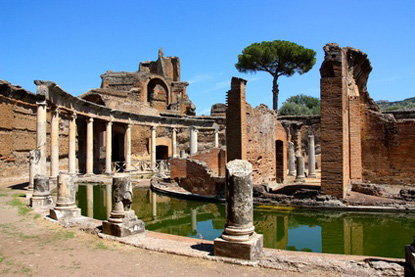
Hadrian's Villa is one of the most magnificent and well-preserved imperial Roman villas in Italy. Commissioned by Emperor Hadrian, who ruled from 117 to 138 CE, it is one of the largest palaces ever constructed. The various buildings in the complex had a total surface area of 450,000 square metres (seven times larger than Versailles) spread out over 120 hectares (296 acres) of gardens. Hadrian was a great traveler and drew inspiration from various cultures, particularly Greek and Egyptian. The villa features advanced engineering for its time, including intricate water systems with aqueducts, fountains, and baths. The villa was adorned with exquisite sculptures, mosaics, and frescoes, many of which are now displayed in museums worldwide. |
Other attractions
 Anzio
Santa Maria di Canneto Sanctuary
Collalto Sabrino Castle
Southern & Eastern Latium
| Olevano Romano |
|---|

The picturesque village of Olevano Romano has attracted thousand artists from almost all European countries as well as American ones since the 19th century. It's also renowned for its wine. |
| Sermoneta |
|---|

Nestled in the foothills of the Monti Lepini, Sermoneta is a beautifully preserved medieval town with stunning views of the surrounding countryside. It is dominated by the massive Caetani Castle, which was erected in the 13th century. |
Other attractions
Casamari Abbey
Fossanova Abbey
Monte Cassino Abbey
Terracina
| Anagni |
|---|

The ancient city of Anagni was once home to the Hernici, an Italic tribe, before becoming a Roman municipium. During the Middle Ages, Anagni became a favorite residence of popes and a center of political and religious power. The town has preserved its medieval atmosphere with
narrow cobblestone streets, walls and towers. The main attractions are the Palazzo Bonifacio VIII and Anagni Cathedral. The latter is a masterpiece of Romanesque and Gothic architecture, and is particularly famous for the Crypt of St. Magnus, dubbed the "Sistine Chapel of the Middle Ages" owing to its colourful frescoes. |
| Alatri |
|---|

Alatri was an important city of the Hernici, with a history going back at least to the 7th century BCE. It's main attraction is the acropolis, one of the best-preserved examples of Cyclopean walls in Italy. Built using massive, precisely cut limestone blocks without mortar, the walls display the incredible engineering skills of the ancient Hernici. |
|


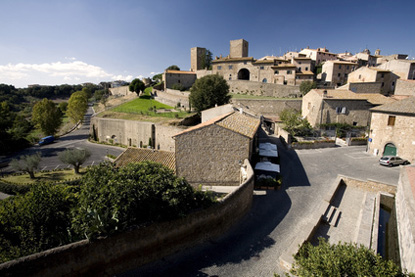


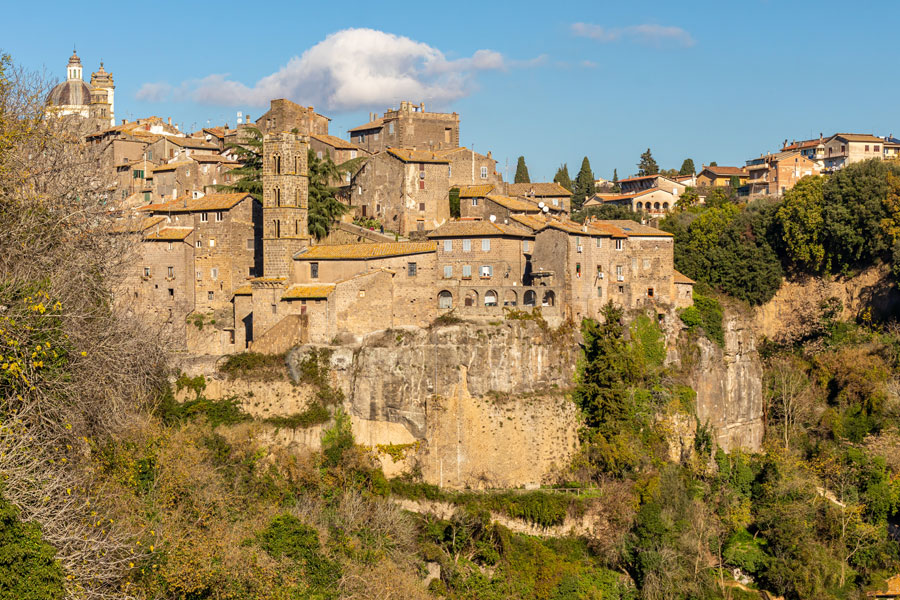
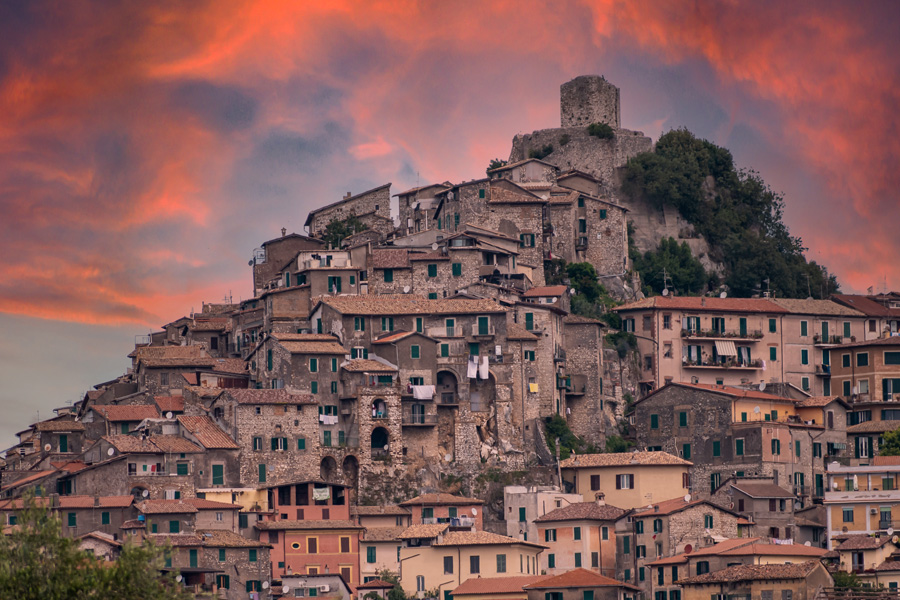
 Positioned atop a hill made of friable volcanic tuff, Bagnoregio has been nicknamed "the dying city" due to the slow erosion of the hill, which is leading to the gradual abandonment of the town. It was founded by the Etruscans around 2,500 years ago. Its name derives from the Latin "Vicus Balneorum" or "town of baths," likely referring to the presence of natural hot springs in the area. The town is only accessible by a 300-metre long pedestrian bridge connecting it to the modern world. The bridge adds to the sense of isolation and timelessness. Its unique location renders it one of most photogenic places in Italy.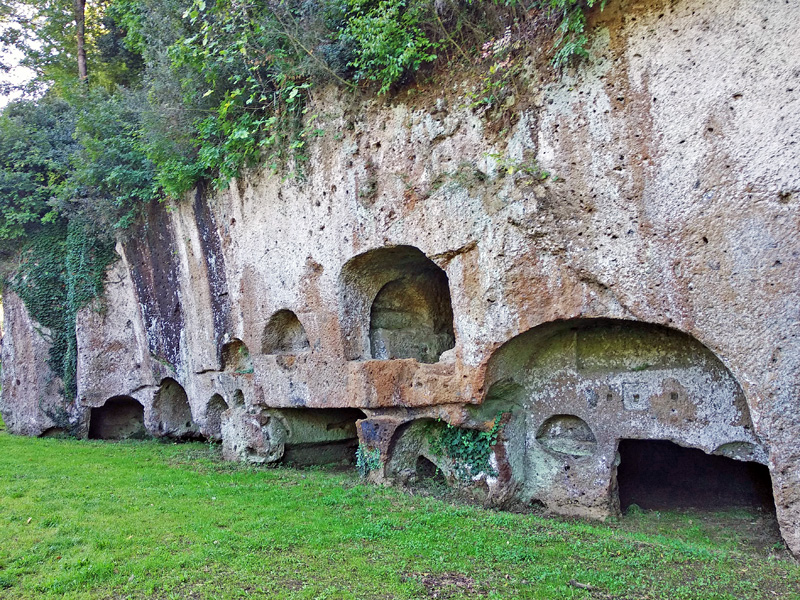



 : Local interest
 : Moderately interesting
 : Outstanding place
 : Must-see in the country
 : Top cities in Europe