


| Contents |
|---|

Introduction
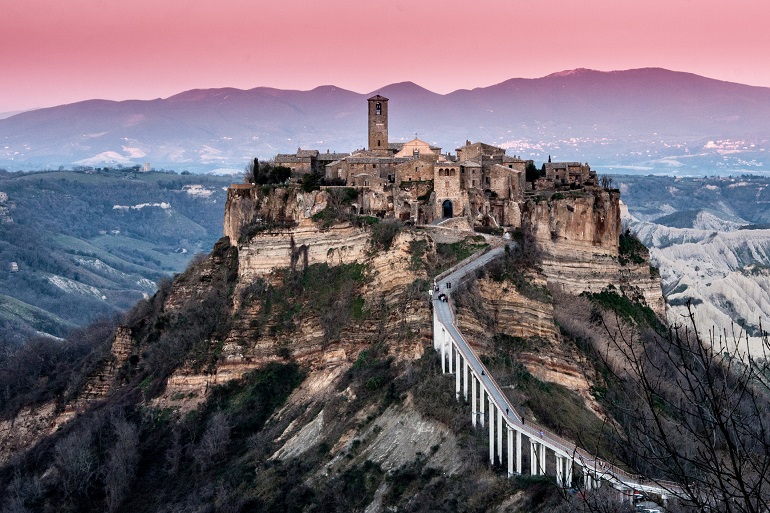
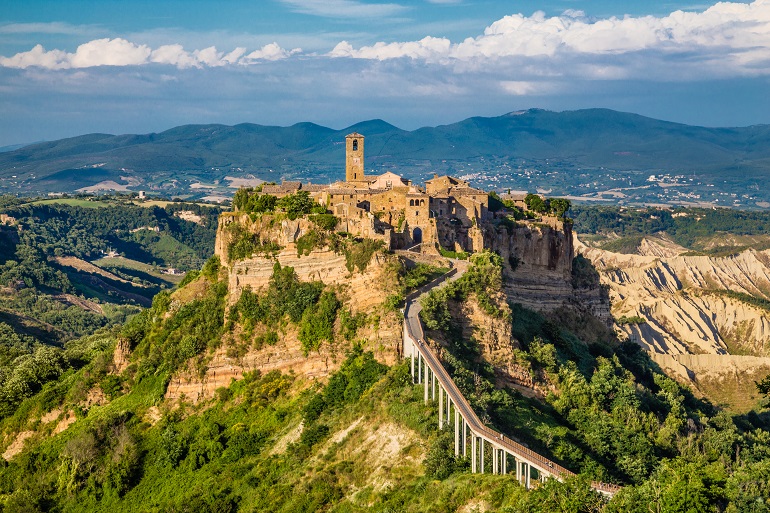
Nestled atop a crumbling volcanic plateau in the heart of Italy's Lazio region, Civita di Bagnoregio is a breathtaking medieval village that seems to defy gravity. Often referred to as 'The Dying Town' due to its precarious position and dwindling population, this enchanting hamlet offers visitors a step back in time. Founded by the Etruscans over 2,500 years ago, Civita di Bagnoregio has weathered centuries of history, natural erosion, and earthquakes to emerge as one of Italy's most captivating destinations. Accessible only by a dramatic footbridge, this car-free village boasts narrow cobblestone streets, charming Renaissance architecture, and panoramic views of the surrounding valleys. Despite its nickname, Civita di Bagnoregio is very much alive, drawing hundreds of thousands of visitors each year to marvel at its unique beauty and rich cultural heritage.
Interesting Facts about Bagnoregio
- Civita di Bagnoregio, often called "The Dying Town", perches precariously on a crumbling tuff cliff eroded over 2,500 years.
- This medieval village remains accessible only via a steep 300-metre pedestrian bridge rebuilt after WWII destruction.
- Founded by the Etruscans in the 7th century BCE, it later became a strategic Roman settlement along Tiber trade routes.
- With just 10-12 permanent residents, the village paradoxically attracts nearly a million annual visitors despite its "dying" status.
- Italy's first pay-to-enter town implements €3-5 admission fees to combat overtourism and fund erosion prevention measures.
- Ancient features include an Etruscan tunnel bisecting the village and a 13th-century cathedral housing a miraculous wooden crucifix.
- The entire settlement sits on an endangered volcanic plateau listed among the world's 100 most at-risk heritage sites.
- Bagnoregio's municipal taxes were abolished in 2017 due to tourism revenue from its famous "dying" neighbour Civita.
- Summer brings traditional donkey races to Piazza San Donato, continuing medieval festivities in the cliffside forum.
- UNESCO World Heritage status has been pursued since 2021 to protect its unique geological and architectural legacy.
History
Civita di Bagnoregio was established by the Etruscans roughly 2,500 years ago as a strategic settlement along vital trade routes. The town, originally named 'Balneum Regio' by the Lombard King Desiderius due to its therapeutic hot springs, flourished throughout the Medieval period. In 1221, it became the birthplace of Saint Bonaventure, who would later become a significant religious figure and biographer of St Francis of Assisi. However, the town's fate took a dramatic turn when devastating earthquakes in the late 17th century, coupled with continuous soil erosion, forced most inhabitants to abandon the ancient settlement for the newer town of Bagnoregio. Today, this enchanting village, known as 'Il paese che muore' (the dying town), remains connected to the mainland only by a footbridge and houses merely a handful of permanent residents, though it has found new life as a remarkable tourist destination.
Main Attractions
Ponte Panoramico di Civita
The dramatic footbridge represents more than just an entrance to the village—it's a modern marvel of engineering that replaced the ancient land bridge that once connected Civita to the mainland. Completed in 1965, this remarkable structure spans a vast chasm, providing breathtaking views of the Valle dei Calanchi. The bridge's construction marked a new chapter in Civita's history, ensuring the town's continued accessibility while offering visitors a spectacular approach that emphasises the dramatic isolation of this ancient settlement.
Porta Santa Maria
The town's sole remaining entrance gate, Porta Santa Maria (also known as Porta Cava), represents a fascinating blend of Etruscan ingenuity and medieval artistry. Carved directly into the volcanic tuff rock, this ancient gateway features intricate details that tell stories of the town's past. The entrance is adorned with mysterious triangular pilgrim marks and Templar crosses, while its most striking features are the medieval bas-reliefs depicting lions clutching human heads—a powerful commemoration of the town's 1457 victory over the Monaldeschi family of Orvieto. These fierce basalt lions serve as eternal guardians of the town's independence.
Historic Palaces
The Renaissance-era Palazzo Alemanni stands as a testament to 16th-century architectural grandeur, now housing the fascinating Geological Museum. Its elegant façade and perfectly proportioned windows exemplify the refined taste of the period. The Palazzo Vescovile, also dating to the 16th century, holds special significance as the purported birthplace of Saint Bonaventura, one of the town's most illustrious sons. The Palazzo Colesanti completes this triumvirate of Renaissance splendour, showcasing the sophisticated architectural style that defined this golden age of Italian design.
Religious Sites
The Church of San Donato dominates the main square, representing the spiritual heart of Civita since the 5th century. This magnificent structure, designated as a national monument in 1940, houses precious religious artifacts, including a remarkable 15th-century wooden crucifix. The church underwent significant transformations in 1511, when architect Nicola Matteucci of Caprarola redesigned its eastern section, adding a new presbytery and choir. The façade received its Renaissance makeover during this period, with the addition of an elegant central portal in 1524 and two side entrances in 1547.
Museums and Cultural Sites
The Museo Geologico delle Frane, housed within Palazzo Alemanni, offers visitors a fascinating journey through the geological history of Civita. Spread across four distinct rooms, the museum chronicles the town's ongoing battle against erosion, displaying fossils, historical documents, and interactive exhibits that explain the unique geological challenges facing the settlement. The ancient Grotta di San Bonaventura, originally an Etruscan tomb later converted into a medieval chapel, holds particular significance due to its association with Saint Francis of Assisi. The Antica Civitas museum provides valuable insights into the area's Etruscan heritage through its collection of artifacts and educational displays.
Public Spaces
Piazza Colesanti serves as the vibrant heart of Civita, where Renaissance architecture creates a stunning backdrop for daily life. The square's intimate dimensions and surrounding historical buildings create an atmosphere that transports visitors back through centuries of Italian history. Colourful flowers cascade from wrought-iron balconies, while local residents maintain the traditions that have defined this space for generations. The square comes alive during festivals and local gatherings, maintaining its role as the social centre of the community.

Giardino del Poeta
The Poet's Garden, created by a local resident named Geremia, represents a peaceful haven at the far end of town. This meticulously maintained private garden, now open to the public, offers a sensory experience with its array of fragrant flowers and carefully curated plant life. Visitors can enjoy unparalleled views of the surrounding valley while surrounded by the beauty of nature. The garden serves as a living testament to the creative spirit that continues to thrive in Civita, with every corner offering inspiration just as it did for its poetic founder.
Traditional Events
The Palio della Tonna, celebrated twice yearly on the first Sunday of June and the second Sunday of September, transforms the town's intimate square into a unique racing venue. This distinctive event features donkeys competing in pairs due to the narrow course, creating a spectacle that combines traditional pageantry with unpredictable entertainment. The race, mirroring elements of Siena's famous Palio but with its own distinct character, sees riders attempting to complete three laps while their mount might have other ideas—stopping to graze or simply refusing to move, much to the delight of spectators.
Local Cuisine
The local cuisine of Civita di Bagnoregio reflects the rich traditions of the Viterbo region, featuring simple yet flavourful dishes crafted from authentic local ingredients. The area's signature dish is piciarelli, traditional spaghettoni made with just water and flour. The region is particularly renowned for its wild boar dishes and exceptional cured meats. The local terrain provides an abundance of porcini mushrooms and black truffles, which add robust flavours to the otherwise humble cuisine. In May, visitors can savour the excellent cherries from nearby Celleno, whilst throughout the year, the local restaurants pair their traditional fare with superb regional wines, often served against the backdrop of the spectacular Tuscan-Umbrian countryside.
Getting There
To reach Civita di Bagnoregio, located about 50 miles northwest of Rome, you can take a Cotral bus from Orvieto, with services running between 6:30 and 10:00, returning by 14:30. Upon arrival in modern Bagnoregio, you'll need to purchase a 5 euro entrance ticket, available either at the ticket booth or through the Civita di Bagnoregio mobile app. The ancient town can only be reached on foot via a long footbridge that slopes uphill, and whilst there's a shuttle service from modern Bagnoregio to the bridge during peak seasons, you may need to walk approximately 1.2 miles if visiting during off-peak times. Once inside the historic centre, you'll find yourself wandering through narrow Medieval streets and alleyways, with the town's main piazza serving as the central hub for exploration and local events, including the entertaining donkey palio held in June and September.
Best Time to Visit
The best time to visit Civita di Bagnoregio is during the spring (March to May) or autumn (September to November) months. These seasons offer mild temperatures, fewer crowds, and stunning scenery. Spring brings blooming flowers and lush landscapes, whilst autumn treats visitors to colourful foliage and a peaceful atmosphere. For a truly magical experience, consider visiting in the early morning during autumn or winter, when the town is often shrouded in mist, creating an ethereal ambiance. If you prefer warmer weather, late spring or early autumn provide comfortable temperatures for exploring without the peak summer crowds. Weekdays are generally quieter than weekends, allowing for a more relaxed visit. To fully appreciate the town's beauty and history, plan to spend at least half a day exploring its charming streets and taking in the breathtaking views of the surrounding Valle dei Calanchi.